MindMap Gallery 算法之查找算法对比导图
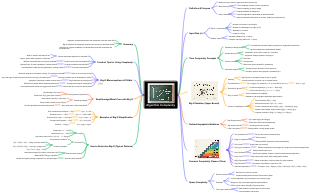
Discover the fascinating world of search algorithms with our comprehensive comparison guide. This mind map outlines the essential goals of searching, evaluates key dimensions such as time and space complexity, and considers preconditions for effective searching. Dive into core algorithms like Linear Search, Binary Search, and Jump Search, each with their unique strengths and weaknesses. Explore their implementation complexities and typical use cases to understand when to apply each algorithm. Whether you are handling unsorted collections or large sorted arrays, this guide will help you choose the most efficient search strategy for your needs. Join us in mastering the art of searching!
Edited at 2026-03-20 03:57:06Discover the ultimate Douyin Food "Shop-Visit" Account Matrix designed for comprehensive local food exploration! This strategy focuses on achieving full local food traffic coverage through a multi-account approach, enhancing reach, frequency, and conversion for restaurants. Our structure includes a Main Account, Regional Accounts, Category Accounts, and Price-Tier Accounts, each serving distinct roles from authoritative recommendations to hyperlocal insights. We ensure engaging content across various formats, from high-quality reviews to quick-hit discoveries. With a strong branding system and a commitment to trust and transparency, we aim to connect food lovers with their next great dining experience while driving traffic and conversions for local eateries. Join us in exploring the best food options in your city!

Discover the ultimate guide to beauty with our Douyin Beauty Review Account Matrix! This comprehensive strategy aims to help users make informed beauty purchases through objective testing and tailored recommendations. Our main account serves as the traffic hub, delivering cross-category reviews and in-depth testing reports. Supporting sub-accounts focus on ingredient analysis, budget-friendly picks, and luxury product reviews. Engage with content tailored for various audiences, from beginners to skincare enthusiasts, ensuring there's something for everyone. Key formats include quick ingredient decodes, budget hauls, and luxury trials, all designed to build trust and improve conversions. Join us in navigating the beauty landscape with clarity and confidence!
Welcome to our TikTok Outfit & Fashion Account Matrix, where we empower your style journey! Our goal is to build brand authority in outfit styling while catering to diverse audiences through segmented content. With a focus on gender, age, budget, and geography, we provide tailored fashion solutions. Our structure includes a Main Account as the brand face, along with specialized Style, Body-Type, and Scenario Accounts. Each vertical channel offers unique themes, visuals, and audience needs, from minimalist basics to travel outfits. We emphasize collaboration and content reuse, ensuring a scalable system that keeps your wardrobe fresh and stylish. Join us to elevate your fashion game!
Discover the ultimate Douyin Food "Shop-Visit" Account Matrix designed for comprehensive local food exploration! This strategy focuses on achieving full local food traffic coverage through a multi-account approach, enhancing reach, frequency, and conversion for restaurants. Our structure includes a Main Account, Regional Accounts, Category Accounts, and Price-Tier Accounts, each serving distinct roles from authoritative recommendations to hyperlocal insights. We ensure engaging content across various formats, from high-quality reviews to quick-hit discoveries. With a strong branding system and a commitment to trust and transparency, we aim to connect food lovers with their next great dining experience while driving traffic and conversions for local eateries. Join us in exploring the best food options in your city!
Discover the ultimate guide to beauty with our Douyin Beauty Review Account Matrix! This comprehensive strategy aims to help users make informed beauty purchases through objective testing and tailored recommendations. Our main account serves as the traffic hub, delivering cross-category reviews and in-depth testing reports. Supporting sub-accounts focus on ingredient analysis, budget-friendly picks, and luxury product reviews. Engage with content tailored for various audiences, from beginners to skincare enthusiasts, ensuring there's something for everyone. Key formats include quick ingredient decodes, budget hauls, and luxury trials, all designed to build trust and improve conversions. Join us in navigating the beauty landscape with clarity and confidence!
Welcome to our TikTok Outfit & Fashion Account Matrix, where we empower your style journey! Our goal is to build brand authority in outfit styling while catering to diverse audiences through segmented content. With a focus on gender, age, budget, and geography, we provide tailored fashion solutions. Our structure includes a Main Account as the brand face, along with specialized Style, Body-Type, and Scenario Accounts. Each vertical channel offers unique themes, visuals, and audience needs, from minimalist basics to travel outfits. We emphasize collaboration and content reuse, ensuring a scalable system that keeps your wardrobe fresh and stylish. Join us to elevate your fashion game!
Search Algorithms Comparison Mind Map
Goals of Searching
Determine whether a target key exists
Find position/index of target
Retrieve associated value/record
Support repeated queries efficiently
Key Evaluation Dimensions
Time Complexity
Best / Average / Worst case
Dependence on data distribution and query patterns
Space Complexity
In-place vs extra memory
Index structures and preprocessing cost
Preconditions / Data Requirements
Sorted vs unsorted
Random access vs sequential access
Static vs dynamic updates (insert/delete frequency)
Use-Case Fit
One-off search vs many repeated searches
Range queries / nearest neighbor needs
Exact match vs approximate match
Implementation Complexity
Simplicity, bug risk, edge cases
Core Algorithms (Array/List)
Linear Search (Sequential Search)
Idea
Scan elements one by one until found or end
Preconditions
None (works on unsorted data)
Works with sequential access (arrays, linked lists, streams)
Complexity
Best: O(1) (first element)
Average: O(n)
Worst: O(n)
Space: O(1)
Strengths
Minimal assumptions and simplest implementation
Good for very small n
Works when data changes frequently (no maintenance cost)
Weaknesses
Slow for large n
Typical Use
Unsorted collections
Linked lists / iterators / file streams
Binary Search
Idea
Repeatedly halve the search interval using mid comparison
Preconditions
Data must be sorted by key
Requires random access (efficient indexing); best on arrays
Complexity
Best: O(1)
Average/Worst: O(log n)
Space: O(1) iterative; O(log n) recursive (call stack)
Strengths
Very fast for large static sorted arrays
Simple and cache-friendly
Weaknesses / Pitfalls
Sorting cost if data initially unsorted: O(n log n)
Maintaining sorted order under frequent updates can be costly
Edge cases: overflow in mid calculation, duplicates (first/last occurrence)
Variants
Lower bound / upper bound (first ≥ x / first > x)
Search on answer (parametric search)
Rotated sorted array search
Jump Search
Idea
Jump ahead by fixed block size, then linear scan within block
Preconditions
Sorted data
Random access helpful
Complexity
Time: O(√n) (optimal step ≈ √n)
Space: O(1)
Strengths
Fewer comparisons than linear for large n
Simpler than binary in some contexts
Weaknesses
Slower than binary search asymptotically
Typical Use
When binary search is not ideal or comparisons are expensive and block scanning is efficient
Interpolation Search
Idea
Estimate probe position using value distribution (like “guessing” location)
Preconditions
Sorted data
Keys are numeric/ordered and reasonably uniformly distributed
Random access
Complexity
Best/Average (uniform): O(log log n)
Worst (skewed): O(n)
Space: O(1)
Strengths
Can outperform binary search on uniform distributions
Weaknesses
Highly sensitive to non-uniform distributions
More complex; careful with integer division and bounds
Typical Use
Large uniformly distributed numeric arrays (e.g., IDs with near-uniform spacing)
Exponential Search
Idea
Find range by doubling bounds (1,2,4,8,...) then binary search within range
Preconditions
Sorted data
Random access; especially useful for unbounded/unknown size arrays
Complexity
Time: O(log i) where i is position of target (or insertion point)
Space: O(1)
Strengths
Efficient when target is near beginning
Works well when array size is unknown or conceptually infinite
Weaknesses
Requires sorted order and random access
Typical Use
Searching in large sorted data with unknown length (APIs, streams buffered into random-access structure)
Fibonacci Search
Idea
Use Fibonacci numbers to split array into decreasing ranges
Preconditions
Sorted data
Random access
Complexity
Time: O(log n)
Space: O(1)
Strengths
Uses only addition/subtraction; historically useful when division is costly
Can have good locality properties
Weaknesses
More complex than binary search; rarely superior on modern hardware
Typical Use
Specialized environments or educational comparison
For sorted arrays with random access, Binary Search is the default; Jump/Interpolation/Exponential/Fibonacci are situational optimizations depending on distribution, cost model, or unknown size.
Search in Linked Lists / Sequential-Only Access
Linear Search (primary choice)
Rationale
No random access => binary/jump-based methods lose advantage
Sentinel Linear Search (Optimization)
Idea
Place target as sentinel at end to avoid bounds checks inside loop
Complexity
Still O(n), but fewer comparisons/branches
Use
Performance micro-optimization in tight loops
Searching in Hash-Based Structures
Hash Table Lookup
Idea
Compute hash(key) → bucket/slot; resolve collisions
Preconditions
Hash function and table maintained
Equality comparable keys
Complexity
Average: O(1)
Worst: O(n) (pathological collisions / adversarial input)
Space: O(n) with overhead (load factor dependent)
Strengths
Excellent for exact-match queries
Great for many repeated searches and frequent updates
Weaknesses
No inherent ordering (range queries, predecessor/successor not natural)
Requires resizing/rehashing; memory overhead
Worst-case concerns unless using robust hashing
Collision Handling
Chaining (lists/trees in buckets)
Open addressing (linear/quadratic probing, double hashing)
Typical Use
Dictionaries/maps/sets, caches, symbol tables
Searching in Tree-Based Ordered Structures
Binary Search Tree (BST) Search
Idea
Traverse left/right based on comparisons
Preconditions
BST property maintained
Complexity
Average: O(log n) if balanced/random
Worst: O(n) if skewed
Space: O(h) recursion stack (or O(1) iterative)
Strengths
Maintains sorted order; supports range queries
Dynamic insert/delete
Weaknesses
Can degrade without balancing
Balanced BST (AVL / Red-Black Tree)
Idea
Self-balance to keep height logarithmic
Complexity
Search: O(log n) worst-case
Insert/Delete: O(log n)
Space: O(n)
Strengths
Ordered map/set with predictable performance
Supports range queries, min/max, predecessor/successor
Weaknesses
More complex; constant factors higher than hash tables
Typical Use
Ordered dictionaries, interval/range operations, in-memory indexes
B-Tree / B+Tree
Idea
High branching factor tree optimized for disk/SSD pages
Preconditions
Suitable page/block storage; maintained as balanced multiway tree
Complexity
Search: O(log_b n) node visits (b = branching factor)
Strengths
Excellent for external memory (databases, filesystems)
B+Tree supports efficient range scans (linked leaves)
Weaknesses
Implementation complexity
Typical Use
Database indexes, key-value storage engines
Trees trade slightly higher constants for ordered operations; balancing (AVL/RB) stabilizes performance, and B+Trees dominate on disk due to page-friendly fanout and range scans.
Searching in Tries (Prefix Trees)
Trie Search
Idea
Traverse characters/digits by alphabet edges
Preconditions
Keys are strings (or sequences); defined alphabet
Complexity
Time: O(L) where L = key length (independent of n)
Space: Potentially high; compressed variants reduce
Strengths
Fast prefix queries (autocomplete)
Lexicographic traversal
Weaknesses
Memory overhead; alphabet size impacts
Variants
Radix tree (compressed trie)
Ternary search tree
Typical Use
Dictionaries, routing tables, prefix matching
Algorithm Selection Guide (When to Use What)
Data Unsorted, Few Searches
Choose: Linear Search
Reason: No preprocessing; simplest
Data Unsorted, Many Searches
Choose: Hash Table (exact match) or build index
Alternative: Sort once + Binary Search if ordered operations needed
Data Sorted, Random Access (Array)
Choose: Binary Search (default best general choice)
Consider: Interpolation Search if uniform numeric distribution
Consider: Exponential Search if size unknown or target near start
Data Sorted, Need Range Queries / Ordered Operations
Choose: Balanced BST (in-memory) or B+Tree (on-disk)
String Keys, Prefix Queries
Choose: Trie / Radix tree
Sequential Access Only (Linked list / Stream)
Choose: Linear Search (or restructure data to enable indexing)
Efficiency Summary Table (Big-O)
Multi-Algorithm Comparison
Practical Notes / Caveats
Constant factors matter
Binary search often fastest for arrays despite similar asymptotics to other O(log n) methods
Preprocessing trade-off
Sorting/indexing cost amortized only if many queries
Duplicate keys
Need lower/upper bound variants or store lists per key
Cache and locality
Arrays + binary search are cache-friendly; trees may incur pointer chasing
Adversarial inputs
Hash tables can degrade; use robust hashing or tree-backed buckets where available