Wondershare EdrawMind
MindMap Gallery What is Group Theory
What is Group Theory
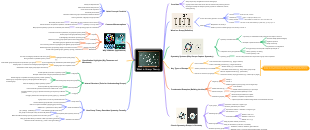
Discover the fascinating world of Group Theory, a mathematical framework that explores symmetry and reversible transformations across various disciplines. At its core, Group Theory studies algebraic structures known as "groups," defined by operations that combine and invert elements while preserving structure. The theory formalizes symmetry systemssuch as rotations and reflectionsusing axioms like closure, associativity, and identity. Key concepts include subgroup structures, homomorphisms, and normal subgroups, leading to insights into the classification of groups. With applications in mathematics, physics, and computer science, Group Theory unifies our understanding of patterns and symmetries in the universe. Join us in unraveling the beauty of these abstract structures!
Edited at 2026-03-20 03:51:45
- Iran History Timeline
Explore the rich tapestry of Iran's history, spanning from early civilizations to the Islamic era and beyond. This timeline highlights key periods, including the emergence of ancient societies around 10,000 BCE, the rise of the Achaemenid Empire under Cyrus the Great, and the cultural flourishing during the Sasanian Empire. The narrative continues through the Islamic conquest, showcasing the integration of Iran into the Caliphate, and the subsequent revival of Persian culture under various dynasties. The Mongol invasion marks a turning point, leading to fragmentation and the rise of local powers. Delve into a journey that captures the resilience and evolution of Iranian identity through the ages.
- Indonesia History Timeline
Discover the rich tapestry of Indonesia's history through its timeline, spanning from early settlements to modern independence. The journey begins with the Austronesian peoples and their maritime networks, followed by the rise of influential kingdoms like Srivijaya and Majapahit, which shaped culture and trade. The arrival of Europeans in the 16th century heralded colonial contestation, leading to Dutch consolidation and the emergence of nationalism in the early 20th century. The Japanese occupation during World War II further catalyzed the quest for independence, culminating in the proclamation by Sukarno and Hatta in 1945. This timeline encapsulates the dynamic forces that have shaped Indonesia into the diverse nation it is today.
- What is Partial Differential Equation
Discover the fascinating world of Partial Differential Equations (PDEs), essential tools for modeling complex multivariable systems. This overview covers the definition of PDEs as equations involving unknown functions and their partial derivatives, alongside their significance in capturing spatial and temporal variations, interactions, and conservation laws. You'll learn about the components of a PDE, including independent and dependent variables, partial derivatives, and coefficients. Explore common PDEs like the Heat Equation and Navier–Stokes equations, as well as their classifications by order, linearity, and type. Finally, understand the conditions needed for solutions and the various methods used to solve these equations, both analytically and numerically. Join us in unraveling the complexities of PDEs!
What is Group Theory
- Iran History Timeline
Explore the rich tapestry of Iran's history, spanning from early civilizations to the Islamic era and beyond. This timeline highlights key periods, including the emergence of ancient societies around 10,000 BCE, the rise of the Achaemenid Empire under Cyrus the Great, and the cultural flourishing during the Sasanian Empire. The narrative continues through the Islamic conquest, showcasing the integration of Iran into the Caliphate, and the subsequent revival of Persian culture under various dynasties. The Mongol invasion marks a turning point, leading to fragmentation and the rise of local powers. Delve into a journey that captures the resilience and evolution of Iranian identity through the ages.
- Indonesia History Timeline
Discover the rich tapestry of Indonesia's history through its timeline, spanning from early settlements to modern independence. The journey begins with the Austronesian peoples and their maritime networks, followed by the rise of influential kingdoms like Srivijaya and Majapahit, which shaped culture and trade. The arrival of Europeans in the 16th century heralded colonial contestation, leading to Dutch consolidation and the emergence of nationalism in the early 20th century. The Japanese occupation during World War II further catalyzed the quest for independence, culminating in the proclamation by Sukarno and Hatta in 1945. This timeline encapsulates the dynamic forces that have shaped Indonesia into the diverse nation it is today.
- What is Partial Differential Equation
Discover the fascinating world of Partial Differential Equations (PDEs), essential tools for modeling complex multivariable systems. This overview covers the definition of PDEs as equations involving unknown functions and their partial derivatives, alongside their significance in capturing spatial and temporal variations, interactions, and conservation laws. You'll learn about the components of a PDE, including independent and dependent variables, partial derivatives, and coefficients. Explore common PDEs like the Heat Equation and Navier–Stokes equations, as well as their classifications by order, linearity, and type. Finally, understand the conditions needed for solutions and the various methods used to solve these equations, both analytically and numerically. Join us in unraveling the complexities of PDEs!
- Recommended to you
- Outline