MindMap Gallery What is Linear Algebra
Discover the fascinating world of Linear Algebra, where mathematics meets the complexities of interdependent systems. This branch focuses on vectors and their relationships, exploring how they combine, scale, and interact. Key topics include the definition and interpretation of vectors, the structure of vector spaces, and systems of linear equations. You'll learn about matrices, their operations, and how they represent linear transformations. Additionally, we delve into concepts like span, linear independence, and the fundamental subspaces of a matrix, which are crucial for understanding dimensions and solvability. Join us in unraveling the essential toolkit for modeling and solving real-world problems through linear relationships.
Edited at 2026-03-20 03:52:01Discover the ultimate Douyin Food "Shop-Visit" Account Matrix designed for comprehensive local food exploration! This strategy focuses on achieving full local food traffic coverage through a multi-account approach, enhancing reach, frequency, and conversion for restaurants. Our structure includes a Main Account, Regional Accounts, Category Accounts, and Price-Tier Accounts, each serving distinct roles from authoritative recommendations to hyperlocal insights. We ensure engaging content across various formats, from high-quality reviews to quick-hit discoveries. With a strong branding system and a commitment to trust and transparency, we aim to connect food lovers with their next great dining experience while driving traffic and conversions for local eateries. Join us in exploring the best food options in your city!

Discover the ultimate guide to beauty with our Douyin Beauty Review Account Matrix! This comprehensive strategy aims to help users make informed beauty purchases through objective testing and tailored recommendations. Our main account serves as the traffic hub, delivering cross-category reviews and in-depth testing reports. Supporting sub-accounts focus on ingredient analysis, budget-friendly picks, and luxury product reviews. Engage with content tailored for various audiences, from beginners to skincare enthusiasts, ensuring there's something for everyone. Key formats include quick ingredient decodes, budget hauls, and luxury trials, all designed to build trust and improve conversions. Join us in navigating the beauty landscape with clarity and confidence!
Welcome to our TikTok Outfit & Fashion Account Matrix, where we empower your style journey! Our goal is to build brand authority in outfit styling while catering to diverse audiences through segmented content. With a focus on gender, age, budget, and geography, we provide tailored fashion solutions. Our structure includes a Main Account as the brand face, along with specialized Style, Body-Type, and Scenario Accounts. Each vertical channel offers unique themes, visuals, and audience needs, from minimalist basics to travel outfits. We emphasize collaboration and content reuse, ensuring a scalable system that keeps your wardrobe fresh and stylish. Join us to elevate your fashion game!
Discover the ultimate Douyin Food "Shop-Visit" Account Matrix designed for comprehensive local food exploration! This strategy focuses on achieving full local food traffic coverage through a multi-account approach, enhancing reach, frequency, and conversion for restaurants. Our structure includes a Main Account, Regional Accounts, Category Accounts, and Price-Tier Accounts, each serving distinct roles from authoritative recommendations to hyperlocal insights. We ensure engaging content across various formats, from high-quality reviews to quick-hit discoveries. With a strong branding system and a commitment to trust and transparency, we aim to connect food lovers with their next great dining experience while driving traffic and conversions for local eateries. Join us in exploring the best food options in your city!
Discover the ultimate guide to beauty with our Douyin Beauty Review Account Matrix! This comprehensive strategy aims to help users make informed beauty purchases through objective testing and tailored recommendations. Our main account serves as the traffic hub, delivering cross-category reviews and in-depth testing reports. Supporting sub-accounts focus on ingredient analysis, budget-friendly picks, and luxury product reviews. Engage with content tailored for various audiences, from beginners to skincare enthusiasts, ensuring there's something for everyone. Key formats include quick ingredient decodes, budget hauls, and luxury trials, all designed to build trust and improve conversions. Join us in navigating the beauty landscape with clarity and confidence!
Welcome to our TikTok Outfit & Fashion Account Matrix, where we empower your style journey! Our goal is to build brand authority in outfit styling while catering to diverse audiences through segmented content. With a focus on gender, age, budget, and geography, we provide tailored fashion solutions. Our structure includes a Main Account as the brand face, along with specialized Style, Body-Type, and Scenario Accounts. Each vertical channel offers unique themes, visuals, and audience needs, from minimalist basics to travel outfits. We emphasize collaboration and content reuse, ensuring a scalable system that keeps your wardrobe fresh and stylish. Join us to elevate your fashion game!
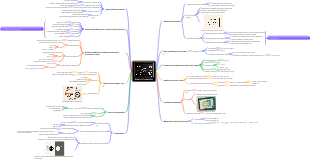
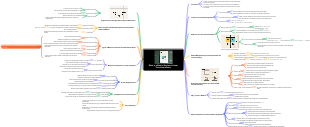
What is Linear Algebra
Core Idea
A branch of mathematics focused on vectors and linear relationships
Studies how collections of vectors behave under operations like addition and scaling
Provides a language and toolkit for modeling systems with many interdependent quantities
Vectors
Definition
An element of a vector space that can represent direction, magnitude, or a list of numbers
Commonly written as columns or rows (e.g., [v1, v2, ..., vn])
Interpretation
Geometric (2D/3D): arrows in space with direction and length
Algebraic (nD): ordered tuples representing states, features, or coefficients
Basic Operations
Vector addition
Combines vectors component-wise
Geometrically: tip-to-tail addition
Scalar multiplication
Scales a vector by a number
Geometrically: stretches/shrinks and possibly flips direction
Linear combinations
Sums of scaled vectors: a1 v1 + a2 v2 + ... + ak vk
Central to spanning, dependence, and system representation
Vector Spaces (Vector Systems)
Definition
A set of vectors closed under addition and scalar multiplication
Must satisfy axioms (associativity, commutativity of addition, existence of zero vector, etc.)
Examples
R^n (real n-dimensional vectors)
Polynomials (vectors as polynomial coefficient lists)
Functions (vectors as functions, with addition/scaling defined pointwise)
Subspaces
A subset that is also a vector space under the same operations
Typical forms
Lines/planes through the origin in R^n
Null space of a matrix
Column space of a matrix
Systems of Linear Equations
What “Linear” Means
Variables appear only to the first power
No products of variables, no nonlinear functions (e.g., sin, exp) of variables
Matrix Form
Expresses a system compactly as A x = b
A: coefficient matrix
x: unknown vector
b: result vector
Solution Behavior
No solution (inconsistent)
Exactly one solution
Infinitely many solutions
Solving Methods
Gaussian elimination
Row-reduction to (reduced) row echelon form
Using inverses (when applicable)
Matrices
Definition and Role
Rectangular arrays representing linear transformations and linear systems
Act on vectors via matrix-vector multiplication
Key Operations
Addition and scalar multiplication
Matrix multiplication
Encodes composition of linear transformations
Not generally commutative (AB ≠ BA)
Transpose
Swaps rows and columns
Inverse (when it exists)
A^{-1} such that A A^{-1} = I
Exists only for square, full-rank matrices
Special Matrices
Identity matrix (I): does not change vectors
Diagonal matrices: scaling along coordinate axes
Symmetric matrices: A = A^T
Orthogonal matrices: Q^T Q = I (preserve lengths and angles)
Triangular matrices: upper/lower triangular (useful in elimination)
Linear Transformations
Definition
A function T that preserves addition and scalar multiplication
T(u + v) = T(u) + T(v)
T(c v) = c T(v)
Connection to Matrices
Every linear transformation between finite-dimensional spaces can be represented by a matrix (given a basis)
Matrix-vector multiplication is the standard representation
Geometric Meaning
Rotations, reflections, scalings, shears, projections
Transformations map lines through the origin to lines through the origin
Basis, Span, and Dimension
Span
The set of all linear combinations of a set of vectors
Describes what vectors can be “built” from given vectors
Linear Independence vs Dependence
Independent: no vector is a linear combination of the others
Dependent: at least one vector can be formed from others (redundant information)
Basis
A minimal spanning set: spans the space and is linearly independent
Provides coordinates for representing any vector uniquely
Dimension
Number of vectors in a basis
Measures the degrees of freedom of the space
Fundamental Subspaces (for a matrix A)
Column Space (Range)
All vectors A x can produce
Span of the columns of A
Null Space (Kernel)
All vectors x such that A x = 0
Describes degrees of freedom in homogeneous systems
Row Space
Span of the rows of A (equivalently column space of A^T)
Left Null Space
Vectors y such that y^T A = 0
Relationships
Rank-nullity theorem
dim(Null(A)) + rank(A) = number of columns of A
Rank and Solvability
Rank
The dimension of the column space (or row space)
Indicates how many independent directions the transformation produces
Consistency Conditions
A x = b is solvable iff b is in the column space of A
Over/Under-Determined Systems
Over-determined: more equations than unknowns (may be inconsistent; often use least squares)
Under-determined: more unknowns than equations (typically infinitely many solutions)
Determinants (Square Matrices)
Meaning
Scaling factor of area/volume under the transformation
Indicates orientation change (sign) and invertibility (zero vs nonzero)
Key Properties
det(A) ≠ 0 implies A is invertible
det(AB) = det(A) det(B)
Geometric Interpretation
Magnitude: how volumes scale
Zero determinant: collapses space into a lower dimension
Eigenvalues and Eigenvectors
Definition
Nonzero vector v where A v = λ v
v: eigenvector (direction preserved)
λ: eigenvalue (scaling along that direction)
Why They Matter
Reveal invariant directions and system behavior
Central in stability, oscillations, and repeated application of transformations
Diagonalization
When A = P D P^{-1}
Simplifies powers of matrices and many computations
Spectral Theorem (key case)
Symmetric matrices can be orthogonally diagonalized
Real eigenvalues and orthogonal eigenvectors
Inner Products, Lengths, and Angles
Dot Product (standard inner product in R^n)
Measures similarity and defines angles
Used to compute projections and orthogonality
Norm (Length)
||v|| derived from the inner product
Orthogonality
u ⟂ v if u · v = 0
Leads to stable bases and simplified computations
Orthonormal Bases
Basis vectors are orthogonal and unit-length
Make coordinates and projections straightforward
Projections and Least Squares
Projection onto a Subspace
Finds the closest vector in a subspace to a given vector
Often uses orthonormal bases or normal equations
Least Squares Problems
Solve A x ≈ b when exact solution doesn’t exist
Minimizes ||A x − b|| (best approximation)
Applications
Data fitting, regression, signal denoising, measurement error correction
Decompositions (Practical Toolkits)
LU Decomposition
A = L U for efficient solving of many systems with same A
QR Decomposition
A = Q R with Q orthogonal
Useful for least squares and numerical stability
SVD (Singular Value Decomposition)
A = U Σ V^T
Works for any matrix and exposes rank, conditioning, and best low-rank approximations
Factorizations re-express A to make solving, stability, and approximation practical at scale
Why Linear Algebra Matters
Modeling and Computation
Encodes complex relationships as linear systems and transformations
Provides efficient algorithms for large-scale problems
Core Application Areas
Computer graphics (transformations, projections)
Machine learning (feature spaces, optimization, SVD/PCA)
Physics and engineering (systems, eigenmodes, stability)
Networks and search (graphs, adjacency matrices)
Differential equations and dynamical systems (eigenvalues, diagonalization)
Quick Concept Map (How It Fits Together)
Vectors live in vector spaces
Matrices represent linear transformations between spaces
Linear systems A x = b are solved via matrix methods
Subspaces (column/null spaces) describe solvability and structure
Eigenvalues/eigenvectors describe invariant behavior under transformations
Inner products enable geometry (angles, projections) and least squares
Decompositions provide efficient, stable computation for real-world problems