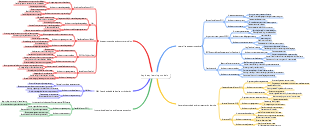
MindMap Gallery 自然语言处理基础导图
Unlock the power of language with our comprehensive exploration of Natural Language Processing (NLP) fundamentals! This guide covers essential topics including the definition of NLP and its relationships to linguistics and machine learning. Dive into core NLP tasks such as text classification, sequence labeling, information extraction, and parsing. Discover data foundations with insights on data sources, preparation, and challenges. Learn about text representation through classic and distributed methods, and explore various modeling approaches including rule-based and symbolic methods. Join us on this journey to understand how computers can comprehend and generate human language effectively!
Edited at 2026-03-20 03:56:57小紅書(RED)における「草もみ」から購買への転換パスを徹底分析しました。まず、コンテンツの露出や認知段階に焦点を当て、最適な露出チャネルやアルゴリズム推薦の重要性を探ります。続いて、ユーザーの関与を促進する要素や、コメントやQ&Aによる信頼構築について考察。購買段階では、シームレスな決済体験や主要決済手段との連携が鍵となります。最後に、購入後のUGC生成やハッシュタグキャンペーンによるブランド資産の構築についても触れます

Naver Shoppingの転換ファネル分析図は、顧客の購買プロセスを深く理解するための重要なツールです。まず、流入・集客フェーズでは、検索トラフィックやコンテンツディスカバリーを通じてユーザーを引き寄せます。次に、関心・検討フェーズでは、コンテンツとコマースの融合を活用し、情報比較を促進します。意思決定・転換フェーズでは、購入障壁の除去や決済の利便性を重視し、リピート購入を促進する保持・拡散フェーズでは、ユーザー生成コンテンツの循環を通じて新たな顧客を引き込む仕組みを構築しています
WooCommerceの転換パス最適化は、オンラインストアの成長を促進するための重要な戦略です。このプロセスは、集客からリテンションまでの各フェーズにおいて、効果的な施策を展開します。まず、集客・流入フェーズでは、SEOや有料広告を活用し、ランディングページの最適化を行います。次に、閲覧・検討フェーズでは、商品ページの改善と社会的証明を強調します。カート投入フェーズでは、放棄率を抑制し、決済・チェックアウトフェーズでは簡素化を図ります。購入完了後は、リテンション施策を通じて顧客を再度呼び戻し、データ分析を通じて継続的な改善を実施します
小紅書(RED)における「草もみ」から購買への転換パスを徹底分析しました。まず、コンテンツの露出や認知段階に焦点を当て、最適な露出チャネルやアルゴリズム推薦の重要性を探ります。続いて、ユーザーの関与を促進する要素や、コメントやQ&Aによる信頼構築について考察。購買段階では、シームレスな決済体験や主要決済手段との連携が鍵となります。最後に、購入後のUGC生成やハッシュタグキャンペーンによるブランド資産の構築についても触れます
Naver Shoppingの転換ファネル分析図は、顧客の購買プロセスを深く理解するための重要なツールです。まず、流入・集客フェーズでは、検索トラフィックやコンテンツディスカバリーを通じてユーザーを引き寄せます。次に、関心・検討フェーズでは、コンテンツとコマースの融合を活用し、情報比較を促進します。意思決定・転換フェーズでは、購入障壁の除去や決済の利便性を重視し、リピート購入を促進する保持・拡散フェーズでは、ユーザー生成コンテンツの循環を通じて新たな顧客を引き込む仕組みを構築しています
WooCommerceの転換パス最適化は、オンラインストアの成長を促進するための重要な戦略です。このプロセスは、集客からリテンションまでの各フェーズにおいて、効果的な施策を展開します。まず、集客・流入フェーズでは、SEOや有料広告を活用し、ランディングページの最適化を行います。次に、閲覧・検討フェーズでは、商品ページの改善と社会的証明を強調します。カート投入フェーズでは、放棄率を抑制し、決済・チェックアウトフェーズでは簡素化を図ります。購入完了後は、リテンション施策を通じて顧客を再度呼び戻し、データ分析を通じて継続的な改善を実施します
Natural Language Processing (NLP) Fundamentals Mind Map
1. What is NLP
Definition
Enables computers to understand, interpret, generate, and interact using human language (text/speech)
Relationship to other fields
Linguistics (syntax, semantics, pragmatics)
Machine Learning / Deep Learning
Information Retrieval (search, ranking)
Speech Processing (ASR/TTS)
Typical NLP pipeline (high-level)
Data collection → Cleaning → Annotation → Modeling → Evaluation → Deployment → Monitoring
2. Core NLP Tasks
2.1 Text Classification
Sentiment analysis (polarity; aspect-based)
Topic classification / intent detection
Toxicity / spam / hate speech detection
Document categorization (news, legal, medical)
2.2 Sequence Labeling
Named Entity Recognition (NER)
Entity types: person, organization, location, time, product, medical codes, etc.
Part-of-Speech (POS) tagging
Chunking (shallow parsing)
Slot filling (in dialogue systems)
2.3 Information Extraction (IE)
Relation extraction (e.g., works_for(Person, Company))
Event extraction (who did what, when, where)
Entity linking (mentions → knowledge base entities)
Knowledge graph population
2.4 Parsing & Linguistic Analysis
Dependency parsing (head-dependent relations)
Constituency parsing (phrase structure)
Coreference resolution (he/she/it → entity)
Word sense disambiguation (bank: river vs finance)
2.5 Information Retrieval & Search
Document retrieval (BM25, dense retrieval)
Query understanding and expansion
Passage ranking / reranking
Question answering retrieval component (RAG)
2.6 Machine Translation
Neural machine translation (NMT)
Multilingual translation
Domain adaptation (general → legal/medical)
2.7 Summarization
Extractive summarization (select sentences)
Abstractive summarization (generate new text)
Long-document summarization; meeting summarization
2.8 Question Answering (QA)
Extractive QA (answer span in context)
Generative QA (free-form answers)
Open-domain QA (requires retrieval)
Conversational QA (multi-turn context)
2.9 Text Generation & Dialogue
Chatbots / assistants
Controlled generation (style, safety, constraints)
Story generation, paraphrasing, rewriting
2.10 Semantic Similarity & Matching
Text similarity (STS), duplicate detection
Semantic search embeddings
Entailment / Natural Language Inference (NLI)
2.11 Speech-Related (often adjacent to NLP)
Automatic Speech Recognition (ASR)
Text-to-Speech (TTS)
Spoken language understanding (SLU)
3. Data Foundations
3.1 Data Sources
Web text, books, news, social media
Domain text (clinical notes, legal contracts, product reviews)
Conversational logs (customer support)
Multilingual corpora
3.2 Data Preparation
Cleaning (HTML removal, deduplication, normalization)
Tokenization decisions (word vs subword vs character)
Handling casing, punctuation, emojis, hashtags
Dealing with noisy text (typos, slang)
Train/validation/test splits (avoid leakage)
3.3 Annotation & Labeling
Label schemas (BIO tagging for NER)
Annotation guidelines and inter-annotator agreement
Active learning for efficient labeling
Weak supervision / distant supervision
Synthetic data generation (with caution)
3.4 Data Challenges
Class imbalance
Domain shift
Multilingual / code-switching
Privacy and sensitive data (PII)
Bias and representativeness
4. Text Representation (Features)
4.1 Classic Representations
Bag of Words (BoW)
TF-IDF
N-grams (word/character n-grams)
Sparse vectors; interpretability
4.2 Distributed Representations (Embeddings)
Word embeddings
Word2Vec (CBOW, Skip-gram)
GloVe
FastText (subword information)
Sentence/document embeddings
Sentence-BERT, Universal Sentence Encoder
Contextual embeddings
ELMo, BERT-style token representations
4.3 Subword Tokenization
BPE, WordPiece, Unigram LM
Benefits: open vocabulary, multilingual handling
Tradeoffs: token fragmentation, length inflation
4.4 Feature Engineering (still useful)
Lexicons (sentiment dictionaries)
Morphological features (prefix/suffix)
Metadata signals (author, timestamp)
5. Modeling Approaches
5.1 Rule-Based & Symbolic Methods
Regular expressions, pattern matching
Grammars and finite-state machines
Advantages: control, interpretability
Limitations: brittleness, scalability
5.2 Classical Machine Learning
Naive Bayes, Logistic Regression
SVMs, Random Forests
CRFs for sequence labeling
Typical workflow: feature extraction → model training → evaluation
5.3 Neural Networks (Pre-Transformer)
Feed-forward networks for classification
CNNs for text (local patterns)
RNNs/LSTMs/GRUs for sequences
Seq2Seq with attention (translation, summarization)
5.4 Transformers & Foundation Models
Transformer basics
Self-attention, positional encoding
Encoder, decoder, encoder-decoder
Popular model families
Encoder-only (BERT, RoBERTa) for understanding tasks
Decoder-only (GPT-style) for generation
Encoder-decoder (T5, BART) for translation/summarization
Training paradigms
Pretraining (masked LM / causal LM)
Fine-tuning (task-specific)
Instruction tuning and alignment
Parameter-efficient adaptation
Adapters, LoRA, prefix/prompt tuning
Retrieval-Augmented Generation (RAG)
Retriever + generator; grounding in documents
Multimodal extensions (text+image; broader than basic NLP)
5.5 Prompting & In-Context Learning
Zero-shot / few-shot prompting
Prompt templates and guardrails
Structured outputs (JSON schemas)
Limitations: hallucination, sensitivity to wording
Modeling progressed from rules → classic ML → neural sequence models → transformers/foundation models, with prompting and RAG as system-level techniques around LLMs.
6. Training, Optimization, and Evaluation
6.1 Training Concepts
Loss functions
Cross-entropy for classification
Token-level negative log-likelihood for LM
Optimization
SGD, Adam/AdamW
Learning rate schedules, warmup
Regularization
Dropout, weight decay, early stopping
Handling long texts
Truncation, sliding window, chunking, long-context models
6.2 Evaluation Metrics (by task)
Classification
Accuracy, Precision, Recall, F1
ROC-AUC / PR-AUC (imbalanced)
Sequence labeling (NER/POS)
Token-level vs entity-level F1 (strict match)
Machine translation
BLEU, chrF, COMET
Summarization
ROUGE, BERTScore
Faithfulness/hallucination checks
Language modeling / generation
Perplexity (limited proxy)
Human evaluation (helpfulness, correctness, style)
Retrieval
Recall@k, MRR, nDCG
QA
Exact Match (EM), F1, accuracy
6.3 Error Analysis
Confusion matrix; per-class breakdown
Slice analysis (by length, domain, demographic group)
Calibration and confidence
Robustness checks (typos, paraphrases, adversarial)
6.4 Benchmarking & Reproducibility
Fixed seeds; dataset versions
Baselines and ablations
Model cards and experiment tracking
7. Common NLP Techniques (Practical Toolkit)
7.1 Preprocessing
Sentence segmentation
Tokenization and normalization
Stopword removal (task-dependent)
Stemming vs lemmatization
7.2 Vectorization & Similarity
Cosine similarity
Approximate nearest neighbors (ANN) for embeddings
Clustering (k-means, hierarchical) for topic discovery
7.3 Topic Modeling
LDA (probabilistic topics)
Neural topic models; embedding-based topics (BERTopic)
7.4 Text Generation Control
Decoding methods
Greedy, beam search
Top-k, nucleus (top-p), temperature
Safety filters and constraints
Bad word lists, regex constraints
Constrained decoding (structured formats)
7.5 Retrieval-Augmented Systems
Document chunking strategies
Embedding selection (bi-encoders)
Reranking (cross-encoders)
Citations/attribution and grounding
8. Tools & Libraries
8.1 Core Python NLP Libraries
NLTK (education, classic NLP)
spaCy (production NLP pipelines)
Gensim (topic modeling, embeddings)
Stanza (neural pipelines)
8.2 Deep Learning Frameworks
PyTorch
TensorFlow / Keras
JAX (research/accelerated training)
8.3 Transformer Ecosystem
Hugging Face Transformers (models, tokenizers)
Hugging Face Datasets (data loading, benchmarks)
Hugging Face Tokenizers (fast tokenization)
Accelerate / DeepSpeed (distributed training)
PEFT libraries (LoRA/adapters)
8.4 Data & Annotation Tools
Label Studio (annotation)
Prodigy (annotation; spaCy ecosystem)
doccano (text classification/NER annotation)
8.5 Experiment Tracking & MLOps
Weights & Biases, MLflow
DVC (data versioning)
Docker (packaging), Kubernetes (deployment)
8.6 Retrieval & Vector Databases (for RAG)
FAISS (ANN search library)
Elasticsearch / OpenSearch (BM25 + vector)
Vector DBs: Pinecone, Weaviate, Milvus, Qdrant
8.7 Deployment
FastAPI (serving)
ONNX / TorchScript (optimization)
Quantization libraries (e.g., bitsandbytes)
9. Practical Applications
Customer support automation (chat, ticket triage)
Search and recommendation (semantic search)
Business intelligence (feedback mining, trend detection)
Healthcare (clinical coding, de-identification)
Legal (contract review, clause extraction)
Finance (news analysis, risk signals)
Education (grading assistance, tutoring)
Content moderation and safety
10. Key Challenges & Limitations
Ambiguity and context dependence
Polysemy, sarcasm, implicit meaning
Hallucination in generative models
Need grounding, verification, citations
Bias, fairness, and toxicity
Data-driven biases; mitigation and evaluation
Privacy and security
PII leakage, prompt injection (in LLM apps)
Domain generalization
Performance drops outside training distribution
Multilingual and low-resource languages
Data scarcity; transfer learning
Efficiency and cost
Latency, memory, energy; model compression
11. Ethics, Safety, and Responsible NLP
Transparency
Model cards, data statements
Fairness & bias mitigation
Balanced datasets, debiasing techniques, audits
Safety controls
Content filtering, refusal policies, red teaming
Privacy-preserving methods
De-identification, differential privacy (advanced)
Legal and compliance
Copyright, consent, data governance
12. Learning Path (Suggested Progression)
Foundations
Linguistics basics (syntax/semantics)
Python + linear algebra + probability
Classic NLP
Tokenization, n-grams, TF-IDF, Naive Bayes, CRFs
Neural NLP
Embeddings → RNNs/CNNs → attention
Transformers & LLMs
Fine-tuning, prompting, evaluation, RAG
Building systems
Data pipelines, monitoring, safety, deployment
Hands-on projects
Sentiment classifier → NER model → semantic search → RAG QA assistant