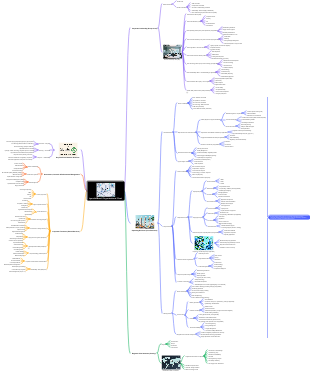
Overview
Purpose of the analysis
Clarify strategic intent and priorities
Translate statements into actionable themes
Identify alignment with markets, capabilities, and stakeholders
Core idea (given)
Improves safety, efficiency, and sustainability through technological innovation
Mission Statement Analysis
What a mission statement should answer
How value is delivered (capabilities/approach)
What makes it distinctive
Implied mission components in the given idea
Value delivered
Sustainability improvement
Likely customers/stakeholders (inferred)
Industrial operators and workers
Building owners and occupants
Aerospace and aviation stakeholders
Energy and process industries
Governments/regulators and communities
Strengths
Clear outcomes
Safety, efficiency, sustainability are concrete performance outcomes
Broad relevance across Honeywell’s portfolio
Industrial automation, aerospace, building technologies, energy transition solutions
Innovation as a unifying capability
Connects R&D, software, hardware, and services
Gaps / ambiguities
Scope and audience not explicit
Could specify industries, customers, or global communities served
Mechanism is high-level
“Technological innovation” could be clarified (software, automation, connected systems, AI, sensing)
Differentiation not explicit
Lacks mention of scale, reliability, domain expertise, integrated solutions, lifecycle services
Time horizon and priorities not stated
No signal of near-term execution vs long-term transformation
How to operationalize the mission
Strategic pillars mapping
Safety
Sensing and detection (gas, fire, industrial hazards)
Automation and control to reduce human exposure
Compliance and reliability engineering
Efficiency
Optimization (energy, throughput, maintenance)
Digitalization and analytics for asset performance
Process automation and workflow integration
Sustainability
Emissions monitoring and reporting
Energy efficiency in buildings/industry
Low-carbon technologies and safer materials/refrigerants
Innovation
R&D and product platforms
Software and connected ecosystems
Partnerships, acquisitions, and open innovation
Key stakeholders and promises
Customers
Reduced incidents, downtime, and operating costs
Employees
Safer workplaces and meaningful innovation work
Shareholders
Growth via differentiated technology and recurring services
Society
Environmental impact reduction and safer infrastructure
KPIs to track mission delivery
Safety
Incident rate reduction, safety system adoption, compliance pass rates
Efficiency
Energy saved, productivity gains, maintenance cost reduction, uptime improvement
Sustainability
CO₂e reduced/avoided, energy intensity improvements, circularity metrics
Innovation
R&D intensity, product vitality index, software ARR growth, patent output
Vision Statement Analysis
What a vision statement should answer
What future state is being created
How the organization will be perceived when successful
Implied vision themes in the given idea
A future where technology measurably improves
Operational efficiency outcomes
Environmental sustainability outcomes
Honeywell as an enabler of critical systems
Intelligent, connected, resilient infrastructure and industry
Strengths
Future-oriented and aspirational
Emphasizes progress through innovation
Societal relevance
Aligns with major global needs (safety, productivity, climate)
Gaps / opportunities to sharpen the vision
Lacks vivid end-state description
Could articulate “what the world looks like” with Honeywell’s impact
Missing distinct identity cues
Could highlight leadership in industrial digitalization, aerospace safety, smart buildings, energy transition
Does not communicate ambition level
Could specify “industry-leading,” “most trusted,” or “global standard-setter”
Vision-to-strategy translation
Portfolio alignment
Prioritize segments where safety/efficiency/sustainability are mission-critical
Technology roadmap alignment
Connected systems, autonomy, AI/ML analytics, edge-to-cloud architectures
Ecosystem positioning
Standards participation, interoperability, partnerships with OEMs and operators
Strategic Alignment (Safety, Efficiency, Sustainability, Innovation)
Safety alignment
Product and solution implications
Hazard detection, predictive safety analytics, fail-safe controls
Operating model implications
Safety-by-design engineering, rigorous testing and certification
Efficiency alignment
Product and solution implications
Industrial optimization, building management systems, supply chain and maintenance optimization
Business model implications
Outcome-based services, subscriptions, lifecycle support
Sustainability alignment
Product and solution implications
Energy optimization, emissions monitoring, low-carbon process support
Corporate sustainability implications
Internal operations decarbonization, responsible sourcing, circular product design
Innovation alignment
Capability implications
Talent, R&D governance, platform reuse, cybersecurity and data governance
Execution implications
Faster product cycles, customer co-development, scalable software deployment
Stakeholder Impact Analysis
Customers
Value propositions
Reduced risk and compliance burden
Lower OPEX via optimization and automation
Sustainability reporting and performance improvements
Customer success requirements
Implementation support, integration, training, measurable ROI
Employees
Cultural signals
Innovation mindset, accountability for safety, engineering excellence
Talent priorities
Software, AI, cybersecurity, systems engineering, sustainability expertise
Regulators and communities
Trust and legitimacy factors
Safety certifications, transparency, responsible AI and data practices
Societal outcomes
Safer infrastructure and reduced environmental impact
Investors
Business case
Resilient demand in essential industries
Recurring revenue expansion via software/services
Differentiated tech moats and switching costs
Competitive Positioning Implications
Differentiators suggested by the statements
Deep domain expertise in regulated, mission-critical environments
Integrated hardware-software systems
Reliability, safety engineering, and certification capabilities
Risks of generic positioning
Many firms claim “innovation + sustainability”
Need proof points, metrics, and industry-specific narratives
Ways to strengthen competitive clarity
Emphasize measurable outcomes and customer stories
Highlight platforms and ecosystems (interoperability, cybersecurity)
Focus on critical verticals where Honeywell has credibility
Consistency and Coherence Checks
Internal consistency
Do business units map clearly to safety/efficiency/sustainability?
Do investment priorities match the stated outcomes?
External coherence
Do customers perceive Honeywell as delivering these outcomes?
Are claims supported by data, certifications, and independent validation?
Messaging coherence
Simple “why” (outcomes) + credible “how” (technology + expertise)
Risks and Challenges
Execution risks
Innovation not translating into deployable solutions
Implementation complexity and integration with legacy systems
Reputational risks
Overstated sustainability claims (greenwashing)
Safety incidents undermining trust
Technology risks
Cybersecurity threats to connected systems
Data privacy and responsible AI concerns
Market risks
Cyclical capital spending in industrial markets
Regulatory shifts and compliance costs
Main risks cluster around delivery execution, trust/reputation, connected-tech security, and market/regulatory volatility.
Recommendations to Strengthen the Statements
Make audience explicit
Specify customers and industries served (e.g., aerospace, buildings, industrial, energy)
Increase specificity of “how”
Mention connected software, automation, sensing, analytics, and cybersecurity
Add differentiation
Emphasize reliability, mission-critical performance, and domain expertise
Add measurability
Commit to measurable outcomes (incident reduction, energy savings, emissions reductions)
Provide a vivid future-state vision
Describe the world enabled by Honeywell (safer workplaces, smarter infrastructure, lower emissions)
Example Refinements (optional wording directions)
Mission (more specific direction)
Deliver measurable safety, operational efficiency, and sustainability improvements for critical industries through connected automation, advanced sensing, and industrial software
Vision (more vivid future-state direction)
Be the most trusted technology partner powering safer, more efficient, and lower-carbon operations across the world’s essential industries
Practical Use Cases for Leaders
Strategy and planning
Guide portfolio prioritization and capital allocation
Product management
Frame roadmaps around safety/efficiency/sustainability outcomes
Sales and marketing
Build industry narratives and ROI cases aligned to the three outcomes
ESG and reporting
Tie sustainability claims to quantified customer and operational impacts
Culture and talent
Reinforce innovation, safety discipline, and outcome accountability
 Wondershare EdrawMind