
MindMap Gallery Pratt & Whitney Organizational Chart
Discover the dynamic structure of Pratt & Whitney, a leader in aerospace propulsion. At the headquarters, the organization is guided by Global Strategy, focusing on corporate planning and competitive analysis to set long-term priorities. The Research & Development (R&D) team drives innovation in new engine programs and advanced technologies, while Corporate Functions provide essential support in finance, HR, legal, communications, and IT. Pratt & Whitney's subsidiaries include Commercial Aviation Engines, which manages product delivery from manufacturing to customer support, and Military Aviation Engines, dedicated to executing defense programs with precision and quality assurance. Together, these divisions ensure excellence in both civil and military aviation solutions.
Edited at 2026-03-25 14:44:01中国のDouyin(抖音)ECサイトにおけるユーザープロファイル分析を深掘りします。本分析では、ユーザー属性を年齢層(Z世代、ミレニアル世代、中壮年層、シルバー層)や都市ランクに基づいて層別化し、消費能力と購買行動を多角的に考察します。興味タグや関心事(美容、グルメ、テクノロジー、ライフスタイル)を明らかにし、ユーザーのアクティブ時間帯や購買動機を分析します。また、コンテンツ嗜好やスタイル、コンバージョンパス、短動画の企画方向性についても詳述し、効果的なマーケティング戦略を探ります

天猫美妆の「価格が高い」という異議に対処し、商品の価値を再構築するための戦略をご紹介します。まず、顧客の心理的障壁を取り除くために、価格への共感とフレーミングを行います。次に、商品の機能的価値と情緒的価値を最大化し、具体的な効果を可視化します。プロモーションによるお得感を強調し、会員特典や期間限定の希少性も活用します。最後に、リスクを払拭し、購入の緊急性を促すことで成約を促進します。このアプローチにより、顧客は価格以上の価値を実感できるでしょう
淘宝(Taobao)の検索流量転化漏斗分析では、効果的なマーケティング戦略を探るための重要なステージを紹介します。まず、検索露出ステージでは、キーワードマッチングやユーザー属性タグの最適化が鍵となります。次に、クリックスルーステージでは、視覚的な要素や価格戦略がクリック率に影響します。続いて、検討・関心ステージでは、商品詳細ページの説得力やユーザーレビューが重要です。最終的なコンバージョンステージでは、決済プロセスの心理的障壁を取り除く工夫が求められます。また、最適化ノードとフィードバック構造により、データ分析を活用した継続的な改善が可能です
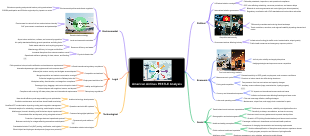
中国のDouyin(抖音)ECサイトにおけるユーザープロファイル分析を深掘りします。本分析では、ユーザー属性を年齢層(Z世代、ミレニアル世代、中壮年層、シルバー層)や都市ランクに基づいて層別化し、消費能力と購買行動を多角的に考察します。興味タグや関心事(美容、グルメ、テクノロジー、ライフスタイル)を明らかにし、ユーザーのアクティブ時間帯や購買動機を分析します。また、コンテンツ嗜好やスタイル、コンバージョンパス、短動画の企画方向性についても詳述し、効果的なマーケティング戦略を探ります
天猫美妆の「価格が高い」という異議に対処し、商品の価値を再構築するための戦略をご紹介します。まず、顧客の心理的障壁を取り除くために、価格への共感とフレーミングを行います。次に、商品の機能的価値と情緒的価値を最大化し、具体的な効果を可視化します。プロモーションによるお得感を強調し、会員特典や期間限定の希少性も活用します。最後に、リスクを払拭し、購入の緊急性を促すことで成約を促進します。このアプローチにより、顧客は価格以上の価値を実感できるでしょう
淘宝(Taobao)の検索流量転化漏斗分析では、効果的なマーケティング戦略を探るための重要なステージを紹介します。まず、検索露出ステージでは、キーワードマッチングやユーザー属性タグの最適化が鍵となります。次に、クリックスルーステージでは、視覚的な要素や価格戦略がクリック率に影響します。続いて、検討・関心ステージでは、商品詳細ページの説得力やユーザーレビューが重要です。最終的なコンバージョンステージでは、決済プロセスの心理的障壁を取り除く工夫が求められます。また、最適化ノードとフィードバック構造により、データ分析を活用した継続的な改善が可能です
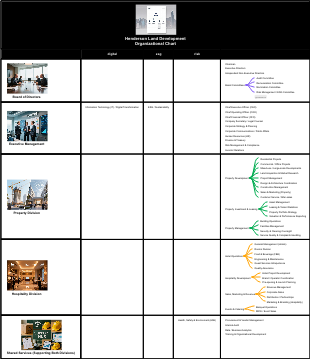
Marathon Petroleum Mission and Vision Statement Analysis
Overview
Context: U.S.-based downstream energy company (refining, logistics, fuels distribution)
Purpose: clarify strategic intent and test mission/vision alignment with operations
Key highlighted emphasis
Efficient refining operations
Stable energy supply
Mission Statement Analysis
Core intent
Deliver energy products through operational excellence in refining
Support reliable availability of fuels and related products
Key themes
Efficiency and optimization
Maximizing throughput and yield
Minimizing downtime and variability
Cost discipline and margin improvement
Reliability and stability of supply
Consistent product availability across markets
Resilience to disruptions (logistics, outages, demand swings)
Customer and market focus (implied)
Meeting demand specifications and quality requirements
Timely delivery and dependable service
Safety and compliance
Safe operations as prerequisite for sustained performance
Regulatory adherence to maintain continuity of operations
Stakeholder implications
Customers: reliable supply, consistent quality, competitive pricing
Employees: operational discipline, safety culture, continuous improvement
Investors: efficiency-driven profitability, risk managed via reliability
Communities and regulators: environmental controls, incident prevention, transparent compliance
The mission reads as an operating system—optimize assets, protect continuity, and deliver dependable products to key stakeholders.
Operational translation (what the mission implies in practice)
Refinery performance management
KPIs: utilization, energy intensity, unplanned downtime, yields, unit reliability
Supply chain and logistics execution
Crude sourcing, terminal operations, distribution scheduling
Maintenance and asset integrity
Predictive maintenance, turnarounds, reliability-centered strategies
Quality management
Product specs, blending optimization, lab and QA/QC systems
Vision Statement Analysis
Directional aspiration
Be recognized for operational leadership and dependable energy delivery
Sustain long-term competitiveness in a changing energy landscape
Future-facing elements (inferred)
Scaling efficiency as a strategic advantage
Strengthening resilience of supply networks
Maintaining relevance as energy systems evolve
What “stable energy supply” suggests for the vision
Robust infrastructure and redundancy
Strong risk management and contingency planning
Long-horizon investment in reliability and logistics capability
Alignment Between Mission and Vision
Reinforcing logic
Mission focuses on “how” (efficient refining operations)
Vision emphasizes “why/where” (stable, dependable energy supply and leadership)
Strategic coherence
Efficiency supports stability (fewer disruptions, better economics)
Stability reinforces market position (customer trust, contract reliability)
Potential gaps to watch
If “stability” is framed only as volume, environmental/transition expectations may be underweighted
Overemphasis on efficiency can miss innovation or portfolio evolution needs
Strengths of the Framing (Efficiency + Stability)
Clear operational focus: directly actionable for a refining-centric enterprise
Competitive differentiation: low-cost, high-reliability operations outperform across cycles
Risk reduction: reliability lowers incident risk and mitigates supply disruptions
Customer value clarity: dependability and consistent product quality are straightforward benefits
Limitations / Blind Spots
Energy transition readiness under-explicit
Limited signaling on low-carbon strategy, renewable fuels, decarbonization pathways
ESG and societal expectations not foregrounded
Environmental performance and community impact may appear secondary
Innovation beyond refining underemphasized
Digital, advanced analytics, new products, diversification not explicitly stated
Strategic Implications
For operations strategy
Prioritize high-reliability assets and debottlenecking
Enhance energy efficiency and process optimization programs
Invest in maintenance excellence and outage reduction
For supply stability strategy
Strengthen crude flexibility and supplier diversification
Improve logistics resilience (terminals, pipelines, marine/rail optionality)
Build contingency planning for extreme weather and geopolitical disruptions
For capital allocation
Balance short-cycle optimization with long-cycle resilience projects
Evaluate investments that improve both margin and reliability
For talent and culture
Continuous improvement mindset (Lean/Six Sigma, reliability culture)
Safety-first operations as a non-negotiable enabler of efficiency
Suggested Enhancements (if rewriting/strengthening mission & vision)
Expand reliability beyond supply volume
Include safety, quality, and resilience explicitly
Integrate sustainability without diluting operational focus
Mention emissions reduction, responsible operations, compliance leadership
Add innovation and adaptability language
Reflect modernization, digital transformation, evolving energy needs
Clarify stakeholder value
Customers (reliability), employees (safe workplace), communities (responsible operations), shareholders (disciplined returns)
Example “Refined” Statement Concepts (illustrative)
Mission concept
Operate safe, efficient, and reliable refining and logistics systems to deliver the energy products customers depend on
Vision concept
Lead in dependable energy supply through operational excellence, resilience, and responsible, lower-impact performance
Key Takeaways
Central focus: operational excellence in refining as the engine of dependable supply
Primary advantage: efficiency and reliability reinforce each other strategically
Primary risk: transition, ESG, and innovation priorities lack visibility unless explicitly incorporated