MindMap Gallery Air Liquide Mission and Vision Statement Analysis
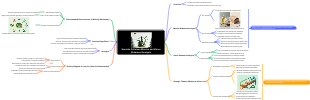
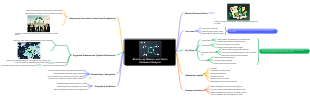
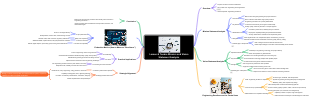
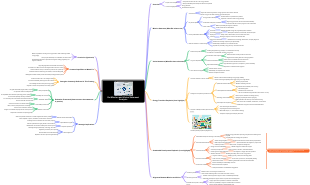
Discover how Air Liquide's mission and vision shape its strategic priorities and value creation. This analysis delves into the company's focus on innovative gas solutions that empower customers and society while positioning itself as a leader in the low-carbon energy transition. Key themes include the emphasis on R&D and digitalization, the solutions-oriented approach that integrates services with products, and a commitment to reliability and safety. The vision statement underscores decarbonization leadership and a portfolio shift towards low-carbon hydrogen and sustainability initiatives. Explore how Air Liquide’s strategic commitments align with its operations and investment choices, highlighting strengths, potential gaps, and the broader stakeholder landscape impacted by its initiatives.
Edited at 2026-03-25 14:46:08This strategic SWOT analysis explores how Aeon can navigate the competitive online landscape, highlighting strengths, weaknesses, opportunities, and threats. Strengths include strong brand recognition (trusted Japanese heritage, quality), omnichannel capabilities (stores + online + mall integration), customer loyalty programs (Aeon Card, points, member pricing), and physical footprint (extensive store network for pickup/returns). Weaknesses encompass digital maturity gaps (e-commerce penetration, app functionality, personalization vs. Amazon, Alibaba), cost structure challenges (store-heavy, real estate, labor), and supply chain complexity (fresh food, frozen logistics for online). Opportunities include enhancing e-commerce competitiveness (faster delivery, wider assortment, lower minimum order), leveraging data-driven strategies (purchase history, personalized offers, inventory optimization), expanding omnichannel integration (buy online pick up in store, ship from store), and private label growth (Topvalu, localized brands). Threats involve online-first players (Amazon, Alibaba, Sea Limited) with lower costs, wider selection, faster delivery, market dynamics (changing consumer behavior post-COVID, discount competitors), and regulatory risks (data privacy, cross-border e-commerce rules). Aeon can strengthen market position by investing in digital capabilities, leveraging store assets for omnichannel, and using customer data for personalization, while addressing cost structure and online competition.
This analysis explores how Aeon effectively tailors offerings to meet the diverse needs of family-oriented consumers through a comprehensive Segmentation, Targeting, and Positioning (STP) framework. Demographic segmentation examines family life stages (young families with babies, school-aged children, teenagers, empty nesters), household sizes (small vs. large), income levels (mass, premium), and parent age bands (millennials, Gen X). This identifies distinct consumer groups with different spending patterns. Geographic segmentation highlights store catchment types (urban, suburban, rural), community characteristics (density, income, competition), and local preferences (fresh food, halal, Japanese products). Psychographic segmentation delves into family values (health, safety, education, convenience), lifestyle orientations (busy professionals, home-centered, eco-conscious). Behavioral segmentation focuses on shopping missions (daily grocery, weekly stock-up, seasonal shopping), price sensitivity (value seekers, premium), channel preferences (in-store, online, pickup). Needs-based segmentation reveals core family needs related to value (good-better-best pricing), budget considerations (affordability, promotions, member pricing), safety (food quality, product recall), convenience (one-stop shopping, parking, store hours). Targeting prioritizes young families with school-aged children, budget-conscious households, and convenience-seeking shoppers. Positioning emphasizes Aeon as a family-friendly, value-for-money, one-stop destination with Japanese quality and local relevance. These insights enhance family shopping experiences through tailored assortments (kids’ products, school supplies), promotions (family bundles, weekend events), and services (nursing rooms, kids’ play areas).
This Kream Sneaker Consumption Scene Analysis Template aims to visualize purchasing and consumption journeys of sneakers, identifying key demand drivers and obstacles. User behavior within Kream includes searching, bidding, buying, selling, authentication, and community engagement. External influences include brand drops (Nike, Adidas), social media (Instagram, TikTok), influencer hype, and cultural trends. Target categories: limited editions, collaborations, retro releases, performance sneakers, and general releases. Timeframes: launch day, first week, first month, long-term (seasonal, yearly). Regions: North America, Europe, Asia (Korea, China, Japan). User segments: Collectors: value rarity, condition, completeness (box, accessories). KPIs: collection size, spend, authentication rate. Resellers: value profit margin, volume, turnover. KPIs: sell-through rate, average profit, listing frequency. Sneakerheads: value hype, trends, community validation. KPIs: purchase frequency, social engagement, wishlist adds. Casual trend followers: value style, convenience, price. KPIs: conversion rate, average order value, repeat purchases. Gift purchasers: value ease, presentation, brand trust. KPIs: gift message usage, return rate. Consumption journey: Awareness: social media, email, push notifications. Search: browse, filter, search by brand, model, size. Purchase: bid, buy now, payment, shipping. Authentication: inspection, verification, certification. Resale: list, price, sell, transfer. Sharing: review, unboxing, social post, community discussion. Key performance indicators: conversion rate, sell-through rate, average order value, customer lifetime value, authentication pass rate, return rate, Net Promoter Score. This framework helps understand sneaker trading dynamics, user motivations, and touchpoints for engagement and satisfaction.
This strategic SWOT analysis explores how Aeon can navigate the competitive online landscape, highlighting strengths, weaknesses, opportunities, and threats. Strengths include strong brand recognition (trusted Japanese heritage, quality), omnichannel capabilities (stores + online + mall integration), customer loyalty programs (Aeon Card, points, member pricing), and physical footprint (extensive store network for pickup/returns). Weaknesses encompass digital maturity gaps (e-commerce penetration, app functionality, personalization vs. Amazon, Alibaba), cost structure challenges (store-heavy, real estate, labor), and supply chain complexity (fresh food, frozen logistics for online). Opportunities include enhancing e-commerce competitiveness (faster delivery, wider assortment, lower minimum order), leveraging data-driven strategies (purchase history, personalized offers, inventory optimization), expanding omnichannel integration (buy online pick up in store, ship from store), and private label growth (Topvalu, localized brands). Threats involve online-first players (Amazon, Alibaba, Sea Limited) with lower costs, wider selection, faster delivery, market dynamics (changing consumer behavior post-COVID, discount competitors), and regulatory risks (data privacy, cross-border e-commerce rules). Aeon can strengthen market position by investing in digital capabilities, leveraging store assets for omnichannel, and using customer data for personalization, while addressing cost structure and online competition.
This analysis explores how Aeon effectively tailors offerings to meet the diverse needs of family-oriented consumers through a comprehensive Segmentation, Targeting, and Positioning (STP) framework. Demographic segmentation examines family life stages (young families with babies, school-aged children, teenagers, empty nesters), household sizes (small vs. large), income levels (mass, premium), and parent age bands (millennials, Gen X). This identifies distinct consumer groups with different spending patterns. Geographic segmentation highlights store catchment types (urban, suburban, rural), community characteristics (density, income, competition), and local preferences (fresh food, halal, Japanese products). Psychographic segmentation delves into family values (health, safety, education, convenience), lifestyle orientations (busy professionals, home-centered, eco-conscious). Behavioral segmentation focuses on shopping missions (daily grocery, weekly stock-up, seasonal shopping), price sensitivity (value seekers, premium), channel preferences (in-store, online, pickup). Needs-based segmentation reveals core family needs related to value (good-better-best pricing), budget considerations (affordability, promotions, member pricing), safety (food quality, product recall), convenience (one-stop shopping, parking, store hours). Targeting prioritizes young families with school-aged children, budget-conscious households, and convenience-seeking shoppers. Positioning emphasizes Aeon as a family-friendly, value-for-money, one-stop destination with Japanese quality and local relevance. These insights enhance family shopping experiences through tailored assortments (kids’ products, school supplies), promotions (family bundles, weekend events), and services (nursing rooms, kids’ play areas).
This Kream Sneaker Consumption Scene Analysis Template aims to visualize purchasing and consumption journeys of sneakers, identifying key demand drivers and obstacles. User behavior within Kream includes searching, bidding, buying, selling, authentication, and community engagement. External influences include brand drops (Nike, Adidas), social media (Instagram, TikTok), influencer hype, and cultural trends. Target categories: limited editions, collaborations, retro releases, performance sneakers, and general releases. Timeframes: launch day, first week, first month, long-term (seasonal, yearly). Regions: North America, Europe, Asia (Korea, China, Japan). User segments: Collectors: value rarity, condition, completeness (box, accessories). KPIs: collection size, spend, authentication rate. Resellers: value profit margin, volume, turnover. KPIs: sell-through rate, average profit, listing frequency. Sneakerheads: value hype, trends, community validation. KPIs: purchase frequency, social engagement, wishlist adds. Casual trend followers: value style, convenience, price. KPIs: conversion rate, average order value, repeat purchases. Gift purchasers: value ease, presentation, brand trust. KPIs: gift message usage, return rate. Consumption journey: Awareness: social media, email, push notifications. Search: browse, filter, search by brand, model, size. Purchase: bid, buy now, payment, shipping. Authentication: inspection, verification, certification. Resale: list, price, sell, transfer. Sharing: review, unboxing, social post, community discussion. Key performance indicators: conversion rate, sell-through rate, average order value, customer lifetime value, authentication pass rate, return rate, Net Promoter Score. This framework helps understand sneaker trading dynamics, user motivations, and touchpoints for engagement and satisfaction.
Air Liquide Mission and Vision Statement Analysis
Overview
Purpose of the analysis
Clarify what Air Liquide’s mission and vision communicate about strategy, priorities, and value creation
Interpret how stated commitments translate into operational and investment choices
Core highlight
Mission emphasis: innovative gas solutions that enable customers and society
Vision direction: leadership in low-carbon strategy and the energy transition
Company context (high-level)
Business scope implied by statements
Industrial gases and services (oxygen, nitrogen, hydrogen, specialty gases)
Healthcare gases and related services
Engineering and technology capabilities enabling large-scale gas production and distribution
Stakeholder landscape referenced or implied
Customers across industry, healthcare, electronics, energy, and mobility
Employees and scientific/engineering talent
Communities, regulators, and partners in decarbonization ecosystems
Investors focused on resilient growth and ESG outcomes
Mission statement analysis (innovative gas solutions)
Key themes
Innovation-led differentiation
Continuous R&D and technology deployment (process efficiency, purification, distribution)
Digitalization and advanced monitoring to improve reliability and performance
Solutions orientation (not just products)
Bundling gases with services (supply management, on-site plants, logistics)
Co-development with customers to meet specific process requirements
Reliability and safety as implicit pillars
High standards for operational safety and supply continuity
Compliance and risk management in critical applications (healthcare, electronics)
What “innovative gas solutions” typically signals
Competitive strategy
Differentiation through technology, scale, and application expertise
Long-term customer contracts and embedded infrastructure (high switching costs)
Value proposition
Productivity gains, process quality improvements, and cost optimization for customers
Enabling capabilities in hard-to-abate sectors (steel, chemicals, refining)
Strengths of the mission framing
Clear link between core competency (gases) and customer outcomes
Encourages a culture of engineering excellence and applied innovation
Flexible enough to cover multiple markets (industry, healthcare, electronics)
Potential gaps / ambiguities
Innovation scope not defined (incremental vs. breakthrough; product vs. business model)
Limited explicit mention of people, safety, or ethics (often critical in industrial operations)
Social impact stated indirectly unless paired with explicit sustainability commitments
Vision statement analysis (low-carbon strategy)
Key themes
Decarbonization leadership
Positioning as an enabler of the energy transition through gases (notably hydrogen)
Commitment to reducing emissions across operations and value chains
Portfolio shift and investment direction
Increased focus on low-carbon hydrogen, biomethane, carbon capture linkages, and electrification
Modernization of production assets (efficiency, renewable power sourcing)
Long-term systems perspective
Building ecosystems with partners (utilities, OEMs, governments, industrial clusters)
Scaling infrastructure (pipelines, hubs, liquefaction, storage, distribution)
What a “low-carbon strategy” typically includes
Operational decarbonization (Scope 1 & 2)
Energy efficiency upgrades in air separation units and hydrogen plants
Greater use of renewable electricity and low-carbon heat sources
Product/service decarbonization (customer enablement; Scope 3 influence)
Supplying low-carbon gases (low-carbon hydrogen, oxygen for efficient combustion)
Supporting customer process redesign to reduce emissions intensity
Technology pathways
Blue hydrogen (with carbon capture) vs. green hydrogen (electrolysis with renewables)
Carbon capture utilization/storage partnerships where relevant
Strengths of the vision framing
Aligns the company with macro drivers (net-zero policies, industrial decarbonization demand)
Signals strategic resilience and future relevance
Provides a narrative for capital allocation toward transition-related growth
Risks / challenges implied
Technology and cost curve uncertainty (electrolyzer costs, renewable availability, CCS maturity)
Policy and regulatory dependence (subsidies, carbon pricing, certification schemes)
Infrastructure constraints (grid capacity, hydrogen transport, permitting timelines)
Greenwashing scrutiny if targets, baselines, and progress metrics are not transparent
Strategic alignment: mission ↔ vision
How innovation supports low-carbon leadership
Innovation as the mechanism to decarbonize both Air Liquide operations and customer applications
Technology platforms (large-scale plants, purification, distribution networks) repurposed for low-carbon products
Coherence with core business model
Long-duration contracts and infrastructure investments match the long time horizons of energy transition projects
Industrial cluster approach supports scale economies in low-carbon hydrogen and CO₂ management
Tensions to manage
Balancing near-term profitability with long-payback transition investments
Managing legacy asset emissions while scaling low-carbon alternatives
Ensuring innovation does not compromise safety or reliability
Stakeholder impact interpretation
Customers
Promise of improved performance, reliability, and decarbonization options
Increased collaboration on emissions reduction roadmaps and technology adoption
Employees
Demand for advanced engineering, digital, and project execution capabilities
Need for safety culture reinforcement as new technologies scale (hydrogen handling, high-pressure systems)
Communities and society
Potential benefits: reduced industrial emissions, cleaner mobility and energy systems
Concerns: industrial siting, permitting, water use (electrolysis), and local environmental impacts
Investors
Framing supports growth narrative tied to transition markets
Expectation of measurable targets, disciplined capital allocation, and risk management
Competitive positioning implications
Differentiators suggested
Deep expertise in industrial gases plus scale infrastructure and engineering execution
Ability to provide integrated solutions (supply + services + decarbonization enablement)
Credibility in regulated/critical sectors (healthcare, electronics) enhancing trust
Market opportunities indicated
Low-carbon hydrogen for industry, refining, chemicals, and heavy mobility
Electronics and semiconductor gases requiring ultra-high purity and reliability
Healthcare growth with medical oxygen and homecare-related services
Competitive threats to consider
New entrants and utilities in green hydrogen and renewables integration
Regional policy differences affecting competitiveness
Commodity price volatility (power costs) impacting margins
Practical indicators to validate the statements (what to look for)
Innovation proof points
R&D spend trends and patent activity
New technology deployments (digital plant optimization, advanced separation processes)
Time-to-scale from pilot to commercial projects
Low-carbon progress indicators
Public emissions targets with clear baselines and scopes
Share of capex allocated to low-carbon projects
Volume of low-carbon hydrogen produced/supplied and contracted capacity
Renewable electricity sourcing share and energy intensity reductions
Governance and accountability
Board/management incentives tied to climate and safety outcomes
Transparent reporting aligned with recognized standards
Third-party assurance for key sustainability metrics
Validate “innovation” via R&D and deployments; validate “low-carbon leadership” via targets, capex mix, volumes, and assured reporting.
SWOT-style synthesis (from mission/vision lens)
Strengths
Strong fit between core capabilities (gases) and decarbonization needs
Innovation-driven culture supports differentiation and long-term contracts
Infrastructure and execution experience enable scaling
Weaknesses
Energy-intensive operations make decarbonization complex and capital-intensive
Mission wording may underemphasize safety/people unless explicitly addressed elsewhere
Opportunities
Rapid growth in low-carbon hydrogen ecosystems and industrial clusters
Customer demand for decarbonization solutions and certified low-carbon products
Digital optimization to improve efficiency and reduce emissions
Threats
Policy shifts, permitting delays, and infrastructure bottlenecks
Technology competition and cost pressures
Reputation risk if progress lags behind commitments
Recommendations (to strengthen clarity and credibility)
Make mission more explicit on execution pillars
Add or emphasize safety, reliability, and customer partnership alongside innovation
Define “low-carbon strategy” with measurable commitments
Clarify timelines, scopes, interim milestones, and verification methods
Connect innovation roadmap to decarbonization outcomes
Publish examples linking specific technologies/projects to quantified emissions reductions
Reinforce stakeholder value narrative
Explain how strategy creates shared value: customer performance + societal emissions cuts + sustainable returns
Conclusion
Integrated interpretation
Air Liquide’s mission centers on delivering innovative gas solutions as a core competency and customer value driver
Its vision positions the company to lead in the low-carbon transition, using innovation, scale, and partnerships to decarbonize industry and energy systems
Key takeaway
The statements are strategically coherent; credibility depends on transparent targets, measurable progress, and consistent execution across safety, reliability, and climate outcomes