MindMap Gallery Cristiano RonaldoA Comprehensive Biography
Cristiano Ronaldo dos Santos Aveiro is one of the most iconic and enduring footballers in history. Known for his extraordinary athleticism, relentless work ethic, and goal‑scoring prowess, Ronaldo has shattered records across Europe and beyond. This biography traces his journey from humble beginnings in Madeira to global superstardom. Early Life & Sporting Lisbon (1985–2003) : Born in Funchal, Madeira, Ronaldo joined Sporting CP’s youth academy at age 12. He made his first‑team debut in 2002. His dazzling performance against Manchester United in a friendly (2003) caught Sir Alex Ferguson’s eye, leading to a swift transfer. Manchester United (2003–2009) : Ronaldo developed from a flashy winger into a prolific forward. He won three Premier League titles, one FA Cup, two League Cups, and the 2008 UEFA Champions League. He scored 42 goals in the 2007‑08 season and won his first Ballon d’Or in 2008. Real Madrid Era (2009–2018) : A world‑record €94 million transfer ushered in his most prolific period. Ronaldo became Real Madrid’s all‑time leading scorer (450 goals in 438 games). He won four Champions League titles (including three consecutive from 2016‑2018), two La Liga titles, and four Ballon d’Or awards. His legendary “hat-trick” against Atlético Madrid in the 2017 semi‑final is iconic. Juventus, Manchester United Return & Al‑Nassr (2018–Present) : Ronaldo won two Serie A titles with Juventus (2018‑2020). He returned to Manchester United in 2021 but had a controversial second stint. In 2023, he joined Saudi Arabian club Al‑Nassr, where he continues to break goal‑scoring records. He holds the record for most international goals (over 120) and most UEFA Champions League goals (over 140). Ronaldo has won five Ballon d’Or awards and remains a global brand icon.
Edited at 2026-04-30 03:11:40The UEFA Champions League is the most prestigious club football competition in the world, featuring Europe’s top domestic league finishers. First held in 1955 as the European Cup, it was rebranded to the Champions League in 1992. The tournament is organized annually by UEFA and runs from late June to May of the following year. Format Evolution: The original format was a straight knockout tournament for league champions only. In 1992, a group stage was introduced, and from 1997–98, runners‑up from major leagues were included. The modern format (2024–25 onward) features 36 teams in a single league phase (the “Swiss system”), replacing the traditional group stage. Each team plays eight matches against eight different opponents. The top eight advance directly to the round of 16, while teams placed 9th to 24th enter a two‑leg knockout playoff. Most Successful Clubs: Real Madrid holds the record for most titles (14), followed by AC Milan (7), Liverpool and Bayern Munich (6 each), and Barcelona (5). Madrid’s dominance includes three consecutive titles from 2016 to 2018. Legendary Performances: The tournament has produced iconic moments, including Liverpool’s “Miracle of Istanbul” (2005), Manchester United’s last‑minute comeback in 1999, and Real Madrid’s “Decimocuarta” (14th title) in 2022. Lionel Messi and Cristiano Ronaldo share the record for most goals in the competition’s history (over 140 each). Global Impact: The Champions League final is the world’s most‑watched annual club sporting event, reaching an audience of over 400 million. Its anthem, played before each match, has become a symbol of elite European football. The tournament continues to evolve, with financial fair play regulations and VAR shaping modern competition.
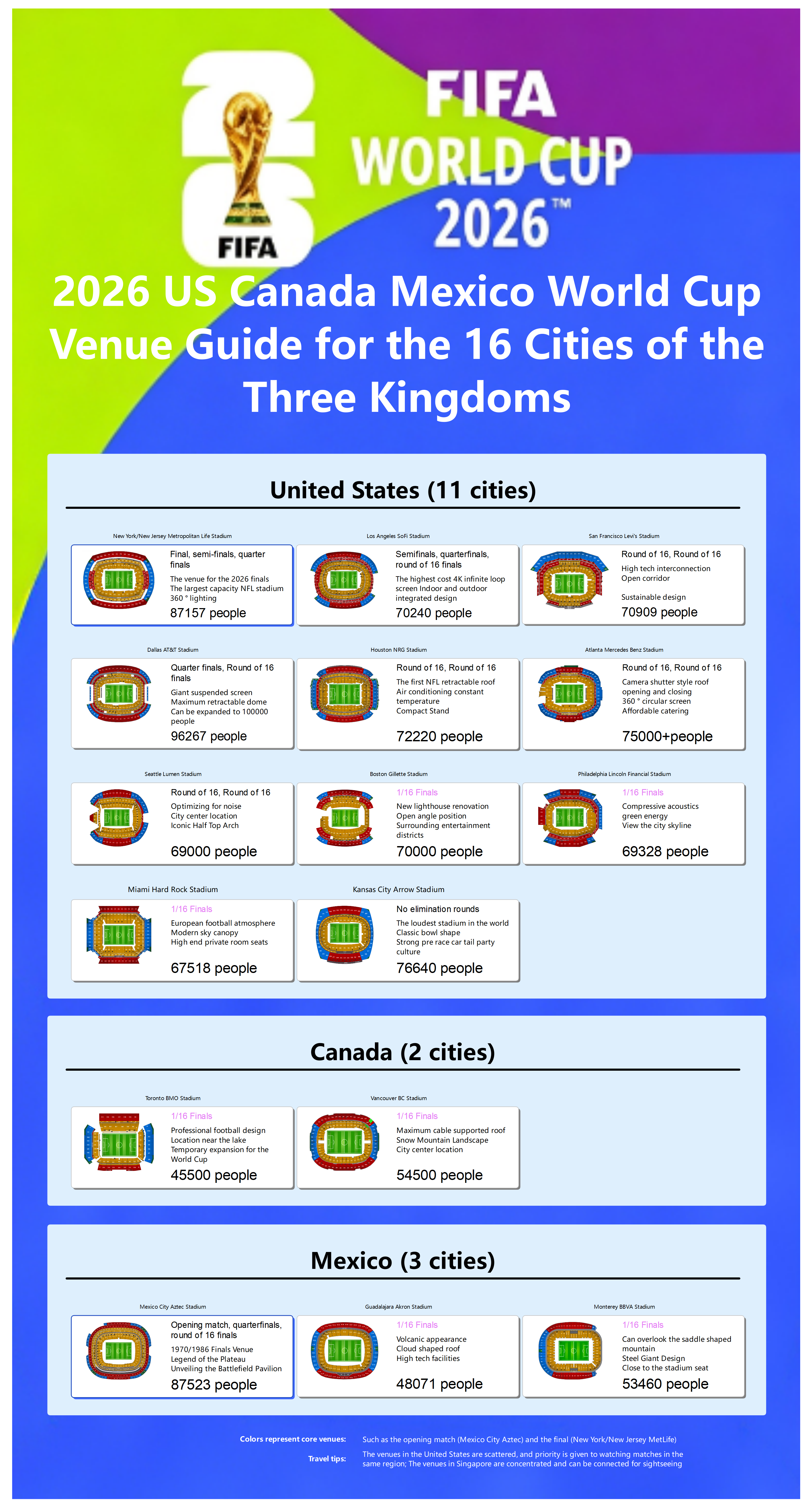
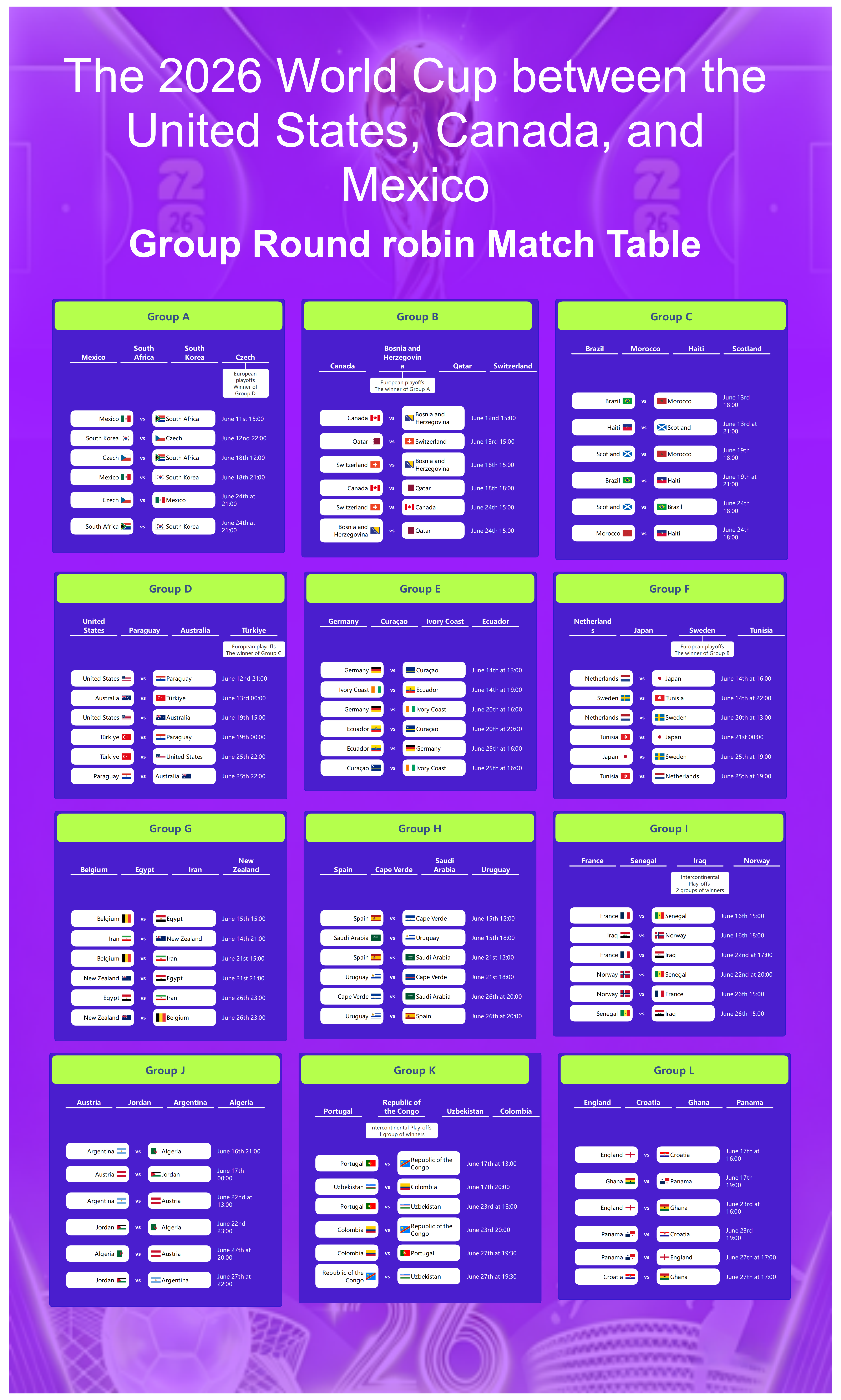
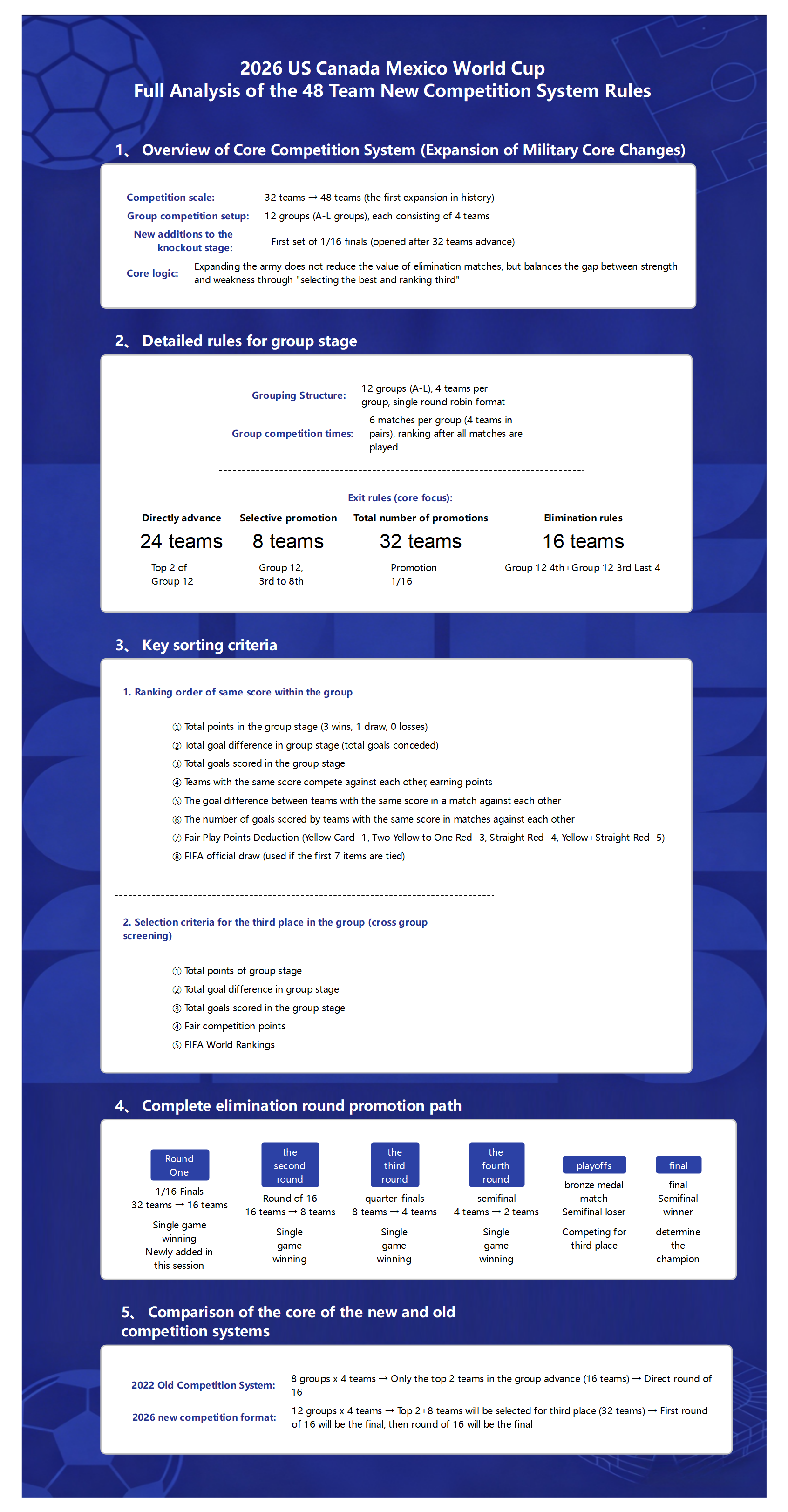
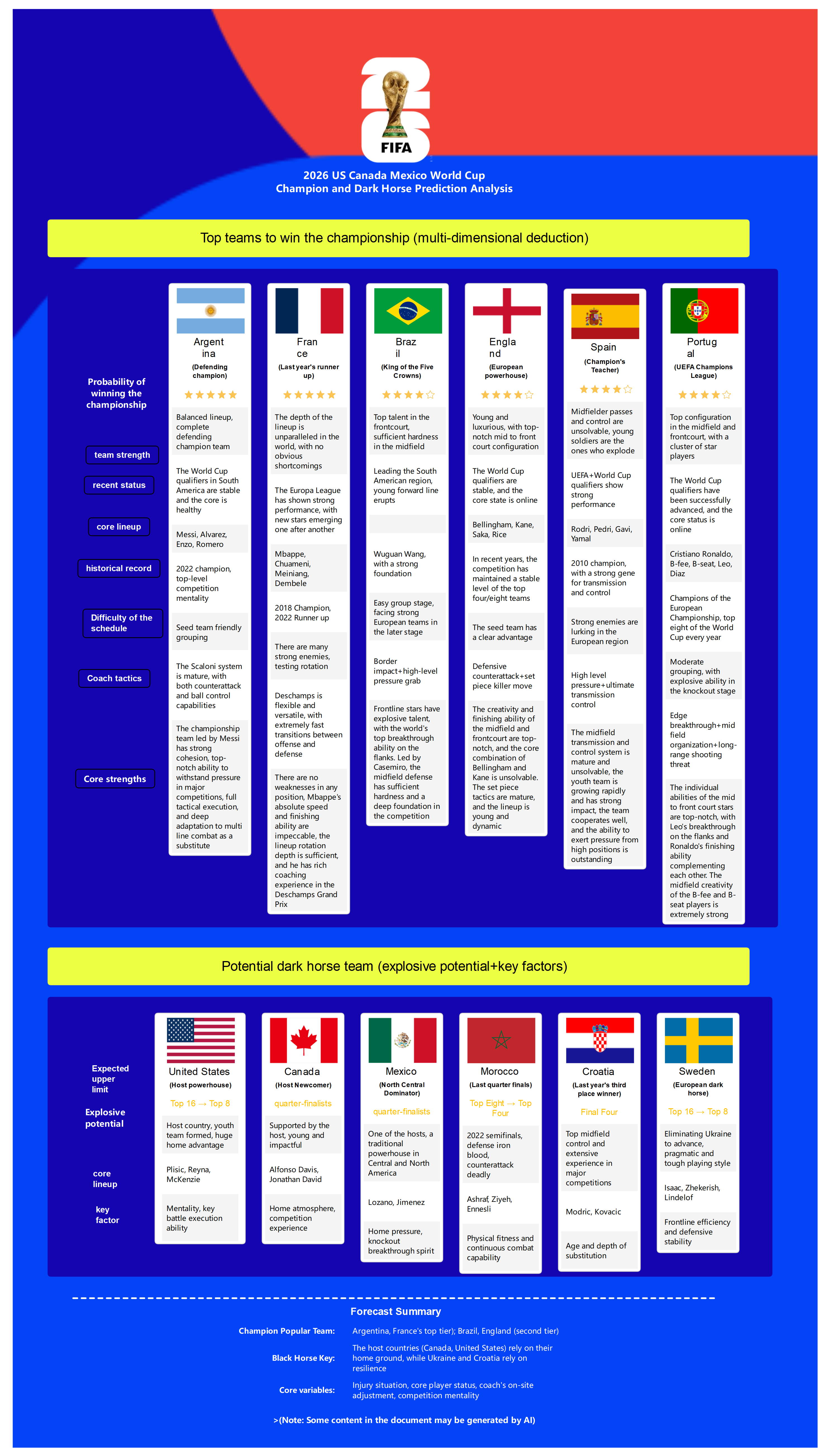
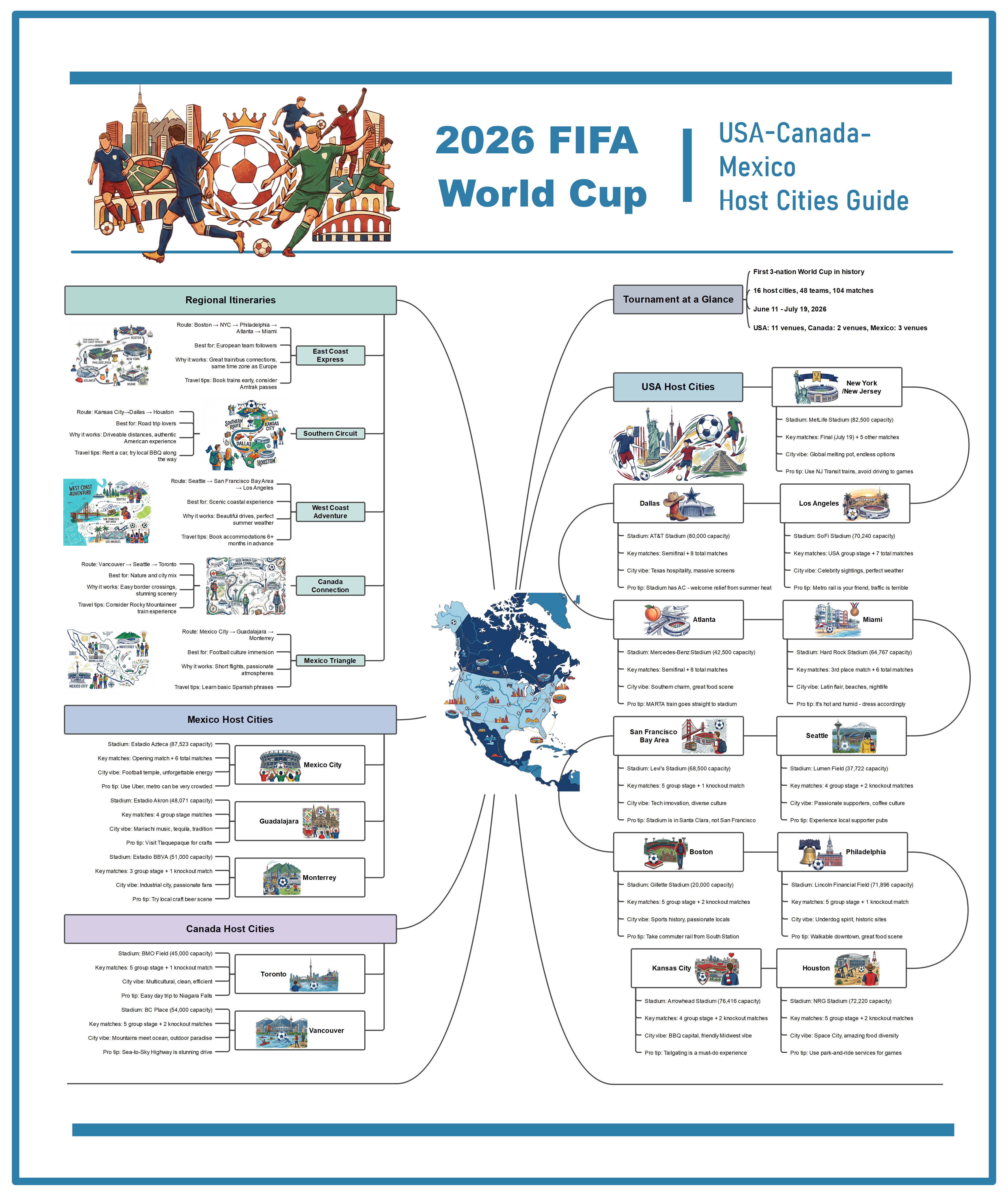
The 2026 FIFA World Cup will feature an expanded 48‑team format, with teams divided into 12 groups of four. The group stage schedule is organized into Groups A through L, with the top two from each group, along with the eight best third‑placed teams, advancing to the knockout stage. This overview focuses on the middle block of the draw: Groups E through K. Group E is expected to include a strong European seed alongside competitive sides from Africa and Asia, promising tightly contested matches. Group F will likely feature a South American heavyweight and a CONCACAF host (USA, Canada, or Mexico), adding regional flavor. Group G often houses a defending champion or top‑ranked UEFA nation, creating immediate drama. Group H typically balances European powerhouses with emerging nations from Oceania or Africa. Group I may spotlight a dark horse from Asia or South America, while Group J could reunite historic rivals from Europe and CONMEBOL. Group K is positioned as a potential “group of death,” with three evenly matched teams fighting for two direct spots. Matches will be played across 16 host cities in the United States, Canada, and Mexico. Each team plays three group‑stage matches. The schedule is designed to maximize prime‑time viewership across multiple time zones, with staggered kickoff times. The 2026 edition marks the first three‑nation co‑hosting of the tournament, and the group stage will set the stage for a historic, wide‑open race to the final.
Lionel Messi, widely regarded as one of the greatest footballers of all time, has enjoyed a career defined by record-breaking achievements, sublime skill, and unwavering consistency. This timeline traces his journey from a boy with growth hormone deficiency to a World Cup-winning captain. Early Years & Barcelona Debut (2000–2008) : Messi joined Barcelona’s famed La Masia academy at age 13. He made his first-team debut in 2004 at 17. His breakout came in 2006–07, scoring a hat-trick against Real Madrid (El Clásico) and replicating Diego Maradona’s “Hand of God” goal. By 2008, he had helped Barcelona win a domestic double and Olympic gold with Argentina. Peak Barcelona Era (2009–2015) : Under Pep Guardiola, Messi won six La Liga titles and three UEFA Champions Leagues (2009, 2011, 2015). He scored a record 91 goals in a calendar year (2012) and won five Ballon d’Or awards during this period. His partnership with Xavi and Iniesta became legendary. Post-Pep & National Team Heartbreak (2016–2020) : Messi continued to dominate domestically but faced near-misses with Argentina, losing three consecutive major finals (2014 World Cup, 2015 and 2016 Copa América). He briefly retired from international duty in 2016 before reversing his decision. Paris Saint-Germain & World Cup Glory (2021–2023) : Forced to leave Barcelona due to financial constraints, Messi joined PSG, winning two Ligue 1 titles. In 2022, he led Argentina to World Cup triumph in Qatar, scoring twice in the final and finally securing the elusive trophy. He won a record-extending seventh (later eighth) Ballon d’Or. Inter Miami & Legacy (2023–Present) : Messi joined MLS side Inter Miami in 2023, winning the Leagues Cup and revitalizing American soccer interest. His career totals include over 800 senior goals and 45+ major trophies.
The UEFA Champions League is the most prestigious club football competition in the world, featuring Europe’s top domestic league finishers. First held in 1955 as the European Cup, it was rebranded to the Champions League in 1992. The tournament is organized annually by UEFA and runs from late June to May of the following year. Format Evolution: The original format was a straight knockout tournament for league champions only. In 1992, a group stage was introduced, and from 1997–98, runners‑up from major leagues were included. The modern format (2024–25 onward) features 36 teams in a single league phase (the “Swiss system”), replacing the traditional group stage. Each team plays eight matches against eight different opponents. The top eight advance directly to the round of 16, while teams placed 9th to 24th enter a two‑leg knockout playoff. Most Successful Clubs: Real Madrid holds the record for most titles (14), followed by AC Milan (7), Liverpool and Bayern Munich (6 each), and Barcelona (5). Madrid’s dominance includes three consecutive titles from 2016 to 2018. Legendary Performances: The tournament has produced iconic moments, including Liverpool’s “Miracle of Istanbul” (2005), Manchester United’s last‑minute comeback in 1999, and Real Madrid’s “Decimocuarta” (14th title) in 2022. Lionel Messi and Cristiano Ronaldo share the record for most goals in the competition’s history (over 140 each). Global Impact: The Champions League final is the world’s most‑watched annual club sporting event, reaching an audience of over 400 million. Its anthem, played before each match, has become a symbol of elite European football. The tournament continues to evolve, with financial fair play regulations and VAR shaping modern competition.
The 2026 FIFA World Cup will feature an expanded 48‑team format, with teams divided into 12 groups of four. The group stage schedule is organized into Groups A through L, with the top two from each group, along with the eight best third‑placed teams, advancing to the knockout stage. This overview focuses on the middle block of the draw: Groups E through K. Group E is expected to include a strong European seed alongside competitive sides from Africa and Asia, promising tightly contested matches. Group F will likely feature a South American heavyweight and a CONCACAF host (USA, Canada, or Mexico), adding regional flavor. Group G often houses a defending champion or top‑ranked UEFA nation, creating immediate drama. Group H typically balances European powerhouses with emerging nations from Oceania or Africa. Group I may spotlight a dark horse from Asia or South America, while Group J could reunite historic rivals from Europe and CONMEBOL. Group K is positioned as a potential “group of death,” with three evenly matched teams fighting for two direct spots. Matches will be played across 16 host cities in the United States, Canada, and Mexico. Each team plays three group‑stage matches. The schedule is designed to maximize prime‑time viewership across multiple time zones, with staggered kickoff times. The 2026 edition marks the first three‑nation co‑hosting of the tournament, and the group stage will set the stage for a historic, wide‑open race to the final.
Lionel Messi, widely regarded as one of the greatest footballers of all time, has enjoyed a career defined by record-breaking achievements, sublime skill, and unwavering consistency. This timeline traces his journey from a boy with growth hormone deficiency to a World Cup-winning captain. Early Years & Barcelona Debut (2000–2008) : Messi joined Barcelona’s famed La Masia academy at age 13. He made his first-team debut in 2004 at 17. His breakout came in 2006–07, scoring a hat-trick against Real Madrid (El Clásico) and replicating Diego Maradona’s “Hand of God” goal. By 2008, he had helped Barcelona win a domestic double and Olympic gold with Argentina. Peak Barcelona Era (2009–2015) : Under Pep Guardiola, Messi won six La Liga titles and three UEFA Champions Leagues (2009, 2011, 2015). He scored a record 91 goals in a calendar year (2012) and won five Ballon d’Or awards during this period. His partnership with Xavi and Iniesta became legendary. Post-Pep & National Team Heartbreak (2016–2020) : Messi continued to dominate domestically but faced near-misses with Argentina, losing three consecutive major finals (2014 World Cup, 2015 and 2016 Copa América). He briefly retired from international duty in 2016 before reversing his decision. Paris Saint-Germain & World Cup Glory (2021–2023) : Forced to leave Barcelona due to financial constraints, Messi joined PSG, winning two Ligue 1 titles. In 2022, he led Argentina to World Cup triumph in Qatar, scoring twice in the final and finally securing the elusive trophy. He won a record-extending seventh (later eighth) Ballon d’Or. Inter Miami & Legacy (2023–Present) : Messi joined MLS side Inter Miami in 2023, winning the Leagues Cup and revitalizing American soccer interest. His career totals include over 800 senior goals and 45+ major trophies.
Group A
Match 1
Jun 11, 15:00 EDT
Mexico
VS
South Africa
Venue Estadio Azteca, Mexico City
Match 2
Jun 11, 22:00 EDT
South Korea
VS
Czechia
Venue Estadio Akron, Guadalajara
Match 3
Jun 18, 12:00 EDT
Czechia
VS
South Africa
Venue Mercedes-Benz Stadium, Atlanta
Match 4
Jun 18, 21:00 EDT
Mexico
VS
South Korea
Venue Estadio Akron, Guadalajara
Match 5
Jun 24, 21:00 EDT
Czechia
VS
Mexico
Venue Estadio Azteca, Mexico City
Match 6
Jun 24, 21:00 EDT
South Africa
VS
South Korea
Venue Estadio BBVA, Monterrey
Group B
Match 1
Jun 12, 15:00 EDT
Canada
VS
Bosnia and Herzegovina
Venue BMO Field, Toronto
Match 2
Jun 13, 15:00 EDT
Qatar
VS
Switzerland
Venue Levi's Stadium, San Francisco
Match 3
Jun 18, 15:00 EDT
Switzerland
VS
Bosnia and Herzegovina
Venue SoFi Stadium, Los Angeles
Match 4
Jun 18, 18:00 EDT
Canada
VS
Qatar
Venue BC Place, Vancouver
Match 5
Jun 24, 15:00 EDT
Switzerland
VS
Canada
Venue BC Place, Vancouver
Match 6
Jun 24, 15:00 EDT
Bosnia and Herzegovina
VS
Qatar
Venue Lumen Field, Seattle
Group C
Match 1
Jun 13, 18:00 EDT
Brazil
VS
Morocco
Venue MetLife Stadium, New York/New Jersey
Match 2
Jun 13, 21:00 EDT
Haiti
VS
Scotland
Venue Gillette Stadium, Boston
Match 3
Jun 19, 18:00 EDT
Scotland
VS
Morocco
Venue Lincoln Financial Field, Philadelphia
Match 4
Jun 19, 21:00 EDT
Brazil
VS
Haiti
Venue Gillette Stadium, Foxborough
Match 5
Jun 24, 18:00 EDT
Scotland
VS
Brazil
Venue Hard Rock Stadium, Miami Gardens
Match 6
Jun 24, 18:00 EDT
Morocco
VS
Haiti
Venue Mercedes-Benz Stadium, Atlanta
Group D
Match 1
Jun 12, 21:00 EDT
United States
VS
Paraguay
Venue SoFi Stadium, Los Angeles
Match 2
Jun 13, 00:00 EDT
Australia
VS
Türkiye
Venue BC Place, Vancouver
Match 3
Jun 19, 00:00 EDT
Türkiye
VS
Paraguay
Venue Levi's Stadium, Santa Clara
Match 4
Jun 19, 15:00 EDT
United States
VS
Australia
Venue Lumen Field, Seattle
Match 5
Jun 25, 22:00 EDT
Türkiye
VS
United States
Venue SoFi Stadium, Los Angeles
Match 6
Jun 25, 22:00 EDT
Paraguay
VS
Australia
Venue Levi's Stadium, Santa Clara
Group E
Match 1
Jun 14, 13:00 EDT
Germany
VS
Curaçao
Venue NRG Stadium, Houston
Match 2
Jun 14, 19:00 EDT
Ivory Coast
VS
Ecuador
Venue Lincoln Financial Field, Philadelphia
Match 3
Jun 20, 16:00 EDT
Germany
VS
Ivory Coast
Venue BMO Field, Toronto
Match 4
Jun 20, 20:00 EDT
Ecuador
VS
Curaçao
Venue Arrowhead Stadium, Kansas City
Match 5
Jun 25, 16:00 EDT
Ecuador
VS
Germany
Venue MetLife Stadium, East Rutherford
Match 6
Jun 25, 16:00 EDT
Curaçao
VS
Ivory Coast
Venue Lincoln Financial Field, Philadelphia
Group F
Match 1
Jun 14, 16:00 EDT
Netherlands
VS
Japan
Venue AT&T Stadium, Dallas
Match 2
Jun 14, 22:00 EDT
Sweden
VS
Tunisia
Venue Estadio BBVA, Monterrey
Match 3
Jun 20, 13:00 EDT
Netherlands
VS
Sweden
Venue NRG Stadium, Houston
Match 4
Jun 20, 00:00 EDT
Tunisia
VS
Japan
Venue Estadio BBVA, Monterrey
Match 5
Jun 25, 19:00 EDT
Japan
VS
Sweden
Venue AT&T Stadium, Dallas
Match 6
Jun 25, 19:00 EDT
Tunisia
VS
Netherlands
Venue Arrowhead Stadium, Kansas City
Group G
Match 1
Jun 15, 21:00 EDT
Iran
VS
New Zealand
Venue SoFi Stadium, Los Angeles
Match 2
Jun 15, 15:00 EDT
Belgium
VS
Egypt
Venue Lumen Field, Seattle
Match 3
Jun 21, 15:00 EDT
Belgium
VS
Iran
Venue SoFi Stadium, Los Angeles
Match 4
Jun 21, 21:00 EDT
New Zealand
VS
Egypt
Venue BC Place, Vancouver
Match 5
Jun 26, 23:00 EDT
Egypt
VS
Iran
Venue Lumen Field, Seattle
Match 6
Jun 26, 23:00 EDT
New Zealand
VS
Belgium
Venue BC Place, Vancouver
Group H
Match 1
Jun 15, 12:00 EDT
Spain
VS
Cape Verde
Venue Mercedes-Benz Stadium, Atlanta
Match 2
Jun 15, 18:00 EDT
Saudi Arabia
VS
Uruguay
Venue Hard Rock Stadium, Miami
Match 3
Jun 21, 12:00 EDT
Spain
VS
Saudi Arabia
Venue Mercedes-Benz Stadium, Atlanta
Match 4
Jun 21, 18:00 EDT
Uruguay
VS
Cape Verde
Venue Hard Rock Stadium, Miami
Match 5
Jun 26, 20:00 EDT
Cape Verde
VS
Saudi Arabia
Venue NRG Stadium, Houston
Match 6
Jun 26, 20:00 EDT
Uruguay
VS
Spain
Venue Estadio Akron, Guadalajara
Group I
Match 1
Jun 16, 15:00 EDT
France
VS
Senegal
Venue MetLife Stadium, New York/New Jersey
Match 2
Jun 16, 18:00 EDT
Iraq
VS
Norway
Venue Gillette Stadium, Boston
Match 3
Jun 22, 17:00 EDT
France
VS
Iraq
Venue Lincoln Financial Field, Philadelphia
Match 4
Jun 22, 20:00 EDT
Norway
VS
Senegal
Venue MetLife Stadium, East Rutherford
Match 5
Jun 26, 15:00 EDT
Norway
VS
France
Venue Gillette Stadium, Boston
Match 6
Jun 26, 15:00 EDT
Senegal
VS
Iraq
Venue BMO Field, Toronto
Group J
Match 1
Jun 16, 21:00 EDT
Argentina
VS
Algeria
Venue Arrowhead Stadium, Kansas City
Match 2
Jun 16, 00:00 EDT
Austria
VS
Jordan
Venue Levi's Stadium, San Francisco
Match 3
Jun 22, 13:00 EDT
Argentina
VS
Austria
Venue AT&T Stadium, Dallas
Match 4
Jun 22, 23:00 EDT
Jordan
VS
Algeria
Venue Levi's Stadium, Santa Clara
Match 5
Jun 27, 22:00 EDT
Algeria
VS
Austria
Venue Arrowhead Stadium, Kansas City
Match 6
Jun 27, 22:00 EDT
Jordan
VS
Argentina
Venue AT&T Stadium, Dallas
Group K
Match 1
Jun 17, 13:00 EDT
Portugal
VS
Congo DR
Venue NRG Stadium, Houston
Match 2
Jun 17, 22:00 EDT
Uzbekistan
VS
Colombia
Venue Estadio Azteca, Mexico City
Match 3
Jun 23, 13:00 EDT
Portugal
VS
Uzbekistan
Venue NRG Stadium, Houston
Match 4
Jun 23, 22:00 EDT
Colombia
VS
Congo DR
Venue Estadio Akron, Guadalajara
Match 5
Jun 27, 19:30 EDT
Colombia
VS
Portugal
Venue Hard Rock Stadium, Miami Gardens
Match 6
Jun 27, 19:30 EDT
Congo DR
VS
Uzbekistan
Venue Mercedes-Benz Stadium, Atlanta
Group L
Match 1
Jun 17, 16:00 EDT
England
VS
Croatia
Venue AT&T Stadium, Dallas
Match 2
Jun 17, 19:00 EDT
Ghana
VS
Panama
Venue BMO Field, Toronto
Match 3
Jun 23, 16:00 EDT
England
VS
Ghana
Venue Gillette Stadium, Boston
Match 4
Jun 23, 19:00 EDT
Panama
VS
Croatia
Venue BMO Field, Toronto
Match 5
Jun 27, 17:00 EDT
Panama
VS
England
Venue MetLife Stadium, East Rutherford
Match 6
Jun 27, 17:00 EDT
Croatia
VS
Ghana
Venue Lincoln Financial Field, Philadelphia
Note: All times are in Eastern Daylight Time (EDT). The specific time is subject to the official website announcement.
2026 FIFA World Cup Group Stage Schedule