MindMap Gallery Lionel Messi Career Timeline
Lionel Messi, widely regarded as one of the greatest footballers of all time, has enjoyed a career defined by record-breaking achievements, sublime skill, and unwavering consistency. This timeline traces his journey from a boy with growth hormone deficiency to a World Cup-winning captain. Early Years & Barcelona Debut (2000–2008) : Messi joined Barcelona’s famed La Masia academy at age 13. He made his first-team debut in 2004 at 17. His breakout came in 2006–07, scoring a hat-trick against Real Madrid (El Clásico) and replicating Diego Maradona’s “Hand of God” goal. By 2008, he had helped Barcelona win a domestic double and Olympic gold with Argentina. Peak Barcelona Era (2009–2015) : Under Pep Guardiola, Messi won six La Liga titles and three UEFA Champions Leagues (2009, 2011, 2015). He scored a record 91 goals in a calendar year (2012) and won five Ballon d’Or awards during this period. His partnership with Xavi and Iniesta became legendary. Post-Pep & National Team Heartbreak (2016–2020) : Messi continued to dominate domestically but faced near-misses with Argentina, losing three consecutive major finals (2014 World Cup, 2015 and 2016 Copa América). He briefly retired from international duty in 2016 before reversing his decision. Paris Saint-Germain & World Cup Glory (2021–2023) : Forced to leave Barcelona due to financial constraints, Messi joined PSG, winning two Ligue 1 titles. In 2022, he led Argentina to World Cup triumph in Qatar, scoring twice in the final and finally securing the elusive trophy. He won a record-extending seventh (later eighth) Ballon d’Or. Inter Miami & Legacy (2023–Present) : Messi joined MLS side Inter Miami in 2023, winning the Leagues Cup and revitalizing American soccer interest. His career totals include over 800 senior goals and 45+ major trophies.
Edited at 2026-04-30 03:12:30The UEFA Champions League is the most prestigious club football competition in the world, featuring Europe’s top domestic league finishers. First held in 1955 as the European Cup, it was rebranded to the Champions League in 1992. The tournament is organized annually by UEFA and runs from late June to May of the following year. Format Evolution: The original format was a straight knockout tournament for league champions only. In 1992, a group stage was introduced, and from 1997–98, runners‑up from major leagues were included. The modern format (2024–25 onward) features 36 teams in a single league phase (the “Swiss system”), replacing the traditional group stage. Each team plays eight matches against eight different opponents. The top eight advance directly to the round of 16, while teams placed 9th to 24th enter a two‑leg knockout playoff. Most Successful Clubs: Real Madrid holds the record for most titles (14), followed by AC Milan (7), Liverpool and Bayern Munich (6 each), and Barcelona (5). Madrid’s dominance includes three consecutive titles from 2016 to 2018. Legendary Performances: The tournament has produced iconic moments, including Liverpool’s “Miracle of Istanbul” (2005), Manchester United’s last‑minute comeback in 1999, and Real Madrid’s “Decimocuarta” (14th title) in 2022. Lionel Messi and Cristiano Ronaldo share the record for most goals in the competition’s history (over 140 each). Global Impact: The Champions League final is the world’s most‑watched annual club sporting event, reaching an audience of over 400 million. Its anthem, played before each match, has become a symbol of elite European football. The tournament continues to evolve, with financial fair play regulations and VAR shaping modern competition.
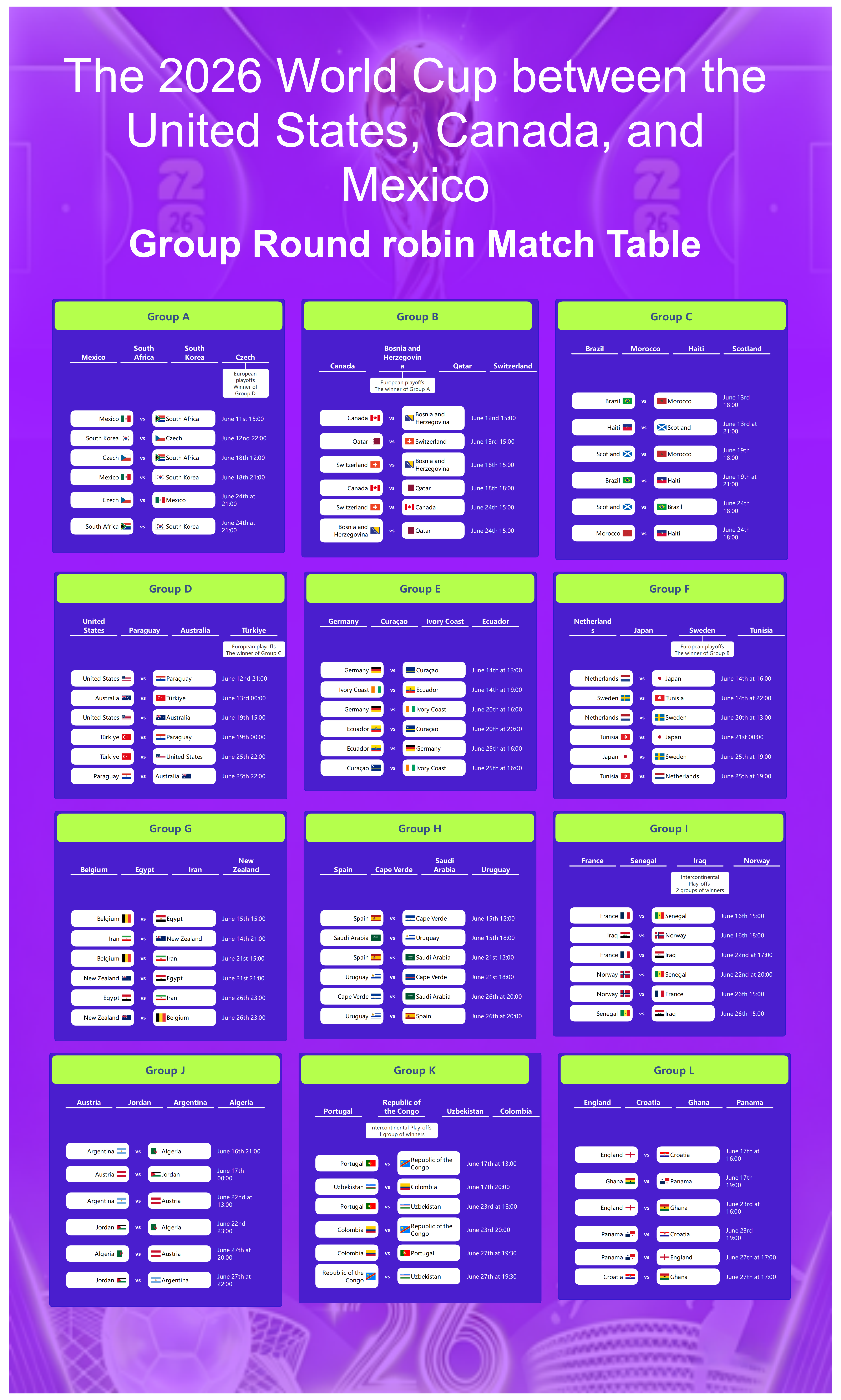
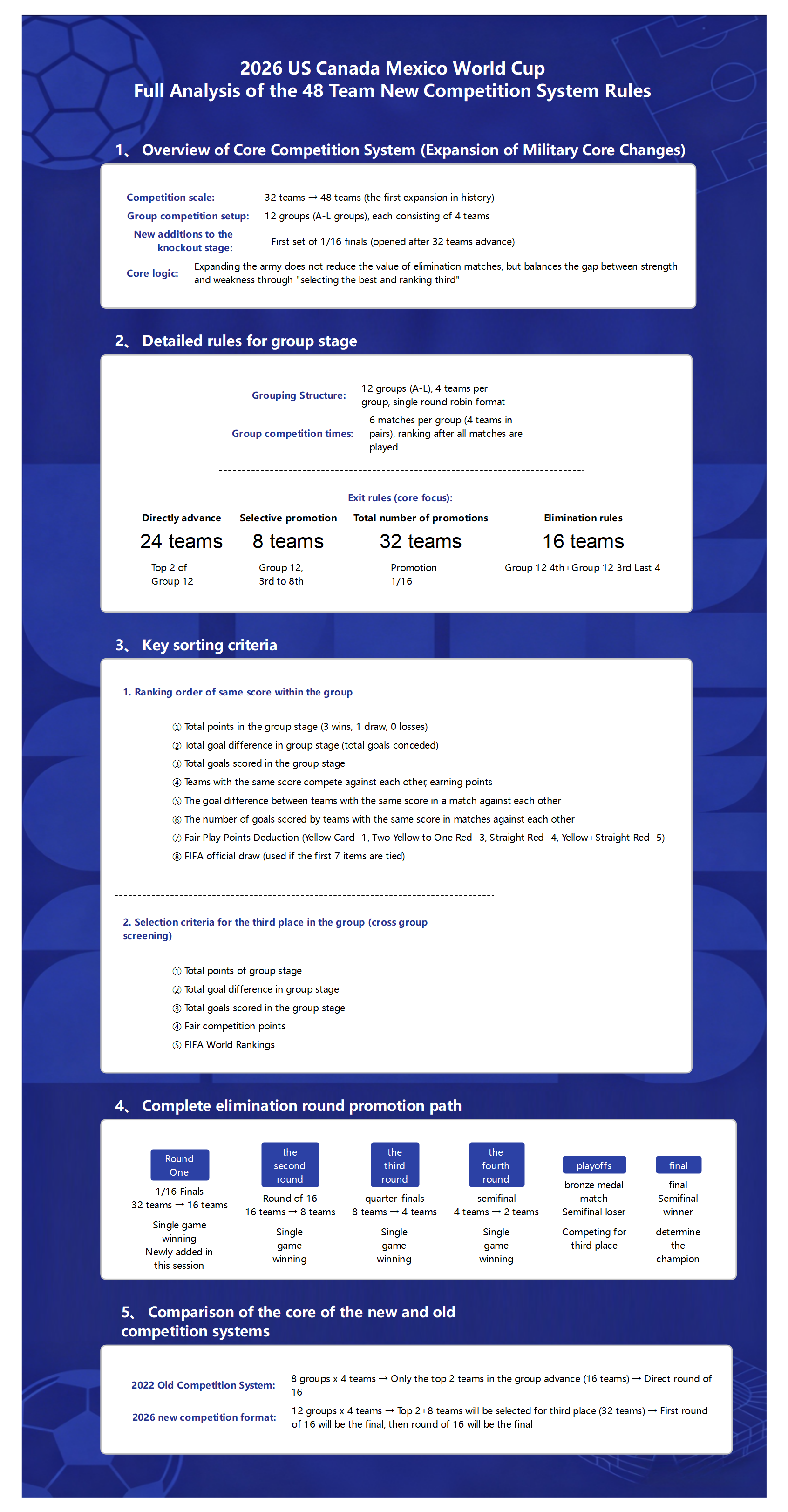
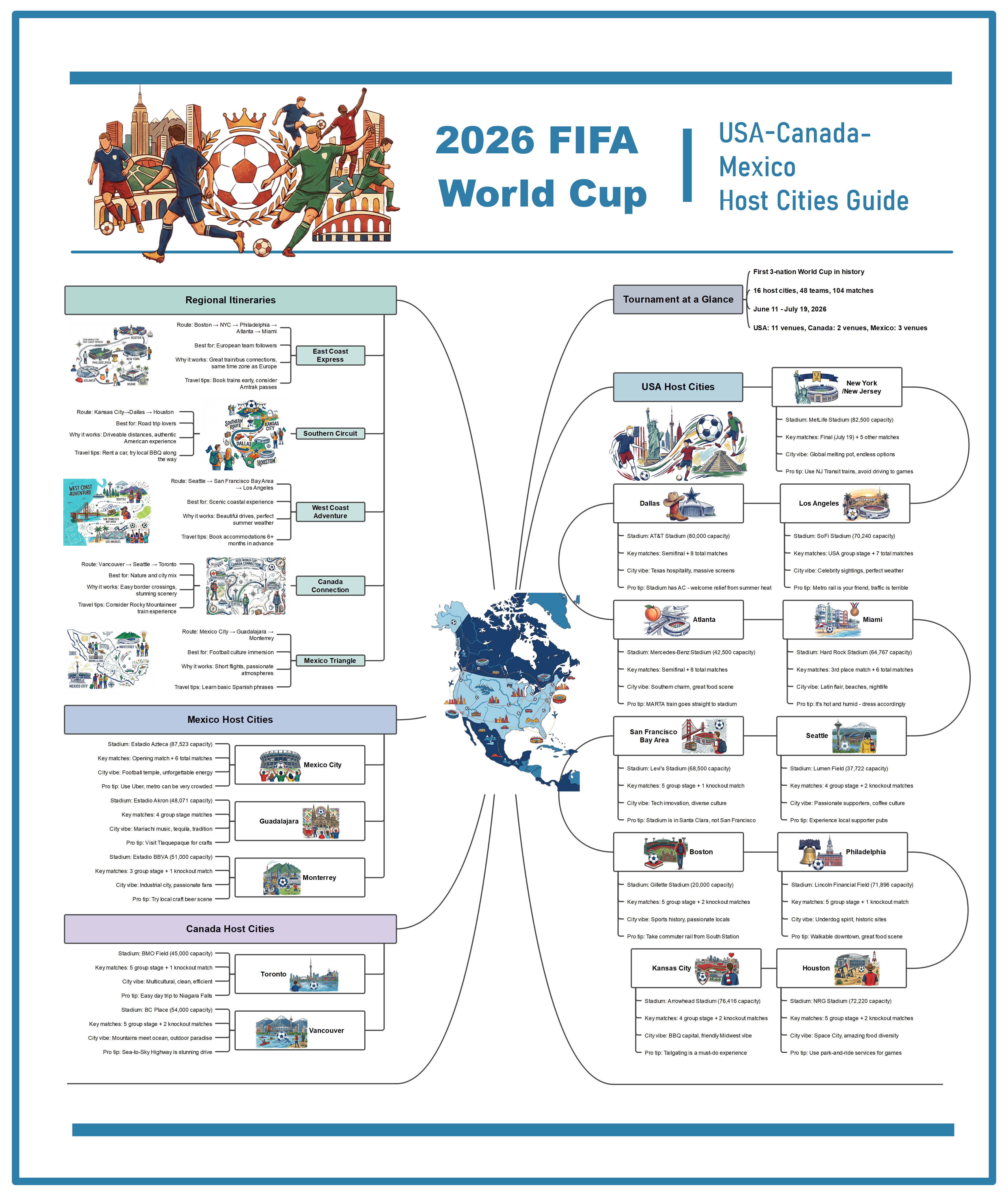
The 2026 FIFA World Cup will feature an expanded 48‑team format, with teams divided into 12 groups of four. The group stage schedule is organized into Groups A through L, with the top two from each group, along with the eight best third‑placed teams, advancing to the knockout stage. This overview focuses on the middle block of the draw: Groups E through K. Group E is expected to include a strong European seed alongside competitive sides from Africa and Asia, promising tightly contested matches. Group F will likely feature a South American heavyweight and a CONCACAF host (USA, Canada, or Mexico), adding regional flavor. Group G often houses a defending champion or top‑ranked UEFA nation, creating immediate drama. Group H typically balances European powerhouses with emerging nations from Oceania or Africa. Group I may spotlight a dark horse from Asia or South America, while Group J could reunite historic rivals from Europe and CONMEBOL. Group K is positioned as a potential “group of death,” with three evenly matched teams fighting for two direct spots. Matches will be played across 16 host cities in the United States, Canada, and Mexico. Each team plays three group‑stage matches. The schedule is designed to maximize prime‑time viewership across multiple time zones, with staggered kickoff times. The 2026 edition marks the first three‑nation co‑hosting of the tournament, and the group stage will set the stage for a historic, wide‑open race to the final.
Lionel Messi, widely regarded as one of the greatest footballers of all time, has enjoyed a career defined by record-breaking achievements, sublime skill, and unwavering consistency. This timeline traces his journey from a boy with growth hormone deficiency to a World Cup-winning captain. Early Years & Barcelona Debut (2000–2008) : Messi joined Barcelona’s famed La Masia academy at age 13. He made his first-team debut in 2004 at 17. His breakout came in 2006–07, scoring a hat-trick against Real Madrid (El Clásico) and replicating Diego Maradona’s “Hand of God” goal. By 2008, he had helped Barcelona win a domestic double and Olympic gold with Argentina. Peak Barcelona Era (2009–2015) : Under Pep Guardiola, Messi won six La Liga titles and three UEFA Champions Leagues (2009, 2011, 2015). He scored a record 91 goals in a calendar year (2012) and won five Ballon d’Or awards during this period. His partnership with Xavi and Iniesta became legendary. Post-Pep & National Team Heartbreak (2016–2020) : Messi continued to dominate domestically but faced near-misses with Argentina, losing three consecutive major finals (2014 World Cup, 2015 and 2016 Copa América). He briefly retired from international duty in 2016 before reversing his decision. Paris Saint-Germain & World Cup Glory (2021–2023) : Forced to leave Barcelona due to financial constraints, Messi joined PSG, winning two Ligue 1 titles. In 2022, he led Argentina to World Cup triumph in Qatar, scoring twice in the final and finally securing the elusive trophy. He won a record-extending seventh (later eighth) Ballon d’Or. Inter Miami & Legacy (2023–Present) : Messi joined MLS side Inter Miami in 2023, winning the Leagues Cup and revitalizing American soccer interest. His career totals include over 800 senior goals and 45+ major trophies.
The UEFA Champions League is the most prestigious club football competition in the world, featuring Europe’s top domestic league finishers. First held in 1955 as the European Cup, it was rebranded to the Champions League in 1992. The tournament is organized annually by UEFA and runs from late June to May of the following year. Format Evolution: The original format was a straight knockout tournament for league champions only. In 1992, a group stage was introduced, and from 1997–98, runners‑up from major leagues were included. The modern format (2024–25 onward) features 36 teams in a single league phase (the “Swiss system”), replacing the traditional group stage. Each team plays eight matches against eight different opponents. The top eight advance directly to the round of 16, while teams placed 9th to 24th enter a two‑leg knockout playoff. Most Successful Clubs: Real Madrid holds the record for most titles (14), followed by AC Milan (7), Liverpool and Bayern Munich (6 each), and Barcelona (5). Madrid’s dominance includes three consecutive titles from 2016 to 2018. Legendary Performances: The tournament has produced iconic moments, including Liverpool’s “Miracle of Istanbul” (2005), Manchester United’s last‑minute comeback in 1999, and Real Madrid’s “Decimocuarta” (14th title) in 2022. Lionel Messi and Cristiano Ronaldo share the record for most goals in the competition’s history (over 140 each). Global Impact: The Champions League final is the world’s most‑watched annual club sporting event, reaching an audience of over 400 million. Its anthem, played before each match, has become a symbol of elite European football. The tournament continues to evolve, with financial fair play regulations and VAR shaping modern competition.
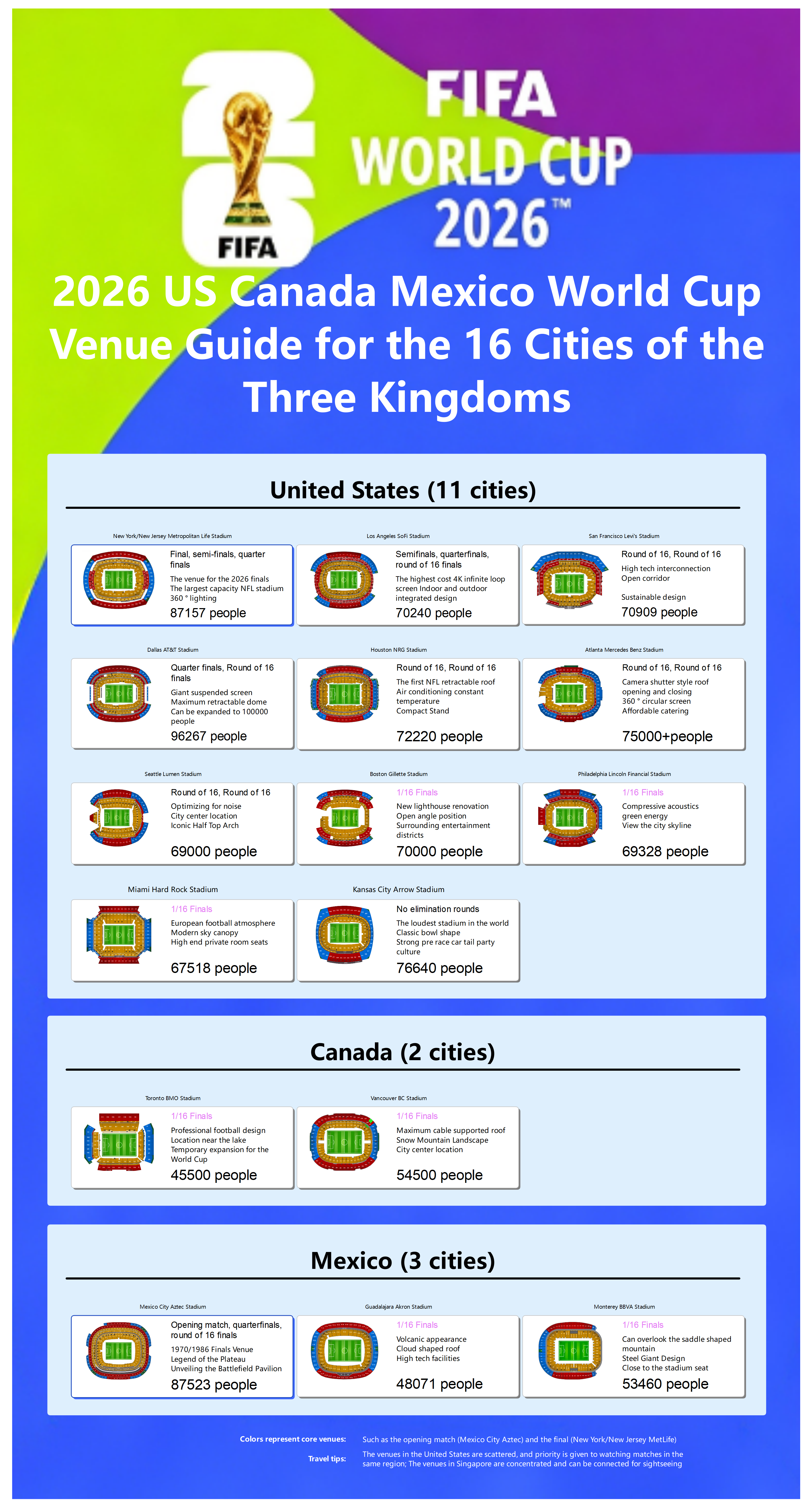
The 2026 FIFA World Cup will feature an expanded 48‑team format, with teams divided into 12 groups of four. The group stage schedule is organized into Groups A through L, with the top two from each group, along with the eight best third‑placed teams, advancing to the knockout stage. This overview focuses on the middle block of the draw: Groups E through K. Group E is expected to include a strong European seed alongside competitive sides from Africa and Asia, promising tightly contested matches. Group F will likely feature a South American heavyweight and a CONCACAF host (USA, Canada, or Mexico), adding regional flavor. Group G often houses a defending champion or top‑ranked UEFA nation, creating immediate drama. Group H typically balances European powerhouses with emerging nations from Oceania or Africa. Group I may spotlight a dark horse from Asia or South America, while Group J could reunite historic rivals from Europe and CONMEBOL. Group K is positioned as a potential “group of death,” with three evenly matched teams fighting for two direct spots. Matches will be played across 16 host cities in the United States, Canada, and Mexico. Each team plays three group‑stage matches. The schedule is designed to maximize prime‑time viewership across multiple time zones, with staggered kickoff times. The 2026 edition marks the first three‑nation co‑hosting of the tournament, and the group stage will set the stage for a historic, wide‑open race to the final.
Lionel Messi, widely regarded as one of the greatest footballers of all time, has enjoyed a career defined by record-breaking achievements, sublime skill, and unwavering consistency. This timeline traces his journey from a boy with growth hormone deficiency to a World Cup-winning captain. Early Years & Barcelona Debut (2000–2008) : Messi joined Barcelona’s famed La Masia academy at age 13. He made his first-team debut in 2004 at 17. His breakout came in 2006–07, scoring a hat-trick against Real Madrid (El Clásico) and replicating Diego Maradona’s “Hand of God” goal. By 2008, he had helped Barcelona win a domestic double and Olympic gold with Argentina. Peak Barcelona Era (2009–2015) : Under Pep Guardiola, Messi won six La Liga titles and three UEFA Champions Leagues (2009, 2011, 2015). He scored a record 91 goals in a calendar year (2012) and won five Ballon d’Or awards during this period. His partnership with Xavi and Iniesta became legendary. Post-Pep & National Team Heartbreak (2016–2020) : Messi continued to dominate domestically but faced near-misses with Argentina, losing three consecutive major finals (2014 World Cup, 2015 and 2016 Copa América). He briefly retired from international duty in 2016 before reversing his decision. Paris Saint-Germain & World Cup Glory (2021–2023) : Forced to leave Barcelona due to financial constraints, Messi joined PSG, winning two Ligue 1 titles. In 2022, he led Argentina to World Cup triumph in Qatar, scoring twice in the final and finally securing the elusive trophy. He won a record-extending seventh (later eighth) Ballon d’Or. Inter Miami & Legacy (2023–Present) : Messi joined MLS side Inter Miami in 2023, winning the Leagues Cup and revitalizing American soccer interest. His career totals include over 800 senior goals and 45+ major trophies.
Cristiano Ronaldo A Comprehensive Biography
Early Life and Childhood
Birth and Family Background
Born on February 5, 1985, in Funchal, Madeira, Portugal
Full name: Cristiano Ronaldo dos Santos Aveiro
Father: José Dinis Aveiro (gardener and amateur club kit man)
Mother: Maria Dolores dos Santos (cook and cleaner)
Siblings: One older brother (Hugo), two older sisters (Elma and Katia)
Raised in poverty; his mother once considered abortion due to financial hardship, yet the doctor refused the procedure
Childhood and Early Football Journey
Grew up in a cramped home, sharing a room with siblings
Nicknamed "Little Bee" for his energetic and lively personality
Began playing football at age 8 for local club Andorinha
Joined Nacional da Madeira at 10 years old
Moved to Lisbon alone at 12 to join the Sporting CP academy
Suffered from homesickness and bullying for his Madeiran accent
Diagnosed with a racing heart condition at 15, and fully recovered after successful surgery
Club Career
Sporting CP (1996-2003)
Joined the Sporting CP youth academy in 1996
Made his professional debut in 2002
Delivered a standout performance in the 2003 friendly against Manchester United
Transferred to Manchester United for £12.24 million in 2003
Manchester United - First Spell (2003-2009)
Signed as David Beckham’s replacement and took the iconic No.7 jersey
Team Achievements
3 Premier League titles
1 UEFA Champions League
1 FIFA Club World Cup
1 FA Cup
2 Football League Cups
1 Community Shield
Individual Honors
2008 Ballon d’Or
FIFA World Player of the Year
European Golden Shoe
Two PFA Players' Player of the Year awards
Registered 118 goals in 292 appearances for the club
Real Madrid (2009-2018)
Joined with a then world-record transfer fee of €94 million (£80 million)
Team Achievements
4 UEFA Champions League titles
2 La Liga titles
2 Copa del Rey
2 Spanish Super Cups
3 UEFA Super Cups
3 FIFA Club World Cups
Individual Honors & Records
4 Ballon d’Or awards
3 European Golden Shoes
Real Madrid all-time top scorer (450 goals in 438 appearances)
UEFA Champions League all-time top scorer, with a record 17 goals in one single season
Juventus (2018-2021)
Transferred to Juventus for €100 million
Team Achievements: 2 Serie A titles, 1 Coppa Italia, 2 Supercoppa Italiana
Individual Honors: Serie A MVP, Serie A top scorer (2020-21)
Became the first player to win top domestic league titles in England, Spain and Italy
Manchester United - Return (2021-2022)
Rejoined the club for €15 million plus additional add-ons
First player to score over 100 Premier League goals for two different clubs
Scored his 700th club career goal in October 2022
Had his contract mutually terminated in November 2022
Al Nassr (2022-Present)
Signed with Saudi club Al Nassr in December 2022
Holds a reported annual contract worth €200 million
Continues competing professionally and breaking goal-scoring records worldwide
International Career
Early Years and Senior Debut
Made senior national team debut on August 20, 2003, versus Kazakhstan
Debuted at UEFA Euro 2004, scoring his first international goal and helping Portugal finish as runner-up
Major Tournament Achievements
UEFA European Championship
Euro 2004: Runner-up (2 goals)
Euro 2008: Quarter-finals
Euro 2012: Semi-finals
Euro 2016: Champion, claiming Portugal’s first major international trophy
Euro 2020: Round of 16, Golden Boot winner (5 goals)
Euro 2024: Record sixth European Championship appearance
FIFA World Cup
2006 World Cup: 4th place
2010 & 2018 World Cup: Round of 16
2014 World Cup: Group stage
2022 World Cup: Quarter-finals
The first male footballer to score in five consecutive World Cups
UEFA Nations League
2019 UEFA Nations League Champion (inaugural edition)
Scored a critical semi-final hat-trick against Switzerland
Core International Records
Men’s international football all-time top scorer (128+ goals)
Most capped male international player (200+ appearances)
First European player to reach 100 international goals
All-time top scorer and most frequent participant in European Championship history
Individual Honors and Overall Records
Major Awards
5 Ballon d’Or awards, 5 FIFA World Player of the Year / The Best FIFA Men's Player
4 European Golden Shoes, 3 UEFA Men's Player of the Year awards
2016 FIFA Club World Cup Golden Ball
Notable Career Milestones
140+ goals in UEFA Champions League history
First player with 100+ goals in the Champions League
Multiple La Liga records including most hat-tricks and fastest 150 goals
The only player to score in every minute of a professional football match
Career Statistics (as of 2024)
Club: 1,100+ appearances, 900+ goals
International: 200+ caps, 128+ goals
Total career goals: 1,000+
Personal Life and Legacy
Family and Relationships
Children: Cristiano Ronaldo Jr., twins Eva & Mateo, daughter Alana Martina
Long-term partner: Georgina Rodríguez (since 2016)
Business and Brand Influence
Founder of CR7 brand covering apparel, footwear, fragrance and hotels
Lifetime $1 billion contract with Nike
The most followed person on Instagram (600+ million followers)
Multiple-time Forbes highest-paid athlete
Philanthropy
Regular voluntary blood donor
Donated €5 million for Portugal’s COVID-19 relief
Long-term supporter of children’s hospitals and cancer research
UNICEF Goodwill Ambassador
Legacy and Influence
Widely recognized as one of the greatest footballers of all time
Famous for outstanding athleticism, stable scoring ability and strict work ethic
Redefined the positioning of modern wingers and forwards
Maintained top-level competitiveness into his late 30s
A global sports icon and an inspiration for overcoming humble origins
Retirement Plans
Announced retirement plans in November 2025, set to retire within 1–2 years
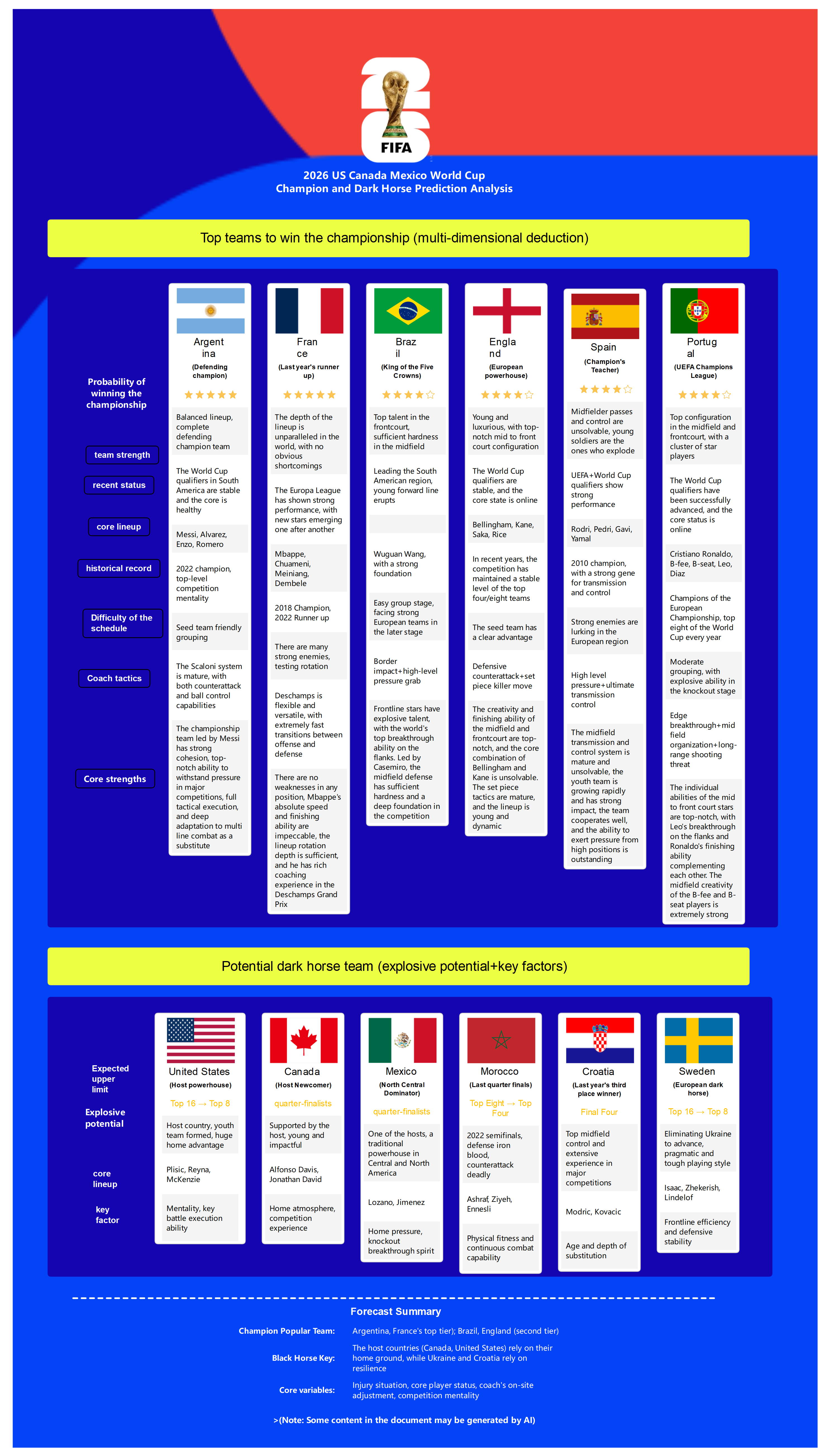
2026 World Cup will be his final international tournament
Plans to engage in football coaching or club ownership after retirement
Note: All data and records are updated to 2024, and will be updated with his ongoing career.
”
“
5
4
3
2
1
Ronaldo
I don’t mind people hating me. Because it pushes me.
Talent without hard work is nothing.
Cristiano