MindMap Gallery Developmental and Educational Psychology (2)
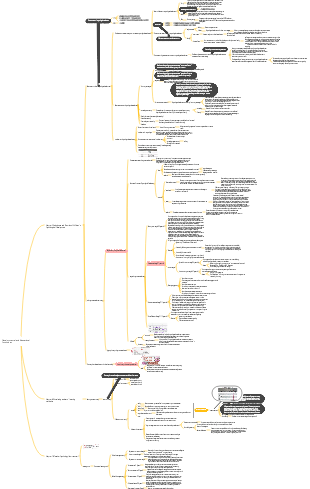
This is a mind map about developmental and educational psychology (2), which summarizes behaviorist learning theory and its teaching applications, social learning theory and its teaching applications, Cognitive learning theory and its teaching concepts, etc.
Edited at 2024-01-13 15:54:07This infographic, designed with EdrawMax, presents a quarterly pre-production checklist for film and TV crews. It organizes tasks into weekly segments across 12 weeks, covering script reading, contract negotiation, preliminary research and communication, and image customization. The schedule ensures a systematic approach to pre-production, detailing specific actions like script analysis, contract signing, character image finalization, and verification of contracts. It serves as a vital tool for production teams to manage tasks efficiently and maintain a smooth workflow leading up to filming.

This infographic, created using EdrawMax, showcases influential female historical figures across different eras, from ancient times to the present. It highlights their contributions in various fields such as politics, science, literature, and activism. Each section details key personalities and their impact on society, celebrating their achievements and the barriers they overcame. The chart serves as an inspiration, illustrating the pivotal roles women have played throughout history in shaping the modern world.
This detailed career planning chart, crafted with EdrawMax, is tailored for women navigating their professional journeys. It systematically breaks down the process into self-assessment, goal setting, development planning, learning strategies, coping mechanisms for challenges, and regular evaluations. The guide emphasizes understanding personal skills, setting realistic career objectives, and creating actionable plans for growth. It also addresses overcoming gender-specific obstacles and maintaining work-life balance, making it a comprehensive resource for achieving long-term career success and personal fulfillment.
This infographic, designed with EdrawMax, presents a quarterly pre-production checklist for film and TV crews. It organizes tasks into weekly segments across 12 weeks, covering script reading, contract negotiation, preliminary research and communication, and image customization. The schedule ensures a systematic approach to pre-production, detailing specific actions like script analysis, contract signing, character image finalization, and verification of contracts. It serves as a vital tool for production teams to manage tasks efficiently and maintain a smooth workflow leading up to filming.
This infographic, created using EdrawMax, showcases influential female historical figures across different eras, from ancient times to the present. It highlights their contributions in various fields such as politics, science, literature, and activism. Each section details key personalities and their impact on society, celebrating their achievements and the barriers they overcame. The chart serves as an inspiration, illustrating the pivotal roles women have played throughout history in shaping the modern world.
This detailed career planning chart, crafted with EdrawMax, is tailored for women navigating their professional journeys. It systematically breaks down the process into self-assessment, goal setting, development planning, learning strategies, coping mechanisms for challenges, and regular evaluations. The guide emphasizes understanding personal skills, setting realistic career objectives, and creating actionable plans for growth. It also addresses overcoming gender-specific obstacles and maintaining work-life balance, making it a comprehensive resource for achieving long-term career success and personal fulfillment.
Developmental and Educational Psychology
Learning theories and their teaching applications
Behaviorist learning theory and its teaching applications
Pavlov's theory of classical conditioning (classical conditioning experiments)
signal system
第一信号系统
能够引起条件反应的物理性条件刺激(望梅止渴)
第二信号系统
能够引起条件反应的以语言符号为中介的条件刺激
conditioned reflex acquisition
The phenomenon in which an individual responds only to conditioned stimuli after multiple matches of conditioned stimuli and unconditioned stimuli.
Combining learning tasks with positive and happy things can promote students' enthusiasm for learning. The learning of a course is a neutral stimulus, that is, stories, pictures, videos and other related materials that are related to the course and can arouse students' interest are unconditional stimuli. In the learning process of a course, adding some course-related things that can arouse students' interest are unconditional stimuli. Stories, pictures, videos and other related materials that students are interested in. In this way, over time, learning a course with stories, pictures, videos, etc. will establish conditioned reflexes. In this way, in future learning, even if stories, pictures, videos, etc. are not presented, conditioned reflexes will be established. It can stimulate students' interest and enthusiasm and help students like this subject.
conditioned reflex generalization
Respond in the same way to similar stimuli
conditioned reflex differentiation
respond differently to similar but different stimuli
Poor performance in one subject will not lead to poor performance in all subjects
conditioned reflex extinction
After the conditioned reflex has been formed, if the conditioned stimulus is presented without reinforcement, the conditioned response will gradually fade away.
Thorndike's connectionist learning theory (cat's cage experiment)
The essence of learning is to establish a certain connection between a certain situation and a specific response through "trying" (the connection refers to the connection between the stimulus situation and the correct response). In the attempt, the individual will make mistakes. Through feedback, the individual will give up the wrong attempts and retain the correct attempts, thereby establishing the correct connection.
Teachers should let students think for themselves and take the initiative to solve some problems on their own. For example, when calculating a word problem, let them think first, and then find out by themselves what went wrong or what they don’t understand.
From the perspective of the learning process, learning is a "trial-and-error" process, so some people call Thorndike's connectionist learning theory a "trial-and-error" learning theory. In the learning process, the consequences of behavior are the most critical factor affecting learning. If the behavior is reinforced and the attempt is proven to be correct, the behavior can be retained, otherwise it will be abandoned as a wrong behavior.
learning law
Effectiveness rate
If the learner can obtain satisfactory results after making a specific response to a certain situation, then the connection between the response and this specific stimulus situation will be strengthened, otherwise it will be weakened
Use rewards and punishments, use more rewards and less punishment
practice rate
The strength of the connection between a stimulus situation and a specific response depends on how often the connection is used. The more often the connection is practiced or used, the stronger the connection.
Practice makes perfect. When students have just learned a knowledge point, they should be given appropriate practice so that they can learn it well.
Readiness rate
Students will feel satisfied if they are provided with corresponding activities when they are ready. However, they will feel annoyed if they are not provided with corresponding activities when they are prepared, or if they are forced to provide activities without preparation.
When students are well-prepared for a question, then when the teacher asks the question, the students will be happy to answer and will be happy to be asked, otherwise they will be unhappy and unhappy. Teaching inspiration is that preview is very important. If there is preview, students will be more willing to accept the teacher’s questions.
new behaviorist learning theory
Skinner's theory of operant conditioning
The difference between operant conditioning theory and classical conditioning
Skinner divided behavior into two types. One is behavior caused by known stimuli, called responsive behavior. This behavior is controlled by stimuli and is passive. The other is a behavior that does not require stimulation, occurs naturally in a certain situation, and is fixed due to the reinforcement of the result, which is called operant behavior. This behavior is spontaneous and represents the organism's active adaptation to the environment. Responsive behavior leads to reactive conditioned reflexes, while operant behavior leads to operant conditioned reflexes. Pavlov's classical conditioning is reactive conditioning, while Skinner's operant conditioning is instrumental conditioning. Classical conditioning emphasizes the significance of stimuli in eliciting desired responses, while operant conditioning emphasizes the significance of behavioral consequences in eliciting behavioral responses.
Classical conditioning is associated with involuntary behavior, and operant conditioning is associated with voluntary behavior
depends on two factors
operate
strengthen
type
positive reinforcement
Increase the frequency of responses by presenting them with desired, pleasurable stimuli
Prizes, verbal praise
negative reinforcement
Punishment and negative reinforcement
负强化
通过排除厌恶刺激来增加反应概率
惩罚
Behavior can only be temporarily suppressed but cannot be eradicated
减少反应概率
呈现性惩罚
通过呈现厌恶刺激来降低反应发生的概率
放学留下来打扫卫生
移除性惩罚
通过消除愉快刺激来降低反应发生的概率
剥夺他的下课时间
Enhance response frequency by eliminating or discontinuing aversive, unpleasant stimuli
Reduce homework
reinforcer
When choosing, you can follow the Premack principle, also known as the "grandmother's rule", that is, use high-frequency activities as effective reinforcers for low-frequency activities. For example, tell primary school students that they can play games after finishing their homework
A stimulus or event that increases the frequency of a response
Reinforcement program
continuous reinforcement
Reinforcement is given after each response
intermittent reinforcement
Reinforce some but not all responses
spaced reinforcement
Reinforcement is carried out with the help of time. There is a certain time interval between two reinforcements. If the time interval between several reinforcements is fixed, it is called "fixed interval" reinforcement. If it is not fixed, it is called "variable interval" reinforcement.
Proportional reinforcement
Reinforcement can only be obtained after the subject has made a certain number of responses. If the number of responses is fixed, it is called "fixed ratio" reinforcement. If not, it is called "variable ratio" reinforcement.
Social learning theory and its teaching applications
Bandura proposed socialist learning theory
Social learning theory divides learning into two types
Participatory learning (direct experiential learning)
Learning through direct hands-on experience of the results of actions
Vicarious learning (observational learning/indirect experiential learning)
Learning by observing the behavior and behavioral results of others, that is, the behavioral response pattern obtained by observing whether the behavioral results of others are rewarded or punished
observational learning
process
Pay attention to the process
Pay attention to role models
keep process
The maintenance of modeled behavior by observational learning relies on two storage systems
representational system
Store modeled behaviors in memory as representations
speech coding system
Enable modeled behaviors to be acquired, maintained and reproduced more accurately
Movement regeneration process (action reproduction process)
Reproduce previously observed demonstrated behavior. During the initial stages of behavioral implementation, responses are screened and organized at the cognitive level. Even so, there may be errors in the first reproduction of the action, so the action needs to be adjusted based on external feedback and one's own internal feedback.
motivational process
After reproducing the modeled behavior, the observed learner receives reinforcement for performing the modeled behavior, thereby affecting the motivation for subsequent behavior.
Influencing factors
triadic interaction theory
specific
observer factor
self-efficacy
An individual's subjective assessment of his/her ability to effectively handle a specific task
The level of self-efficacy directly affects an individual's effort and learning behavior
envirnmental factor
The impact of rewards and other incentives on behavior
factors in the behavior itself
If the modeled behavior itself is appropriate, meaningful, and meets the observer's expectations, the observer will be able and conscious to imitate it.
and demonstration teaching
Identifying appropriate role models in teaching situations
Establish the functional value of modeled behavior
Guide learners to represent observed objects
Guide learners’ cognitive and action reconstruction processes
Provide timely feedback and reinforcement to enhance behavioral motivation
Reinforcement mode
direct reinforcement
Reinforcement that an observer receives for displaying observing behavior
vicarious reinforcement
Reinforcement that an observer receives from seeing the model's behavior reinforced
self-reinforcing
Self-reward for learners when they are satisfied with their performance
Social learning theory emphasizes the role of observational learning and vicarious learning reinforcement in acquiring new behaviors. Learning is the process in which learners acquire certain new behavioral response patterns by observing the behavior of demonstrators and their results.
Cognitive Learning Theory and Its Teaching Concept
Bruner's cognition-discovery theory
constructivist learning theory