MindMap Gallery Machine learning algorithm classification
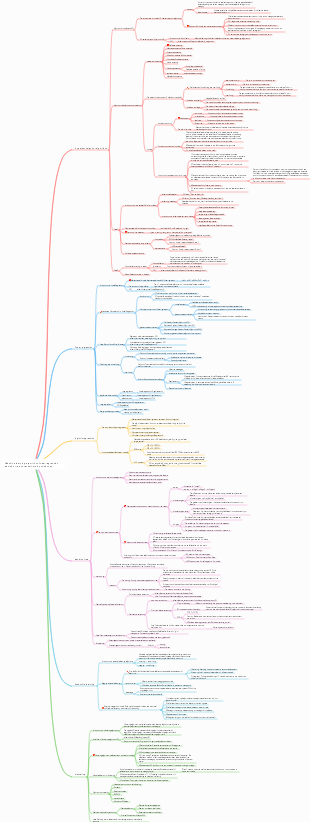
Summary of classification of machine learning algorithms! The figure below summarizes the classification of machine learning algorithms, including supervised learning, unsupervised learning, semi-supervised learning, reinforcement learning, transfer learning, deep learning algorithms, etc. Hope this picture can help you!
Edited at 2020-04-08 10:06:19This infographic, created using EdrawMax, outlines the pivotal moments in African American history from 1619 to the present. It highlights significant events such as emancipation, key civil rights legislation, and notable achievements that have shaped the social and political landscape. The timeline serves as a visual representation of the struggle for equality and justice, emphasizing the resilience and contributions of African Americans throughout history.

This infographic, designed with EdrawMax, presents a detailed timeline of the evolution of voting rights and citizenship in the U.S. from 1870 to the present. It highlights key legislative milestones, court decisions, and societal changes that have expanded or challenged voting access. The timeline underscores the ongoing struggle for equality and the continuous efforts to secure voting rights for all citizens, reflecting the dynamic nature of democracy in America.
This infographic, created using EdrawMax, highlights the rich cultural heritage and outstanding contributions of African Americans. It covers key areas such as STEM innovations, literature and thought, global influence of music and arts, and historical preservation. The document showcases influential figures and institutions that have played pivotal roles in shaping science, medicine, literature, and public memory, underscoring the integral role of African American contributions to society.
This infographic, created using EdrawMax, outlines the pivotal moments in African American history from 1619 to the present. It highlights significant events such as emancipation, key civil rights legislation, and notable achievements that have shaped the social and political landscape. The timeline serves as a visual representation of the struggle for equality and justice, emphasizing the resilience and contributions of African Americans throughout history.
This infographic, designed with EdrawMax, presents a detailed timeline of the evolution of voting rights and citizenship in the U.S. from 1870 to the present. It highlights key legislative milestones, court decisions, and societal changes that have expanded or challenged voting access. The timeline underscores the ongoing struggle for equality and the continuous efforts to secure voting rights for all citizens, reflecting the dynamic nature of democracy in America.
This infographic, created using EdrawMax, highlights the rich cultural heritage and outstanding contributions of African Americans. It covers key areas such as STEM innovations, literature and thought, global influence of music and arts, and historical preservation. The document showcases influential figures and institutions that have played pivotal roles in shaping science, medicine, literature, and public memory, underscoring the integral role of African American contributions to society.
Machine learning algorithm classification
Machine learning is classified according to training methods
Supervised Learning
Artificial Neural Network class
Backpropagation
Boltzmann Machine
Convolutional Neural Network
Hopfield Network
Multilayer Perceptron
Radial Basis Function Network (RBFN)
Restricted Boltzmann Machine
Recurrent Neural Network (RNN)
Self-organizing Map (SOM)
Spiking Neural Network
Bayesin
Naive Bayes
Gaussian Naive Bayes
Multinomial Naive Bayes
Averaged One-Dependence Estimators (AODE)
Bayesian Belief Network (BBN)
Bayesian Network (BN)
Decision Tree class
Classification and Regression Tree (CART)
Iterative Dichotomiser3 (Iterative Dichotomiser 3, ID3)
C4.5 Algorithm
C5.0 Algorithm (C5.0 Algorithm)
Chi-squared Automatic Interaction Detection (CHAID)
Decision Stump
ID3 Algorithm
Random Forest
SLIQ (Supervised Learning in Quest)
Linear Classifier class
Fisher’s Linear Discriminant
Linear Regression
Logistic Regression
Multinomial Logistic Regression
Naive Bayes Classifier
Perception
Support Vector Machine
Unsupervised Learning
Artificial Neural Network class
Generative Adversarial Networks (GAN)
Feedforward Neural Network
Logic Learning Machine
Self-organizing Map
Association Rule Learning class
Apriori Algorithm
Eclat Algorithm
FP-Growth algorithm
Hierarchical Clustering
Single-linkage Clustering
Conceptual Clustering
Cluster analysis
BIRCH algorithm
DBSCAN algorithm
Expectation-maximization (EM)
Fuzzy Clustering
K-means algorithm
K-means Clustering
K-medians clustering
Mean-shift algorithm (Mean-shift)
OPTICS algorithm
Anomaly detection class
K-nearest Neighbor (KNN) algorithm
Local Outlier Factor (LOF) algorithm
Semi-supervised Learning
Generative Models
Low-density Separation
Graph-based Methods
Co-training
Reinforcement Learning
Q-learning
State-Action-Reward-State-Action (State-Action-Reward-State-Action, SARSA)
DQN (Deep Q Network)
Policy Gradients
Model Based RL
Temporal Differential Learning
Deep Learning
Deep Belief Machines
Deep Convolutional Neural Networks
Deep Recurrent Neural Network
Hierarchical Temporal Memory (HTM)
Deep Boltzmann Machine (DBM)
Stacked Autoencoder
Generative Adversarial Networks
Transfer Learning
Inductive Transfer Learning
Transductive Transfer Learning
Unsupervised Transfer Learning
Transitive Transfer Learning
Machine learning is classified according to problem solving
Two-class Classification
Two-class SVM: suitable for scenarios with many data features and linear models
Two-class Average Perceptron: Suitable for scenarios with short training time and linear models.
Two-class Logistic Regression: Suitable for scenarios with short training time and linear models
Two-class Bayes Point Machine: suitable for scenarios with short training time and linear models
Two-class Decision Forest: suitable for scenarios with short training time and accuracy
Two-class Boosted Decision Tree: suitable for scenarios with short training time, high accuracy, and large memory usage
Two-class Decision Jungle: suitable for scenarios with short training time, high accuracy, and small memory footprint
Two-class Locally Deep SVM: suitable for scenarios with many data features
Two-class Neural Network: suitable for scenarios with high accuracy and long training time
Multi-class Classification
Multiclass Logistic Regression: Suitable for scenarios with short training time and linear models
Multiclass Neural Network: suitable for scenarios with high accuracy and long training time
Multiclass Decision Forest: suitable for scenarios with high accuracy and short training time
Multiclass Decision Jungle: suitable for scenarios with high accuracy and small memory footprint
"One-vs-all Multiclass": depends on the effect of the two classifiers
Regression algorithm
Ordinal Regression: Suitable for scenarios where data is classified and sorted
Poisson Regression: Suitable for predicting the number of events
Fast Forest Quantile Regression: Suitable for scenarios of predicting distributions
Linear Regression: Suitable for scenarios with short training time and linear models
Bayesian Linear Regression: suitable for linear models and scenarios where the amount of training data is small
Neural Network Regression: suitable for scenarios with high accuracy and long training time
Decision Forest Regression: suitable for scenarios with high accuracy and short training time
Boosted Decision Tree Regression: suitable for scenarios with high accuracy, short training time, and large memory usage
Clustering algorithm
Hierarchical Clustering: suitable for scenarios with short training time and large amount of data
K-means algorithm: suitable for scenarios with high accuracy and short training time
Fuzzy clustering FCM algorithm (Fuzzy C-means, FCM): suitable for scenarios with high accuracy and short training time
SOM neural network (Self-organizing Feature Map, SOM): suitable for scenarios with long running time
Anomaly Detection
One-class support vector machine (One-class SVM): suitable for scenarios with many data features
PCA-based Anomaly Detection: suitable for scenarios with short training time