MindMap Gallery market segmentation
Market segmentation means that an enterprise divides customers in the market into several customer groups according to certain standards. Each customer group constitutes a sub-market. There are obvious differences in demand between different sub-markets. Market segmentation is the basic work of selecting target markets.
Edited at 2022-10-12 16:11:03Avatar 3 centers on the Sully family, showcasing the internal rift caused by the sacrifice of their eldest son, and their alliance with other tribes on Pandora against the external conflict of the Ashbringers, who adhere to the philosophy of fire and are allied with humans. It explores the grand themes of family, faith, and survival.

This article discusses the Easter eggs and homages in Zootopia 2 that you may have discovered. The main content includes: character and archetype Easter eggs, cinematic universe crossover Easter eggs, animal ecology and behavior references, symbol and metaphor Easter eggs, social satire and brand allusions, and emotional storylines and sequel foreshadowing.
[Zootopia Character Relationship Chart] The idealistic rabbit police officer Judy and the cynical fox conman Nick form a charmingly contrasting duo, rising from street hustlers to become Zootopia police officers!
Avatar 3 centers on the Sully family, showcasing the internal rift caused by the sacrifice of their eldest son, and their alliance with other tribes on Pandora against the external conflict of the Ashbringers, who adhere to the philosophy of fire and are allied with humans. It explores the grand themes of family, faith, and survival.
This article discusses the Easter eggs and homages in Zootopia 2 that you may have discovered. The main content includes: character and archetype Easter eggs, cinematic universe crossover Easter eggs, animal ecology and behavior references, symbol and metaphor Easter eggs, social satire and brand allusions, and emotional storylines and sequel foreshadowing.
[Zootopia Character Relationship Chart] The idealistic rabbit police officer Judy and the cynical fox conman Nick form a charmingly contrasting duo, rising from street hustlers to become Zootopia police officers!
market segmentation
a. Benefits of market segmentation:
Market segmentation helps companies discover the best market opportunities and increase market share. Through marketing research and market segmentation, enterprises can understand the needs and current satisfaction of different buyer groups. The best market opportunities may exist in sub-markets with lower satisfaction. This is especially important for small businesses. Because small businesses are weakly funded, they cannot compete with larger companies in the entire market or in larger submarkets. Through market segmentation, small businesses can discover certain unmet needs, find good opportunities within their own capabilities, and then exploit every opportunity to fill in the gaps, so as to survive and develop in the fierce market competition.
Market segmentation can also enable companies to achieve maximum operating benefits with the minimum operating expenses. Through market segmentation and target market selection, companies can timely and correctly adjust product structure and marketing mix according to changes in target market demand, making products marketable and expanding sales. They can also concentrate on using corporate resources to achieve minimum operating costs. cost to achieve maximum operating benefits.
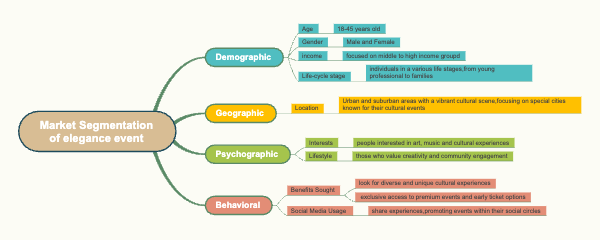
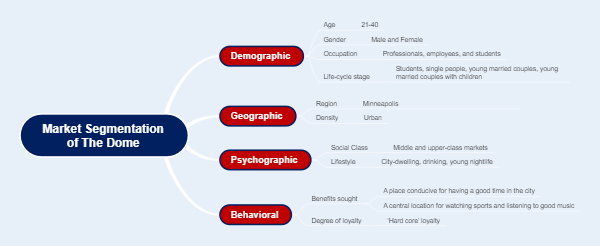
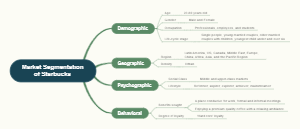
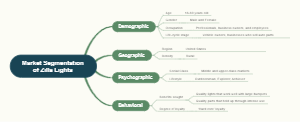
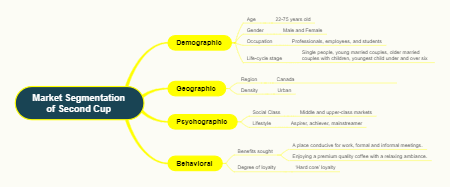
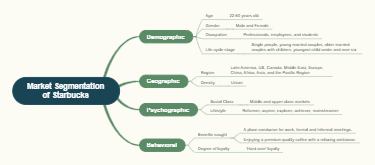
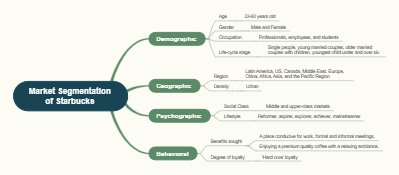
b. Basis for consumer market segmentation: Market segmentation must be based on certain segmentation variables. The segmentation variables of the consumer market mainly include geography, population, psychology and behavior.
Geographic segmentation: Enterprises segment the consumer market based on the geographical location of consumers and other geographical variables (including urban and rural areas, topography, climate, transportation, etc.).
The main theoretical basis for geographical segmentation is that consumers in different geographical locations have different needs and preferences for the company's products, as well as different marketing strategies, product prices, distribution channels, advertising and other marketing measures. There are different.
Market potential and costs will vary depending on market location. Enterprises should choose those geographical markets with higher benefits that the enterprise can best serve as target markets.
Demographic segmentation: This means that companies segment the consumer market according to demographic variables (including age, gender, income, occupation, education level, family size, family life cycle stage, religion, ethnicity, internationality, etc.).
Demographic variables have long been an important variable in market segmentation of consumer markets. This is because demographic variables are easier to measure than other variables.
Consumer desires and needs are not only affected by demographic variables, but also by other variables, especially psychological variables, so demographic segmentation is not completely reliable.
Psychographic segmentation: Segment the consumer market according to consumers’ lifestyle, personality and other psychological variables.
Consumers' desires, needs and purchasing behavior are not only affected by demographic variables, but also by psychological variables, so psychological segmentation must be carried out.
Consumers with different lifestyles have different needs for products; once a consumer's lifestyle changes, he will have new needs. Lifestyle is an important factor influencing consumer wants and needs.
In modern marketing practice, more and more companies are segmenting the consumer market according to different lifestyles of consumers, and designing different products and arranging marketing mixes according to consumer groups with different lifestyles.
To conduct lifestyle segmentation, companies can use three scales (AIO scales) to measure consumers' lifestyles: activities, interests, and opinions.
Behavioral segmentation: Enterprises classify consumers according to the timing of purchasing or using a certain product, the benefits pursued by the consumer, the user situation, the consumer's usage rate of a certain product, the consumer's loyalty to the brand (or store), Segment the consumer market based on behavioral variables such as the consumer's purchase stage and consumer's attitude towards the product.
In modern marketing practice, many companies often try to expand the scope of consumers using their products through opportunity segmentation.
Consumers often purchase different products and brands because they have different purchasing motives and pursue different interests. Because of this, companies must segment the consumer market according to the different interests that different consumers pursue when purchasing goods. Enterprises can weigh the pros and cons according to their own conditions, select one of the consumer groups pursuing certain interests as the target market, design and produce products that suit the needs of the target market, and use appropriate advertising media and advertising words to promote this Product information is conveyed to the consumer base pursuing this benefit.
The practical experience of modern enterprise management proves that interest segmentation is an effective segmentation strategy.
Large companies in Western countries have abundant resources and high market shares, and are generally interested in consumer groups such as potential users. They focus on attracting potential users to expand their market position; small companies with weak resources often focus on attracting regular users.
Quantity segmentation: The market for many commodities can also be segmented according to the consumer's usage rate of a certain product, such as small users, medium users, and large users. Large users often account for a small proportion of the total number of actual and potential buyers, but the quantity of goods they consume accounts for a large proportion of the total consumption of goods.
Companies can also segment consumer markets based on how loyal they are to a brand (or store). Based on behavioral variables such as consumer loyalty to the brand, all consumers can be subdivided into four different consumer groups:
Hard-core brand loyalists: This type of consumer group only buys a certain brand at any time and is always loyal to a certain brand.
Several types of brand loyalists: These consumers are loyal to two or three brands.
Transferred Loyalists: This type of consumer group shifts from being loyal to one brand to being loyal to another brand.
Non-loyalists: This type of consumer group buys various brands and is not loyal to any one brand.
Brand loyalty market: In some markets, there are a large number of die-hard brand loyalists and a large proportion. It is difficult for some companies to enter this kind of market. Once they have entered in time, it is not easy to increase their market share.
Why do companies still need to segment the consumer market according to their purchase stage? This is because companies must use appropriate marketing mix and take appropriate market influence measures for consumers at different purchase stages in order to promote sales and improve operating efficiency.
Enterprises also need to segment the consumer market according to consumers' attitudes towards products. There are five types of consumers' attitudes toward a company's products: love, affirmation, disinterest, negation, and hostility. Enterprises should also adopt different marketing measures as appropriate for these consumer groups with different attitudes.
c. Basis for industrial market segmentation: Some of the variables used to segment industrial markets are the same as those used to segment consumer markets.
end user:
In the industrial market, different end users often have different requirements for the marketing mix of the same industrial products.
Enterprises should use different marketing mixes and adopt different marketing measures for different end users to cater to their preferences and promote sales.
Customer scale: It is also an important variable in segmenting industrial markets.
Other variables: Many companies actually use not one variable, but several variables, or even a series of variables to segment industrial markets.
d. Effective signs of market segmentation: Not all market segmentation is effective.
Measurability: That is, the purchasing power of each submarket can be measured.
Accessibility: The enterprise has the ability to enter the selected sub-market.
Profitability: That is, the size of the submarket selected by the enterprise after market segmentation is sufficient to make the enterprise profitable.