MindMap Gallery Medicine-Shock Mind Map
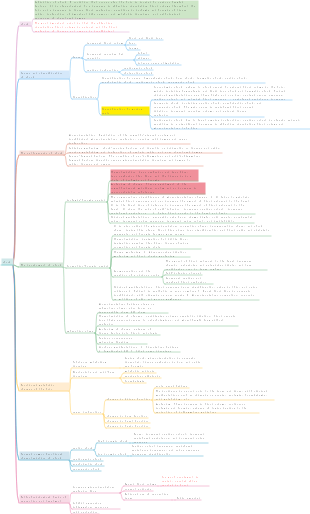
This is a mind map about shock. Shock is a complex pathophysiological process. It is a pathological process in which the body's effective circulating blood volume is reduced, tissue perfusion is insufficient, cell metabolism is disordered, and functions are impaired.
Edited at 2023-12-09 16:54:23This organizational chart, created using EdrawMax, illustrates the hierarchical structure of the Tesla Supercharger Network team. It showcases the chain of command starting from the Chief Executive Officer (CEO) down to various department heads and their respective team members. Each individual's role is clearly defined, showing how different functions such as planning, project construction, power & energy, and operations & service are organized to efficiently manage and expand the Supercharger network globally.

This 2026 Event Countdown Calendar, specifically highlighting the Christmas countdown and created via EdrawMax, presents a detailed monthly breakdown. Each month features a grid layout with a countdown mechanism towards significant events, especially Christmas. The use of red for countdown numbers creates a striking contrast, making it easy to track the days remaining until the big event. It's a perfect tool for those eagerly anticipating Christmas and wanting to plan related activities in advance.
This 2026 Holiday Planning Calendar, crafted with EdrawMax, offers a well-organized monthly view. Each month displays a grid of dates, with major holidays clearly marked. The color-coded design, using red and blue accents, helps distinguish different months and holidays at a glance. It serves as an excellent resource for planning vacations, family gatherings, or any events around holiday periods, ensuring you can make the most of your time off throughout the year.
This organizational chart, created using EdrawMax, illustrates the hierarchical structure of the Tesla Supercharger Network team. It showcases the chain of command starting from the Chief Executive Officer (CEO) down to various department heads and their respective team members. Each individual's role is clearly defined, showing how different functions such as planning, project construction, power & energy, and operations & service are organized to efficiently manage and expand the Supercharger network globally.
This 2026 Event Countdown Calendar, specifically highlighting the Christmas countdown and created via EdrawMax, presents a detailed monthly breakdown. Each month features a grid layout with a countdown mechanism towards significant events, especially Christmas. The use of red for countdown numbers creates a striking contrast, making it easy to track the days remaining until the big event. It's a perfect tool for those eagerly anticipating Christmas and wanting to plan related activities in advance.
This 2026 Holiday Planning Calendar, crafted with EdrawMax, offers a well-organized monthly view. Each month displays a grid of dates, with major holidays clearly marked. The color-coded design, using red and blue accents, helps distinguish different months and holidays at a glance. It serves as an excellent resource for planning vacations, family gatherings, or any events around holiday periods, ensuring you can make the most of your time off throughout the year.
shock
Introduction
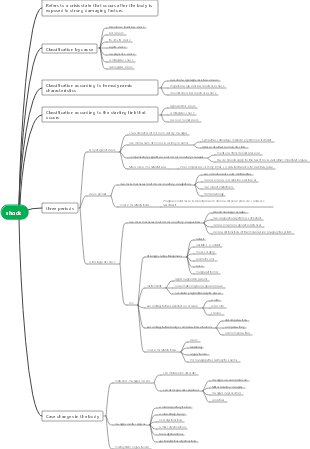
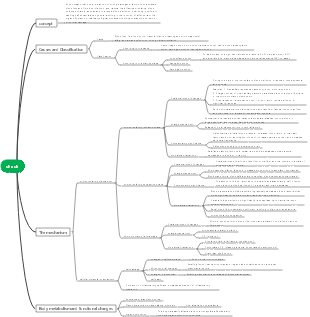
Definition: Reduction in effective circulating blood volume Fundamental change: Insufficient tissue perfusion Essence: hypoxia, not a drop in blood pressure Characteristics: production of inflammatory mediators Cause of death: MODS (multiple organ failure) The key to the occurrence and worsening of shock: acute cellular hypoxia
Classification
Hypovolemia (hemorrhagic, traumatic), infectious, cardiogenic, neurogenic, allergic
Microcirculation Phase III
Microcirculation accounts for Total cycle 20%
Early stage of shock (microcirculatory ischemia/systole)
Only going out but not entering
Small A, micro A, posterior micro A, significant contraction of precapillary sphincter
Shock phase (microcirculatory congestion phase)
Only in but not out
Characteristics: Blood stasis in capillaries Precapillary sphincter relaxes and posterior sphincter contracts
Late stage of shock (microcirculation failure stage)
No entry or exit
Features: Hypercoagulable DIC Irreversible shock, damage to multiple organ functions
Changes in body metabolism and functions during shock period
energy
Protein breakdown; blood sugar rises
Water and electricity
Early stage: respiratory alkali Late stage: pyruvate (P) → lactic acid (L) L/P increases Acidosis, oxygen dissociation curve shifts to the right Acidosis Hyperkalemia
Release of inflammatory mediators, ischemia-reperfusion injury
Interleukin, interferon, NO
secondary damage to internal organs
lung
Damage to pulmonary capillary endothelial cells and pulmonary epithelial cells Decreased surfactant: alveolar collapse or atelectasis ARDS can occur during the shock stage or 48-72 hours after shock stabilization - the main cause of death in shock
kidney
Effective circulating blood volume decreases, GFR decreases → cortical tubular necrosis → ARF, oliguria
brain
Cerebral edema, high intracranial pressure → consciousness disorder, encephalopathy, coma
Heart
Decreased coronary blood flow and focal myocardial necrosis
gastrointestinal tract
Enterogenic infections → MODS, an important cause of death
liver
The organ that rarely undergoes irreversible changes during shock is the liver.
Clinical manifestationsP30
Compensation 800ml
Nervous, excited, irritable, pale, cold limbs, fast HR, small PP, oliguria; BP does not decrease
Decompensation 1600ml
Apathetic and dull, pale skin, cold sweats, cyanosis of lips, slow pulse, progressive decrease in BP, oliguria or even anuria
monitor
General monitoring
mental state
Indifferent expression, delirium, lethargy and coma - brain disorders
Mental changes often precede BP decline
skin temperature, color
Body surface perfusion status signs
Warm limbs, dry skin, lightly pressed nails and partially pale lips, Restore color after stress relief → Shock recovery
blood pressure
SP<90mmHg, PP<20mmHg→shock
shock index
pulse rate/systolic blood pressure
0.5: No shock 1~1.5: shock >2.0: severe shock
pulse rate
Early stage of shock: pulse rate increases; BP is normal Shock decompensation: pulse rate increases; BP decreases
urine output
Renal blood perfusion index; indicator of microcirculation improvement
Urine output <25ml/h, increased specific gravity → renal vasoconstriction and insufficient blood supply Urine output >30ml/h →shock improves Normal blood pressure, low urine output, and low specific gravity →ARF
special monitoring
Central venous pressure (CVP): most commonly used
Relationship between blood volume and right heart function *CVP changes generally occur earlier than changes in arterial pressure 5-10cmH2O; < 5cmH2O: insufficient blood volume CVP>15cmH2O: cardiac insufficiency, excessive contraction of venous vascular bed, increased pulmonary circulation resistance CVP>20cmH2O: congestive heart failure
arterial blood gas analysis
PaO2: 80-100mmHg; PaCO2: 36-44mmHg
Arterial blood lactate measurement
Estimating trends in shock and recovery Normal value: 1-1.5mmol/L; critical value reaches 4mmol/L Lactate levels are associated with prognosis and continue to increase mortality ↑
DIC detection
PLT: <80×109/L Prothrombin time: >3 seconds longer than control Plasma fibrinogen determination: <1.5g/L or progressive decrease 3P test (plasma protamine secondary coagulation test): Blood smear check for broken red blood cells: >2%
Swan-Ganz floating catheter
Cardiac output (CO):4-6L/min
Heart index (CI):2.5-3.5L/min.m2
Pulmonary capillary wedge pressure (PCWP): functional status of pulmonary veins, left atrium, and left ventricle; 6-15mmHg
shock treatment
Emergency treatment
Body position: Elevate head and trunk 20-30°, lower limbs 15-20° Establish intravenous access, inhale oxygen, and maintain warmth
Rehydration (critical)
crystalloid
Actively deal with the underlying disease
Correct acid-base balance imbalance
Early stage: hyperventilation, respiratory alkalosis, oxygenation curve deviates to the left, and oxygen is not easily released Early use of alkaline drugs is not recommended Acidic environment: oxygen is easily released, relieving hypoxia Principles: use acid and alkali, improve perfusion, and use alkaline drugs in a timely manner
vasoactive drugs
vasoconstrictor
Dopamine: α, β1 and dopamine receptors Enhance myocardial contractility, increase cardiac output, and expand kidney and gastrointestinal blood vessels
Dobutamine: increases CO by enhancing stroke volume and HR - cardiogenic shock
Norepinephrine: (alpha, light beta) Norepinephrine Dobutamine: septic shock
Metahydroxylamine (alamin): indirect (alpha, light beta) The effect is the same as that of norepinephrine, but the effect is weak and lasts for 30 minutes.
Note before use: Compensate blood volume
vasodilators
Alpha blockers: phentolamine, phenoxybenzamine The BP of shock patients is relatively stable after adequate volume expansion. Which drug should be used to improve microcirculation: phentolamine
Anticholinergic drugs: atropine, anisodamine (654-2), etc.
cardiotonic pills
Drugs that stimulate α and β adrenergic receptors and have cardiac function: dopamine, dobutamine
Cardiac glycosides: enhance myocardial contractility and slow down heart rate Trinoside C (Cedilan)
Treating DIC
Heparin anticoagulation Low molecular weight dextran: expand blood volume
corticosteroid GC
For septic shock and severe shock *Refractory shock with unsatisfactory blood pressure after routine anti-shock treatment: GC
hypovolemic shock
Hemorrhagic shock (common)
Large blood vessels, liver and spleen rupture, gastroduodenal bleeding, portal hypertension variceal bleeding Rapid blood loss > 20% (1000ml) → hemorrhagic shock
treat
Replenish blood volume
Balanced salt and artificial colloid (rapid expansion and maintenance of osmotic pressure) Hb> 100g/L: no blood transfusion Hb<70g/L: Transfuse concentrated red blood cells 70-100g/L: discretion
Stop bleeding
The relationship between CVP and fluid replacement P33
traumatic shock
Trauma causes soft tissue damage, long bone fractures, blood flow loss, etc.
septic shock
Often secondary to G-infection, endotoxic shock
Inflammatory response syndrome (SRIS) criteria
T: >38℃ or <36℃ P: >90 times/min Tachypnea R: >20 times/min or hyperventilation PaCO2 <4.3kPa WBC: >12×109/L or <4×10⁹/L or immature cells >10%
Clinical manifestations of septic shock: cold shock and warm shock P34
septic shock diagnosis
SIRS, evidence of bacterial infection (culture or clinical evidence of infection), shock manifestations
treat
Septic shock bundle therapy P35
Supplement blood volume: mainly balanced salts, appropriate colloids, plasma or whole blood
control infection
Unknown pathogen: empiric dosing - broad spectrum Abdominal infection (intestinal bacteria): carbapenems, third-generation cephalosporins, anti-anaerobic drugs When the pathogenic bacteria are clear: drug susceptibility results are used
Correct acid-base imbalance
Cardiovascular active drug applications
GC
Early, large amount, maintained for 48 hours Inhibit inflammatory response and stabilize lysosomal membrane Avoid serious complications such as acute gastric mucosal damage and immunosuppression