 Wondershare EdrawMind
MindMap Gallery BIM three-dimensional site layout solution review
- 20
BIM three-dimensional site layout solution review
This article is a mind map about BIM three-dimensional site layout solutions, with detailed introduction and comprehensive knowledge. I hope it can be helpful to everyone!
Edited at 2024-03-07 20:49:37
- bacteria
This is a mind map about bacteria, and its main contents include: overview, morphology, types, structure, reproduction, distribution, application, and expansion. The summary is comprehensive and meticulous, suitable as review materials.
- Plant asexual reproduction
This is a mind map about plant asexual reproduction, and its main contents include: concept, spore reproduction, vegetative reproduction, tissue culture, and buds. The summary is comprehensive and meticulous, suitable as review materials.
- Reproductive development of animals
This is a mind map about the reproductive development of animals, and its main contents include: insects, frogs, birds, sexual reproduction, and asexual reproduction. The summary is comprehensive and meticulous, suitable as review materials.
BIM three-dimensional site layout solution review
- bacteria
This is a mind map about bacteria, and its main contents include: overview, morphology, types, structure, reproduction, distribution, application, and expansion. The summary is comprehensive and meticulous, suitable as review materials.
- Plant asexual reproduction
This is a mind map about plant asexual reproduction, and its main contents include: concept, spore reproduction, vegetative reproduction, tissue culture, and buds. The summary is comprehensive and meticulous, suitable as review materials.
- Reproductive development of animals
This is a mind map about the reproductive development of animals, and its main contents include: insects, frogs, birds, sexual reproduction, and asexual reproduction. The summary is comprehensive and meticulous, suitable as review materials.
- Recommended to you
- Outline
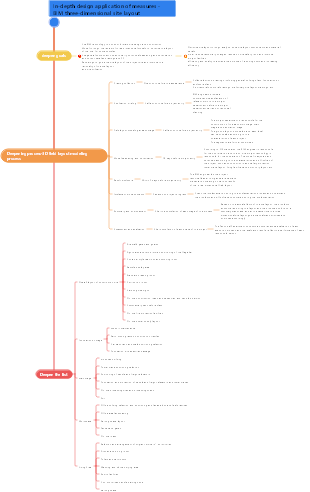
In-depth design application of measures - BIM three-dimensional site layout
deepen goals
Through BIM technology, forward site design and modeling are carried out, and the layout of the site is optimized through the review of three-dimensional models. For some complex and common component nodes, the model is deepened and optimized, and detailed drawings and 3D renderings are output to guide the construction of the project site. Site layout, improve the rationality of site layout and site utilization.
By analyzing and optimizing the site layout and issuing a detailed list of site layout components and materials, we can reduce temporary changes in facilities, reduce on-site safety risks, improve project construction efficiency and quality, and achieve the purpose of reducing costs and increasing efficiency.
Deepening process-3D field layout modeling process
Drawing collection
One month before the appearance
Collect electronic drawings, including general building plans, foundation pit enclosure drawings, building structure drawings, preliminary site layout drawings, etc.
Application briefing
Half a month before project entry
BIM engineers carry out technical planning in the project department and provide comprehensive explanations of relevant work to the project department.
Field layout modeling at each stage
Half a month before project entry
The project department is responsible for modeling the site layout of the earthwork stage, main stage, and decoration stage. According to the characteristics of each project, each stage can be further subdivided.
Model deepening and optimization
10 days before project entry
According to CIS standards, the BIM engineer is responsible for the coordination, and the on-site project technology is responsible for the cooperation. The model is adjusted and optimized according to the characteristics and difficulties of the project, such as construction roads, safety protection, tower crane layout, living facilities and dormitory layout, etc.
Result disclosure
Within 3 days before project entry
The BIM engineer led the project technical leader to organize a review and presentation meeting on various results of the three-dimensional field layout.
Implement process checks
Depends on project progress
Check the implementation during the implementation process and understand the problems and difficulties encountered during the implementation.
Summary and improvement
After the completion of each stage of the process
Based on the actual effects of the site layout, the problems encountered during the layout and the proposed solutions, a summary was made, and at the same time the three-dimensional site layout guide manual was optimized and improved accordingly.
Assessment and evaluation
After completion of each phase of the project
The Technical Department conducts a comprehensive evaluation of each execution process, and the evaluation results reflect the performance of each responsible person
Deepen the list
Overall layout of construction site
Site walls, gates and guards
Eight cards and two pictures, positioning of the flag altar
Container style tea kiosk and smoking room
Sample display area
Standard breeding room
Distribution room
Various guide signs
On-site construction roads and pedestrian and vehicle diversion
Commentary desk before class
On-site fire protection facilities
On-site power supply layout
foundation pit stage
support maintenance
Earth moving ramps, construction trestles
Car wash tank and scale positioning selection
Foundation pit pedestrian passage
main stage
proposed building
Tower crane positioning selection
Positioning of people and freight elevators
Foundation and protection of people and freight elevators and tower cranes
On-site processing sites and processing sheds
Exit
Workspace
Office building selection and positioning and facade look and feel practices
Office area landscaping
Parking space layout
Fences and gates
On-site roads
Living Area
Selection and arrangement of migrant workers’ dormitories
Kitchen and dining room
Toilets and bathrooms
Washing and clothes drying area
Sports facilities
Non-motorized vehicle parking spots
parking space
Deepen the principle
Overall layout of construction site
Site walls, gates and guards
1. The site fence is generally arranged along the red line of the project building, with a wall height of 1.8 meters or 2.5 meters; 2. The construction gates should be arranged according to the road traffic environment around the project, following the principle of facilitating vehicle entry and exit without affecting the normal traffic on the surrounding roads. It is advisable to set up two or more construction gates. The width of the gates is determined according to the actual needs of the project. Generally, it is 6m, 8m, 10m; 3. Arrange a guard room next to the gate and configure at least two gates. Non-motor vehicle passages can be set up according to needs.
Eight cards and two pictures, flag altar
1. The eight cards and two pictures are arranged according to the size and style specified by the group's CIS, and should include the project overview card, fire protection system card, civilization and environmental protection system card, safety production system card, management personnel list and supervision telephone number card, and the general plan of the construction site ; 2. The flag altar is generally arranged directly in front of the second picture of the eight tiles. It contains three flagpoles and is covered with marble. The front includes the Zhongtian LOGO and the four words "Zhongtian Construction".
Tea pavilion, smoking room
1. According to the group’s CIS standard requirements, use container-type standardized tea kiosks and smoking rooms; 2. The dimensions of the tea kiosk and smoking room are (length x width x height): 6000x3000x3000 (mm).
Sample display area
1. The sample display area includes the project’s masonry samples, roof samples, pipe well samples, staircase samples, etc.; 2. The sample area is laid with lawn bricks or absorbent bricks, and the surrounding area is greened with lawn.
Standard breeding room
1. Use a container-type standard breeding room with dimensions (length x width x height) 6000x3000x3000 (mm); 2. The standard maintenance room is equipped with filing cabinets, desks, air conditioners, shelves, and constant temperature and humidity equipment; 3. The container floor should be sloped with mortar to facilitate drainage.
guide sign
1. At the entrances and forks of the construction site, living areas, office areas, etc., set up different styles of guide signs as needed; 2. The guide signs should be eye-catching, the content should be concise and clear, and the direction should be clear.
On-site construction roads
1. The main roads in the construction site are treated with concrete hardening. For roads where heavy vehicles are frequently driven, steel bars are added when pouring concrete; 2. The road width is generally no less than 4 meters for a single lane and no less than 6 meters for a double lane. The inner radius of the turning is preferably 6 to 9 meters. 3. Concrete is generally made of C25/C30, with a thickness of 200mm. It should be covered with film in time after pouring, and watering and curing should be in place in time; 4. When pouring the construction road, set an expansion joint every 6m, and the depth of the expansion joint shall not be less than 1/3 of the pouring thickness.
Commentary desk before class
1. The lecture platform in front of the class consists of a podium and an exhibition board. The exhibition board is 6000mm long and 3000mm high; 2. The content of the display board mainly includes this month’s safety goals, work arrangements, safety education columns, safety bulletins, hazardous operation notices, etc.
On-site fire safety arrangements
1. The group’s standardized container fire pump room is used, with dimensions (length x width x height) 6000x3000x3000 (mm); 2. The fire protection distance between the dangerous goods warehouse and the project under construction is not less than 15m, the fire protection distance between the combustible material storage yard and the fixed fire site and the project under construction is not less than 10m, and the fire protection distance between other temporary facilities and the project under construction is not less than 6m; 3. Set up a circular fire lane on site with a clear width of not less than 6m and a clear height of not less than 4m. If the layout of the circular fire lane is difficult, a 12mx12m return yard can be set up at the end of the road; 4. The diameter of the on-site fire protection pipe is determined based on the water flow speed, but not less than DN100; 5. The spacing between on-site fire hydrants should not be greater than 120m. For fire extinguishers, please refer to the "Building Fire Extinguisher Configuration Design Code".
On-site power supply layout
1. The group's standardized container main distribution room is used, with dimensions (length x width x height) 4200x3000x3000 (mm); 2. The power distribution system should balance the three loads, and 220V or 380V single-phase electrical equipment should be connected to the 220/380V three-phase four-wire system; 3. Cable lines shall be laid underground or overhead, with a burial depth of not less than 0.7m, and shall be covered with a hard protective layer; 4. The edge of the earth excavation at the construction site and the edge of the cable trench shall not be less than 0.5m; 5. Cable lines in projects under construction should be introduced underground. It is strictly forbidden to introduce them through scaffolding. For vertical laying, shafts, vertical voids, etc. can be considered, and they should be laid as close to the power load center as possible. The maximum arc vertical distance from the ground should not be less than 2m. .
foundation pit stage
Earth moving ramps, construction trestles, car wash basins
1. Create supports according to the foundation pit enclosure drawings, and deepen the elevation and slope of the excavated ramps and trestle boards to meet the driving and operation requirements of excavators and muck trucks; 2. Set up a car wash pool at the entrance and exit gate of the muck truck. The size of the car wash pool (length x width x depth): 10000x4500x400 (mm).
Foundation pit pedestrian passage
1. For deeper foundation pits, set up pedestrian passages for the foundation pit, and set reasonable resting points and fixed points nearby according to the layout of the foundation pit supports.
main stage
Tower crane selection and positioning
1. Create the outline and height of the proposed building based on the general building plan, determine the installation location of the tower crane, and determine the model of the tower crane based on the tower crane's operating range and lifting weight requirements; 2. The tower crane foundation is equipped with railings, the railings are 1.8m high, and wall attachments are installed according to the requirements of different types of tower cranes; 3. The tower crane foundation and its foundation bearing capacity should comply with the instructions for use and relevant specifications. The foundation usually includes pile foundation, pile foundation concrete foundation, composite foundation and other common foundation forms; 4. The anti-overturning stability and foundation bearing capacity should be checked before installation. 5. The minimum erection distance between multiple tower cranes should ensure that the distance between the end of the boom of the low-level tower crane and the tower body of the adjacent tower crane is greater than 2m.
People and freight elevator layout
1. Select a reasonable location for the passenger and cargo elevators according to the proposed building; 2. A safety protective shed should be installed at the entrance and exit of the passenger and freight elevator. When the building height exceeds 24m, a double-layer protective shed should be installed. The first attached wall of the passenger and freight elevator should not be higher than 6m, and the spacing between each line should be 7.5m to 9m; 3. Protective doors for people and freight elevators are arranged on each floor. The door dimensions are (width x height): 1600x1800 (mm). 4. For lifts whose foundations are installed on suspended structures such as basement roofs and floors, the foundation bearing capacity, embedded parts, drainage measures, etc. should be inspected before installation to confirm that they meet the program requirements.
Various processing sheds for steel bars, formwork, masonry, etc.
1. The dimensions of the standardized processing shed are (length x width x height): 12000x6000x4200 (mm); 2. If it is located within the coverage area of the tower crane or within the falling radius of high-altitude operations, double-layer hard protection should be used; 3. The foundation should be a concrete foundation, with embedded steel plates on the top surface of the foundation, and welded connections between the processing shed columns and the embedded steel plates; 4. Determine the location of the processing shed based on comprehensive consideration of tower crane hoisting range, on-site space, transportation distance and other factors.
Exit
1. A safe passage should be set up at the entrance to the main entrance of the building. The width of the passage is greater than the width of the road, and the beam ends are each 1m longer. The depth size should be determined according to the safety protection range of high-altitude operations. The falling radius (R) is: when the height of the falling object is 2~5m, R is 3m; when the height of the falling object is 5~15m, R is 4m; when the height of the falling object is 15~30m, R is 5m; When the height of the falling object is greater than 30m, R is 6m.
decoration stage
Decoration stage cloth
1. Based on the principle of facilitating production and transportation and reducing secondary transportation, set up a storage yard for decorative materials and a storage area for construction waste nearby; 2. Fire-proof, rust-proof, and rain-proof measures should be taken for material storage, and flammable and explosive items should be classified and stored in special warehouses; 3. Carry out necessary greening landscape modeling according to the architectural drawings.
Workspace
Office building dimensions and various office layouts
1. Determine the room size and number of rooms in the office building. The standard office size is 3.6mx6m and the conference room size is 10.8mx6m; 2. Hang the Zhongtian LOGO and promotional slogans on the front of the office building, such as "Every construction must be excellent, quality first"; 3. Office layout: The conference room, data room, and construction team are located on the first floor. The safety and labor office is located near the doorman. The project manager, supervisor, and Party A offices should be located on the second floor. 4. Office buildings close to the construction site should also be equipped with protective sheds to prevent hazards caused by falling objects.
labor room
A labor room is equipped according to project needs, and functional areas such as education area, physical examination area, medical area, and check-in area are arranged in the labor room.
Office area landscaping
1. Reasonably arrange landscaping around the office building and on both sides of the road to create a beautiful and green working environment; 2. Set green stone strips around the greening, with a height of 200mm and a width of 200mm. The height of the greening soil cover should be lower than the surrounding floors and roads.
parking space
1. The standard size of the parking space is 3 meters x 6 meters. The parking space is laid with lawn tiles and a steel pipe positioning fence is set at the front end; 2. Parking spaces are arranged next to main roads, and the number of parking spaces is set according to actual needs.
Fences and gates
1. The fence is made of 200mm thick brick walls with a wall height of 1.8 meters or 2.5 meters. The top of the fence is covered with prefabricated tiles. 2. The gate adopts electric telescopic gate.
Living Area
Living Area
1. The bay of a dormitory standard room is 3.6m, the depth is 6m, and the floor height is 3m; 2. An iron or wooden 2mx0.9m single bed or bunk bed with a height of no less than 30cm should be installed in the dormitory. 3. Under the premise of ensuring that the per capita usable area is not less than 2.5m2, each dormitory must not exceed 12 people. Generally, the number of rooms required is calculated based on 5 people per room; 4. According to the actual needs of the project, set up a certain number of couple rooms with a size of 3.6mx3m; 5. Dormitories are generally two floors, with a maximum of three floors. The number and width of the stairs are determined according to the number of residents in the dormitory. Generally, a 1m wide staircase is set up on the left and right sides of the dormitory. A staircase with a width of not less than 2.5m can also be set in the middle. For stairs, the distance from the farthest room door to the stairs shall not be greater than 20m, and the height of the stair handrails and corridor railings shall not be less than 1.05m.
Kitchen and canteen
1. Determine the area size of the kitchen and canteen based on the project scale and the number of diners; 2. The kitchen should be equipped with independent operating room, storage room and gas tank storage room; 3. The distance between the canteen and toilets, garbage stations and other pollution sources should be no less than 15 meters, and should not be located on the downwind side of the pollution sources; 4. The operation room is equipped with a flushing pool, a cleaning pool, a disinfection pool, and a grease trap, and the floor is treated with anti-slip hardening.
Toilets and bathrooms
1. Automatic flushing or mobile toilets should be installed at the construction site; 2. The toilet seats in the living area should be set up so that there is one squat toilet for every 50 people in the men's toilet and every 25 people in the women's toilet. There should be a 100cm long urinal trough for every 50 people in the men's toilet. The spacing between squat toilets should be no less than 900mm, and partitions should be set between squatting stations. The height of the partition is not less than 900mm; 3. The ratio of bathroom showers to the number of people is not less than 1:30, and the distance between showers is not less than 1000mm; 4. The floors of toilets and bathrooms should be hardened and treated with anti-slip treatment.
Washing area and clothes drying area
1. Set up a washing area and a clothes drying area next to the dormitory building to facilitate workers' daily washing and drying; 2. Set up awnings in the washing area and clothes-drying area, which are built with rectangular steel pipes and plastic plates on the top.
sports facilities
1. According to the size of the living area, reasonably set up sports facilities, such as basketball courts, table tennis tables, fitness equipment, etc.
Non-motorized carport
1. Arrange non-motorized carports near the door of the living area to facilitate employees to park bicycles and electric vehicles, and set up a certain number of charging sockets to prevent employees from pulling charging cables privately and eliminate fire safety hazards.
deepen results