MindMap Gallery Timeline of ancient Chinese history and historical events and figures of class changes, etc.
Regarding the mind map of ancient Chinese history, the timeline of ancient Chinese history, and the historical events and figures of class changes, there is a knowledge summary. I hope it will be helpful to you!
Edited at 2023-11-25 19:04:51This is a mind map about bacteria, and its main contents include: overview, morphology, types, structure, reproduction, distribution, application, and expansion. The summary is comprehensive and meticulous, suitable as review materials.

This is a mind map about plant asexual reproduction, and its main contents include: concept, spore reproduction, vegetative reproduction, tissue culture, and buds. The summary is comprehensive and meticulous, suitable as review materials.
This is a mind map about the reproductive development of animals, and its main contents include: insects, frogs, birds, sexual reproduction, and asexual reproduction. The summary is comprehensive and meticulous, suitable as review materials.
This is a mind map about bacteria, and its main contents include: overview, morphology, types, structure, reproduction, distribution, application, and expansion. The summary is comprehensive and meticulous, suitable as review materials.
This is a mind map about plant asexual reproduction, and its main contents include: concept, spore reproduction, vegetative reproduction, tissue culture, and buds. The summary is comprehensive and meticulous, suitable as review materials.
This is a mind map about the reproductive development of animals, and its main contents include: insects, frogs, birds, sexual reproduction, and asexual reproduction. The summary is comprehensive and meticulous, suitable as review materials.
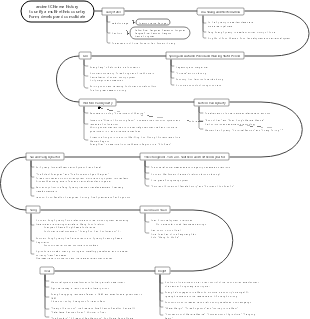
Ancient Chinese history timeline
Xia Dynasty
Time: approximately 2070 BC to approximately 1600 BC
Class Change: Transition from Tribal to Slavery Society
Historical events: Yu established the Xia Dynasty, and implemented a hereditary system after Qi succeeded to the throne
Main deeds: Yu controlled the floods and started to conquer the Youhu clan
Turning point: After Qi succeeded to the throne, he implemented the hereditary system and broke the tradition of abdication.
Main characters: Yu, Qi, Taikang, Shaokang, etc.
Shang Dynasty
Time: About 1600 BC to about 1046 BC
Class Change: Further Development of Slavery Society
Historical events: Shang Tang destroyed Xia, Pan Geng moved to Yin, and Wu Ding revived
Main deeds: Shang Tang destroyed Xia, Pan Geng moved to Yin, and Wu Ding revived
Turning point: Pan Geng moved to Yin, and the Shang Dynasty revitalized
Main characters: Shang Tang, Pan Geng, Wu Ding, Fu Hao, etc.
Western Zhou Dynasty
Time: approximately 1046 BC to 771 BC
Class changes: Slavery society further developed and feudalism sprouted
Historical events: King Wu conquered Zhou, Duke Zhou assisted the government, King You of Zhou beaconed the princes
Main deeds: King Wu defeated Zhou, Duke Zhou assisted the government, King You of Zhou played beacon fire on the princes
Turning point: King You of the Zhou Dynasty played with the princes with beacon fire, and the Western Zhou Dynasty was destroyed
Main characters: King Wu of Zhou, Duke of Zhou, King You of Zhou, Bao Si, etc.
Spring and Autumn Period
Time: 770 B.C. to 476 B.C.
Class changes: Slavery society gradually disintegrated and feudalism gradually formed
Historical events: King Ping of Zhou moved eastward, Duke Huan of Qi came to hegemony, Duke Wen of Jin came to hegemony, and Wu and Yue fought for hegemony
Main deeds: King Ping of Zhou moved eastward, Duke Huan of Qi came to hegemony, Duke Wen of Jin came to hegemony, Wu and Yue fought for hegemony
Turning point: King Ping of Zhou moved eastward, the beginning of the Eastern Zhou Dynasty
Main characters: King Ping of Zhou, Duke Huan of Qi, Duke Wen of Jin, Gou Jian, etc.
Warring States Period
Time: 475 BC to 221 BC
Class changes: feudalism gradually formed and the scholar class rose
Historical events: Three families were divided into Jin, Shang Yang’s reforms, the Battle of Changping, Qin destroyed the Six Kingdoms
Main deeds: Three families divided into Jin, Shang Yang’s reform, the Battle of Changping, Qin destroyed the six kingdoms
Turning point: Qin destroyed the six kingdoms and unified China
Main characters: Shang Yang, Su Qin, Zhang Yi, Qin Shihuang, etc.
Qin Dynasty
Time: 221 BC to 206 BC
Class changes: the feudal system was established and the emperor system was established
Historical events: Qin Shihuang unified the six countries, implemented the system of prefectures and counties, burned books and harassed Confucian scholars, and peasant uprisings in the late Qin Dynasty
Main deeds: Qin Shihuang unified the six countries, implemented the system of prefectures and counties, burned books and harassed Confucian scholars, and peasant uprisings in the late Qin Dynasty
Turning point: Peasant uprising at the end of Qin Dynasty and the fall of Qin Dynasty
Main characters: Qin Shihuang, Li Si, Zhao Gao, Xiang Yu, Liu Bang, etc.
Han Dynasty
Time: 202 BC to 220 AD
Class changes: the feudal system further developed and the scholar class grew
Historical events: the Chu-Han war, the rule of Wen and Jing, the unification of Emperor Wu of the Han Dynasty, and the usurpation of the Han Dynasty by Wang Mang
Main deeds: Chu-Han War, Wen and Jing’s rule, Han Emperor Wu’s unification, Wang Mang’s usurpation of the Han Dynasty
Turning point: Wang Mang usurped the Han Dynasty and established the new dynasty
Main characters: Liu Bang, Xiang Yu, Emperor Wu of Han Dynasty, Wang Mang, etc.
Three Kingdoms, Two Jins, Southern and Northern Dynasties period
Time: 220 AD 589 AD
Class changes: the gentry clan system was formed, and the feudal system further developed
Historical events: The Three Kingdoms were established, the Western Jin Dynasty was unified, the Five Husbands disrupted China, and the Southern and Northern Dynasties stood side by side.
Main deeds: the establishment of the Three Kingdoms, the unification of the Western Jin Dynasty, the five chaos in China, and the coexistence of the Southern and Northern Dynasties
Turning point: Five chaos disrupted China, and the Southern and Northern Dynasties stood side by side.
Main characters: Cao Cao, Liu Bei, Sun Quan, Sima Yi, Yang Jian, etc.
Sui and Tang Dynasties
Time: 581 AD 907 AD
Class changes: the decline of the gentry system and the rise of the imperial examination system
Historical events: the unification of the Sui Dynasty, the rule of Zhenguan, the prosperous age of Kaiyuan, and the Anshi Rebellion
Main events: the unification of the Sui Dynasty, the rule of Zhenguan, the prosperous age of Kaiyuan, and the Anshi Rebellion
Turning point: The Anshi Rebellion, the Tang Dynasty turned from prosperity to decline
Main characters: Emperor Wen of Sui Dynasty, Emperor Yang of Sui Dynasty, Emperor Taizong of Tang Dynasty, Wu Zetian, Emperor Xuanzong of Tang Dynasty, etc.
Five Dynasties and Ten Kingdoms period
Time: 907 AD 960 AD
Class changes: feudalism further developed and warlords separated themselves
Historical events: Zhu Wen usurped the Tang Dynasty, the Five Dynasties changed, and the ten kingdoms coexisted
Main deeds: Zhu Wen usurped the Tang Dynasty, the Five Dynasties changed, and the ten kingdoms stood side by side.
Turning point: Zhao Kuangyin established the Northern Song Dynasty and the Five Dynasties and Ten Kingdoms ended
Main characters: Zhu Wen, Li Cunxu, Shi Jingtang, Liu Zhiyuan, etc.
Song
Time: 960 AD 1279 AD
Class changes: feudalism further developed and civilian politics rose
Historical events: Chenqiao Mutiny, Chanyuan Alliance, Jingkang’s Shame, the Establishment of the Southern Song Dynasty
Main deeds: Chenqiao Mutiny, Chanyuan Alliance, Jingkang's Shame, the Establishment of the Southern Song Dynasty
Turning point: The shame of Jingkang, the demise of the Northern Song Dynasty
Main characters: Zhao Kuangyin, Zhao Guangyi, Yue Fei, Qin Hui, etc.
Yuan Dynasty
Time: 1271 AD 1368 AD
Class changes: Feudalism further developed and Mongolian aristocracy ruled
Historical events: Kublai Khan established the Yuan Dynasty, the Yuan Dynasty unified China, and the Red Turban Army uprising
Main deeds: Kublai Khan established the Yuan Dynasty, the Yuan Dynasty unified China, and the Red Turban Army uprising
Turning point: The Red Scarf Army uprising and the fall of the Yuan Dynasty
Main characters: Kublai Khan, Genghis Khan, Zhu Yuanzhang, etc.
Ming Dynasty
Time: 1368 AD 1644 AD
Class changes: the feudal system further developed and the eight-legged essay system was established
Historical events: Zhu Yuanzhang established the Ming Dynasty, the Battle of Jingnan, the Tumubao Incident, and the peasant uprising in the late Ming Dynasty
Main deeds: Zhu Yuanzhang established the Ming Dynasty, the Battle of Jingnan, the Tumubao Incident, and the peasant uprising in the late Ming Dynasty
Turning point: Peasant uprising in the late Ming Dynasty and the demise of the Ming Dynasty
Main characters: Zhu Yuanzhang, Zhu Di, Zhang Juzheng, Wei Zhongxian, etc.
Qing Dynasty
Time: 1644 AD 1911 AD
Class changes: feudalism further developed and Manchu aristocracy ruled
Historical events: Qing troops entering the country, the heyday of Kangxi and Qianlong, the Opium War, the Taiping Rebellion
Main events: Qing troops entering the country, Kangxi and Qianlong, Opium War, Taiping Rebellion
Turning point: The Opium War, the beginning of modern Chinese history
Main characters: Kangxi, Yongzheng, Qianlong, Cixi, etc.