MindMap Gallery Jaundice mind map
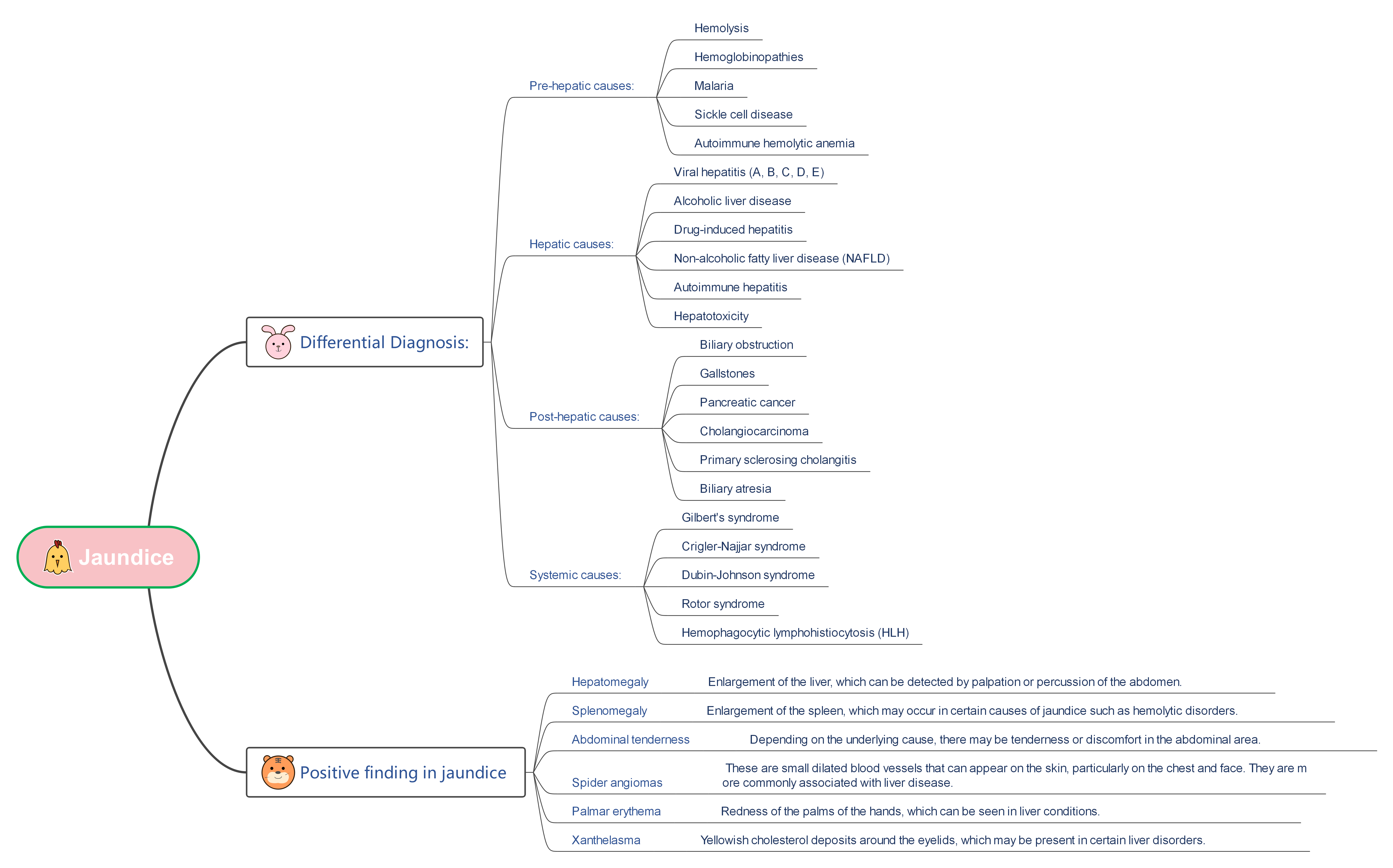
This is a mind map about jaundice, including the cause, definition, mechanism and clinical manifestations, accompanying symptoms, normal metabolism of bilirubin, etc.
Edited at 2023-11-13 09:16:47This is a mind map about bacteria, and its main contents include: overview, morphology, types, structure, reproduction, distribution, application, and expansion. The summary is comprehensive and meticulous, suitable as review materials.

This is a mind map about plant asexual reproduction, and its main contents include: concept, spore reproduction, vegetative reproduction, tissue culture, and buds. The summary is comprehensive and meticulous, suitable as review materials.
This is a mind map about the reproductive development of animals, and its main contents include: insects, frogs, birds, sexual reproduction, and asexual reproduction. The summary is comprehensive and meticulous, suitable as review materials.
This is a mind map about bacteria, and its main contents include: overview, morphology, types, structure, reproduction, distribution, application, and expansion. The summary is comprehensive and meticulous, suitable as review materials.
This is a mind map about plant asexual reproduction, and its main contents include: concept, spore reproduction, vegetative reproduction, tissue culture, and buds. The summary is comprehensive and meticulous, suitable as review materials.
This is a mind map about the reproductive development of animals, and its main contents include: insects, frogs, birds, sexual reproduction, and asexual reproduction. The summary is comprehensive and meticulous, suitable as review materials.
jaundice
definition
Jaundice is caused by an increase in bilirubin in the serum and is a symptom and sign of yellowing of the skin, mucous membranes and sclera
Normal serum total bilirubin is 1.7 to 17.1 micromoles per liter. Bilirubin is between 17.1 and 34.2 micromoles per liter, which is not easily detectable clinically and is called latent jaundice. Above 34.2 micromoles per liter clinically visible jaundice
Normal metabolism of bilirubin
Aged red blood cells in normal blood circulation are phagocytized by monocytes and macrophages to form heme and globin. Heme is converted into biliverdin under the action of catalytic enzymes, and the latter is reduced to bilirubin by reductase, accounting for the bile content. 80% to 85% of the hemoglobin comes from, and a small amount of bilirubin comes from the hemoglobin of immature red blood cells in the bone marrow and the protein containing heme in the liver, accounting for 15% to 20% of the total bilirubin
The bilirubin formed above is called free bilirubin or unconjugated bilirubin (UCB) and is transported by binding to serum proteins. It is insoluble in water and cannot be filtered out from the glomerulus, so unconjugated bilirubin does not appear in the urine.
Unconjugated bilirubin is transported to the liver through the blood circulation and separated from albumin. It is then taken up by liver cells and combined with Y and Z carrier proteins in the liver cells. It is combined with glucuronic acid through the catalysis of glucuronosyltransferase. Conjugated bilirubin (CB) is formed. Conjugated bilirubin is water-soluble and can be filtered through the glomerulus and excreted in the urine
After conjugated bilirubin is discharged from the liver cells into the intestine through the bile duct, it is decomposed and reduced by bacterial enzymes in the terminal ileum and colonoscope to form urobilinogen. Most of the urobilinogen is excreted in the feces and is called fecal bilinogen. A small part is absorbed through the intestines and returns to the liver. Most of it is converted into bilirubin and excreted into the intestines with bile, forming the so-called enterohepatic circulation of bilirubin. A small part of urobilinogen is absorbed back to the liver. , excreted from the body by the kidneys through systemic circulation
Classification
Classification by etiology
Hemolytic jaundice
Hepatocellular jaundice
Cholestatic jaundice
Congenital non-hemolytic jaundice
Classification according to the properties of bilirubin
Jaundice mainly caused by increased UCB
Jaundice mainly caused by increased CB
Etiology and clinical manifestations
Hemolytic jaundice
definition
Any disease that can cause hemolysis can cause hemolytic jaundice
Cause
Congenital hemolytic anemia
Thalassemia (sickle cell), hereditary spherocytosis
Acquired hemolytic anemia
Neonatal hemolysis, transfusion hemolysis and favismosis, primary ammonia, hemolysis caused by snake venom
mechanism
On the one hand, due to the destruction of a large number of red blood cells, a large amount of unconjugated bilirubin is formed, which exceeds the uptake, conjugation and excretion functions of liver cells
On the other hand, anemia, hypoxia and the toxic effects of red blood cell destruction products caused by hemolysis weaken the metabolic function of bilirubin in liver cells, causing unconjugated bilirubin to remain in the blood, causing jaundice to exceed normal levels
clinical manifestations
Hemolytic jaundice generally causes the skin and mucous membranes to be light lemon in color, without skin itching
In acute hemolysis, there are also fever, chills, headache, vomiting, low back pain, varying degrees of anemia and hemoglobinuria, and the urine is soy sauce or tea-colored. Severe cases may have acute renal failure,
Chronic hemolysis is mostly congenital. In addition to anemia, there is also splenomegaly.
Laboratory tests
UCB mainly increases, CB is basically normal
As UCB in the blood increases, the formation of CB also increases compensatoryly, and the discharge from the biliary tract to the intestine also increases, leading to an increase in urobilinogen, a subsequent increase in fecal bilinogen, and a darker fecal color
Due to hypoxia and toxins, the ability of the liver to process increased urobilinogen is reduced, resulting in an increase in urobilinogen in the blood, which is excreted from the kidneys, so urobilinogen is increased in the urine, but there is no bilirubin
Hepatocellular jaundice
Cause
Due to various diseases that cause serious damage to liver cells, such as viral hepatitis, cirrhosis, toxic hepatitis, leptospirosis, sepsis, etc.
Mechanism
Due to severe damage to liver cells, the uptake and binding function of bilirubin by liver cells is reduced, so UCB in the blood increases.
Undamaged liver cells can still convert part of UCB into CB. Part of the CB is still excreted from the bile duct through the capillary bile ducts. The other part of CB is refluxed into the blood circulation due to the infiltration of swollen liver cells and inflammatory cells that compresses the capillary bile ducts and bile canaliculi or the obstruction of bile plugs, which blocks bile excretion. CB in the body increases and jaundice occurs
clinical manifestations
The skin and mucous membranes appear light to dark yellow, accompanied by mild skin itching, and other primary liver manifestations such as loss of appetite and abdominal effusion
laboratory tests
Both CB and UCB in serum increase. In jaundice hepatitis, CB increases more than UCB, and the qualitative test of bilirubin in urine is positive
Cholestatic jaundice
Classification
Intrahepatic cholestasis
Intrahepatic obstructive cholestasis
Common in liver sludge-like stones, tumor emboli, parasitic diseases, such as clonorchiasis
Intrahepatic cholestasis
Such as viral cirrhosis, drug cholestasis
Extrahepatic cholestasis
Cause
Caused by common bile duct stones, strictures, inflammatory edema, tumors and roundworm obstruction
mechanism
Due to the obstruction of the bile duct, the pressure in the upper bile duct increases, the bile duct dilates, causing the small bile ducts and capillary bile ducts to rupture, and the bilirubin in the bile flows back into the blood
clinical manifestations
The skin and mucous membranes are dark yellow, and those with complete bile duct obstruction are dark yellow or even yellow-green, accompanied by skin itching and bradycardia, and the color of the feces becomes lighter and white clay.
laboratory tests
Serum CB is mainly increased, and urine bilirubin test is positive. Because the enterohepatic circulation pathway is blocked, urobilinogen and fecal bibilogen are reduced or absent
Congenital non-hemolytic jaundice
definition
Jaundice is caused by defects in the uptake, binding and excretion of bilirubin by liver cells
Classification
Gilbert syndrome
Dysfunction of UCB uptake by hepatocytes and insufficient glucuronosyltransferase lead to an increase in serum UCB and jaundice
DJ syndrome
Jaundice occurs due to increased serum cb
CN syndrome
Liver cells lack glucuronosyltransferase, resulting in the inability of UCB to form CB, resulting in an increase in UCB in the blood and the occurrence of jaundice
This disease can produce kernicterus due to extremely high levels of UCB in the blood. It is seen in newborns and has a very poor prognosis
Rotor syndrome
There are congenital defects in the uptake of UCB and the excretion of CB, resulting in increased bilirubin
Auxiliary inspection
Accompanying symptoms
With fever
Commonly seen in acute cholangitis, liver abscess, leptospirosis, sepsis, and lobar pneumonia
Acute hemolysis, fever may occur first, and then jaundice
Accompanied by severe pain in the upper abdomen
Severe pain in the right upper quadrant, chills, high fever, and jaundice are Charcot's triad, suggesting acute suppurative cholangitis
With hepatomegaly
With gallbladder enlargement
It indicates obstruction of the common bile duct, which is common in pancreatic head cancer and ampullary cancer
With splenomegaly
Viral hepatitis, leptospirosis, sepsis, malaria
With abdominal effusion