MindMap Gallery Chapter 39 Anemia✓
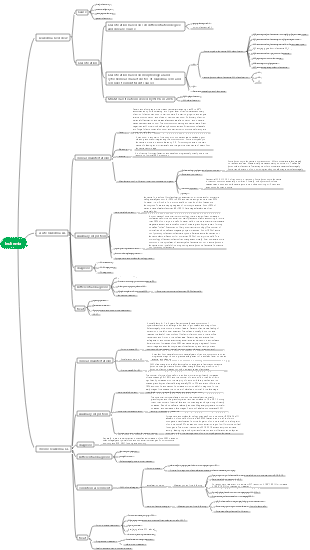
Internal Medicine Chapter 5 Blood System Diseases Anemia. The pathogenesis of anemia is insufficient red blood cell production or excessive red blood cell destruction or blood loss. This picture summarizes the knowledge of iron deficiency anemia IDA and aplastic anemia AA.
Edited at 2023-10-29 23:35:25This is a mind map about bacteria, and its main contents include: overview, morphology, types, structure, reproduction, distribution, application, and expansion. The summary is comprehensive and meticulous, suitable as review materials.

This is a mind map about plant asexual reproduction, and its main contents include: concept, spore reproduction, vegetative reproduction, tissue culture, and buds. The summary is comprehensive and meticulous, suitable as review materials.
This is a mind map about the reproductive development of animals, and its main contents include: insects, frogs, birds, sexual reproduction, and asexual reproduction. The summary is comprehensive and meticulous, suitable as review materials.
This is a mind map about bacteria, and its main contents include: overview, morphology, types, structure, reproduction, distribution, application, and expansion. The summary is comprehensive and meticulous, suitable as review materials.
This is a mind map about plant asexual reproduction, and its main contents include: concept, spore reproduction, vegetative reproduction, tissue culture, and buds. The summary is comprehensive and meticulous, suitable as review materials.
This is a mind map about the reproductive development of animals, and its main contents include: insects, frogs, birds, sexual reproduction, and asexual reproduction. The summary is comprehensive and meticulous, suitable as review materials.
anemia
Anemia Overview
Etiology and pathogenesis
Insufficient red blood cell production
Too much red blood cell destruction
blood loss
Classification
Morphological classification
macrocytic anemia
normocytic anemia
microcytic hypochromic anemia
Classification of causes and pathogenesis
Reduced RBC production
RBC destroys too much
blood loss
Classification of bone marrow erythroid hyperplasia
dysplastic anemia
proliferative anemia
clinical manifestations
general performance
Fatigue, sleepiness, and weakness are the most common and earliest symptoms of anemia. Some patients may develop low-grade fever. Pale skin and mucous membranes are the main signs of anemia. Iron deficiency anemia causes flat nails, anti-nails, thick and brittle nail striae, and renal anemia and megaloblastic anemia cause edema and paleness.
Respiratory and circulatory system performance
Palpitations and shortness of breath are most common after activity. Dyspnea occurs in more severe anemia, with rapid heart rate, strong heartbeat, and increased pulse pressure. Some patients may have anemic heart disease
central nervous system manifestations
Headache, dizziness, dizziness, tinnitus, difficulty concentrating and drowsiness, etc. Lack of sleep, weakness, and fatigue are symptoms of muscle tissue hypoxia.
Digestive system performance
Loss of appetite, bloating, nausea, etc. are common symptoms. Loss of appetite and anorexia are early manifestations of megaloblastic anemia. Atrophy of the lingual papilla is seen in nutritional anemia;
Urogenital manifestations
Increased nocturia, decreased urine specific gravity, changes in sexual desire, and menstrual disorders are also common in female patients.
Clinical manifestations of primary disease
The skin is dry, the hair is dry, and wounds heal slowly. Pale fundus and retinal hemorrhage are occasionally seen.
diagnosis
Diagnostic steps
Ask about medical history
Physical examination
Auxiliary inspection
Diagnosis ideas
Types of anemia
Hemoglobin and red blood cell count are reliable indicators of anemia.
Peripheral blood smear examination can provide diagnostic clues to the nature and type of anemia.
Reticulocyte count can help understand red blood cell proliferation and serve as an early indicator of treatment for anemia
bone marrow examination
Accompanying symptoms and signs
Iron deficiency anemia IDA
iron metabolism
Distribution of iron
Normal iron content for adult men is 50mg/Kg and for women is 35mg/Kg
Sources and absorption of iron
iron transport
Iron recycling and excretion
Hepcidin and Iron Balance
Cause
Lost too much
Insufficient intake
Increased requirements for women of childbearing age, infants, children and adolescents during growth and development
Food composition is unreasonable
Drugs or stomach or duodenal diseases
malabsorption
genetic factors
Pathogenesis
Effects on the hematopoietic system
Effects on iron metabolism
Effects on tissue cell metabolism
clinical manifestations
Manifestations of primary iron deficiency diseases
Manifestations of tissue iron deficiency
Children and adolescents have developmental delays, reduced physical strength, low IQ, excitability, inattention, irritability, irritability or apathy, pica and dysphagia (Plummer-Vinson syndrome).
In addition to pale skin and mucous membranes, hair is dry and easy to fall off and break, nails are flat, dull, and easily broken. Some patients have spoon-shaped nails (antionychia) or mildly enlarged spleens.
manifestations of anemia
Dizziness, headache, pale complexion, fatigue, easy fatigue, palpitations, shortness of breath after activity, vertigo and tinnitus, etc.
Auxiliary inspection
peripheral blood test
bone marrow examination
Iron metabolism index detection
Determination of red blood cell free protoporphyrin FEP and blood zinc protoporphyrin ZPP
diagnosis
Comply with any two or more of Articles 1 and 2-9
1. Microcytic hypochromic anemia: male hemoglobin HGB<120g/L, female HGB<110g/L, MCV<80fl, MCH<27pg, MCHC<0.32, RBC morphology is hypochromic.
2. Have clear causes and clinical manifestations of iron deficiency
3. Ferritin SF<14μg/L (for diagnosis of non-simple iron deficiency, the SF standard can be raised to <60μg/L)
4. Serum iron SI<8.95μmol/L, total iron binding capacity TIBC>64.44μmol/L
5. Transferrin saturation TS<0.15
6. Bone marrow iron staining shows that the small bone marrow granules that can be stained with iron disappear and sideroblasts are less than 15%.
7. FEP>0.9μmol/L (whole blood), or blood ZPP>0.96μmol/L (whole blood), or ZPP>3μg/gHGB
8. Serum sTfR (serum soluble TfR) concentration >26.5nmol/L (2.25mg/L)
9. Iron treatment is limited
Differential diagnosis
globinogenic anemia
anemia of chronic disease
sideroblastic anemia
treat
Cause treatment
iron therapy
Oral iron supplements
iron injection
supportive care
Efficacy evaluation
Valid criteria
After iron treatment, HGB rises by at least 15g/L as a valid standard, and a rise of more than 20g/L is more reliable.
Cure criteria
Clinical symptoms completely disappeared
HGB returns to normal, men >120/L, women >110g/L, pregnant women >100g/L
The aforementioned indicators for diagnosing iron deficiency all returned to normal, especially indicators reflecting iron storage and iron in RBCs, such as SF, FEP (or ZPP), sTfR, etc. And SF≥50μg/L, FEP<0.9μmol/L (50μg/L), ZPP<0.96μg/L (60μg/L), sTfR≤2.25mg/L
Eliminate the cause of iron deficiency
Replenish iron stores
aplastic anemia AA
Cause
primary
Diseases resulting from abnormal quality of hematopoietic stem cells (HSCs), such as PNH
Autoimmune mediated AA, such as systemic lupus erythematosus, Hashimoto's thyroiditis
Cytopenia of undetermined significance
Secondary
Hematopoietic cell tumors, such as hairy cell leukemia, MM
Tumors from other systems infiltrate bone marrow
myelofibrosis
severe nutritional anemia
Chemical substances, drugs, radiation damage, viral infections, etc.
Pathogenesis
immune abnormalities
Hematopoietic stem cell abnormalities
HSC toxic damage
HSC own defects
Abnormal hematopoietic microenvironment
clinical manifestations
The main clinical manifestations of aplastic anemia are anemia, bleeding and infection
Heavy AA (SAA)
Anemia progressively worsens, accompanied by obvious fatigue, dizziness, palpitations, etc.
Skin infections and lung infections are common. In severe cases, septicemia may occur. High fever or hyperpyrexia poisoning is often a symbol of sepsis. The condition is dangerous and commonly used symptomatic treatments are not easy to be effective.
Bleeding sites are widespread. In addition to skin and mucous membranes, there are often deep bleeding, such as blood in the stool, hematuria, uterine bleeding or intracranial bleeding, which are life-threatening. Intracranial hemorrhage is a common cause of death
Non-heavy duty AA (NSAA)
The onset and progression are slow. ①Anemia is often the first and main manifestation. ②The bleeding is light, mainly on the skin and mucous membranes. Except for women who are prone to uterine bleeding, visceral bleeding is rare. ③Infections are more common in the respiratory tract, and severe infections are rare
Auxiliary inspection
peripheral blood test
bone marrow examination
bone marrow cytology examination
bone marrow biopsy
Immunological examination
Cytogenetic testing
Film degree exam
diagnosis
Pancytopenia, absolute decrease in reticulocyte count (<1% in children), and increased lymphocyte proportion meeting at least two of the three criteria
HGB<100g/L
PLT count<50*10 9/L (children<100*10 9/L)
ANC<1.5*10 9/L
Bone marrow examination shows that at least one part of the bone marrow has reduced or severely reduced proliferation. If the proliferation is active, there must be a significant decrease in megakaryocytes and a relative increase in lymphocytes. The small granular component of the bone marrow should show an increase in non-hematopoietic cells, an increase in adipose tissue, and no increase in reticulin. There is no abnormality. cell
Other diseases that cause pancytopenia must be excluded, such as PNH, MDS, autoantibody-mediated pancytopenia, AL, malignant histiocytosis, etc.
Differential diagnosis
congenital bone marrow failure
The acid hemolysis test (Ham) test, sugar water test and urine hemosiderin test (Rom test) were all positive. Neutrophil alkaline phosphatase activity is normal or reduced, and clinically, recurrent hemoglobinuria (soy sauce-colored urine), jaundice, and splenomegaly are common.
Paroxysmal nocturnal hemoglobinuria PNH
Myelodysplastic SyndromeMDS
The blood picture shows a decrease in one or two items, which does not necessarily mean pancytopenia. Erythroid megaloblastic changes, unbalanced nuclear and cytoplasmic development, obviously active bone marrow hyperplasia, and pathological hematopoiesis in the three lineage cells are the obvious characteristics of this disease.
hypoproliferative acute leukemia
Low blood cells caused by other reasons
treat
Symptomatic and supportive treatment
Safeguard
blood transfusion
control infection
control bleeding
iron removal therapy
Treatment for AA
NSAA
High-dose androgens can stimulate bone marrow hematopoiesis and are effective in chronic aplastic anemia, but are ineffective in severe aplastic anemia. Commonly used testosterone derivatives such as stanazol and danazol are particularly effective in selecting blood stem cells with a sound hematopoietic microenvironment and residual blood stem cells.
SAA
The immunosuppressant anti-lymphocyte globulin (ALG) or anti-thymocyte globulin (ATG) is currently the main drug for the treatment of severe aplastic anemia and is suitable for cases with suppressive lymphocytes.
Hematopoietic cytokines are mainly used for severe aplastic anemia, and can promote the recovery of blood images at the same time or after using immunosuppressants. Including G-GSF, GM-CSF and erythropoietin EPO, etc.
Bone marrow transplantation is mainly used for severe aplastic anemia. It is best to apply it early before the patient has received a blood transfusion or infection. The patient should not be older than 40 years old and has a suitable bone marrow donor
Treatment of specific types of aplastic anemia
Efficacy evaluation
prevention
Health education and humanistic care