MindMap Gallery Chapter 40 Leukemia✓
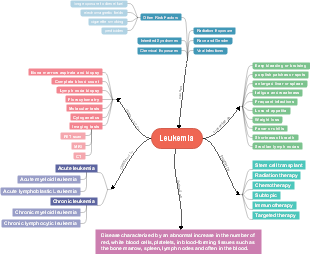
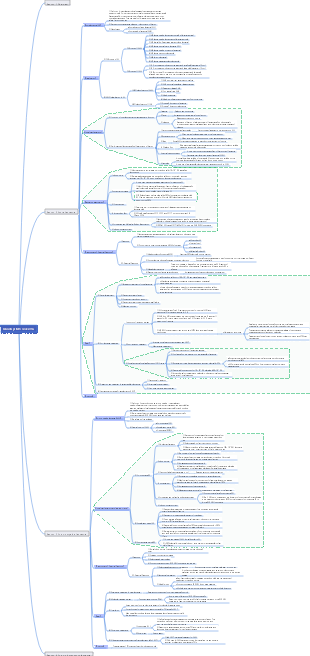
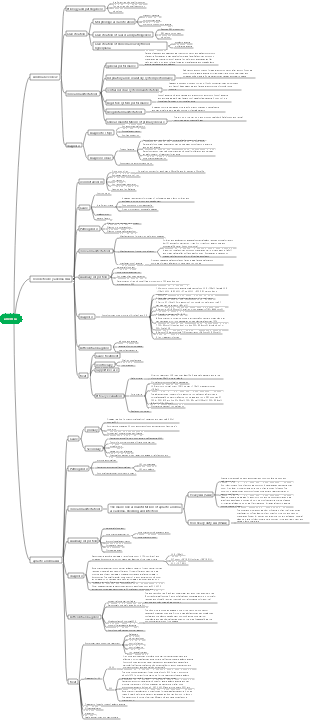
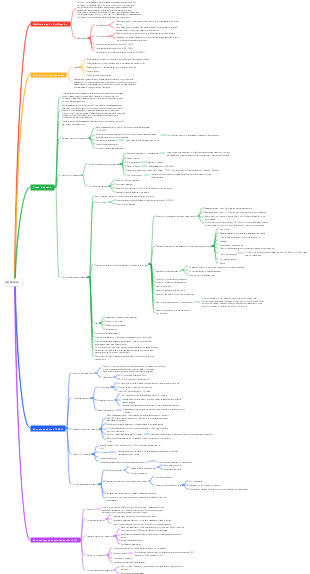
Internal Medicine Chapter 5 Blood System Diseases Leukemia can be divided into acute leukemia AL and chronic leukemia CL according to the degree of cell differentiation and the severity of the disease. Let’s learn more together.
Edited at 2023-10-29 23:34:47This is a mind map about bacteria, and its main contents include: overview, morphology, types, structure, reproduction, distribution, application, and expansion. The summary is comprehensive and meticulous, suitable as review materials.

This is a mind map about plant asexual reproduction, and its main contents include: concept, spore reproduction, vegetative reproduction, tissue culture, and buds. The summary is comprehensive and meticulous, suitable as review materials.
This is a mind map about the reproductive development of animals, and its main contents include: insects, frogs, birds, sexual reproduction, and asexual reproduction. The summary is comprehensive and meticulous, suitable as review materials.
This is a mind map about bacteria, and its main contents include: overview, morphology, types, structure, reproduction, distribution, application, and expansion. The summary is comprehensive and meticulous, suitable as review materials.
This is a mind map about plant asexual reproduction, and its main contents include: concept, spore reproduction, vegetative reproduction, tissue culture, and buds. The summary is comprehensive and meticulous, suitable as review materials.
This is a mind map about the reproductive development of animals, and its main contents include: insects, frogs, birds, sexual reproduction, and asexual reproduction. The summary is comprehensive and meticulous, suitable as review materials.
leukemia
Leukemia Overview
Cause
Viral infection
chemical factors
radioactive factors
genetic factors
Classification
Classification based on cell differentiation degree and disease course
acute leukemia AL
chronic leukemia CL
Classification based on morphological and cytochemical characteristics of leukemia cells and cell lines from different sources
AL
Acute myeloid leukemia AML classification
M0 acute myeloid leukemia, minimally differentiated type
M1 acute myeloid leukemia undifferentiated type
M2 acute myeloid leukemia partially differentiated type
M3 acute promyelocytic leukemia APL
M4 acute myeloid-monocytic leukemia
M5 acute monocytic leukemia
M6 acute erythroleukemia
M7 acute megakaryoblastic leukemia
acute lymphoblastic leukemia ALL classification
L1
L2
L3
CL
Rare and special types of leukemia
MICM classification revised by WHO in 2016
AML classification
ALL classification
acute leukemia AL
clinical manifestations
fever
Fever can be low-grade, or can reach temperatures as high as 39 to 40°C, accompanied by chills, sweating, etc. Higher fever often indicates secondary infection. Infection can occur in various parts. Stomatitis, gingivitis, and angina are the most common, and ulcers or necrosis can occur. Pulmonary infection, perianal inflammation, and paraanal abscess are also common, and in severe cases, septicemia can occur. The most common pathogenic bacteria are Gram-negative bacilli, others include Staphylococcus aureus, Streptococcus faecalis, etc. Fungal infections can also occur, and patients with immune deficiency are prone to viral infections.
Bleeding
It can occur in any part of the body, with skin petechiae, nosebleeds, gum bleeding, and menorrhagia being the most common. Acute promyelocytic leukemia is prone to be complicated by DIC. Thrombocytopenia is the main cause of bleeding, and intracranial hemorrhage is the main cause of death from leukemia hemorrhage.
anemia
It is often the first manifestation and develops progressively, mainly due to the reduction of normal RBC production.
Manifestations of infiltration in various tissues and organs
Enlarged liver, spleen, and lymph nodes
Acute lymphocytic leukemia is more common. Mild to moderate splenomegaly, no redness and pain. Mediastinal lymphadenopathy is common in T-cell acute lymphoblastic leukemia. There may be mild to moderate hepatosplenomegaly. Acute transformation of non-chronic granulocytic cells may show splenomegaly
Bone and joint pain
nervous system
Leukemia (CNS-L) CNS-L often occurs in remission. Acute lymphocytic leukemia is the most common, especially in children. Clinically, mild symptoms include headache and dizziness, while severe symptoms include vomiting, stiff neck, and even convulsions and coma.
other
Auxiliary inspection
peripheral blood test
leukemia. In the blood film classification examination, primitive and/or immature cells generally account for 30% to 90%, and can be as high as more than 95%. However, it is difficult to find primitive cells on the blood film of cases with leukocytosis. There are varying degrees of normocytic anemia. About 50% of patients have platelets less than 60×109/L. Late-stage platelets are often extremely low.
bone marrow examination
In most cases of bone marrow morphology, there is a significant increase in nucleated cells in the bone marrow, mainly leukemic blasts, accounting for more than 30% of non-erythroid cells. However, cells in the more mature intermediate stages are absent, and a small number of mature granulocytes remain, forming so-called "holes". Phenomenon. (Very important terminology) The number of normal red blood cells and megakaryocytes is reduced. About 10% of acute non-lymphocytic leukemic blasts are hypoproliferative acute leukemias, but leukemic blasts still account for more than 30% of non-erythroid cells. The morphology of leukemic blasts often changes abnormally. Auer bodies are more common in the cytoplasm of acute myeloid leukemia but not in acute lymphoid leukemia, which is helpful in distinguishing acute lymphoid leukemia from acute non-lymphocytic leukemia.
Immunological examination
Cytogenetic and molecular biology tests
diagnosis
AL diagnosis
CNSL diagnosis
TL diagnosis
Differential diagnosis
aplastic anemia AA
Primary immune thrombocytopenia ITP
Infectious mononucleosis IM
Myelodysplastic SyndromeMDS
Bone marrow contains less than 30% blast cells
leukemoid reaction
treat
chemotherapy
Targeted therapy
Symptomatic and supportive treatment
HSCT
chronic leukemia CL
clinical manifestations
Chronic phase CP
It usually lasts for 1 to 4 years. Patients usually have symptoms of hypermetabolism such as fatigue, low fever, night sweats, and weight loss. Splenomegaly is the most prominent feature. Patients often have a feeling of distension in the left upper quadrant. The spleen is usually found to have reached the level of the umbilicus. If splenic infarction occurs, there will be tenderness and friction in the spleen area. Patients may experience liver enlargement, and some patients may experience tenderness in the middle and lower sternum. Increased blood WBC can cause varying degrees of fundus hemorrhage and even leukocyte stasis (manifested by respiratory distress, dizziness, slurred speech, central nervous system bleeding, priapism, etc.)
Acceleration period AP
It can last from several months to several years, often with symptoms such as progressive weight loss, progressive enlargement of the spleen, fever, bone pain, anemia, and bleeding.
Crisis phase BP or BC
CML blast change is usually blast myeloid change, and a few may show acute lymphoid change or acute mononuclear change. When any proportion of lymphoid blasts increases, it should be diagnosed as blast phase.
Auxiliary inspection
peripheral blood test
The number of white blood cells in the blood picture is significantly increased, often exceeding 20×109/L, and the number of neutrophils in the blood film is significantly increased, with the majority of neutrophils, late juveniles, and rod-shaped granulocytes; blast cells are generally 1% to 3%, and are not More than 10%; eosinophilic and basophilic increase, which is helpful in diagnosis. In the early stage of the disease, the number of platelets is normal. In the late stage, the platelet count gradually decreases and anemia may occur.
bone marrow examination
The bone marrow hyperplasia is obvious to extremely active, mainly granulocytes, and the granulocyte:red ratio can increase to 10 to 50:1. Among them, the number of neutral, late, and rod-shaped granulocytes is significantly increased. Red blood cells are relatively reduced. Megakaryocytes are normal or increased, and decrease in late stages. Neutrophil alkaline phosphatase (NAP) activity is reduced or negative.
Cytogenetic and molecular genetic testing
Cytogenetic and molecular biology changes Ph chromosome, t(9;22)(q34;q11), appears in blood cells of more than 90% of patients, and the C-abl proto-oncogene is translocated from the long arm of chromosome 9 to the long arm of chromosome 22 The breakpoint concentration region (bcr) forms the bcr/abl fusion gene. The protein it encodes is P210. P210 enhances tyrosine kinase activity, leading to granulocyte transformation and proliferation, and plays an important role in the pathogenesis of chronic myelogenous leukemia.
diagnosis
Generally, there is a persistent and unexplained increase in blood WBC, based on splenomegaly and typical blood and bone marrow changes, Ph chromosome positivity and BCR-ABL1 fusion gene positivity.
Differential diagnosis
leukemoid reaction
myelofibrosis
Splenomegaly due to other causes
condition assessment
CML clinical stages
Chronic phase
blast cells in peripheral blood or bone marrow <0.1
Criteria for diagnosis of accelerated phase or blast phase are not met
acceleration period
Meet any one of the following
The proportion of blast cells in peripheral blood or bone marrow is 0.10-0.19
Peripheral blood basophils ≥0.2
No response to treatment or persistent PLT reduction (<100*10 9/L) or increase (>1000*10 9/L) not caused by treatment
Ph cell clonal evolution during treatment (CCA/Ph)
Progressive splenomegaly or increased WBC
period of acute change
Meet any one of the following
≥0.2 blast cells in peripheral blood or bone marrow
Bone marrow biopsy shows large or foci of blast cells
Extramedullary blast cell infiltration
treat
Chronic phase treatment
Tyrosine kinase inhibitor TKL
Allogeneic hematopoietic stem cell transplantation allo-HSCT
Hydroxyurea
Interferon-alpha (IFN-alpha)
Indirubin and its derivatives
Progressive treatment
Accelerated phase treatment
blast crisis treatment
Health education and humanistic care