MindMap Gallery leukemia
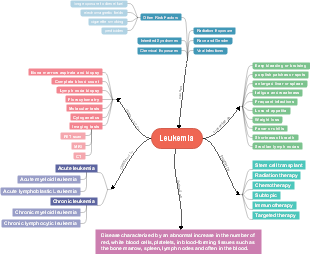
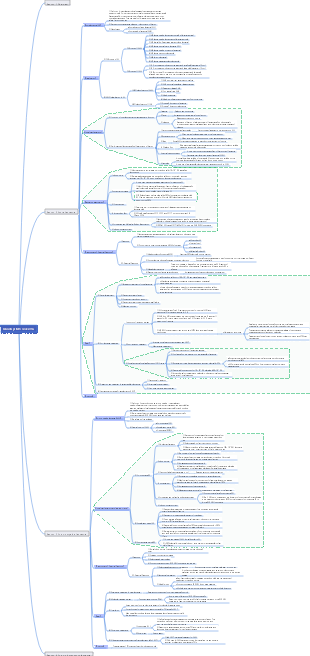
Internal Medicine Nursing, Hematology System, Describes the definition and classification of leukemia, etiology and pathogenesis, acute leukemia, chronic leukemia (CML), chronic lymphocytic leukemia (CLL), etc.
Edited at 2025-02-25 22:13:05This template shows the structure and function of the reproductive system in the form of a mind map. It introduces the various components of the internal and external genitals, and sorts out the knowledge clearly to help you become familiar with the key points of knowledge.
This is a mind map about the interpretation and summary of the relationship field e-book, Main content: Overview of the essence interpretation and overview of the relationship field e-book. "Relationship field" refers to the complex interpersonal network in which an individual influences others through specific behaviors and attitudes.
This is a mind map about accounting books and accounting records. The main contents include: the focus of this chapter, reflecting the business results process of the enterprise, the loan and credit accounting method, and the original book of the person.
This template shows the structure and function of the reproductive system in the form of a mind map. It introduces the various components of the internal and external genitals, and sorts out the knowledge clearly to help you become familiar with the key points of knowledge.
This is a mind map about the interpretation and summary of the relationship field e-book, Main content: Overview of the essence interpretation and overview of the relationship field e-book. "Relationship field" refers to the complex interpersonal network in which an individual influences others through specific behaviors and attitudes.
This is a mind map about accounting books and accounting records. The main contents include: the focus of this chapter, reflecting the business results process of the enterprise, the loan and credit accounting method, and the original book of the person.
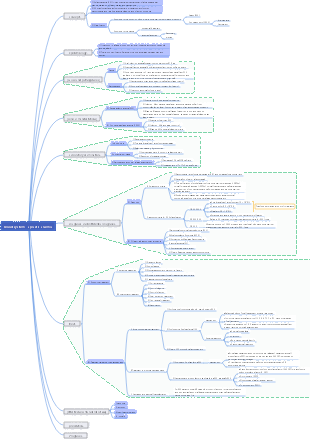
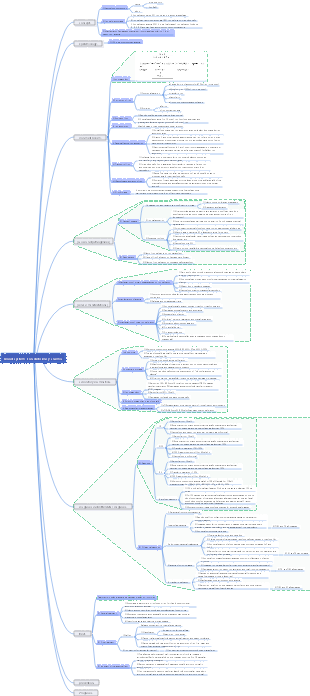
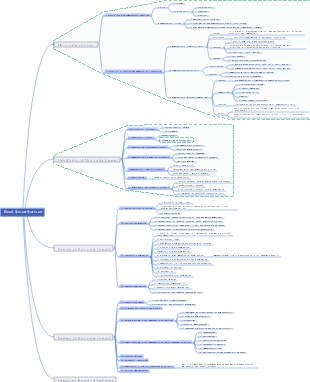
leukemia
Definition and classification
Definition: It is a malignant clonal disease of hematopoietic stem cells. The proliferation of leukemia cells in the clone is out of control, differentiation disorder, apoptosis is blocked and stagnates at different stages of cell development; leukemia cells proliferate in the bone marrow and other hematopoietic tissues and accumulate infiltrates other tissues and organs, and normal hematopoietic function is inhibited. It is characterized by the appearance of different morphological and varied naive cells in peripheral blood.
Classification
Acute leukemia
The onset is urgent, the progress is fast, the course of the disease is only a few months
Cell differentiation is arrested in an earlier stage. Primitive and early naive cells are predominant in bone marrow and peripheral blood.
Chronic leukemia
Slow onset, slow progress, long course of illness can last for several years
Cell arrest is in a later stage. Most of the more mature naive and mature cells in the bone marrow and peripheral blood.
Leukocytic leukemia (leukocytosis ≥10×109/L)
Hyperleukemia (leukocyte count ≥100×109/L)
Leukocyte non-polytic leukemia (leukocytes are 4-10×109/L)
Causes and pathogenesis
Causes
Biological factors: mainly include viral infection and autoimmune abnormalities
Chemical factors: including benzene and its derivatives and certain drugs
Radiation factors: X-ray, gamma ray and ionizing radiation, etc.
Genetic factors
Others: such as lymphoma, etc.
Pathogenesis: The above factors cause genetic mutations or chromosomal aberrations to form leukemia cell lines, combined with human immune function defects, causing the generated tumor cells to continuously increase value, and ultimately lead to the occurrence of leukemia.
Acute leukemia
It is a malignant clonal disease of hematopoietic stem cells. When the disease occurs, the abnormal primitive cells and naive cells in the bone marrow proliferate in large quantities and widely infiltrate the liver and spleen organs, inhibit normal hematopoiesis
Progressive anemia (first symptom: half of the patients have severe anemia when they visit the hospital) Continuous fever (the most common symptoms and one of the main causes of treatment)/repeated infection (secondary infection: one of the main causes of death) Bleeding (there are varying degrees of bleeding throughout the course of the disease) and tissue and organ infiltration as the main manifestations
Characterized by the appearance of a large number of naive cells in the bone marrow and peripheral blood
Laboratory and other inspections
Blood image examination: Most of the white blood cells are between 10-58×109/L
Bone marrow imaging examination: Most of them show extreme hyperplasia, and a few patients show low hyperplasia
It is the main basis for the necessary investigation and diagnosis
Cytochemistry examination
Peroxidase staining, glycogen staining, etc.
Immunological examination
Chromosome and gene examination
Key points of treatment
Symptom-based supportive treatment
Emergency treatment of hyperleukemia
Use a hemocytosol separator to collect leukocytes that are clearly too high and are treated with hydration and short-term pretreatment before chemotherapy.
Prevent infection
Improve anemia
Maintain Hb ≥80g/L
Prevent bleeding
Keep platelet count ≥20×109/L
Prevent and treat hyperuric acid nephropathy
Ensure sufficient urine volume per hour is above 150ml/m2
Nutritional support
Leukemia is a serious wasting disease. Patients are prone to malnutrition and cause cachexia
Anti-leukemia treatment
Induction remission treatment
Post-relief treatment
Prevention and treatment of CNSL (Central nervous system leukemia)
Treatment of acute leukemia in the elderly
Nursing diagnosis and measures
Risk of bleeding: related to thrombocytopenia and leukemia cell infiltration
Risk of infection
Protective isolation (absolute value of mature granulocytes ≤0.5×10⁹/L)
Other nursing measures
Potential complications: Adverse reactions of chemotherapy drugs
Protection of chemical phlebitis and tissue necrosis
Reasonable use of veins. The preferred central vein cannula
Before and after infusion of irritating drugs, flush the tube with normal saline
Before importing irritating drugs, be sure to confirm that the needle is in the blood vessels.
In combination with chemotherapy, first infusion of drugs that are less irritating to blood vessels. Infusion of drugs that are more irritating to blood vessels
Emergency treatment of extravasation of blister chemotherapy drugs
Stop infusion
Retrieve medication and remove the damage-free needle
X-ray to determine the position of the catheter tip
Evaluate
Detoxification: dextamide, etc.
Closure: Use lidocaine and other local closure as per doctor's advice
Cold or hot compress
Dry cold or ice compress should be applied within 24-48 hours 15-20min each time ≥4 times a day
Lift the affected limb
Record
Treatment of chemical phlebitis
Intravenous injection is prohibited intravenously in local blood vessels
Do not be stressed in the affected area
Avoid lying on the affected side
Protection of bone marrow suppression
Protection of gastrointestinal reactions
Care for oral ulcers
Prevention and care of cardiotoxicity
Protection and care of liver function impairment
Care for intrathecal injection of chemical drugs
Lying on the side with your head down and holding your knees. Local disinfection and anesthesia. The speed of bolus injection should be slow. After removing the needle, the local disinfection gauze should be applied to cover. Instruct the patient to lie flat on the pillow for 4-6 hours.
Prevention and care of uricidal nephropathy
Hair loss care
sad
Assessment of psychological responses
Support in your heart
Establish a good lifestyle
Social support
Activity endurance decreases
Hyperthermia: related to infection and hypermetabolicity of tumor cells
Oral mucosa damage: related to leukemia cell infiltration, chemotherapy response and secondary fungal infection
Nutritional disorder: lower than the body's needs, related to increased leukemia metabolism, high fever, gastrointestinal reactions caused by chemotherapy patients and inability to eat in stomatitis, etc.
Pain: bones Joint pain is related to leukemia cells infiltrating bones and limb muscles joints
Chronic Leukemia (CML)
Definition and classification
Definition: Also known as chronic myeloid leukemia, its characteristics are slow course of disease development, significant increase in peripheral granulocytocytes and immature spleen is significantly enlarged
Classification
Chronic myeloid leukemia (CML)
Chronic lymphocytic leukemia (CLL)
Clinical manifestations
Chronic period
No symptoms in the early stage, fatigue may occur, fever and weight loss, etc.
The giant spleen is the most prominent sign
The chronic period can last for 1-4 years
Acceleration period
0.7 The patient enters an accelerated period in 1-4 years
Unexplained high fever, weight loss, rapid spleen enlargement, and gradual bleeding, anemia
Leukemia cells gradually become resistant to the original effective drugs
Rapid change period
The acceleration period enters a period of rapid change from a few months to 1-2 years
Laboratory and other inspections
Blood image examination: The increase in peripheral leukocyte count is mainly ≥20×109/L, and half of the patients ≥100×109/L, and the naive granules at each stage can be seen.
Bone marrow imaging examination: Myelodysplasia is extremely active
Chromosome examination: Ph chromosomes appear in blood cells of patients with chronic leukemia
Neutrophil alkaline phosphatase (NAP) assay
Reduced or negative activity. Recovery of activity when treatment is effective
Blood biochemical examination: Increased uric acid concentration in serum and urine
Key points of treatment
Targeted Therapy Tyrosine kinase inhibitor (TKI) is the preferred treatment for CML
α-interferon
Patients who are not suitable for TKI and allogeneic hematopoietic stem cell transplantation can choose
Chemotherapy drugs
Allogeneic hematopoietic stem cell transplantation (allo-HSCT)
Current standard treatment for radical CML
Nursing diagnosis and measures
Pain: abdominal pain
Relieve spleen bloating and pain
Left side lying position
Eat less and eat more
Sickness observation
Potential complications: hyperuric acid nephropathy
Sickness observation
Prevention and medication care
Drink more water
Oral allopurinol as directed by the doctor
Diuretics are given as prescribed by doctor before and after chemotherapy
Decreased endurance in activity: related to weakness or anemia
Nutritional disorder: lower than the body's needs and is related to the body's hypermetabolic
Chronic lymphocytic leukemia (CLL)
definition
It is a slow-progressing B lymphocyte proliferation tumor characterized by the presence of large amounts of clonal B lymphocytes in lymph tissues such as peripheral blood, bone marrow, spleen and lymph nodes.
Clinical manifestations
There are many symptoms without self-consciousness
Fatigue and weakness may occur in the early stages and gradually worsen
Lymph node enlargement is often the first symptom of medical treatment
Laboratory and other inspections
Blood sign examination: Lymphocytes account for more than 50% of the white blood cell count, and 90% can be reached in the late stage.
Bone marrow image examination: Bone marrow nucleated cells are obviously active
Immunological examination
Cytogenetics examination
Key points of treatment
Chemotherapy: mainly including alkylating agents, purine analogs
Immunotherapy
Rituximab can be combined with fludarabine and cyclophosphamide (FCR therapy) for CD20 expression CLLs.
Complication treatment
Hematopoietic stem cell transplantation
Nursing diagnosis and measures
Risk of infection: related to hypoimmunoglobulinemia and normal granulocyte deficiency
Activity endurance decreases