MindMap Gallery Cell Biology-Nucleus Mind Map
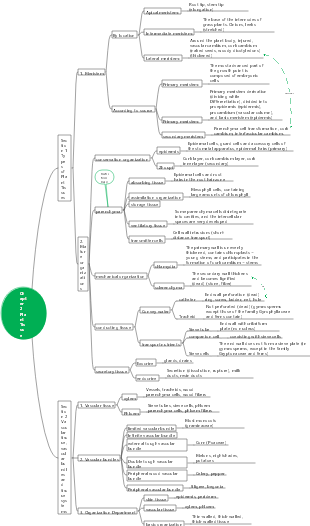
This is a mind map about cell biology-nucleus, including chromosomes and chromatin, nucleoli, nuclear matrix, functions of the nucleus, etc.
Edited at 2023-12-02 16:30:08cell nucleus
1. Nuclear membrane
(1) Chemical composition
1. Protein
2. Lipids: high in cholesterol and triglycerides
(2) Structure of nuclear membrane
It is composed of two parallel but discontinuous unit membranes inside and outside.
1. Outer nuclear membrane: connected to RER, with ribosomes attached to the surface; attached to C skeleton components such as intermediate fibers and microtubules, related to C nuclear positioning
2. Inner core membrane: smooth without ribosomes, with a fibrous grid structure (nuclear lamina) attached to the plasma surface
3. Pericellular space: the space between the inner and outer nuclear membranes, connected with the RER
4. Nuclear pore complex: an annular opening formed at the local fusion of the inner and outer nuclear membranes
Structural model: Fishing cage structure model (cytoplasmic ring, nucleoplasmic ring, spokes, central tether)
Function: Dual-function (passive and active transport), bidirectional hydrophilic nucleocytoplasmic exchange channel
5. Nuclear fiber layer: the three-dimensional fiber network between the inner side of the inner nuclear membrane and the chromatin, and the intermediate fiber
Function: scaffolding; disintegration and reconstruction of nuclear membrane; condensation of chromatin into chromosomes; involved in DNA replication
(3) Function of nuclear membrane
1. Provides a spatiotemporal isolation barrier for gene expression: replication, transcription and translation can occur at different times and spaces, creating a relatively stable internal environment
2. The nuclear membrane participates in protein synthesis: ribosomes are attached to the surface of the outer nuclear membrane
3. The nuclear pore complex mediates the material exchange between the nucleus and the plasma: passive diffusion, active transport (nuclear pore size can be adjusted, special nuclear positioning signal, bidirectionality)
①Import of nucleophilic proteins
(a) Conditions: nuclear localization signal (NLS), nuclear import receptor, Ran-GTPase
(b) Process:
②Nuclear export of RNA and ribosomal subunits
(a) Condition: nuclear export signal, nuclear import receptor
③The virus enters the nucleus and recognizes nuclear import receptors by simulating the nuclear localization signal in C
2. Chromosomes and chromatin
(1) Chemical composition
1.DNA: Each unreplicated chromosome is composed of a linear DNA molecule. All the genetic information in a eukaryotic C haploid chromosome group is the genome.
①Single sequence: single copy or a few copies
② Moderately repetitive sequences: gene sequences of rRNA, tRNA, histones, and ribosomal proteins
③Highly repetitive sequences: telomeres and centromeric regions
2. Histones and non-histone proteins
① Histones are basic proteins, rich in arginine Lys and lysine Arg, positively charged, nucleosome histones and H1 histones, highly conserved
②Non-histone proteins are acidic proteins, negatively charged, enzymes involved in nucleic acid synthesis, metabolism and modification
3.RNA is a biological macromolecule that carries genetic information
(2) Construction of chromosomes
1. Primary structure nucleosome: basic structural unit, core particle and DNA connection area, bead-like structure compressed 7 times
2. Secondary structure solenoid: with the assistance of histone H1, it is formed by spiraling nucleosomes and compressed 6 times
3. Further packaging of the solenoid
① Multi-level spiralization model: three-level structure supersolenoid, compressed 40 times → four-level structure chromatid, compressed 5 times
②Chromosome skeleton-radial ring model: advanced structure
Loop structure (folded into 30nm chromatin fibers)
Chromatids (each 18 loops are arranged radially to form microbands, and ten to the sixth power of microbands are arranged along the vertical axis to form chromatids)
(3) Euchromatin and heterochromatin
① Euchromatin
(a) Definition: Basic dyes have lighter coloring, lower degree of helicization, contain active sites for gene transcription, and have single or moderately repetitive DNA sequences.
(b) Distribution: Evenly distributed within the nucleus, mostly located in the center of the nucleus
②Heterochromatin
(a) Definition: Alkaline fuel is deeply colored, condensed, inactive or inactive in transcription, highly repetitive DNA sequence
(b) Distribution: mostly located at the edge of the nucleus or around the nucleolus
③The X chromosome is randomly inactivated to form Bartholin bodies
(4) Morphological structure of chromosomes
1. Karyotype and banding type
①Karyotype: The phenotype of all chromosomes in a somatic cell during mitotic metaphase, including the number, size and morphological characteristics of chromosomes
② Banding pattern: The specific banding patterns of non-histone proteins and DNA base pairs in chromosomes
2. Functional chromosome DNA molecules contain
①Copy the source sequence
② Centromere sequence
③Telomere sequence
3. Related structures
①Main constriction: the junction of two sister chromatids of metaphase chromosomes
② Centromere: the main constricted chromatin part, composed of highly repeated heterochromosomes
③ Kinetochores: centromeres, specialized disc-shaped structures on both sides of the main constriction, composed of proteins
④ Centromere-dynamic complex: the movement center of chromosomes and the microtubule organizing center
Kinetochore domain: located on the surface of the centromere
Central domain: the body of the centromere
Pairing domain: inner surface of centromere
⑤ Telomeres: specialized structures at the ends of both arms, composed of highly repetitive telomeric DNA and proteins
Function
① Ensure complete replication of chromosomes
② Protect chromosomes from degradation by nucleases
③Prevent chromosome ends from fusing with each other
Telomerase: Pr complex containing short RNA, reverse transcriptase activity, using the telomere as a primer itself as a template to synthesize telomeric DNA
3. Nucleolus
(1) Main ingredients: RNA, DNA, proteins and enzymes
(2) Structure of nucleolus
1. Fiber center: chromatin region of rRNA
2. Dense fiber components: rRNA molecules at different stages of transcription, ribosomal proteins and certain specific RNA-binding proteins
3. Particle components: Contains rRNA and protein being processed
(3) Function of nucleolus
1. Transcription and processing of ribosomal RNA
The tandemly repeated rRNA gene is transcribed into 45S rRNA precursor under the action of RNA polymerase I.
It is cleaved into 18S, 5.8S, and 28SrRNA, 18S and protein form the small ribosome subunit, and the rest forms the large ribosome subunit with 5SrRNA.
2. Assembling ribosome subunits
4. Nuclear matrix
(1) Nucleus skeleton: a three-dimensional network structure composed of protein fibers in the nucleus of eukaryotic cells
Composition: nuclear matrix protein, nuclear matrix binding protein, a small amount of RNA
Function: Participate in DNA replication; Participate in gene transcription and RNA processing and modification; Participate in chromosome construction; Participate in cell differentiation
5. Function of cell nucleus
Storage of genetic information, replication of genetic information, transcription and processing of genetic information, synthesis of DNA, RNA, and ribosome subunits