MindMap Gallery Understanding Self-Perception and Impression Formation in Interpersonal Communication
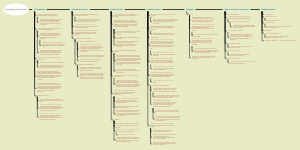
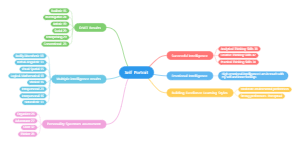
Delve into the psychological aspects of how we perceive ourselves and others within the realm of interpersonal communication. This guide explores the seven impression formation processes that influence our interactions, including self-fulfilling prophecies and implicit personality theories. It also covers the foundations of self-concept and self-esteem, and how these elements are shaped by and affect our communication with others. Discover strategies for enhancing self-awareness and self-esteem, and learn how attribution control and perceptual accentuation play a role in our daily social exchanges.
Edited at 2021-11-20 18:15:15Delve into the psychological aspects of how we perceive ourselves and others within the realm of interpersonal communication. This guide explores the seven impression formation processes that influence our interactions, including self-fulfilling prophecies and implicit personality theories. It also covers the foundations of self-concept and self-esteem, and how these elements are shaped by and affect our communication with others. Discover strategies for enhancing self-awareness and self-esteem, and learn how attribution control and perceptual accentuation play a role in our daily social exchanges.
This mind map primarily explains social harmony concepts such as unity (Kesepaduan), reconciliation (Penyatupaduan), and pursued goals (Matlamat Diidamkan). By interpreting their roles in achieving social stability and harmony, the map further elucidates the importance of social integration.
This mind map details the psychological and philosophical exploration of states of being such as "blessed," "honorable," and "very blessed." By analyzing the conditions for achieving these states and the differences in feelings, the map further reveals the deep-seated motives and strategies behind human pursuit of a happy life.
Delve into the psychological aspects of how we perceive ourselves and others within the realm of interpersonal communication. This guide explores the seven impression formation processes that influence our interactions, including self-fulfilling prophecies and implicit personality theories. It also covers the foundations of self-concept and self-esteem, and how these elements are shaped by and affect our communication with others. Discover strategies for enhancing self-awareness and self-esteem, and learn how attribution control and perceptual accentuation play a role in our daily social exchanges.
This mind map primarily explains social harmony concepts such as unity (Kesepaduan), reconciliation (Penyatupaduan), and pursued goals (Matlamat Diidamkan). By interpreting their roles in achieving social stability and harmony, the map further elucidates the importance of social integration.
This mind map details the psychological and philosophical exploration of states of being such as "blessed," "honorable," and "very blessed." By analyzing the conditions for achieving these states and the differences in feelings, the map further reveals the deep-seated motives and strategies behind human pursuit of a happy life.
Chapter 3: Perception Of The Self And Others In Interpersonal Communication
1. The Self In ICOM
Self Concept
- Image of who you are - The way you see yourself
Self Awareness
- Ability to understand yourself - Represents the extent to which you know yourself
Self Esteem
- How valuable you think you are - How person feel about themselves
2. Self-Concept
Four sources of self-concept
The way you see yourself
1. Others' Image- you look at the image of yourself that others reveal to you through the way they treat you and react to you.
2. Social Comparison-you develop yourself concept is by comparing yourself with others
Consist of: Feelings and thoughts, Strenghts and weaknesses, Abillities and limitation, and your aspiration and worldview
3. Cultural Teaching- through your parents, teachers, and the media, your culture instills in you a variety of beliefs, values, and attitudes.
4. Self-evaluations- Others form images of you based on what you do, you also react to your own behavior, interpret and evalute it.
3. Self-Awareness
-Represents the extent to which you know yourself
- Johari model of the Self or Your Four Selves
The Johari Window
The open self- Information about yourself that you and others know The blind self- Information about yourself that you don't know but others do know The hidden self- Information about yourself that you know but other's don't know as you keep secret The unknown self- Truths about yourself that neither you nor others know
Growing Self Awareness
Five ways to increase your Self-Awareness:
- Ask yourself about yourself - Listen to others - Actively seek information about yourself - See you different selves - Increase your open self
4. Self-Esteem
- A measure of how valuable you think you are
High self-esteem- you think highly of yourself
Low self-esteem- tend to view yourself negatively
Five suggestions for increasing self-esteem
1. Attack self-destructive beliefs- ideas you have about yourself that are unproductive 2. Seek out nourishing people- noxious(people criticize and find fault) and nourishing(are positive and optimistic) 3. Work on projects that will result in success- select projects that will result in success as it will build your self-esteem 4. Remind yourself of your success- some people have a tendency to focus on to exaggerate their failures 5. Secure affirmation- refers to positive statements about yourself
5. Perception In Interpersonal Communication
- Perception is the process by which you become aware of objects, events, and specially people through your senses(smell, sight, taste, touch and hearing)
- Your perception result both from what exists in the outside world and from your own experiences, desires, needs, wants, loves and hatreds
6. Interpersonal Perception Stages
1. Stimulation
* Selective attention- you attend to those things that you anticipate will fulfill your needs, or will prove enjoyable(focuses on your name) * Selective exposure- you exposure yourself to people or messages that will confirm your existing beliefs, contribute to your objectives, or prove satisfying in some way
2. Organization
Organization by rules - One frequently used rule is that of proximity or physical closeness -Physically close to each other are perceived as a unit
Organization by schemata - is a mental templates that help you organize the millions of items of information you come into contact with every day - Stereotype: Fixed impression of a group of people
Organization by scripts - An organized body of information about some action, event, or procedure
3. Interpretation-evalution
- Greatly influenced by your experiences, needs, wants, values
- Will be influenced by your rules, schemata, scripts and even gender
4. Memory
- All the perceptions and interpretation-evaluation are put into memory
- May ultimately retrieve at some later time
5. Recall
- Involves accessing the information you have stored in memory
May recall it with a variety of inaccuracies:
- Your are likely to recall information that is consistent with your schemas - But you may fail to recall information that is inconsistent with your schema
7. Impression Formation Process
- Impression formation (person perception) consists of a variety of processes that you go through in forming an impression of another person.
Self-fulfilling Prophecy
*Self-Fulfilling Prophecy is a prediction that comes true because you act on it as if it were true * Own beliefs
Four basic steps: - You make prediction or formulate a belief about a person or a situation -You act toward that person or situation as if that prediction or beliefs were true -Because you act as if the belief were true, it becomes true - You observe your effect on the person or the resulting situation and what you see strengthens your beliefs
Implicit Personality Theory
refers to the fact that everyone has a subconscious or implicit idea about which features of an individual go together.
Halo effect- if you believe a person has some positive qualities
Horns effect(reverse halo)- if you know a person possesses several negative qualities
Perceptual accentuation
- Leads you to see what you expect or want to see
- You may perceive certain behaviors as indicate that someone likes you simply because you want to be liked (e.g. salesman)
Primacy-recency
Primacy- what comes first exerts the most influence
Recency- the last information you remember most
Consistency
refers to the tendency to maintain balance among perceptions or attitudes
Attribution of control
- Another way in which we form impressions
- Might likely be sympathetic
Several potential errors:
Self-serving bias- take credit for the positive and deny responsibility for the negative Over attribution- the proclivity to single out one or two evident characteristics of a person and blame everything they do on them Fundamental attribution error- overvalue or undervalue the contribution of internal and external values