 Wondershare EdrawMind
MindMap Gallery Using violent mind maps
- 76
- 1
Using violent mind maps
This mind map on the behavior of children raised in violent homes delves into influencing factors, psychological mechanisms, intervention measures, and societal impacts. Each theme expands with specific research findings and case analyses, revealing complex chains of influence and potential prevention pathways.
Edited at 2022-01-22 10:39:56
- Recommended to you
- Outline

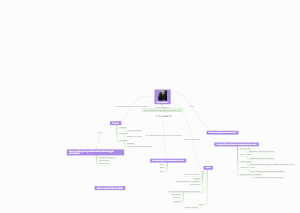
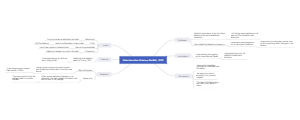

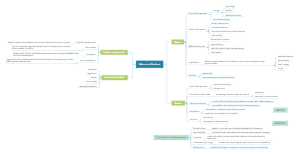
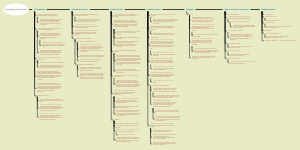


TEZA: Dzieci wychowywane w domach przemocowych są bardziej narażone na używanie przemocy w życiu dorosłym.
Jak ukazano na mapie argumentacji, teza została potwierdzona wieloma przesłankami, które wskazują na większe prawdopodobieństwo stosowania przemocy w dorosłym życiu, jeśli doświadczyło się jej lub miało z nią styczność w dzieciństwie. Jednakże, należy również wziąć pod uwagę przesłanki, które podkreślają, że każdy człowiek powinien być traktowany jako osoba jednostka, aby uniknąć generalizacji i stygmatyzacji ludzi pochodzących z przemocowych domów. Wiele czynników wpływa na fakt stosowania przemocy w dorosłości, nie tylko miejsce, w jakim się wychowaliśmy.
Przesłanka 5.3: Wśród osob, które były molestowane seksualnie w dzieciństwie, mężczyźni znacznie częściej niż kobiety stosują przemoc seksualną w życiu dorosłym
Glasser, M., Kolvin, I., Campbell, D., Glasser, A., Leitch, I., & Farrelly, S. (2001). Cycle of child sexual abuse: Links between being a victim and becoming a perpetrator. The British Journal of Psychiatry, 179(6), 482-494. "While 41 (43%) of female subjects were previous victims of sexual abuse, only one of the victims became a perpetrator of sexual abuse (2%). However, the highest likelihood of a male victim becoming a perpetrator was associated with being abused by a sister or mother." "Among 747 males the risk of being a perpetrator was positively correlated with reported sexual abuse victim experiences. The overall rate of having been a victim was 35% for perpetrators and 11 % for non-perpetrators. Of the 96 females, 43% had been victims but only one was a perpetrator. A high percentage of male subjects abused in childhood by a female relative became perpetrators. Having been a victim was a strong predictor of becoming a perpetrator, as was an index of parental loss in childhood."
Przesłanka 5.2: Rodzaj doświadczonej przemocy wpływa na to, czy osoba będzie stosować przemoc
Goodman, M. L., Hindman, A., Keiser, P. H., Gitari, S., Ackerman Porter, K., & Raimer, B. G. (2020). Neglect, Sexual Abuse, and Witnessing Intimate Partner Violence During Childhood Predicts Later Life Violent Attitudes Against Children Among Kenyan Women: Evidence of Intergenerational Risk Transmission From Cross-Sectional Data. Journal of Interpersonal Violence, 35(3-4), 623-645. https://doi.org/10.1177/0886260516689777 "Surprisingly, the experience of emotional and physical abuse during childhood did not predict later life violent attitudes toward children, but sexual abuse, emotional neglect, physical neglect and witnessing intimate partner violence among household adults did predict significantly higher violent attitudes toward children. Family functioning, perceived stress, and affirming justifications for violence against women mediated nearly 30% of the observed association between the selected ACEs and violent attitudes toward children."
Przesłanka 5.1: Osoby, które w wyniku przemocy wykazują symptomy PTSD częściej stosują przemoc
RaeAnn E. Anderson, Larissa-Jayne Edwards, Kristin E. Silver, Dawn M. Johnson, Intergenerational transmission of child abuse: Predictors of child abuse potential among racially diverse women residing in domestic violence shelters, Child Abuse & Neglect, Volume 85, (2018). Pages 80-90, ISSN 0145-2134, https://doi.org/10.1016/j.chiabu.2018.08.004 "Results suggest that IPV-related PTSD symptoms, rather than exposure to abuse (i.e., childhood abuse or IPV), is most strongly associated with child abuse potential in recent IPV survivors. Interventions which can ameliorate maternal psychopathology and provide resources are recommended for these vulnerable families."
Przesłanka 3.3: Kobiety doświadczone przemocą w dzieciństwie nie stosują przemocy w związkach jednopłciowych
Beatty, D. M. (2013). Effects of exposure to abuse and violence in childhood on adult attachment and domestic violence in women’s same-sex relationships. https://scholarship.shu.edu/cgi/viewcontent.cgi?article=2921&context=dissertations “Unexpectedly, childhood abuse or exposure to domestic violence was not found to directly impact adult aggression, but it did influence attachment style. As predicted, women who were victimized or exposed to violence in childhood were less inclined to feel close in their intimate relationships and were fearful of rejection. It was also found that lesbian women who were securely attached experienced less aggression in their intimate relationships.” “Exposure to domestic violence or childhood abuse did not have a significant impact on the frequency and mutuality of adult aggression in intimate lesbian relationships in this study.”
Przesłanka 3.2: Kobiety, które doświadczyły przemocy w dzieciństwie, częściej wchodzą w związki przemocowe
Glasser, M., Kolvin, I., Campbell, D., Glasser, A., Leitch, I., & Farrelly, S. (2001). Cycle of child sexual abuse: Links between being a victim and becoming a perpetrator. The British Journal of Psychiatry, 179(6), 482-494. "Experiencing victimization as a young child increases the risk of further victimization in later childhood (16,17) and adulthood (18,19). For example, a survey of 5908 French women in stable relationships found that 1 in 7 of those with a childhood history of maltreatment reported serious abuse by their spouse, compared with 1 in 20 of those with no such experience in childhood (20). A decade earlier, remarkably similar findings were found in a survey of women in the United States (21). Again, 1 in 20 of women with no history of maltreatment were victims of adult domestic violence, compared to 1 in 10 of those who had experienced one type of abuse in childhood and 1 in 3 of those who had experienced physical, sexual and emotional abuse. In addition, a recent British study of 1207 women attending primary care services (22) showed a significant co-occurrence of sexual and physical abuse in both childhood and adulthood. The chances of being a victim of such abuse as an adult were significantly higher in those women who had experienced childhood victimization."
Przesłanka 3.1: Osoby, które doświadczyły przemocy w dzieciństwie popierają bicie żon
Ravi, S., & Ahluwalia, R. (2017). What explains childhood violence? Micro correlates from VACS surveys. Psychology, Health & Medicine, 22(sup1), 17-30. “In two out of the four countries, we see that when individuals support and justify wife beating, they are more likely to have faced violence themselves. Once again, actual incidence of violence reinforces and in turn is reinforced by individual’s attitude and values. The OR tell us that individuals who justify wife beating have 1.9 and 1.6 times higher likelihood of having faced violence themselves, compared to their peers in Tanzania and Kenya respectively.” “People’s attitude to wife-beating is a strong predictor for whether they have faced violence themselves. As our main results show, individuals who justify wife-beating have 1.44 (and 1.9) times the odds of facing violence than those who do not support wife beating.”
Przesłanka 4.2: Pewne czynniki zewnętrzne sprawiają, że osoby nie stosują przemocy
Wright, K. A., Turanovic, J. J., O’Neal, E. N., Morse, S. J., & Booth, E. T. (2019). The cycle of violence revisited: Childhood victimization, resilience, and future violence. Journal of interpersonal violence, 34(6), 1261-1286. "Second, certain factors may be protective for some forms and extents of abuse but not others. Social protective factors were more protective among those young adults who had been frequently abused as children. Indeed, no social protective factors were significant in any models examining individuals who experienced a low frequency of abuse. This pattern is somewhat at odds with research that suggests that social factors are more critical for resilience in nonabused children (and perhaps less serious cases of abused children) whereas personality characteristics and self-esteem processes are more important for resilience in abused children (Cicchetti & Rogosch, 1997). Marriage was protective among victims who had a high frequency of physical abuse but not among other victims. Job satisfaction was protective among victims who were both physically and sexually abused at a high frequency but not among victims experiencing either type of abuse separately at a high frequency."
Przesłanka 4.1: Pewne cechy osobowości sprawiają, że osoby nie stosują przemocy
Wright, K. A., Turanovic, J. J., O’Neal, E. N., Morse, S. J., & Booth, E. T. (2019). The cycle of violence revisited: Childhood victimization, resilience, and future violence. Journal of interpersonal violence, 34(6), 1261-1286. "First, a number of protective factors reduced the likelihood of violent offending among victims of child abuse. The most consistent and strongest of these factors was the individual protective factor of self-control. This finding is consistent with the broader criminological literature that documents a strong relationship between low self-control and criminal behavior (Pratt & Cullen, 2000), as well as that which links victimization, low self-control, and future criminal behavior (Turanovic & Pratt, 2013). We add to this literature by finding that self-control may reduce offending for victims of abuse."
Przesłanka 2.2: Jest tak wiele czynników, które decydują o tym, czy ktoś stosuje przemoc, że nie można tego przypisać jedynie doświadczaniu przemocy w dzieciństwie
Wagner, J., Jones, S., Tsaroucha, A., Cumbers, H. (2019). Intergenerational Transmission of Domestic Violence: Practitioners' Perceptions and Experiences of Working with Adult Victims and Perpetrators in the UK. Child Abuse Review. Jan2019, Vol. 28 Issue 1, p39-51. DOI: 10.1002/car.2541. "• Not all children witnessing domestic violence will inevitably become victims or perpetrators of abuse in adulthood. • Perpetrating domestic violence in adulthood is often associated with a combination of various factors and circumstances, and can rarely be attributed to just one past experience." Hayes, B. E., Connolly, E. J., Wang, X., Ingham, C., Mason, M. (2021). Prevalence of Child Maltreatment and the Effects of the Intergenerational Transmission of Violence on Attitudes towards Domestic Violence in Chinese Police Cadets. Journal of Family Violence. Aug2021, Vol. 36 Issue 6, p733-742. DOI: 10.1007/s10896-020-00182-0. "Nie znaleziono poparcia dla międzypokoleniowego przenoszenia przemocy wśród tej próby kadetów chińskiej policji." "Child maltreatment and witnessing domestic violence were not associated with attitudes toward domestic violence. Support was not found for the intergenerational transmission of violence among this sample of Chinese police cadets."
Przesłanka 1.2 W cyklu przemocy osoby stają się sprawcami przemocy
Bartlett, J. D., Kotake, C., Fauth, R., & Easterbrooks, M. A. (2017). Intergenerational transmission of child abuse and neglect: Do maltreatment type, perpetrator, and substantiation status matter?. Child abuse & neglect, 63, 84-94. "Odkryliśmy, że gdy matki miały co najmniej jeden przypadek maltretowania w dzieciństwie (uzasadniony lub nie), prawdopodobieństwo, że maltretują one swoje dzieci, wzrosły o 72% (iloraz szans = 2,52), w porównaniu matek, które nie są maltretowane, ale szanse były znacznie niższe, gdy ograniczyliśmy analizę do uzasadnionych raportów. Zarówno historia udokumentowanego zaniedbania ze strony matki, jak i wiele rodzajów maltretowania (zaniedbanie i wykorzystywanie fizyczne lub seksualne) wiązały się ze zwiększonym ryzykiem maltretowania dziecka, jednak prawdopodobieństwo, że dzieci doświadczają wielokrotnego maltretowania, gdy ich matki zostały zidentyfikowane jako sprawcy, wzrosło o ponad 300%, gdy matki miały historia dzieciństwa wielokrotnego maltretowania." Glasser, M., Kolvin, I., Campbell, D., Glasser, A., Leitch, I., & Farrelly, S. (2001). Cycle of child sexual abuse: Links between being a victim and becoming a perpetrator. The British Journal of Psychiatry, 179(6), 482-494. "Of the male cohort (n=747), 18% (n=135) were victims and 30% (n=225) were perpetrators. It is a reported high-risk population for both experiences of childhood sexual victimisation and adult perpetrator behaviour, with risk being much higher for the latter. Nevertheless, 82% were not victims of child sexual abuse and 70% were not perpetrators of child sexual abuse (see Table 1)."
Przesłanka 1.1 W cyklu przemocy osoby doświadczają rewiktymizacji
Butler, N., Quigg, Z., Bellis, M. (2020). Cycles of violence in England and Wales: the contribution of childhood abuse to risk of violence revictimisation in adulthood. BMC Medicine, 18(1), DOI: 10.1186/s12916-020-01788-3. "Results here demonstrate that experiencing multiple types of abuse is the strongest risk factor for violence revictimisation and suggest that individual types of abuse may be differentially associated with different violence outcomes in adulthood when multi-type victimisation is accounted for." "Most individual types of child abuse were significantly associated with each adulthood violence outcome, after controlling for sociodemographics and other abuse types. Compared to individuals who experienced no abuse in childhood, those who experienced one form of abuse were over twice as likely to experience PA in the past year and three times as likely to have experienced IPV and/or SV since age 16 years, whilst individuals who experienced multiple types were three, six, and seven times more likely to experience physical assault (PA), intimate partner violence (IPV), and sexual violence (SV), respectively."
Przesłanka 2.1: Osoby, które obserwowały przemoc lub jej doświadczały, mogą stosować przemoc w dorosłości
Fanslow, J., Hashemi, L., Gulliver, P., McIntosh, T. (2020). Adverse childhood experiences in New Zealand and subsequent victimization in adulthood: Findings from a population-based study. In Child Abuse & Neglect, July 2021 (117), DOI: 10.1016/j.chiabu.2021.105067 "Witnessing or experiencing violent events as a child has been hypothesized to lead to the intergenerational transfer of violence through imitating or tolerating similar behaviors in adult relationships (Bensley, Van Eenwyk, & Wynkoop Simmons, 2003; Fergusson et al., 2008; McKinney, Caetano, Ramisetty-Mikler, & Nelson, 2009), or through pathways such as fostering lowered self-opinion in relation to others and maladaptive beliefs about relationships (Reyome, 2010)." Dargis, M., & Koenigs, M. (2017). Witnessing domestic violence during childhood is associated with psychopathic traits in adult male criminal offenders. Law and human behavior, 41(2), 173. “it is possible that the direct experience of childhood abuse contributes to a propensity to engage in aggressive and dysregulated behavior, whereas witnessing violence contributes to the development of callous and manipulative personality traits.”
Przesłanka 2: Osoby uczą się od rodziców zachowań przemocowych (transgeneracyjne przenoszenie przemocy)
Liberska, H., Farnicka, M. (2015). Agresywność i zachowania agresywne młodzieży a percypowane przez nią postawy rodzicielskie. Perspektywa rozwojowa. Psychologia Rozwojowa, 25-44. doi:https://doi.org/10.4467/20843879PR.15.020.4463 "Wyniki analizy statystycznej wskazują na występowanie istotnych zależności między poziomem agresywności a percepcją postaw rodzicielskich jako niewłaściwych zarówno przez dziewczęta, jak i przez chłopców. Córki i synowie postrzegają odmiennie postawy rodzicielskie u swych matek i ojców, co ujawnia się w sposób bardziej wyraźny w wypadku postawy niekonsekwentnej i postawy akceptacji." Nr 6
Przesłanka 4: Osoby, które doświadczyły przemocy w dzieciństwie, mogą nie wykazywać zachowań przemocowych w dorosłości
World Health Organization. (2007). The cycles of violence: the relationship between childhood maltreatment and the risk of later becoming a victim or perpetrator of violence: key facts (No. WHO/EURO: 2007-4089-43848-61738). World Health Organization. Regional Office for Europe. "Nevertheless, the majority of individuals who experienced maltreatment as a child are not violent towards their own children. Estimates from prospective studies range from 8% in the United Kingdom to 40% in the United States (6,30–33). The reported rates vary because of the different study methods, but they are consistent in finding that only a minority of parents with a history of childhood abuse go on to abuse their own children. Although this is “good news”, the role of victimization cannot be down played as a risk factor for becoming a perpetrator of violence."
Przesłanka 5: Na stosowanie przemocy w dorosłości wpływają różne czynniki
Przesłanka 3: Osoby, które doświadczyły przemocy w dzieciństwie, w dorosłości wchodzą w przemocowe związki
Stith, S. M., Rosen, K. H., Middleton, K. A., Busch, A. L., Lundeberg, K., & Carlton, R. P. (2000). The intergenerational transmission of spouse abuse: A meta‐analysis. Journal of Marriage and Family, 62(3), 640-654. "The findings of this meta-analysis suggest there is a weak-to-moderate relationship between growing up in an abusive family and becoming involved in a violent marital relationship. Differential effects of gender and sample type are also discussed."
Przesłanka 1: Osoby, które doświadczyły przemocy w dzieciństwie, wpadają w cykl przemocy
Aggression perpetrators and victims of domestic violence. By: Stodulska-Blaszke, Aldona; Wójcicka, Anna. Current Problems of Psychiatry. 2011, Vol. 12 Issue 3, p310-313. 4p. Language: Polish. , Baza danych: Academic Search Ultimate. “Znacznie wyższe wskaźniki agresji charakteryzowały sprawców niż ofiary pozostające w związkach przemocowych. U sprawców wyższy był poziom agresji ogólnej, fizycznej, słownej, pośredniej, negatywizmu oraz współczynnik agresji. W grupie ofiar przemocy, fakt nadużywania alkoholu przez ojca miał związek z agresją pośrednią ujawnianą w dorosłym życiu – według autorów skali agresja pośrednia to: zachowania nie zawsze skierowane wprost do osoby, wpadanie w złość, okazywanie złego humoru, dąsanie się. Pewnym wytłumaczeniem dla tego faktu może być to, że istnienie problemu alkoholowego w domu wiąże się z ciągłym doświadczaniem przez dzieci wielu szkodliwych bodźców bez możliwości jednoznacznej reakcji, wypowiedzenia własnego zdania. Skutkuje to brakiem umiejętności w dorosłym życiu jednoznacznego i wprost ujawniania emocji. Nadużywanie alkoholu przez ojca miało też związek z agresją ogólną, irytacją opisywaną przez twórców skali, jako: złoszczenie się, niecierpliwość, drażliwość, współczynnikiem agresji (impulsywność, nie kontrolowanie przejawów agresji), podczas gdy sam fakt nadużywania alkoholu w domu rodzinnym sprawców wiązał się z urazą ( gniew spowodowany złym traktowaniem rzeczywistym lub subiektywnym jego odczuciem, wypowiadaniem pretensji, domaganiem się czegoś). Stosowanie przemocy przez ojca ofiar skutkuje w ich rodzinach prokreacyjnych ujawnianiem irytacji (gniewu, wypowiadaniem pretensji, skarżeniem się), słabą stabilnością emocjonalną”