MindMap Gallery World History 28-Ancient Civilizations of the Americas (Part 1)
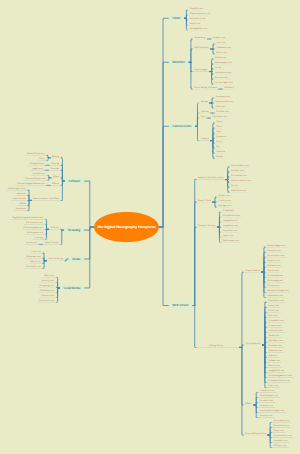
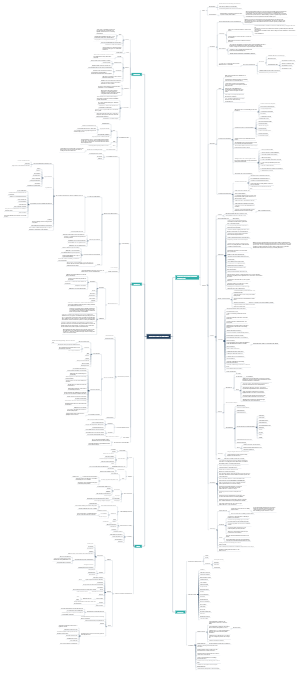
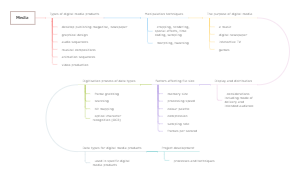
The main representatives of American civilization are the Mesoamerican and Andean cultural circles. This article mainly introduces the Mesoamerican cultural circles. It is divided into three stages: pre-classical, classical and post-classical.
Edited at 2024-01-23 09:57:18World History 28-Ancient Civilizations of the Americas (Part 1)
1.Overview
Origin of Indians: In 1492, Columbus discovered the New World. He thought it was a shortcut to India. Therefore, the local indigenous people are called Indians.
Race: Ethnographic analysis shows that most American Indians belong to the Asian Mongolian race. Archeology has found no human remains before the Late Paleolithic, indicating that they initially migrated from outside.
They migrated from Asia to the Americas about 35,000 to 10,000 years ago. After about 500 years, the footprints gradually covered the entire New World from north to south.
Agricultural society: Around 1500 BC, marked by the cultivation of corn, a mature agricultural society began to appear in the Americas. Until the arrival of Spain at the end of the 15th century and the beginning of the 16th century AD, most areas were still in different stages of development of pre-class society.
Only Central America and the central Andes region established some slave states, thus giving rise to the concept of two cultural circles: Central America and the Andes. They are the pinnacle and typical representatives of the development of ancient American civilizations.
2. Mesoamerican Cultural Circle
scope
The ancient Indian civilizations formed, developed and declined in central and southern Mexico, Guatemala, Honduras, parts of Nicaragua, and parts of the Caribbean such as the Olmec, Maya, Toltec, Teotihuacan, and Aztec.
stage
Three periods: preclassical, classical and postclassical.
3. Preclassic period
Scope: 1500 BC to AD 300, which was the formation period of Mesoamerican culture, with the main representative being the Olmec civilization.
The Olmec civilization was the cradle of Mesoamerican culture and the mother culture of Mexico, from 1500 BC to 600 to 700 AD. Mainly found in the Gulf Coast region. Major sites include La Venta, San Lorenzo, Tres-Zaportes, and many more.
Time: La Venta was approximately between 1160 BC and 500 BC. San Lorenzo may be 300 years earlier.
Cities are centers of worship
All the ruins of San Lorenzo are on an artificial earth platform, and no human habitation has been found.
The main street of La Venta runs north to south, with many stone monuments lined up on both sides, including four huge stone statues and an altar with strange carvings.
Agricultural economy: The Olmecs have begun to implement social division of labor, mainly including farmers, businessmen, carvers, and priests in charge of religious ceremonies. The Olmecs engaged in farming and built irrigation systems.
Create words and counting symbols, and even the concept of 0 has been produced. But it cannot reproduce speech and is not text in the true sense.
Exquisite stone carvings are the most outstanding artistic achievement of the Olmecs, such as high reliefs, bas reliefs and statues of various figures and animals.
The most distinctive feature is the 13 human heads carved from a single boulder. The largest one is 6 meters high and weighs about thirty or forty tons.
Also make little clay figurines. Made of white clay and dyed red.
Jade carvings often represent the main deity, and the most representative work is a figure holding a child in both hands. The child has a face like a jaguar and is called a tiger man. The Khajiit is a characteristic of the Olmec culture and may be an early form of the American rain god.
4. Classical period
From AD 300 to 900, the main representatives were Teotihuacan and Mayan civilizations.
1) Teotihuacan
The Indian word means City of the Gods.
The Pyramid of the Sun is the largest pyramid in America. It has five floors, 66 meters high, 225 meters long at the base, and 222 meters wide. There used to be a sun temple on the top of the tower, where human sacrifices were once made to the sun god.
The Pyramid of the Moon is 46 meters high, 150 meters long and 120 meters wide. To the south is the Butterfly Palace, the residence of dignitaries. A temple was excavated beneath the palace, where the feathered conch was enshrined.
There is a castle with an area of 160,000 square meters at the southern end of the city. There is a Feathered Serpent Temple in the castle.
Teotihuacan covers an area of more than 20 square kilometers. It originated around one or two centuries BC and has a population of about 10,000 to 40,000. At its peak between 300 and 600 AD, the population reached 200,000, making it one of the largest cities in the world.
Teotihuacan was ruled by priests. There is no king with the highest power, but different representatives of people from different regions come together to govern the city. It is a kind of group rule.
Scholars believe that Teotihuacan was destroyed by barbarian invasions. Not far from Teotihuacan, the Toltecs built the city of Tula in the 7th century AD. Teotihuacan soon began to decline and was suddenly abandoned around 900 AD.
2) Mayan civilization
The Mayan civilization was the most brilliant among the ancient Indian cultures. Dating back to 1500 BC, the heyday is generally divided into two stages: the Old Empire and the New Empire.
Mayan old empire
It belongs to the classical period of Central American culture and is distributed in Guatemala, Honduras and other regions. The New Empire belongs to the postclassical period and is mainly distributed in the Yucatan Peninsula of Mexico.
The Mayan civilization inherited many characteristics of the Olmec civilization, such as calendars, numbers, and hieroglyphics. Mayan numbers use the 20-base system, ranging from 0 to millions. About 800 years ahead of Europeans.
The astronomical calendar is also leading in the world. Both calendars have Olmec influence. One is the religious calendar, called the holy calendar year, with 20 days per month and 13 months per year, a total of 260 days; The other is called the solar year, each month also has 20 days, a total of 18 months, plus 5 death anniversaries, a total of 365 days. Its accuracy is about the same as the most advanced contemporary calendar.
Hieroglyphs are composed of various patterns, partly to the extent of recording speech and vocabulary.
The Mayans also produced paper and books, and accumulated many books. But European missionaries in the early colonial period burned them as heretical books.
Tikal was one of the most important cities in the old Mayan empire. It is located in the tropical jungle of the Peten region of Guatemala, covering an area of about 500 square kilometers and is walled. The central area covers an area of 16 square kilometers and contains more than 3,000 architectural ruins. At its peak, there were approximately 50,000 people.
The towering pyramids are the distinctive feature of Tikal, and they appear in pairs on both sides of the road. Pyramid No. 4 is more than 70 meters high and is the tallest building in ancient America. Most of them have temples at the top, and there is a crown more than ten meters high on top.
Many stone monuments are carved from green volcanic stone and are about 5 to 10 meters high. The main part in the middle of the stele is a human figure, surrounded by inscriptions and patterns on the back.
Mayan New Empire
At the end of the 9th century AD, the Mayans migrated to the Yucatan Peninsula and created a new empire. At the same time, they came into contact with the Toltecs. The culture of the new empire had new characteristics, especially the emergence of the feathered serpent worship.
The most important city in the new empire was Chichen-Itza.
The pyramids of Chichen-Itza became solid and harmonious. The Castle Pyramid dedicated to the Quetzalcoatl, also known as the Pyramid of Kukulkan, was selected as one of the New Seven Wonders of the World on July 8, 2007.
This pyramid is 30 meters high, with a square base and 56 meters on each side. It is divided into 9 floors and has stairs on all sides that lead directly to the temple at the top of the tower. The nine floors on each side are divided into two by stairs, and the combined number 18 represents 18 months. There are 91 steps on each side, a total of 364 steps on the 4 sides, plus the first level at the entrance of the temple, a total of 365 steps, representing 365 days per year.
There is a circular building, which the Spanish call the Snail Tower. It is the astronomical observatory of the Mayans.
Chichén-Itza had the largest ballpark in ancient America. The ball game is an integral part of some religious rituals during the festival. The losing captain will sacrifice his head to the gods after the game.
Chichen-Itza is famous for its holy well. Ancient Indians often held ceremonies in front of holy wells, sacrificing girls and a large amount of property to Quetzalcoatl.
5.Postclassical period
900 AD to before the Spanish conquest of the Americas. In addition to the new Mayan empire, there were also the Toltecs and the Aztecs.
When the Spanish arrived, it was the Aztecs who ruled central Mexico. It became powerful at the end of the 13th century and became the last representative force of Central American culture.
Legend: The Aztecs lived in no fixed settlement at first. It is said that their chief god told the priests that if they see an eagle standing on a cactus with a snake in its mouth, this is the place where you will settle. In 1325, they finally saw this scene on an island in Lake Texcoco. So Tenochtitlan, the predecessor of Mexico City, was founded here.
Tenochtitlan has three causeways more than 10 meters wide leading to the lake shore, a total of more than 10 kilometers of flood control embankments and two drinking water aqueducts. There are more than 40 pyramids built in the central square.
Rule: The Aztec Empire only collected tribute from various places without direct management, nor did it impose its own way of life on others. The emperor is the supreme ruler who combines politics and religion, and the nobles hold military and clerical positions. Ke implemented communal land ownership and slave labor.
Aztec business was prosperous, and all five districts of the capital, Tenochtitlan, had large markets.
The main production activity of the Aztecs was agriculture. The most important food crops were corn and beans, and the most important cash crop was agave.
Agave can be eaten directly and used to make wine; the fiber can be used to make ropes and the leaves can be used to build roofs.
Common characteristics with other ancient civilizations in Central America: hieroglyphs, books and maps, rich knowledge of astronomy and a 365-day solar calendar, belief in Quetzalcoatl, the practice of human sacrifice, etc.