 Wondershare EdrawMind
MindMap Gallery Backstory Preaching Process
- 31
Backstory Preaching Process
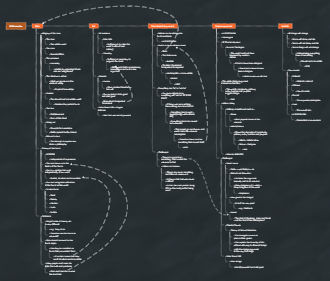
This mind map outlines the Backstory Preaching Process, which is divided into three main stages: Lectio, Meditatio, and Oratio. The Lectio stage involves preparing with a sermon prep ritual, reading the text aloud, recording, and listening to it in different contexts. Meditatio focuses on identifying problems, the Good News, and resting in contemplation. Oratio, though less detailed, likely involves the prayerful response. This structured approach helps in deeply engaging with the text for effective preaching.
Edited at 2024-03-23 13:30:09
- Recommended to you
- Outline
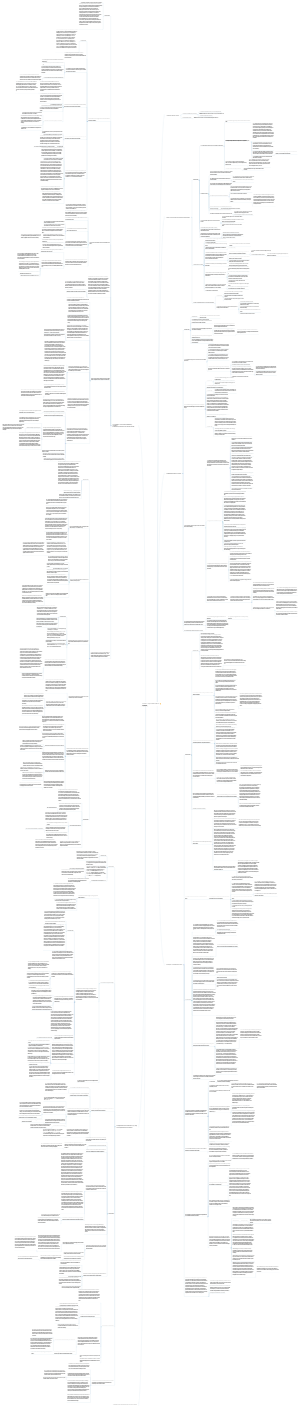






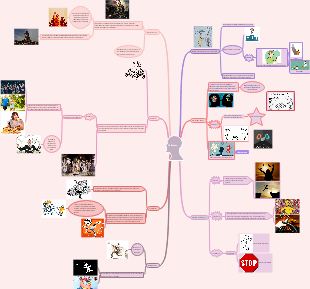
Backstory Preaching Process
Lectio
Prepare yourself with your sermon prep ritual.
Read the text out loud.
Read the text out loud again, and record it into your smartphone or another device. Listen to the recording each day, while you drive, exercise, walk the dog, and/or before you go to sleep.
Pause.
Read the text again, perhaps in a different tone of voice so you hear it another way. Jot down notes of any “glitches,” questions, or “gaps” you see or have about the text. What is making you curious?
Pause.
Read the text again. Choose one or more of these, or a process of your own design. Do the following with all the texts, one of them, or the portions of the texts that most intrigue you:
Map out the scene(s) as if you were a stage director.
Draw the text in comic book fashion.
Rewrite the text in your own words.
Draw or write on a copy of the text the words and phrases that stand out.
Contemplatio.
Rest in the texts in silence. Let the texts be.
Pray before you go to sleep. Ask God to recreate you into the Word you speak.
Have a way to record thoughts that arise as you wake.
Meditatio
Prepare yourself with your sermon prep ritual. Pray to listen and surround to the Word so that it will no longer be you who preach, but Christ who preaches in you. Pray for courage, wisdom, and humility to follow wherever you are led, and for gratitude when you meet Christ.
Read the text again and refer to your lectio notes. Based on your lectio, what questions did you have? What piqued your curiosity most? What tugged at your heart? What irks you about the text? What hope is offered that you want God to realize?
Let yourself be led.
Here are suggestions of paths to find answers, but not necessarily in this order and not necessarily all of them for every sermon. Trust your gut, your instincts, and your interest.
Read what is before and after the text in Scripture.
Follow the footnotes. Do word studies, read the text in different languages, and read different versions of the Bible.
Read about a character from start to finish.
Learn the historical context, the author, and for whom the book was written.
Look at the geography, the social context, and the actual scene. Be a “movie director” and “film” the action so you can “see” how they’re dressed, who moves where, who speaks to whom, in what tone of voice, and in what order.
Use your five senses and your pastoral intuition. Name what you can see, touch, hear, feel, and smell. Put yourself in the scene. What does your sixth sense tell you what’s going on?
What motivates people to do what they do? Use your imagination. What would motivate you if you were in the situation?
What’s not written about? What is left unsaid? Similarly, what is written in response to a conversation we missed, as Paul’s letters do, for example. What did we miss?
Identify the human condition (the problem).
What’s our problem? What’s the universal sin revealed? What’s the idol we don’t want to give up? Why do we cling to it?
Keep asking “why,” drilling deeper and deeper to find the core. Keep going until you find the moment of compunction, when you feel and know yourself to be both sinner and someone who is forgiven.
Name the problem.
Identify the Good News.
What does God offer? What is the Good News?
What is promised? What’s the vision of the reign of God? Be concrete. Use your five senses, your heart, and your intuition to make it real and incarnational. The reign of God might ask us to take concrete actions, or change our hearts, or change our perspectives to see the world differently, but all make the Love of God real and shareable.
What would make the invitation irresistible? Why would you say yes?
Write the Good News in one sentence.
Rest in contemplatio.
Listen to the recording you made of your text again today. A good time is before you go to sleep, so the text is ruminating in you while you rest. Have a way to record your thoughts upon waking.
Oratio
Prepare yourself with your sermon prep plan.
In any order, answer the following:
What do I believe is the Good News in this text? What’s happened in real life to persuade me this is true?
Why don’t I/we believe the Good News? What’s my/our problem? What’s the “calf” I/we won’t let go of?
Because of the Good News, I pray I/they will see/believe/know/take in _________________.
The Promised Land without dragging around that calf looks like _________________.
The one thing out of this sermon I want my listeners to hear is _________________.
The best way to get my point across will be _________________.
Once these are complete, fill out the following and put them at the head of your manuscript or wherever you can refer to them easily for organizing sermon notes.
I believe the Good News is (complete sentence): _________________.
I pray my listeners see _________________.
Our Problem is _________________.
The Vision is _________________.
The Message is (complete sentence): _________________.
The Latch is _________________.
Organize your thoughts. Make sure the sermon has a beginning, a middle, and an end.
Decide on the order for the components. Suggestions: write an outline; make a mind map; put major ideas on 3″ × 5″ cards and shuffle them until you like the order.
Write (or draw or make sermon notes). If the blank page intimidates you, freewrite for ten minutes on one of your statements. For example, think of a particular parishioner and write as if you were having a conversation, telling this person a story about how the Good News in this text impacts you or how you hope (Pray) it impacts them. Or weave a “What If?” picture when the Vision that God promised is realized, as in, “What if we lived a life of shalom now?”
Contemplatio.
Once you’ve written a draft, give thanks and let it go for the day.
Revise.
Revise your draft. Be able to justify that every word is necessary. Check it against the definition of an effective sermon: An effective sermon offers a clear message of Good News, authentic to the preacher, relevant to the listener, holding their attention, and inviting transformation.
Contemplatio.
After the revision, give thanks and let it rest.
Tweak and practice.
Look over the sermon one more time, mark your manuscript as needed, format it on your page or device so it’s easy to read.
If you don’t use a manuscript, one suggestion is this: Have your opening line, each major transition, and last line memorized. This allows you to be relaxed because you know how you’re starting and in a way that gets people’s attention; you know where you’re headed with each major transition so you don’t wander too far afield in the moment; and you don’t accidentally ramble at the end because you know when to stop.
Practice as many times as you need so you can be focused on your listeners rather than on your manuscript or notes.
Backstory Preaching Process
Lectio
Prepare yourself with your sermon prep ritual.
Read the text out loud.
Read the text out loud again, and record it into your smartphone or another device. Listen to the recording each day, while you drive, exercise, walk the dog, and/or before you go to sleep.
Pause.
Read the text again, perhaps in a different tone of voice so you hear it another way. Jot down notes of any “glitches,” questions, or “gaps” you see or have about the text. What is making you curious?
Pause.
Read the text again. Choose one or more of these, or a process of your own design. Do the following with all the texts, one of them, or the portions of the texts that most intrigue you:
Map out the scene(s) as if you were a stage director.
Draw the text in comic book fashion.
Rewrite the text in your own words.
Draw or write on a copy of the text the words and phrases that stand out.
Contemplatio.
Rest in the texts in silence. Let the texts be.
Pray before you go to sleep. Ask God to recreate you into the Word you speak.
Have a way to record thoughts that arise as you wake.
Meditatio
Prepare yourself with your sermon prep ritual. Pray to listen and surround to the Word so that it will no longer be you who preach, but Christ who preaches in you. Pray for courage, wisdom, and humility to follow wherever you are led, and for gratitude when you meet Christ.
Read the text again and refer to your lectio notes. Based on your lectio, what questions did you have? What piqued your curiosity most? What tugged at your heart? What irks you about the text? What hope is offered that you want God to realize?
Let yourself be led.
Here are suggestions of paths to find answers, but not necessarily in this order and not necessarily all of them for every sermon. Trust your gut, your instincts, and your interest.
Read what is before and after the text in Scripture.
Follow the footnotes. Do word studies, read the text in different languages, and read different versions of the Bible.
Read about a character from start to finish.
Learn the historical context, the author, and for whom the book was written.
Look at the geography, the social context, and the actual scene. Be a “movie director” and “film” the action so you can “see” how they’re dressed, who moves where, who speaks to whom, in what tone of voice, and in what order.
Use your five senses and your pastoral intuition. Name what you can see, touch, hear, feel, and smell. Put yourself in the scene. What does your sixth sense tell you what’s going on?
What motivates people to do what they do? Use your imagination. What would motivate you if you were in the situation?
What’s not written about? What is left unsaid? Similarly, what is written in response to a conversation we missed, as Paul’s letters do, for example. What did we miss?
Identify the human condition (the problem).
What’s our problem? What’s the universal sin revealed? What’s the idol we don’t want to give up? Why do we cling to it?
Keep asking “why,” drilling deeper and deeper to find the core. Keep going until you find the moment of compunction, when you feel and know yourself to be both sinner and someone who is forgiven.
Name the problem.
Identify the Good News.
What does God offer? What is the Good News?
What is promised? What’s the vision of the reign of God? Be concrete. Use your five senses, your heart, and your intuition to make it real and incarnational. The reign of God might ask us to take concrete actions, or change our hearts, or change our perspectives to see the world differently, but all make the Love of God real and shareable.
What would make the invitation irresistible? Why would you say yes?
Write the Good News in one sentence.
Rest in contemplatio.
Listen to the recording you made of your text again today. A good time is before you go to sleep, so the text is ruminating in you while you rest. Have a way to record your thoughts upon waking.
Oratio
Prepare yourself with your sermon prep plan.
In any order, answer the following:
What do I believe is the Good News in this text? What’s happened in real life to persuade me this is true?
Why don’t I/we believe the Good News? What’s my/our problem? What’s the “calf” I/we won’t let go of?
Because of the Good News, I pray I/they will see/believe/know/take in _________________.
The Promised Land without dragging around that calf looks like _________________.
The one thing out of this sermon I want my listeners to hear is _________________.
The best way to get my point across will be _________________.
Once these are complete, fill out the following and put them at the head of your manuscript or wherever you can refer to them easily for organizing sermon notes.
I believe the Good News is (complete sentence): _________________.
I pray my listeners see _________________.
Our Problem is _________________.
The Vision is _________________.
The Message is (complete sentence): _________________.
The Latch is _________________.
Organize your thoughts. Make sure the sermon has a beginning, a middle, and an end.
Decide on the order for the components. Suggestions: write an outline; make a mind map; put major ideas on 3″ × 5″ cards and shuffle them until you like the order.
Write (or draw or make sermon notes). If the blank page intimidates you, freewrite for ten minutes on one of your statements. For example, think of a particular parishioner and write as if you were having a conversation, telling this person a story about how the Good News in this text impacts you or how you hope (Pray) it impacts them. Or weave a “What If?” picture when the Vision that God promised is realized, as in, “What if we lived a life of shalom now?”
Contemplatio.
Once you’ve written a draft, give thanks and let it go for the day.
Revise.
Revise your draft. Be able to justify that every word is necessary. Check it against the definition of an effective sermon: An effective sermon offers a clear message of Good News, authentic to the preacher, relevant to the listener, holding their attention, and inviting transformation.
Contemplatio.
After the revision, give thanks and let it rest.
Tweak and practice.
Look over the sermon one more time, mark your manuscript as needed, format it on your page or device so it’s easy to read.
If you don’t use a manuscript, one suggestion is this: Have your opening line, each major transition, and last line memorized. This allows you to be relaxed because you know how you’re starting and in a way that gets people’s attention; you know where you’re headed with each major transition so you don’t wander too far afield in the moment; and you don’t accidentally ramble at the end because you know when to stop.
Practice as many times as you need so you can be focused on your listeners rather than on your manuscript or notes.
Scripture John 3:14-22
All About the Good News (John 12:12-16)NRSV
12 The next day the great crowd that had come to the festival heard that Jesus was coming to Jerusalem.
After Lazarus was raised and people heard and were talking about it
A GREAT Miracle occured and Jewish leaders are afraid and responded
13 So they took branches of palm trees and went out to meet him, shouting, “Hosanna! Blessed is the one who comes in the name of the Lord— the King of Israel!”
Because of Miracle - past and current people are worshiping Jesus
King of Israel
Religious Leader
Jesus is Prophet, King and Priest
Hosanna - an interjection. Hosanna! from the Hebr. meaning save now, help now, or save we pray thee. It became a word of common acclamation (Ps. 118:25), and later a common form of wishing safety and prosperity, Save and prosper, O Lord (Mark 11:9, 10; John 12:13). Spiros Zodhiates, The Complete Word Study Dictionary: New Testament (Chattanooga, TN: AMG Publishers, 2000).
14 Jesus found a young donkey and sat on it; as it is written:
Fulfiling prophecy
Previous sent disciples to get the donkey
15 “Do not be afraid, daughter of Zion. Look, your king is coming, sitting on a donkey’s colt!”
Fear was upon them
Daughter of Zion
The epithet “Daughter Zion” (bat-ṣîyyôn) appears in the OT, mostly in the Prophetic Books and in Lamentations (in the Prophetic Books: Isaiah 6x; Jeremiah 3x; Micah 4x; Zephaniah 1x; Zechariah 2x). Many scholars understand the title to be a personification of the city of Jerusalem as well as its inhabitants, but some tend to emphasize one or the other. The reason for the discrepancy arises from the evidence in the prophetic corpus itself. There are instances where emphasis falls on the personification of the city rather than the people in the city. Isaiah 1:8 identifies Daughter Zion as a “besieged city,” OT Old Testament H. A. Thomas, “Zion,” in Dictionary of the Old Testament: Prophets, ed. Mark J. Boda and Gordon J. McConville
Some of the prophetic texts use the term to present the city as a “mother” whose inhabitants are her children (Maier). In this way, Daughter Zion is a place of security and well-being that nourishes and cares for her inhabitants/children. And the same term can reinforce a sense of loss and abandonment: a mother/Zion who has lost her children/inhabitants in and through the exile
In these texts, the people/city of Zion rejoice over their king who is returning to them to reign (Mt 21:5; Jn 12:15; cf. Zech 9:9; also Is 62:11). In the Gospels, this king is none other than Jesus the Messiah. Further, the Gospels indicate that Zion itself is founded upon Jesus. In this way, both the city and the inhabitants are built into a spiritual house founded upon the “cornerstone” of Zion—that is, Jesus
16 His disciples did not understand these things at first; but when Jesus was glorified, then they remembered that these things had been written of him and had been done to him.
When Jesus GLORIFIED
Lack of Understanding
Revealed when Jesus Glorified
Delay
Prophecy Fulfiled
God always has a plan
Disciples - Followers of Jesus Christ
Mediatio
Meditatio
Prepare yourself with your sermon prep ritual. Pray to listen and surround to the Word so that it will no longer be you who preach, but Christ who preaches in you. Pray for courage, wisdom, and humility to follow wherever you are led, and for gratitude when you meet Christ.
Read the text again and refer to your lectio notes. Based on your lectio, what questions did you have? What piqued your curiosity most? What tugged at your heart? What irks you about the text? What hope is offered that you want God to realize?
Let yourself be led.
Here are suggestions of paths to find answers, but not necessarily in this order and not necessarily all of them for every sermon. Trust your gut, your instincts, and your interest.
Read what is before and after the text in Scripture.
Follow the footnotes. Do word studies, read the text in different languages, and read different versions of the Bible.
Read about a character from start to finish.
Learn the historical context, the author, and for whom the book was written.
Look at the geography, the social context, and the actual scene. Be a “movie director” and “film” the action so you can “see” how they’re dressed, who moves where, who speaks to whom, in what tone of voice, and in what order.
Use your five senses and your pastoral intuition. Name what you can see, touch, hear, feel, and smell. Put yourself in the scene. What does your sixth sense tell you what’s going on?
What motivates people to do what they do? Use your imagination. What would motivate you if you were in the situation?
What’s not written about? What is left unsaid? Similarly, what is written in response to a conversation we missed, as Paul’s letters do, for example. What did we miss?
Identify the human condition (the problem).
What’s our problem? What’s the universal sin revealed? What’s the idol we don’t want to give up? Why do we cling to it?
Keep asking “why,” drilling deeper and deeper to find the core. Keep going until you find the moment of compunction, when you feel and know yourself to be both sinner and someone who is forgiven.
Name the problem.
Greed, Power
Faith based on Miracles only
Not Standing up for Jesus at when appropriate or at opportunity
Identify the Good News.
What does God offer? What is the Good News?
Jesus Christ
Jesus Christ Happened and Entered the City
Jesus has been Glorified
What is promised? What’s the vision of the reign of God? Be concrete. Use your five senses, your heart, and your intuition to make it real and incarnational. The reign of God might ask us to take concrete actions, or change our hearts, or change our perspectives to see the world differently, but all make the Love of God real and shareable.
People Saw
People Participated
They heard
Laid down palms
looked, shoved, shouted, believed
What would make the invitation irresistible? Why would you say yes?
We are a beloved child - son or daughter - our besieged city is now under a new King, We are saved, we are safe and praying for all prosperity - health, wealth and spiritual - we can participate with Christ NOW
Write the Good News in one sentence.
We have the Good News in Christ today, our King Jesus has come and we are to participate we can shout Hosanna - praying for safety and prosperity!!! and fulfil our ministry in Christ by loving others and ourselves
Rest in contemplatio.
Listen to the recording you made of your text again today. A good time is before you go to sleep, so the text is ruminating in you while you rest. Have a way to record your thoughts upon waking.
Prayer:
We can hear the Good News when it is presented
We can recognize the words of Jesus in our life as soon as possible
We do not let greed, power and trauma stop us from having faith and following God
Before Text - Jesus Raises Lazarus from Dead and Jewish Leaders plan to Kill both Lazarus and Jesus After Text - Everyone wants to see the man that Raised a Dead person Jews, Greeks and Jesus talks about His death
Problem:
Faith by Miracles
lack of Faith due to...
Fear of losing power and influence
Lack of immediate understanding
People are being oppressed - trauma state
Oratio
Prepare yourself with your sermon prep plan.
In any order, answer the following:
What do I believe is the Good News in this text? What’s happened in real life to persuade me this is true?
The King has arrived
The King Messiah has been glorified
God has saved the city the people - we are safe and able to prosper
Why don’t I/we believe the Good News? What’s my/our problem? What’s the “calf” I/we won’t let go of?
We only believe or have faith when we can see or experience miracles - we don't want to lose power or we have greed
Because of the Good News, I pray I/they will see/believe/know/take in _________________.
Christ has happened
We can be daughters of Zion
Jesus is glorified and we can share in and be a part of this glory having the Holy Spirit within us and accept adoption into the family of God
The Promised Land without dragging around that calf looks like _________________.
We realize what Christ is doing real time and we respond real time - we operate in the Spirit of God feeling Safe and operating in a place of prosperity
The one thing out of this sermon I want my listeners to hear is _________________.
Love of God, Access to God, Available Deliverance from ALL THINGS
Oppressors
Seized City
Lack of Faith
The best way to get my point across will be _________________.
??? - Wlk them through Palm Sunday - Imagination create environment
Once these are complete, fill out the following and put them at the head of your manuscript or wherever you can refer to them easily for organizing sermon notes.
I believe the Good News is (complete sentence): _________________.
I pray my listeners see _________________.
Our Problem is _________________.
The Vision is _________________.
We live and operate in a space that permeates Christ within us - where we have power to live beyond what we see with our natural eyes. We see and feel deliverance in the midst of oppression and being threatened. Fear no man or human obstance because we know who we are based on whose we are ...
The Message is (complete sentence): _________________.
The Latch is _________________.
Journeying with the people - being a daughter of Israel - both male and female
What it would look like for us - imagining being one of the people ...
Organize your thoughts. Make sure the sermon has a beginning, a middle, and an end.
Decide on the order for the components. Suggestions: write an outline; make a mind map; put major ideas on 3″ × 5″ cards and shuffle them until you like the order.
Write (or draw or make sermon notes). If the blank page intimidates you, freewrite for ten minutes on one of your statements. For example, think of a particular parishioner and write as if you were having a conversation, telling this person a story about how the Good News in this text impacts you or how you hope (Pray) it impacts them. Or weave a “What If?” picture when the Vision that God promised is realized, as in, “What if we lived a life of shalom now?”
Contemplatio.
Once you’ve written a draft, give thanks and let it go for the day.
Revise.
Revise your draft. Be able to justify that every word is necessary. Check it against the definition of an effective sermon: An effective sermon offers a clear message of Good News, authentic to the preacher, relevant to the listener, holding their attention, and inviting transformation.
Contemplatio.
After the revision, give thanks and let it rest.
Tweak and practice.
Look over the sermon one more time, mark your manuscript as needed, format it on your page or device so it’s easy to read.
If you don’t use a manuscript, one suggestion is this: Have your opening line, each major transition, and last line memorized. This allows you to be relaxed because you know how you’re starting and in a way that gets people’s attention; you know where you’re headed with each major transition so you don’t wander too far afield in the moment; and you don’t accidentally ramble at the end because you know when to stop.
Practice as many times as you need so you can be focused on your listeners rather than on your manuscript or notes.