MindMap Gallery Key Studies
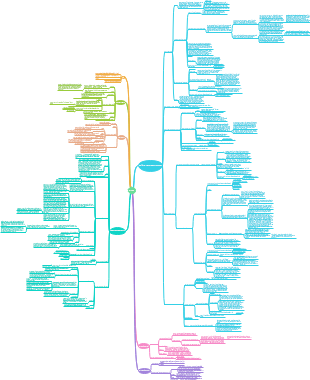
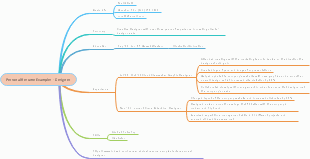
This is a mind map about significant research studies in health psychology, highlighting various topics such as schizophrenia, anxiety disorders, and mood disorders. It outlines the contributions of key researchers, including Freeman et al. (2003), Grant, Chapman and Delapp, and Savage and Armstrong. The map categorizes their findings into areas like biochemical treatments, patient-practitioner relationships, stress management, and cognitive treatments for obsessive-compulsive disorder (OCD).
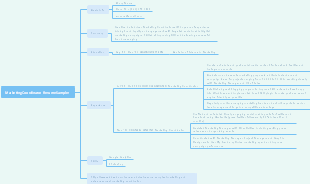
Edited at 2024-04-30 14:34:26This mind map thoroughly analyzes key concepts such as Kim K., social dilemmas, and related theories. The Kim K. section explores her influence in social media and business; the social dilemma part discusses psychological and moral challenges people face in social settings; the theories section covers psychological and sociological theories explaining these phenomena. Such analysis helps understand complex interactions between contemporary society and media.

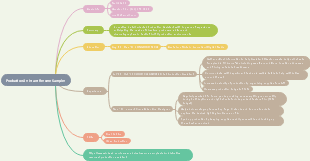
This mind map comprehensively introduces the theories and contributions of Henry Jenkins, David Gauntlett, Albert Bandura, and Clay Shirky. Each scholar's section describes in detail their research fields, main achievements, and how these results have impacted modern media and cultural theories. Understanding these scholars' ideas helps grasp contemporary trends in media communication and social interaction.
This mind map clearly presents a comprehensive analysis of measuring, managing, types, and theories of pain. Initially, it explains various methods and tools for measuring pain, including both quantitative and qualitative assessments. Next, it details diverse strategies for pain management, such as pharmacological, physical therapy, and psychological interventions. Lastly, the map also covers types and theoretical foundations of pain, like the differences between acute and chronic pain, and the physiological mechanisms of pain transmission. This information is crucial for healthcare professionals to understand and optimize pain treatment.
This mind map thoroughly analyzes key concepts such as Kim K., social dilemmas, and related theories. The Kim K. section explores her influence in social media and business; the social dilemma part discusses psychological and moral challenges people face in social settings; the theories section covers psychological and sociological theories explaining these phenomena. Such analysis helps understand complex interactions between contemporary society and media.
This mind map comprehensively introduces the theories and contributions of Henry Jenkins, David Gauntlett, Albert Bandura, and Clay Shirky. Each scholar's section describes in detail their research fields, main achievements, and how these results have impacted modern media and cultural theories. Understanding these scholars' ideas helps grasp contemporary trends in media communication and social interaction.
This mind map clearly presents a comprehensive analysis of measuring, managing, types, and theories of pain. Initially, it explains various methods and tools for measuring pain, including both quantitative and qualitative assessments. Next, it details diverse strategies for pain management, such as pharmacological, physical therapy, and psychological interventions. Lastly, the map also covers types and theoretical foundations of pain, like the differences between acute and chronic pain, and the physiological mechanisms of pain transmission. This information is crucial for healthcare professionals to understand and optimize pain treatment.
Key Studies
Freeman et al ( 2003)
Explanations Of Schizophrenia
Grant
Biochemical Treatments Impulse Control
Grant --> Gambling addiction Aim: whether taking opiates would reduce gambling behaviour
A 10 item scale, divided into two sub scales Y-BOCS
284 participants from USA. They had to display gambling addictions 2 weeks prior to the experiment
Divided into two gropus : -> 16 weeks of opiates nalmefene. 18 weeks of opiates naltrexone. + placebo for both
3 conditions: 25mg, 50mg, 100mg for both opiates
Chapman and Delapp
Anxiety Disorder ( blood phobia)
Savage and Armstrong
Health Psychology - Pacient Practicioner Relatoniship ( Practitioner style)
Aim: Compared the effect of directing and sharing styles of consultation
A random sample of 359 participants between the ages of 16 to 75 presenting any symptoms were eligible
Patient satisfaction was measured by two questionnaires that asked about the quality of communication in the consultation and any thoughts immediately and one week later
Results
From 200 results, they found that both consultation styles had high ratings However, directing consultations had reported more satisfaction with their doctor’s explanation
Brudvic
Floating Topic
Bridge
Health Psychology - Stress ( managing stress)
Aim- Wanted to see if stress could be alleviated in patients being treated with radiotherapy for early breast cancer using randomized control trials (RCT) lasting for 6 weeks
A sample of 139 women at Middlesex Hospital, London
Put into 3 conditions: relaxation, plus imagery and control
Patients completed the Leeds General Scales Measure, which gives the severity of depressive and anxiety symptoms in patients
completed a mood scale, the profile of mood that uses 65 items to assess depression, vigour, fatigue, tension, anger or confusion
Results
- no significant differences in the Leeds General Scales -This indicates that relaxation positively affected mood state and that this effect was further increased when relaxation was combined with imagery
Shosani
Floating Topic
Ocur
Mood Disorders Explanations
Aim: MZ and DZ twins can be used to investigate whether there is a genetic link in depression.
Oruc- 42 participants + 40 ppl. control group ( 25 females + 17 males ) 21-70 with a diagnosis of bipolar disorder carried out in Croatia
16 of the Bipolar group had at least 1 first degree relative
DNA testing was carried out to test for polymorphisms (gene variation) in serotonin receptor 2c (5-HTR2C) and serotonin transporter (SERT/5-HTT) genes.
Results
There were no significant differences between the two groups. However, serotonin (5-HT) is sexually dimorphic, and females had trends of polymorphism in the serotonin genes, which could be responsible for the increased risk of bipolar in females.
Glenwick and Yokley
Health Psychology - Adherence ( Improving Adherence)
Aim- Evaluated the impact of four conditions for motivating parents to take their children to be immunized
4 Conditions - 1.Mailed General Prompt (n = 195) 2. Specific Prompt (n = 190): received a personalized message containing the exact details of the immunizations the child needed 3. Increased access (n = 185): received the specific prompt and a second page that included the mention of two off-hours clinics being opened 4. Monetary Incentive (n = 183): received the specific prompt with a second page that opened with the mention of a raffle with a $175 prize
The impact of the different prompts was measured over the following 12 weeks to assess how many of each group would attend the immunization
Results
Results show that the monetary incentive condition had the biggest impact on attendance, followed by increased access, specific prompts and general prompt groups, respectively
Strenghts + Weakness
was conducted on a large sample. This gives out a high population of validity participants may also bring ethical concerns about informed consent and deception. As the researchers asked parents to come in an actual setting, this can give ecological validity and can be generalized to other populations.
Lovell
O.C.D - Cognitive Treatment
Aim: to compare the effectiveness of CBT delivered by telephone vs. the same face-to-face therapy.
72 patients from 2 different hospitals
Used RCT wherein participants underwent 10 weekly therapy sessions either by telephone or face-to-face. Changes in well-being were measured via Y-BOCS, BDI, and a client satisfaction questionnaire.
Results
6 months after treatment, Y-BOCS scores significantly improved in both groups, along with high participant satisfaction, suggesting patients may benefit equally from both forms of CBT.
Strenghts + Weakness
An independent measures design was used where participants were randomly allocated to two conditions, removing researcher bias.