MindMap Gallery health promotion
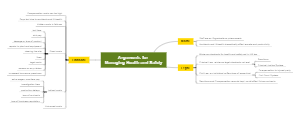
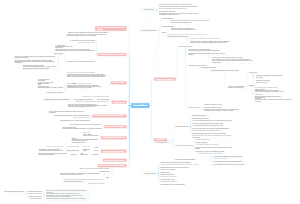
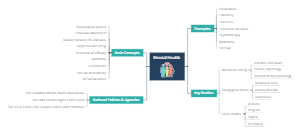
This mind map discusses in detail the strategies for promoting health and the tactics used to advance health initiatives in school settings. From establishing comprehensive health education curricula to implementing physical activities and nutritional dining plans, various strategies aim to improve students' physical and mental health. By analyzing multiple factors both inside and outside school environments, the map reveals how these health promotion activities can be effectively implemented in schools. These strategies not only help to enhance students' health awareness but also impact a broader community health culture through practices in campuses.
Edited at 2024-05-05 13:31:02This mind map thoroughly analyzes key concepts such as Kim K., social dilemmas, and related theories. The Kim K. section explores her influence in social media and business; the social dilemma part discusses psychological and moral challenges people face in social settings; the theories section covers psychological and sociological theories explaining these phenomena. Such analysis helps understand complex interactions between contemporary society and media.

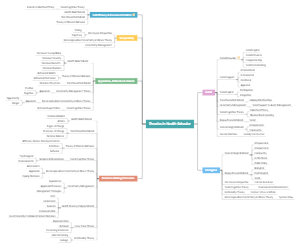
This mind map comprehensively introduces the theories and contributions of Henry Jenkins, David Gauntlett, Albert Bandura, and Clay Shirky. Each scholar's section describes in detail their research fields, main achievements, and how these results have impacted modern media and cultural theories. Understanding these scholars' ideas helps grasp contemporary trends in media communication and social interaction.
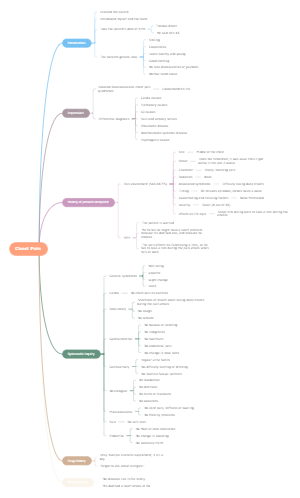
This mind map clearly presents a comprehensive analysis of measuring, managing, types, and theories of pain. Initially, it explains various methods and tools for measuring pain, including both quantitative and qualitative assessments. Next, it details diverse strategies for pain management, such as pharmacological, physical therapy, and psychological interventions. Lastly, the map also covers types and theoretical foundations of pain, like the differences between acute and chronic pain, and the physiological mechanisms of pain transmission. This information is crucial for healthcare professionals to understand and optimize pain treatment.
This mind map thoroughly analyzes key concepts such as Kim K., social dilemmas, and related theories. The Kim K. section explores her influence in social media and business; the social dilemma part discusses psychological and moral challenges people face in social settings; the theories section covers psychological and sociological theories explaining these phenomena. Such analysis helps understand complex interactions between contemporary society and media.
This mind map comprehensively introduces the theories and contributions of Henry Jenkins, David Gauntlett, Albert Bandura, and Clay Shirky. Each scholar's section describes in detail their research fields, main achievements, and how these results have impacted modern media and cultural theories. Understanding these scholars' ideas helps grasp contemporary trends in media communication and social interaction.
This mind map clearly presents a comprehensive analysis of measuring, managing, types, and theories of pain. Initially, it explains various methods and tools for measuring pain, including both quantitative and qualitative assessments. Next, it details diverse strategies for pain management, such as pharmacological, physical therapy, and psychological interventions. Lastly, the map also covers types and theoretical foundations of pain, like the differences between acute and chronic pain, and the physiological mechanisms of pain transmission. This information is crucial for healthcare professionals to understand and optimize pain treatment.
Health Promotion
Strategies for promoting health
Fear arousal
Janis and Feshbach
Aimed to test if a level of fear would have a behavioural consequence in relation to tooth-brushing
Four groups consisting of 50 students each were shown a film about dental hygiene.
Depending on their group, they either received a strong fear message, a moderate fear message or a low fear message involving tooth decay
Questionnaires were also administered, asking how tooth-brushing behaviour had changed
Results
76% of the high fear group worried (42% increase after watching the video) about tooth decay
46% of the low-fear group felt worried (a 24% increase after watching the video) about tooth decay
28% of the high-fear group reportedly changed habits after being exposed to the video
50% of the low-fear group changed their tooth-brushing habits after being exposed to the video
Providing information
Lewin et al.
wanted to find out if home-based programmes would reduce psychological distress in making decisions
176 patients who had suffered a heart attack to either a self-help program or informed counselling
The self-help programme consisted of a heart manual given to participants
The Hospital Anxiety and Depression Scale assessed psychological adjustment, was better in the rehabilitation group at one-year
Results
Clinically anxious or depressed patients had the most significant improvements.
The cost-effectiveness of the home-based programme is yet to be compared with a hospital-based program
Health promotion in schools
Schools with focus on health eating
Tapper et al.
Developed a “Food Dudes” program that aimed to promote healthy eating in schools
Taste Exposure : Increasing the exposure to a new food group over a period of weeks
Modelling: Certain factors, such as imitation and observational learning makes modelling more effective
Rewards: Positive reinforcement for eating the food, as well as rewards for implying the importance of healthy eating behavior
The main intervention phase lasted for 16 days
They got rewards for eating health
Results
Children were enthusiastic about the curriculum work using the Food Dudes Even after four months, the children were still eating significantly more fruit and vegetables, compared to before the programme.
Worksites with a focus on health and safety
Fox et al.
Implemented a token economy on an open pit mine to reduce accidents
The number of workers in the Navajo Coal mine was 450 workers when data collection began
Stamps were rewarded if they worked without lost time and injuries. They could use the stamps to buy thigs from a set shop.
Results
Both the number of days lost due to accidents as well as the costs of covering accidents reduced significantly after the token economy has been implemented
Individual factors in changing health beliefs
Unrealistic optimism
Weinstein
People believe that negative events are less likely to happen to them than to others and vice versa for positive events
258 college students estimated how much their own chances of experiencing 42 events differed from the chances of their peers
“Compared to other students – same sex as you – what do you think are the chances that the following events will happen to you?” 18 positive and 24 negative events
Beneath the description of each event, there was a 15-point rating scale in which participants had to choose their relative probability of this happening to them
Results
When an event was judged as controllable, a stereotype existed in participants’ minds of the kind of person to whom the event generally occurred
an error in judgment where people tend to believe that they are invulnerable and expect others to be victims of misfortune
Positive psychology
Seligman
Seligman was focussed on improving the positivity using 3 methods: gratitude night, pleasurable day and signature strength.
Gratitude night includes people reflecting on what they are grateful for, in order to increase happiness by understanding how important are their lives.
Pleasurable day means sharing experiences with other people, savouring day, where people also collect physical memories like photographs and try to remember their experiences.
Signature strength aims to identify their strengths by using VIA, which identifies top 5 strengths of a person.
Lastly, the final stage of the course involves the meaningful life: creating a family tree, having a family take the VIA test. The course helps to improve positivity by focusing on positive beliefs and strengths of the person.
Shaoshani and Steinmetz
Aim: To investivage wheter ppl in the positive psychology group had better mental health outcomes in middle school than those in the control group
Sample: 1038 teenes aged 11-15 from 2 large middle schools in Israel. 537 positive intervention + 501 control group
Self-report questionnaires
Brief symptoms inventory - identify depression
Rosenberg self-esteem scale - evaluate self worth
General Self Efficacy scale - to see how people cope with daily hassles
Satisfaction with life scale - 1-7
Life Orientation test - asses optimism
Solo Demographic measures - asses background knowledge
Intervention Group
teachers where conducted by a psychologist during 15, 2 hour sessions every two weeks, where they had activities created so teachers were doing the same thing ( e.g. used gratitude lessons discussing 5 or more things they where grateful for each week)
Control Group
Just did social science ( PSCHE) classes like normal
Results
Participants in the Intervention Group showed a decress in psychological distress ( mean change= -0.22) whether as participants in control group showed an increasse in mental health symptoms