MindMap Gallery Histology and Embryology-Digestive Tube
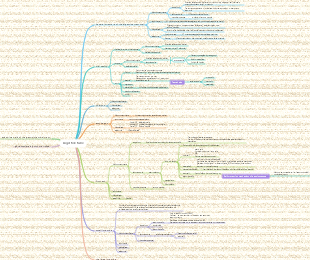
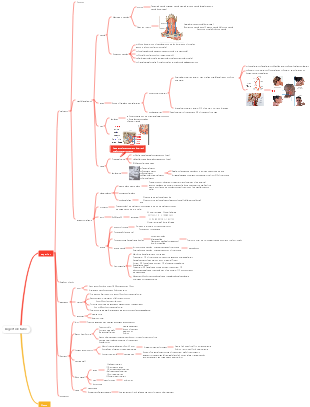
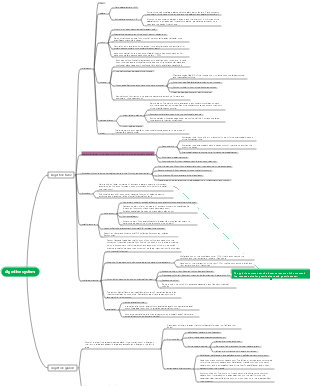
This is a mind map about histology and embryology - the alimentary canal, which is a continuous tube from the mouth to the anus Including the oral cavity, pharynx, esophagus, stomach, small intestine and large intestine.
Edited at 2024-04-21 14:32:11Avatar 3 centers on the Sully family, showcasing the internal rift caused by the sacrifice of their eldest son, and their alliance with other tribes on Pandora against the external conflict of the Ashbringers, who adhere to the philosophy of fire and are allied with humans. It explores the grand themes of family, faith, and survival.

This article discusses the Easter eggs and homages in Zootopia 2 that you may have discovered. The main content includes: character and archetype Easter eggs, cinematic universe crossover Easter eggs, animal ecology and behavior references, symbol and metaphor Easter eggs, social satire and brand allusions, and emotional storylines and sequel foreshadowing.
[Zootopia Character Relationship Chart] The idealistic rabbit police officer Judy and the cynical fox conman Nick form a charmingly contrasting duo, rising from street hustlers to become Zootopia police officers!
Avatar 3 centers on the Sully family, showcasing the internal rift caused by the sacrifice of their eldest son, and their alliance with other tribes on Pandora against the external conflict of the Ashbringers, who adhere to the philosophy of fire and are allied with humans. It explores the grand themes of family, faith, and survival.
This article discusses the Easter eggs and homages in Zootopia 2 that you may have discovered. The main content includes: character and archetype Easter eggs, cinematic universe crossover Easter eggs, animal ecology and behavior references, symbol and metaphor Easter eggs, social satire and brand allusions, and emotional storylines and sequel foreshadowing.
[Zootopia Character Relationship Chart] The idealistic rabbit police officer Judy and the cynical fox conman Nick form a charmingly contrasting duo, rising from street hustlers to become Zootopia police officers!
Digestive tube
a continuous tube from the mouth to the anus
Including mouth, pharynx, esophagus, stomach, small intestine and large intestine
General structure of pipe wall
Mucous membrane
The most structurally different and functionally important part of the digestive tract.
composition
epithelium
Both ends of the digestive tract: oral cavity, pharynx, esophagus and anal canal below the dentate line - stratified squamous epithelium, anti-friction, mainly protective
The remaining segments are single-layer columnar epithelium, mainly responsible for digestive and absorptive functions.
lamina propria
loose connective tissue
Rich in blood vessels and lymphatic vessels
muscularis mucosa
thin layer of smooth muscle
Promote the discharge of glandular secretions and blood circulation in the lamina propria
Conducive to the digestion and absorption of food
submucosa
Dense connective tissue connecting mucosa and muscle layer
Contains arterioles, venules and lymphatic vessels
There are esophageal glands and duodenal glands in the submucosa of the esophagus and duodenum, respectively.
The mucosa and part of the submucosa of the esophagus, stomach, small intestine, and large intestine protrude into the digestive tract to form folds - expanding the surface area
Muscle layer
Except for the upper part of the esophagus and the lower part of the anal canal, which are skeletal muscles, most of the rest are smooth muscles.
Generally divided into two layers: inner ring and outer longitudinal layer.
The stomach is thick and can be divided into three layers: internal oblique, middle ring, and external longitudinal layers.
adventitia
fiber membrane
less in body
Made of thin layers of connective tissue
Mainly distributed in the esophagus and terminal large intestine
Connected to surrounding tissue and fixed
Serosa
Composed of thin layers of connective tissue and surface covering mesothelium
Mainly distributed in the stomach, small intestine and most of the large intestine
Smooth surface can reduce friction during gastrointestinal movement
esophagus
Channel that carries food from the mouth to the stomach
The tension of the circular muscles causes the mucosa and part of the submucosa to form longitudinal folds
The stratified squamous epithelium at the lower end of the esophagus is connected to the single-layer columnar epithelium at the gastric cardia.
Predisposed sites for esophageal cancer
Mucous membrane
epithelium
Unkeratinized stratified squamous epithelium
lamina propria
fine connective tissue
muscularis mucosa
longitudinal smooth muscle bundles
submucosa
loose connective tissue
Esophageal gland ducts penetrate the mucosa and open into the esophageal lumen
More lymphocytes can be seen around the esophageal glands, and lymph nodes are occasionally seen.
Muscle layer
inner loop
outside vertical line
The upper third of the esophagus is skeletal muscle
The lower third is smooth muscle
The middle third is a mixture of skeletal muscle and smooth muscle
The circular muscles at the upper and lower ends of the esophagus thicken to form the upper and lower esophageal sphincters.
adventitia
fiber membrane
Stomach
Mucous membrane
There are criss-crossing shallow grooves on the surface, dividing the mucosa into many gastric cells.
The surface is covered with irregular holes, called gastric pits
epithelium
Composed of a single layer of columnar surface mucus cells
The top cytoplasm is filled with mucin granules
secretions
Prevent the digestion of gastric mucosa by high concentrations of hydrochloric acid and pepsin
Resist food abrasion on gastric mucosal epithelium
tight junctions between cells
The exfoliated cells are replenished by proliferation of stem cells at the bottom of the gastric fovea and the neck of the gastric gland.
lamina propria
fundic glands
chief cell
Cells are cone-shaped or columnar
The nuclear circle is located at the base
The basal cytoplasm beneath the nucleus is strongly basophilic
peptic cells
parietal cell
Cells are mostly round or cone-shaped
The nuclear circle is in the center and dual nuclei are visible.
Cytoplasm is strongly eosinophilic
oxyntic cells
Synthesis and secretion of hydrochloric acid
secreted intrinsic factor
Intrinsic factor deficiency can cause vitamin B12 malabsorption, leading to pernicious anemia
cervical mucus cells
Often wedge-shaped between other cells
The nucleus is flat and located at the base of the cell
Secretion of soluble acidic mucus
stem cell
small quantity
Cell body is small and columnar
Low degree of differentiation and strong proliferation ability
endocrine cells
Scattered in epithelium and glands
Using silver staining or immunohistochemistry
cardia gland
Single or branched tubular mucous gland secreting mucus and lysozyme
Pyloric gland
branched and curved tubular mucous gland
Contains few parietal cells and more endocrine cells
G cells secrete gastrin
Strongly stimulates parietal cells to secrete hydrochloric acid
Promote gastrointestinal mucosal cell proliferation
muscularis mucosa
inner loop
outside vertical line
submucosa
finer connective tissue
Contains larger blood vessels, lymphatic vessels and nerves
Muscle layer
internal diagonal
Central
outside vertical line
adventitia
Serosa
small intestine
The longest section of the digestive tract
Divided into duodenum, jejunum and ileum
The intestinal lumen contains bile, pancreatic juice, and small intestinal juice
Main parts of digestion and absorption
Mucous membrane
epithelium
The epithelium is a single layer of columnar epithelium
absorbing cells
The biggest amount
Tall columnar shape
Nucleus oval
goblet cells
endocrine cells
lamina propria
fine connective tissue
muscularis mucosa
Composed of inner circular rows and outer longitudinal rows
submucosa
There are larger blood vessels and lymphatic vessels in the submucosal connective tissue
The submucosal layer of the duodenum contains biductal and alveolar duodenal glands, also known as Brenner's glands
Secrete alkaline mucus, neutralize gastric acid, and protect duodenal mucosa from acidic gastric juice erosion
Small intestinal epithelial and glandular secretions are called intestinal fluid, which is slightly alkaline
Muscle layer
adventitia
Except for the posterior wall of the duodenum, which is fibrous membrane, the rest is serosa
the large intestine
Cecum, colon and rectum
Mucous membrane
Smooth surface
Epithelium (single layer columnar epithelium)
columnar cells
Main function: Absorb water, electrolytes, B vitamins, vitamin K and trace elements produced by bacteria in the large intestine
goblet cells
lamina propria
Contains numerous single tubular glands of the large intestine
Main function: secrete mucus
muscularis mucosa
Thin layer inner circulation
external longitudinal smooth muscle
submucosa
Connective tissue contains arterioles, venules, and lymphatic vessels
Fat cells can be seen distributed in groups
Muscle layer
inner loop
Myosegmental thickening forms colonic pouch
outside vertical line
Local thickening forms 3 colonic bands
The interzonal longitudinal muscles of the colon are thin or even absent
adventitia
The posterior wall of the ascending and descending colon and the lower rectum are mostly made of fibrous membrane
The rest of the parts are serosa
Intestinal lipidus formed by the accumulation of large amounts of fat cells in the connective tissue
appendix
The lumen is small and irregular
The lamina propria contains abundant lymphoid tissue, forming lymphatic nodules that protrude into the submucosa, leaving the muscularis mucosa incomplete.
Important organ of mucosal immune function
Muscle layer
Thin layer internal circular muscle
external longitudinal muscles
serous membrane
anal canal
anal column
The structure of the anal canal mucosa above the dentate line is similar to that of the rectum, and longitudinal folds can be seen in the upper part of the anal canal.
At the dentate line, the single-layer columnar epithelium suddenly changes into non-keratinized stratified squamous epithelium, and the intestinal glands and mucosal muscles disappear.
Below the white line is keratinized stratified squamous epithelium, which contains more melanin.
Apocrine and sebaceous glands are present in the lamina propria
The connective tissue of the submucosa contains a rich venous plexus
Dilation of venous blood stasis leads to hemorrhoids
Muscle layer
There are two layers of smooth muscle: inner circular and outer longitudinal smooth muscles.
The circular muscle thickens at the anal canal to form the internal anal sphincter.
Near the anus, there is the external anal sphincter around the longitudinal muscles.