MindMap Gallery Chemical equilibrium states and chemical equilibrium shifts
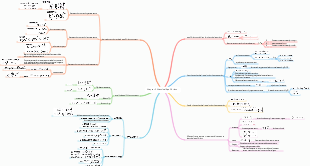
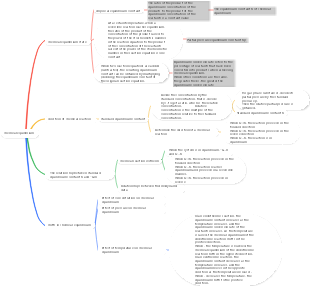
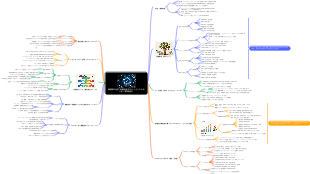
This is a mind map about chemical equilibrium states and chemical equilibrium movements. It introduces the factors that affect chemical equilibrium, Le Chatelier's principle, the establishment of chemical reaction equilibrium, Methods to determine the state of chemical equilibrium, etc.
Edited at 2024-02-10 22:29:15Avatar 3 centers on the Sully family, showcasing the internal rift caused by the sacrifice of their eldest son, and their alliance with other tribes on Pandora against the external conflict of the Ashbringers, who adhere to the philosophy of fire and are allied with humans. It explores the grand themes of family, faith, and survival.

This article discusses the Easter eggs and homages in Zootopia 2 that you may have discovered. The main content includes: character and archetype Easter eggs, cinematic universe crossover Easter eggs, animal ecology and behavior references, symbol and metaphor Easter eggs, social satire and brand allusions, and emotional storylines and sequel foreshadowing.
[Zootopia Character Relationship Chart] The idealistic rabbit police officer Judy and the cynical fox conman Nick form a charmingly contrasting duo, rising from street hustlers to become Zootopia police officers!
Avatar 3 centers on the Sully family, showcasing the internal rift caused by the sacrifice of their eldest son, and their alliance with other tribes on Pandora against the external conflict of the Ashbringers, who adhere to the philosophy of fire and are allied with humans. It explores the grand themes of family, faith, and survival.
This article discusses the Easter eggs and homages in Zootopia 2 that you may have discovered. The main content includes: character and archetype Easter eggs, cinematic universe crossover Easter eggs, animal ecology and behavior references, symbol and metaphor Easter eggs, social satire and brand allusions, and emotional storylines and sequel foreshadowing.
[Zootopia Character Relationship Chart] The idealistic rabbit police officer Judy and the cynical fox conman Nick form a charmingly contrasting duo, rising from street hustlers to become Zootopia police officers!
Chemical equilibrium states and chemical equilibrium shifts
chemical equilibrium state
Reversible reaction
Under the same conditions, there are both positive reactions and you reactions
Reactants and products exist simultaneously
The conversion rate of any component is less than "1"
Establishment of chemical reaction equilibrium
Markers "Forward reaction rate and reverse reaction"
Chemical equilibrium is a positive balance
Conditions change, the chemical equilibrium state may be changed, and a new equilibrium state is established by new conditions
How to determine the state of chemical equilibrium
most important sign
The rate of forward reaction is equal to the rate of reverse reaction
Judgment of different substances
Pay attention to judge the direction of reaction
The direction of the forward reaction is the production of products and the consumption of reactants
The reverse reaction direction is the consumption of products and the generation of reactants
Calculated from the ratio of stoichiometric numbers, the forward and reverse reaction rates of the same substance are equal
Static substance judgment
amount of matter
Percent content
amount of substance
Note that if the reactants of the reaction are liquid/solid and the product is gas, the reaction will start in the forward direction.
The percentage of gas is a fixed value
The reaction balance cannot be judged if the amount and fraction of the substance remain unchanged.
quantity concentration of substance
pressure
In a constant volume sealed container
For reactions in which the gas does not change before and after the reaction
Pressure is a fixed value, not a variable
If the pressure remains unchanged, it is impossible to determine whether it is balanced or not.
Response to increase or decrease in gas
Pressure is a variable
If the pressure remains unchanged, the reaction can be judged to have reached equilibrium.
Note that this pressure is also the partial pressure of the gas
density
The formula for calculating density is mass to volume
In a constant volume sealed container
The volume is a fixed value
For a reaction in which all reactants and products are gases, the mass of the gas is constant
It cannot be judged whether the reaction is balanced if the density remains unchanged.
For reactions that produce solids or liquids in the reactants and products, the mass of the gas will change
Density can be used as a marker to determine the equilibrium of a chemical reaction
In a constant pressure closed container
Volume is not a fixed value Therefore, many situations need to be considered
If the reactants and products are all gases, the mass of the object remains unchanged
For isovolumetric reactions, the pressure is constant and the volume remains constant.
Density is a fixed value and cannot be used as a symbol to judge balance.
For reactions involving gas changes, the pressure is constant and the volume changes
Density is a variable
The constant density can be used as a sign of whether the reaction is balanced.
If there is solid in the reactants or products, the mass change of the gas
If the reaction is isovolumetric, the volume remains constant and the mass of the gas is constant.
Density is the amount of change
Constant density can be used as a sign of equilibrium reaction
average molar mass of gas
The average molar mass of a gas is related to the amount of gas substance and the mass of the gas
In a closed container with constant volume, the volume is a constant value
If the reaction is an isovolumetric reaction involving all gases, the average molar mass of the gas does not change
The average molar mass of a gas is a fixed value and cannot be used as a symbol to judge equilibrium.
If the reaction is an all-gas reaction, there will be a gas change
The mass of the gas remains unchanged, but the amount of matter changes
The average molar mass of a gas is a variable
The average molar mass of the gas remains unchanged and can be used as a marker to determine whether the reaction is balanced.
If the reaction is an isovolumetric reaction involving solid and liquid
The volume of the gas remains unchanged, the amount of substance remains unchanged, and the mass changes
The change in the average molar mass of a gas can be used as a marker to determine whether the reaction is balanced.
color
The color is the same as the percentage content
shifts in chemical equilibrium
Factors affecting chemical equilibrium
temperature
For an exothermic reaction, as the temperature increases, the reaction proceeds in the reverse direction; as the temperature decreases, the reaction proceeds in the forward direction.
For endothermic reactions, as the temperature increases, the reaction proceeds in the forward direction; as the temperature decreases, the reaction proceeds in the reverse direction.
pressure
For a constant volume reaction, the pressure changes but the equilibrium does not move.
For a reaction in which gas increases, when the pressure increases, the reaction proceeds in the reverse direction; when the pressure decreases, the reaction proceeds in the forward direction.
For a reaction in which the gas decreases, the pressure increases and the reaction proceeds in the forward direction; the pressure decreases and the reaction proceeds in the reverse direction.
Note: This pressure should be the partial pressure of the reaction/generated gases rather than the total pressure.
Note: For inert gases, if they are in a constant-volume sealed container, they have no effect on the balance; if they are in a constant-pressure sealed container, they are considered to reduce the pressure.
concentration
For reactants, as the concentration of the reactant increases, the reaction proceeds forward
For products, as the product concentration increases, the reaction proceeds in reverse
Note: In an ion reaction, the increase in concentration must be the ions actually participating in the reaction. If they do not participate in the actual reaction, there will be no impact on the balance.
catalyst
Catalysts can change the forward and reverse reaction rates equally, but cannot change the equilibrium state.
Le Chatelier's Principle
Changing the conditions that affect chemical movement causes the equilibrium to shift in a direction that weakens this effect
For increasing reactants, increasing the reactant concentration can make the reaction proceed in the forward direction and consume the reactants, but the corresponding reactant concentration in the second equilibrium is greater than the concentration in the first reaction equilibrium.