MindMap Gallery Introduction to Histology
Histology and Embryology, summarizes the research content and significance, The development history of histology, common technical methods of histology, etc. Hope this mind map helps you!
Edited at 2024-02-08 17:05:18This mind map analyzes favorites and dark horses for the 2026 FIFA World Cup, hosted by the USA, Canada, and Mexico. With the expansion to 48 teams, the competitive landscape has shifted. The objective is to identify top contenders and surprise packages. Key performance indicators include prediction accuracy and user engagement. Favorites: A Clear Top Four Spain emerges as the consensus front-runner at +400 odds. They are reigning European champions, powered by Lamine Yamal and Ballon d‘Or winner Rodri. France follows at +600, possessing the deepest talent pool led by Kylian Mbappé. They have reached the previous two finals. England ranks third at +550, qualifying with a perfect record: eight wins, zero goals conceded. New manager Thomas Tuchel has instilled defensive solidity. Argentina, the defending champions, sits fourth at +800. Lionel Messi, now 39, leads what is likely his final World Cup. Dark Horses: Potential Surprises Ecuador is a compelling dark horse on a 17-match unbeaten streak, keeping 13 clean sheets. Their counter-attacking style, anchored by Moisés Caicedo, suits knockout football. Japan has defeated Germany, Spain, and Brazil since 2022. Their well-drilled pressing system could surpass their previous Round of 16 ceiling. Norway qualifies for their first World Cup since 1998. Erling Haaland makes them a threat against any opponent. Colombia, led by Luis Díaz, sits at the intersection of dark horse and fringe favorite. Host nations USA (+5000) and Mexico (+6500) have home-soil advantage but face long odds. Conclusion Spain enters as the team to beat, but France, England, and Argentina remain contenders. Among dark horses, Ecuador‘s defensive solidity, Japan’s tactical discipline, and Norway‘s offensive firepower make them most likely to exceed expectations. This mind map is created with EdrawMax and EdrawMind, serving as an essential guide for analysts and fans.

Discover the transformative power of AI in our community with this engaging introduction! In this discussion, we will explore three main topics the definition and fundamentals of AI, its applications across various industries, and the ethical considerations surrounding its use. Firstly, we will delve into what AI(This content is AI-generated. It is for reference only)
장가계 5일 4박 심층 여행 가이드 템플릿 — EdrawMind로 제작된 한국인 맞춤형 여행 계획 마인드맵으로, 중국 장가계 여행을 체계적으로 준비하고 실행할 수 있도록 돕는 전문 시각화 도구입니다. 이 템플릿은 여행의 전 과정을 아우르는 5대 핵심 모듈(출발 전 준비사항·추천 체험·실용 팁·유의사항·일차별 세부 일정)으로 구성되어 있으며, 각 단계별로 필수 정보를 한눈에 파악할 수 있도록 설계되었습니다. 출발 전 준비사항에서는 한국 여권 소지자의 비자 규정(15일 체류 무비자), 최적 여행 시기(4~10월, 특히 4월과 10월 추천), 현지 교통 안내(장가계 화이국제공항에서 직통 버스 3시간 소요), 필수 준비물(등산화·우산·보조배터리·위장막 등)까지 실용적인 정보를 제공합니다. 추천 체험에서는 부모님과 함께하는 효도 여행·한국 드라마 촬영지 탐방·고봉에서의 평지 방문·우황채에서의 짚라인 체험 등 장가계만의 특별한 활동을 제안하며, 전통문화 체험으로 무투자 문화촌의 공연과 송품 체험을 소개합니다. 실용 팁에서는 주요 관광지 내 한국어 안내 서비스 운영, 현지 음식점의 한국어 메뉴 지원, 무료 셔틀버스 이용 안내, 예산 계획(1인당 2000~3000위안)까지 한국인 여행객의 편의를 고려한 정보를 담고 있습니다. 유의사항에서는 환율 기준(2026년 4월 기준 1위안≈216.56원), 환전 팁, 명함 관광 피하기 등 안전하고 즐거운 여행을 위한 주의사항을 정리했습니다. 일차별 세부 일정은 1일차 도착과 시내 관광부터 5일차 문화 체험과 귀국까지 단계별로 구성되어 있습니다. 1일차는 공항 도착 후 호텔 체크인과 시내 맛집 탐방, 2일차는 장가계 국가삼림공원 산악 코스, 3일차는 산하·채곡 코스, 4일차는 텐먼산 국가삼림공원 관광, 5일차는 무투성 방문과 기념품 구매로 이어지며, 각 일차별로 이동 수단·숙박·식사·관광지의 세부 정보(요금·이동 시간·추천 활동)를 구체적으로 제시하여 여행의 혼란을 줄여줍니다. EdrawMind의 강력한 마인드맵 기능을 활용해 사용자는 자신의 여행 스타일에 맞춰 일정・예산・테마를 자유롭게 수정할 수 있으며, 한국어로 작성된 템플릿이라 편리하게 사용할 수 있습니다. 여행 계획 발표・동반자와의 일정 공유・개인 여행 기록 등 다양한场景에서 활용 가능하며, 전문적이고 체계적인 여행 계획을 쉽게 완성할 수 있도록 지원합니다.
This mind map analyzes favorites and dark horses for the 2026 FIFA World Cup, hosted by the USA, Canada, and Mexico. With the expansion to 48 teams, the competitive landscape has shifted. The objective is to identify top contenders and surprise packages. Key performance indicators include prediction accuracy and user engagement. Favorites: A Clear Top Four Spain emerges as the consensus front-runner at +400 odds. They are reigning European champions, powered by Lamine Yamal and Ballon d‘Or winner Rodri. France follows at +600, possessing the deepest talent pool led by Kylian Mbappé. They have reached the previous two finals. England ranks third at +550, qualifying with a perfect record: eight wins, zero goals conceded. New manager Thomas Tuchel has instilled defensive solidity. Argentina, the defending champions, sits fourth at +800. Lionel Messi, now 39, leads what is likely his final World Cup. Dark Horses: Potential Surprises Ecuador is a compelling dark horse on a 17-match unbeaten streak, keeping 13 clean sheets. Their counter-attacking style, anchored by Moisés Caicedo, suits knockout football. Japan has defeated Germany, Spain, and Brazil since 2022. Their well-drilled pressing system could surpass their previous Round of 16 ceiling. Norway qualifies for their first World Cup since 1998. Erling Haaland makes them a threat against any opponent. Colombia, led by Luis Díaz, sits at the intersection of dark horse and fringe favorite. Host nations USA (+5000) and Mexico (+6500) have home-soil advantage but face long odds. Conclusion Spain enters as the team to beat, but France, England, and Argentina remain contenders. Among dark horses, Ecuador‘s defensive solidity, Japan’s tactical discipline, and Norway‘s offensive firepower make them most likely to exceed expectations. This mind map is created with EdrawMax and EdrawMind, serving as an essential guide for analysts and fans.
Discover the transformative power of AI in our community with this engaging introduction! In this discussion, we will explore three main topics the definition and fundamentals of AI, its applications across various industries, and the ethical considerations surrounding its use. Firstly, we will delve into what AI(This content is AI-generated. It is for reference only)
장가계 5일 4박 심층 여행 가이드 템플릿 — EdrawMind로 제작된 한국인 맞춤형 여행 계획 마인드맵으로, 중국 장가계 여행을 체계적으로 준비하고 실행할 수 있도록 돕는 전문 시각화 도구입니다. 이 템플릿은 여행의 전 과정을 아우르는 5대 핵심 모듈(출발 전 준비사항·추천 체험·실용 팁·유의사항·일차별 세부 일정)으로 구성되어 있으며, 각 단계별로 필수 정보를 한눈에 파악할 수 있도록 설계되었습니다. 출발 전 준비사항에서는 한국 여권 소지자의 비자 규정(15일 체류 무비자), 최적 여행 시기(4~10월, 특히 4월과 10월 추천), 현지 교통 안내(장가계 화이국제공항에서 직통 버스 3시간 소요), 필수 준비물(등산화·우산·보조배터리·위장막 등)까지 실용적인 정보를 제공합니다. 추천 체험에서는 부모님과 함께하는 효도 여행·한국 드라마 촬영지 탐방·고봉에서의 평지 방문·우황채에서의 짚라인 체험 등 장가계만의 특별한 활동을 제안하며, 전통문화 체험으로 무투자 문화촌의 공연과 송품 체험을 소개합니다. 실용 팁에서는 주요 관광지 내 한국어 안내 서비스 운영, 현지 음식점의 한국어 메뉴 지원, 무료 셔틀버스 이용 안내, 예산 계획(1인당 2000~3000위안)까지 한국인 여행객의 편의를 고려한 정보를 담고 있습니다. 유의사항에서는 환율 기준(2026년 4월 기준 1위안≈216.56원), 환전 팁, 명함 관광 피하기 등 안전하고 즐거운 여행을 위한 주의사항을 정리했습니다. 일차별 세부 일정은 1일차 도착과 시내 관광부터 5일차 문화 체험과 귀국까지 단계별로 구성되어 있습니다. 1일차는 공항 도착 후 호텔 체크인과 시내 맛집 탐방, 2일차는 장가계 국가삼림공원 산악 코스, 3일차는 산하·채곡 코스, 4일차는 텐먼산 국가삼림공원 관광, 5일차는 무투성 방문과 기념품 구매로 이어지며, 각 일차별로 이동 수단·숙박·식사·관광지의 세부 정보(요금·이동 시간·추천 활동)를 구체적으로 제시하여 여행의 혼란을 줄여줍니다. EdrawMind의 강력한 마인드맵 기능을 활용해 사용자는 자신의 여행 스타일에 맞춰 일정・예산・테마를 자유롭게 수정할 수 있으며, 한국어로 작성된 템플릿이라 편리하게 사용할 수 있습니다. 여행 계획 발표・동반자와의 일정 공유・개인 여행 기록 등 다양한场景에서 활용 가능하며, 전문적이고 체계적인 여행 계획을 쉽게 완성할 수 있도록 지원합니다.
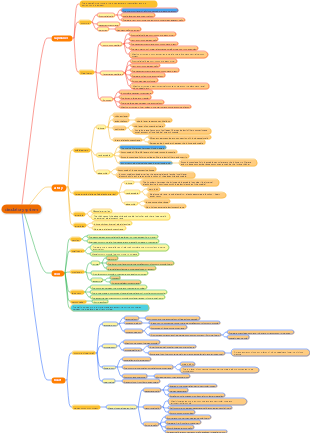
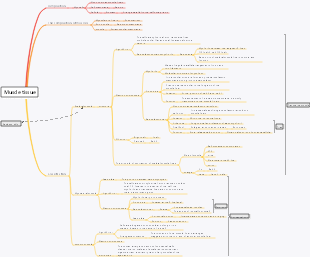
Introduction to Histology
Research content and significance
definition
A discipline that studies the microstructure of the normal human body and its related functions
research content
cell
The basic unit of body structure and function
organize
It is an organic combination of cells and extracellular matrix with similar morphological structures and similar physiological functions.
type
epithelial tissue
connective tissue
muscle tissue
nervous tissue
organ
It is composed of different types of basic tissues and has certain morphological structure and physiological functions.
system
It is an organic combination of several organs with different morphological structures and similar physiological functions, which can complete a certain continuous physiological function.
type
nerve
cycle
immunity
endocrine
Feel
Digestion
breathe
Urology
reproduction
significance
Morphological structure determines physiological function, and morphological structure is the basis of physiological function.
History of Histology
British scholar Hooke discovered the "cell"
British scholar Bixia proposed "organization tissue"
German scholar Meyer proposed "histology biology"
German scholars Schleiden and Schwan established the "cell theory"
German scholar Virchow proposed the "cytopathology theory"
The electron transmission microscope was introduced in 1932
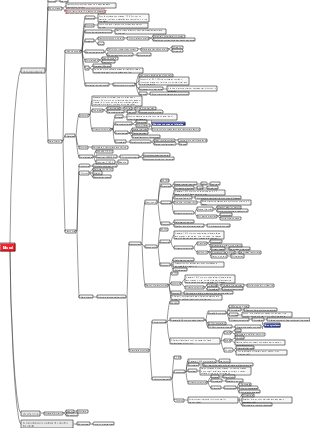
Commonly used technical methods in histology
General light microscopy (LM)
Referred to as a light microscope, it can magnify objects 1000~1500 times with a resolution limit of 0.2μm.
specimen preparation method
slice method
paraffin sectioning
1) Material extraction: The thickness should not exceed 0.5cm, and the tissues and organs obtained from the material are called tissue blocks.
2) Fixation: In order to prevent the protein in the tissue block from decomposing and autolyzing, and to maintain the morphological structure of the cells during life, they need to be fixed with a fixative. Commonly used fixatives include formaldehyde, ethanol, acetone or mixed fixatives.
3) Dehydration: The purpose is to make the embedding agent easily immersed in the tissue block. The commonly used dehydrating agent is ethanol. Gradient dehydration prevents excessive water loss and affects normal morphology
4) Transparency: Use xylene, benzene, and chloroform to soak the tissues and organs to replace the ethanol.
5) Embedding: In order to increase the hardness of the tissue block and facilitate cutting into thin sections, paraffin, collodion, resin and other materials are commonly used for embedding.
6) Slicing: Use a microtome to cut the tissue block into thin slices with a thickness of 5~10 μm, and mount them on a glass slide.
7) Dewaxing: The process of removing paraffin components from paraffin sections through xylene is called dewaxing. Its purpose is to facilitate the coloring of dyes during dyeing.
8) Dyeing:
Principle: Based on the principle that the dye and tissue cells can chemically combine or physically adsorb, the different component structures of the tissue cells form a color difference (contrast), which is convenient for observation under a light microscope.
H-E staining (hematoxylin and eosin staining) Chromosomes and ribosomes are stained with hematoxylin and appear purple-blue; The cytoplasm and extracellular matrix are stained pink with eosin.
9) Sealing the slide: add drops of neutral gum and cover it with a coverslip. This is called a paraffin section specimen and can be observed under a light microscope.
cryosection
The extracted tissue blocks do not undergo steps such as fixation and embedding, but are directly frozen quickly and then sliced in a cryostat microtome.
Advantages: It can effectively preserve lipid components and enzyme activities in tissues and organs, and is often used in cell histochemistry research.
non-slicing method
Refers to the method of making slices without steps such as embedding and slicing.
Smear: directly apply blood, semen, isolated cells, exfoliated cells, etc. on a glass slide
Spreading: tear the mesentery and subcutaneous tissue into thin slices and lay them directly on the glass slide
Grinding: Mechanically grind hard tissues and organs such as teeth and bones into thin slices and attach them to a glass slide.
Special optical microscopy technology
Fluorescence microscopy technology, inverted microscopy technology, phase contrast microscopy technology, dark field microscopy technology, laser confocal microscopy technology
Electron Microscopy (EM)
Principle: The electron beam (electron gun) is used instead of the light source, and the electromagnetic lens is used instead of the condenser, eyepiece, and objective lens. The electron beam produces different short wavelengths under different voltages. Therefore, the resolution limit of the electron microscope is 0.1~0.2nm, which can magnify the object by nearly 100 nm. Ten thousand times.
Commonly used techniques
Transmission electron microscopy
Sample preparation: 1 mm × 1 mm × 1 mm tissue is fixed with glutaraldehyde or osmic acid, embedded in resin, and made into 50~100 nm ultrathin sections using an ultramicrotome, mounted on a copper grid, and covered with lead and uranium. After the heavy metal salt is electron stained, it is observed under an electron microscope.
Any part that is electron-stained and bound by heavy metal salts has a darker image and is said to have high electron density. On the contrary, if the image is brighter, it is said that the electron density is low.
The staining method that combines the detected structure with heavy metal salts is called positive staining. The staining method when the heavy metal salt does not bind to the structure to be examined but binds to the area around the structure to be examined is called negative staining.
Scanning electron microscope technology, freeze etching replica technology, freeze cutting technology, scanning electron microscope casting technology, X-diffraction microanalysis technology, ultra-high voltage electron microscope technology, scanning probe electron microscope technology
Histochemistry and Cytochemistry Techniques
Principle: Based on the principles of physical and chemical reactions, certain chemical substances to be detected in tissue cells form colored precipitates, which facilitates qualitative, localization and quantitative research on them under a light microscope or electron microscope.
research content
1. Sugar
It is shown that polysaccharides and proteoglycans are commonly used in periodic acid-Schiff reaction, referred to as PAS reaction.
Principle: The periodic acid oxidation reaction can oxidize the ethylene glycol group of the sugar molecule to form a glyoxal group. The latter is combined with the colorless basic fuchsin in the Schiff reagent to form a purple-red reaction at the site where the original sugar molecule exists. The product forms a precipitate, indirectly showing the status of intracellular sugar substances.
2. Lipids (including fats and lipids)
In order to prevent organic solvents from dissolving it, frozen sections are often used.
Sudan black, Oil Red O, Nile Blue and other lipid-soluble dyes can be used for dyeing; Osmic acid fixation and dyeing can also be used. Fatty acid or choline treatment can reduce osmic acid to OsO₂, making the lipids appear black.
3. Enzyme
The basic principle is to use an enzyme to hydrolyze and oxidize its corresponding substrate. When the reactant produced by the enzyme reacts with the capture agent, a colored product can be formed. The intensity of the color of the final product is often used to indicate the strength of the enzyme activity.
4. Nucleic acid
Fulgen reaction reveals DNA Principle: The bond between deoxyribose and purine in DNA is opened after treatment with dilute hydrochloric acid. After forming an aldehyde group, it reacts with the basic fuchsin in Schiff reagent to make the DNA purple-red.
Methyl green-pyronine (pyro red) reaction Can make DNA appear blue-green and RNA appear red at the same time
Immunohistochemistry and immunocytochemistry technology, in situ hybridization technology, cell stoichiometry technology, autoradiography technology, in vitro culture technology, cell fusion technology, tissue engineering technology
study method
Basophilic structure
Nucleus, rough endoplasmic reticulum, free ribosomes
dye
Commonly used acid dyes: eosin, fast green, orange G, etc.
Commonly used alkaline dyes: hematoxylin, methylene blue, basic fuchsin, etc.