MindMap Gallery Embryonics Chapter 4 Blood
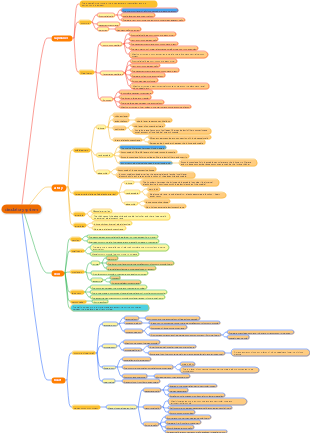
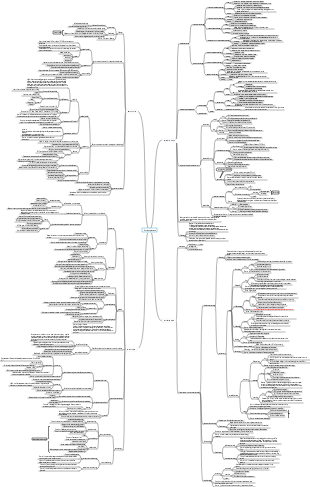
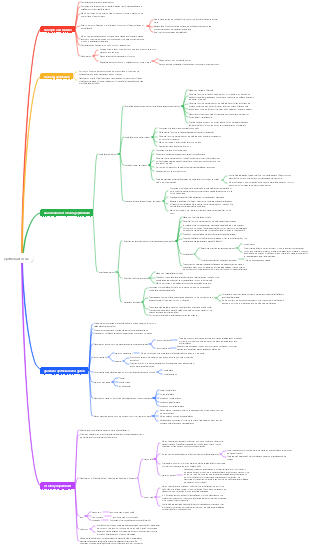
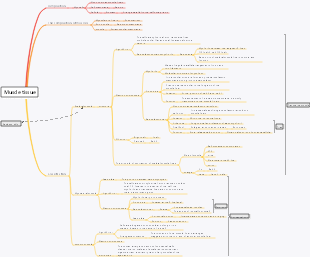
Summary and Review of Chapter 4 of "Tissing and Embryoology" Ninth Edition, Total Blood: The total blood volume of adults is about 5 liters, accounting for about 7% of their body weight. Blood composition: Blood is composed of plasma and blood cells, of which plasma accounts for 55% and blood cells account for 45%.
Edited at 2025-03-11 10:52:43This is a mind map about bacteria, and its main contents include: overview, morphology, types, structure, reproduction, distribution, application, and expansion. The summary is comprehensive and meticulous, suitable as review materials.

This is a mind map about plant asexual reproduction, and its main contents include: concept, spore reproduction, vegetative reproduction, tissue culture, and buds. The summary is comprehensive and meticulous, suitable as review materials.
This is a mind map about the reproductive development of animals, and its main contents include: insects, frogs, birds, sexual reproduction, and asexual reproduction. The summary is comprehensive and meticulous, suitable as review materials.
This is a mind map about bacteria, and its main contents include: overview, morphology, types, structure, reproduction, distribution, application, and expansion. The summary is comprehensive and meticulous, suitable as review materials.
This is a mind map about plant asexual reproduction, and its main contents include: concept, spore reproduction, vegetative reproduction, tissue culture, and buds. The summary is comprehensive and meticulous, suitable as review materials.
This is a mind map about the reproductive development of animals, and its main contents include: insects, frogs, birds, sexual reproduction, and asexual reproduction. The summary is comprehensive and meticulous, suitable as review materials.
blood
45% blood cells
source
marrow
Blood image
Hemocytomorphology, quantity, percentage and hemoglobin content
Important criteria for diagnosing diseases
Classification
Red blood cells
structure
Double concave disc-shaped, 7.5-8.5 microns in diameter, nucleus, organelles, and hemoglobin in the cytoplasm
Function
Combining and transporting oxygen and carbon dioxide
Physiological characteristics
Plasticity and elasticity, semi-permeable membrane properties
skeleton
Hemoshomoscopic protein
Structural abnormality
Hereditary spherical erythrocytes
Swallowed by macrophages, causing anemia
Actin
Blood type antigen
ABO blood type antigen system
Membrane sac glycoprotein
Antigen A
Antigen B
Blood transfusion principle
Immune type
Normal value
Red blood cells
Hemoglobin
life
Average 120 days
Aging red blood cells are phagocytically eliminated by macrophages from the spleen and liver
Immature red blood cells
Reticulum erythrocytes
Also known as naive red blood cells
Accounts for 0.5-1.5%, the cytoplasm contains ribosomes (stained by tar blue into purple-blue), and is in a fine reticle
Increased during anemia
It shows that bone marrow hematopoietic function is enhanced
reduce
Bone marrow hematopoietic dysfunction
Platelets
structure
Megakaryocyte cytoplasmic debris, arranged in clusters, 2-4 microns, double concave disc-shaped or irregular (protrusions produced by mechanical and chemical stimulation), nucleus, with organelles
Two areas
Granule area
central
Purple blue particles
Transparent area
around
Homogenous light blue
Ultramicrostructure
surface
Adsorbs plasma proteins and contains a variety of coagulation factors
Transparent area
Microtube
Microfilament
Maintain the shape of platelets
Granule area
Special particles
Contains blood coagulation and hemostatic factors
Dense particles
A small amount of lysosomes
Cytoplasm
Small tubular system
Open tubular system
Connect with cell membranes
Dense tubular system
Closed
Function
Participate in hemostasis and clotting
Normal value
(100-400)*10 9/L
Less than 100910 9/L
Thrombocytopenia
Thrombocytopenic purpura
Ecchymosis on the skin, purpura
Less than 5*10 9/L
Bleeding
leukocyte
structure
Colorless, spherical, core
Function
Deformation motion
Swallow
Resistant antigens
Classification
Are there any special particles
Leukocytes
Neutrophils
50-70%
Granules
Special neutral particles
80%
Light red
Sky-eating granules
20%
Purple red
structure
Diameter 10-12 microns, core polymorphic, 2-5 leaves, usually 3 leaves are the main
The core left shift
Acute severe bacterial infection, mainly 2 leaves
The core is moved right
Bone marrow hematopoietic dysfunction, mainly 4-5 leaves
Ultramicrostructure
Special particles
Medium electron density
Contains lysozyme, phagocytine
Sky-eating granules
Lysosomes
Contains peroxidase
Function
Deformation motion
Swallow and eliminate bacteria
It will become pus cells
Eosinophils
0.5-3%
structure
Diameter 10-15 microns, special particles are large and uneven, orange-red, core is divided into leaves, mainly 2 leaves, and eight-shaped arrangement
Ultramicrostructure
Granules
Lysosomes
Rectangular crystals in the matrix
Inclusions
Histaminease
Inactivated histamine
Aromatic sulfate enzyme
Inactivated leukotriene
Cationic protein
Kill parasites
Function
Deformation motion
Phagocytosis of antigen-antibody complexes to reduce allergic reactions
Kill parasites
Barophilic granulocytes
0-1%
structure
Diameter 10-12 microns, special particles are large and uneven in size, purple-blue, particles mask the core, heterochromatic, irregular or S-shaped
Ultramicrostructure
Granules
There are fine particles
Contains heparin, histamine
Cytoplasm
Contains leukotriene
Function
Participate in allergic reactions and anticoagulation
Different from mast cells are different hematopoietic progenitor cells derived from bone marrow
Granular leukocytes
Lymphocytes
20-30%
Diameter 6-20 microns classification
Small 6-8 microns
90%, round or oval
Cytoplasm
Few, sky blue, sky-loving particles
nuclear
Round, with shallow concave on one side of the nucleus, dense chromatin into blocks, deep dye
Ultramicrostructure
Cytoplasm
A large number of free ribosomes, lysosomes
9-12 micrometers
13-20 micrometers large
There is basically no blood
Rich cytoplasm
Different classifications of processes, surface molecules and functions
T cells
75%
Participate in cellular immunity
B cells
10-15%
Plasma cells produce antibodies and participate in humoral immunity
NK cells
Natural killer cells
Nonspecifically kill certain tumor cells or virus-infected cells
Mononuclear cells
3-8%
structure
Diameter 14-20 micrometers
maximum
Cytoplasm
Rich, gray-blue, basophilic, and azure-elastic granules
nuclear
Various shapes (kidney-shaped, horseshoe-shaped, round, oval), small and sparse chromatin, uneven surface of the core, light staining
Ultramicrostructure
surface
Micro fluffy
Cytoplasm
Swallowing body
Granules
Lysosomes
Peroxidase
Acid phosphatase
Nonspecific esterase
Function
Enter connective tissue to form powerful macrophages
Kill bacteria
Swallow foreign body particles and aging and damaged cells
Participate in immune response
Plasma 55%
Extracellular matrix
serum
Substrate
Blood clots
In blood vessels and heart, about 5L for adults
Blood smear
wright , giemsa stain