MindMap Gallery epithelial tissue
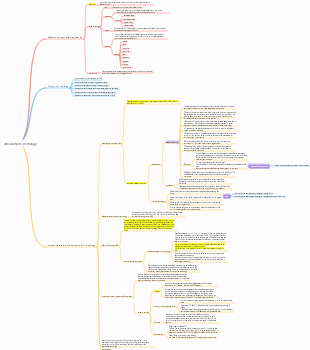
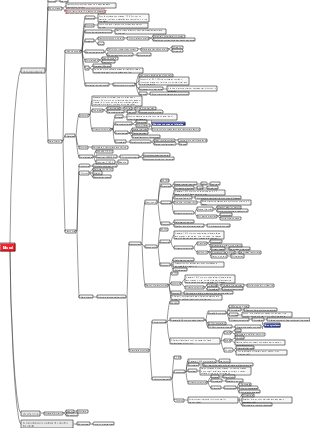
Histology and embryology include covering epithelium, glandular epithelium and glands. Epithelial tissue, referred to as epithelium, is composed of a large number of regularly shaped, tightly arranged cells and a very small amount of intercellular matrix. These cells have obvious polarity. The side facing the body surface or organ cavity is called the free side, and the opposite side is called the basal side.
Edited at 2024-10-11 23:03:07Dive into the world of the Chinese animated film Nezha 2: The Devil's Birth! This knowledge map, created with EdrawMind, provides a detailed analysis of main characters, symbolic elements, and their cultural significance, offering deep insights into the film's storytelling and design.
This is a mindmap about Nezha 2, exploring its political metaphors and cultural references. The diagram highlights the symbolism behind the Dragon Clan’s suppression, drawing parallels to modern geopolitical conflicts and propaganda manipulation. It also details Chinese historical and cultural elements embedded in the film, such as the Jade Void Palace, Ao Bing’s armor, Taiyi Zhenren’s magic weapon, and Nezha’s hairstyle.
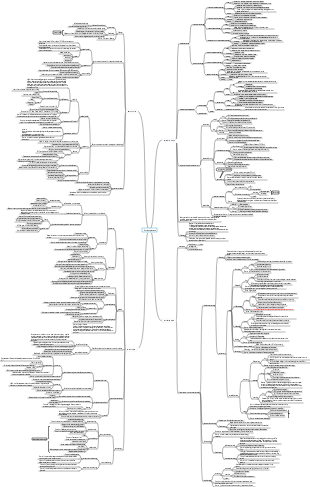
This is a mindmap about the main characters of Nezha 2, detailing their backgrounds, conflicts, and symbolic meanings. It explores the personal struggles and transformations of Nezha, Ao Bing, Shen Gongbao, and Li Jing as they navigate themes of rebellion, duty, ambition, and sacrifice.
Dive into the world of the Chinese animated film Nezha 2: The Devil's Birth! This knowledge map, created with EdrawMind, provides a detailed analysis of main characters, symbolic elements, and their cultural significance, offering deep insights into the film's storytelling and design.
This is a mindmap about Nezha 2, exploring its political metaphors and cultural references. The diagram highlights the symbolism behind the Dragon Clan’s suppression, drawing parallels to modern geopolitical conflicts and propaganda manipulation. It also details Chinese historical and cultural elements embedded in the film, such as the Jade Void Palace, Ao Bing’s armor, Taiyi Zhenren’s magic weapon, and Nezha’s hairstyle.
This is a mindmap about the main characters of Nezha 2, detailing their backgrounds, conflicts, and symbolic meanings. It explores the personal struggles and transformations of Nezha, Ao Bing, Shen Gongbao, and Li Jing as they navigate themes of rebellion, duty, ambition, and sacrifice.
epithelial tissue
Concepts and features
Epithelial tissue referred to as epithelium
Composed of a large number of regularly shaped, tightly packed cells and a small amount of extracellular matrix
Mainly distributed on the outer surface of the body or some organs or on the inner surface of cavity organs
Polarity: distinct differences in structure and function on different surfaces of epithelial cells
Free surface: toward the surface of the body or the luminal surface of a luminal organ
Basal surface: Opposite the free surface, the surface connected to deep connective tissue by the basement membrane
Side: the junction between epithelial cells
Most of the epithelial tissues do not have blood vessels and lymphatic vessels, and their nutrients are provided by blood vessels in the deep connective tissue through the basement membrane.
Epithelial tissue often has a rich distribution of nerve endings
Classification
Covered by epithelium, it has functions such as protection, absorption, secretion, and excretion
Glandular epithelium has secretory function
Specialized epithelium (found in small amounts in some organs)
Myoepithelium, with contractile function
Sensory epithelium, capable of sensing specific physical or chemical stimuli
Covering epithelium
Distribution: Covering epithelium covers the body surface or lines the inner surface of various tubes, cavities and sacs in the body
Classification criteria: Classification and naming based on the number of layers of cells and the shape of the vertical section of the cells (surface cells composed of multiple layers of cells)
Classification of covering epithelium
single layer epithelium
Single layer squamous epithelium (simple layer squamous epithelium)
Made up of a layer of flat cells
Observed from the surface of the epithelium, it is irregular or polygonal, the edges of the cells are jagged and chimeric, and the nucleus is oval and located in the center of the cell.
Observed from the vertical section, the cells are flat, with less cytoplasm, the nucleus-containing part is slightly thicker, and the nucleus is flat and oval.
endothelium, lining the lumen of the heart, blood vessels, or lymphatic vessels
Mesothelium: lines the surface of the pleura, peritoneum, and pericardium
Others: alveoli, renal capsule
The free surface is smooth, which can reduce friction between organs and facilitate the flow of blood and lymph and the penetration of materials.
single layer cuboidal epithelium
Composed of a layer of approximately cubic cells
When viewed from the surface, cells appear polygonal or hexagonal.
Observed from the vertical section, the cells are roughly square in shape with round nuclei in the center.
Mainly distributed in renal tubules and thyroid gland
Has secretory and absorptive functions
simple columnar epithelium
Composed of a layer of columnar cells
Polygonal or hexagonal shape when viewed from cell surface
Observed from a vertical section, the cell is columnar, with an oval nucleus that is often located near the base of the cell, and its long axis is consistent with the long axis of the cell.
Distributed in organs such as gastrointestinal tract, gallbladder and uterus
Have secretory or absorptive function
There are scattered goblet cells between the single layer of columnar epithelial cells in the intestinal wall.
Goblet cells are shaped like a goblet. The top is enlarged and filled with mucin granules. The bottom is narrow and contains deeply stained nuclei.
Mucin contained in mucin granules combines with water after secretion to form mucus, which lubricates and protects the epithelium.
pseudostratified ciliated columnar epithelium
Composed of columnar cells, goblet cells, spindle cells and pyramidal cells, of which columnar cells are the most numerous and have a large number of cilia on the free surface.
The basal surface of all cells is attached to the basement membrane
Because the cells are of different heights, the nuclei are unevenly arranged on different horizontal planes. When viewed from a vertical section, they look like multiple layers, but are actually a single layer.
Mainly distributed in the respiratory tract and has a protective effect on the body
stratified epithelium
Stratified squamous epithelium (stratified squamous epithelium)
Made up of multiple layers of cells
Observed from the vertical section, the cells have different shapes
In the layer close to the basement membrane, basal cells are in the shape of short columns or cubes. They are stem cells with strong ability to proliferate and divide. Some new cells migrate to the shallow layer to replenish the shed cells.
The cells in the middle layers are polygonal and the cells are larger.
The superficial layers of cells are spindle-shaped or flat, and the flat cells on the surface have degenerated and gradually fallen off.
surface cells
Keratinized stratified squamous epithelium
skin epidermis
The protective effect is more significant, it is more resistant to mechanical friction and chemical stimulation, prevents the evaporation of water in the body and prevents the invasion of cells and foreign matter, and has a stronger ability to regenerate and repair after damage.
Unkeratinized stratified squamous epithelium
Mouth, esophagus and vagina
The connection between the basal surface and the deep connective tissue is uneven and wavy, which increases the contact area between the two, making the connection stronger and ensuring the nutrient supply of the epithelial tissue.
Stratified columnar epithelium
Made up of several layers of cells
The cells in the surface layer are columnar and neatly arranged, the cells in the middle layers are polygonal, and the basal layer is short columnar cells.
Mainly distributed in the palpebral conjunctiva and male urethra, etc.
metastatic epithelium
Composed of multiple layers of cells, which can be divided into surface cells, middle layer cells and basal cells
The shape and number of layers can change depending on the contraction and expansion state of the organ in which it is located.
For example, when the bladder contracts, there are more epithelial cell layers and the cells are larger.
On the contrary, the epithelium becomes thinner, the number of cell layers is reduced to only two to three layers, and the cells become flattened.
The surface cells are larger, have rich cytoplasm, and often have double nuclei. They can cover several middle cells, called cover cells, which can prevent urine invasion and have a protective effect.
Distributed to renal pelvis, renal calyces, ureters and bladder
glandular epithelium and glands
The epithelium composed of glandular cells with mainly secretory function is called glandular epithelium
Organs composed mainly of glandular epithelium are called glands
The secretions of glandular cells include enzymes, mucus, and hormones.
Classification according to the way gland secretions are discharged
endocrine glands
There are no ducts, and the secretions are hormones released around the cells or directly into the blood, such as the thyroid gland, adrenal glands, and pituitary glands.
exocrine glands
Secretions are discharged through ducts to the body surface or into organ cavities, such as salivary glands, sebaceous glands, etc.
exocrine glands
secretory department
Mostly surrounded by a single layer of glandular cells with a cavity in the center
catheter
Directly connected to the secretory part and surrounded by single or stratified epithelium
The main function is to discharge secretions. Some catheters can also secrete or absorb water and electrolytes.
Exocrine glands are classified according to the presence or absence of ducts
single gland
complex glands
secretory part shape
Tubular
bubble shape
tubulovesicular
Classification based on morphological characteristics of exocrine glands
single tubular gland
Univesicular gland
compound tubular glands
compound alveolar gland
compound duct alveolar gland
Glands, classified according to the composition of their secretory parts
Serous glands, the secretory part is composed entirely of serous acini, such as the parotid gland
Mucous glands, such as duodenal glands
Mixed gonads, composed of three types of acini (see secretory part), such as submandibular glands and tracheal glands
secretory department
Alveolar and tubulo-alveolar secretory parts often called acini
The morphological structure of glandular cells varies significantly depending on the nature and functional status of secretions.
Classification of Glandular Cells of Digestive and Respiratory Systems
serous cells
Most of them are pyramidal or columnar, with round nuclei and close to the base of the cells. The cells at the base are strongly basophilic, and the top cytoplasm is filled with eosinophilic zymogen granules.
Protein-secreting cells have the following ultrastructural characteristics
Under the electron microscope, there is a dense rough endoplasmic reticulum at the base of the cell.
There are well-developed Golgi complex and secretory granules above the nucleus.
The regular distribution of protein-secreting cell organelles reflects the process of protein synthesis and secretion by gland cells.
secretion process
Cells extract the amino acids needed to synthesize secretions from the blood, synthesize proteins through the rough endoplasmic reticulum, and transport the proteins to the Golgi complex, where they are processed and concentrated by the Golgi complex to form membrane-coated secretory granules. , the membrane of the secretory granule fuses with the top cell membrane to release the secretion out of the cell.
mucus cells
Most of them are cone-shaped or columnar. The cytoplasm at the top of the cell is filled with a large number of mucin granules. The nucleus is pressed to the base by the mucin granules, forming an oblate oval shape.
In H-E stained sections, except for a small amount of cytoplasm around the nucleus that is basophilic, the mucin granules are almost not stained, but appear in the shape of foam or vacuoles.
Goblet cells are scattered mucus cells that synthesize glycoproteins and then form secretory granules, which gather at the top of the cells and are released outside the cells through exocytosis.
acini
serous acini
acini composed of serous cells
mucinous acini
acini composed of mucus cells
mixed acini
Composed of serous cells and mucus cells (mainly)
half moon
A small number of serous cells are located between mucus cells or gathered at the bottom of the acini, surrounding the mucus cells in a half-moon shape
Secretions can be released into the acinar lumen through secretory tubules formed by local expansion of mucus cell spaces.
Myoepithelial cells are distributed between the glandular cells of sweat glands, mammary glands and salivary glands and the basement membrane. The cytoplasm of myoepithelial cells contains microfilaments, and their contraction can promote the discharge of acinar secretions into the ducts.