MindMap Gallery nervous tissue
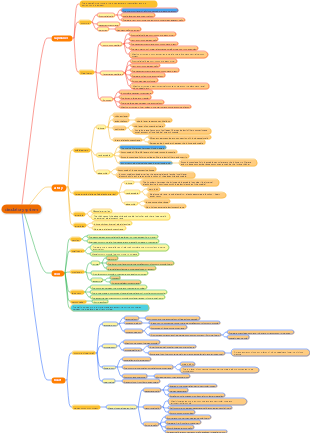
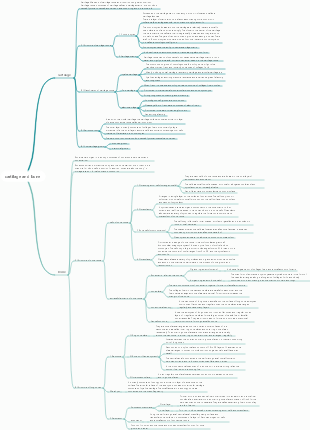
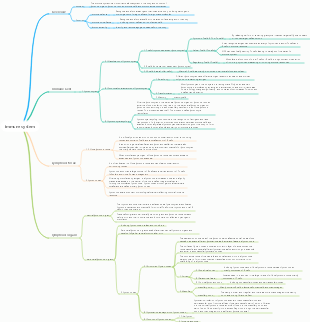
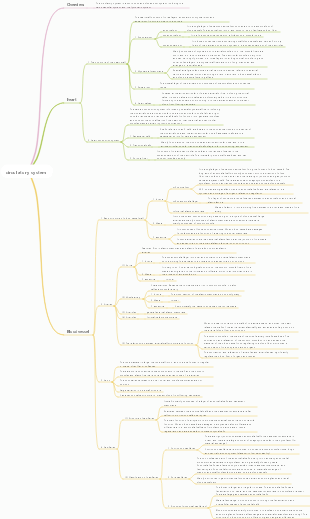
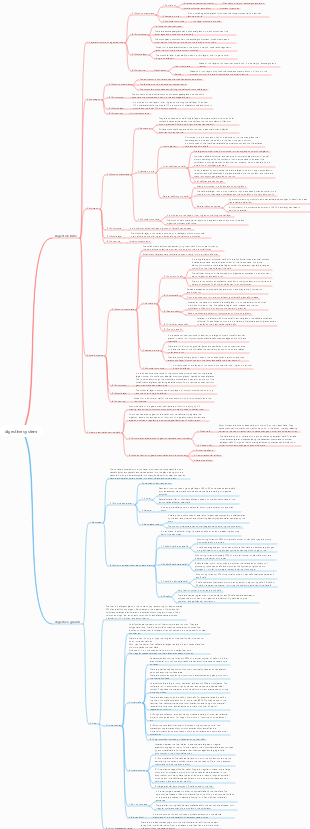
Histology and embryology, mainly including glial cells, synapses, nerve fibers and nerves, Nerve endings, neurons, etc.
Edited at 2024-02-08 17:06:58This article discusses the Easter eggs and homages in Zootopia 2 that you may have discovered. The main content includes: character and archetype Easter eggs, cinematic universe crossover Easter eggs, animal ecology and behavior references, symbol and metaphor Easter eggs, social satire and brand allusions, and emotional storylines and sequel foreshadowing.

[Zootopia Character Relationship Chart] The idealistic rabbit police officer Judy and the cynical fox conman Nick form a charmingly contrasting duo, rising from street hustlers to become Zootopia police officers!
This is a mind map about Deep Analysis of Character Relationships in Zootopia 2, Main content: 1、 Multi-layer network of relationships: interweaving of main lines, branch lines, and hidden interactions, 2、 Motivation for Character Behavior: Active Promoter and Hidden Intendant, 3、 Key points of interaction: logic of conflict, collaboration, and covert support, 4、 Fun Easter eggs: metaphorical details hidden in interactions.
This article discusses the Easter eggs and homages in Zootopia 2 that you may have discovered. The main content includes: character and archetype Easter eggs, cinematic universe crossover Easter eggs, animal ecology and behavior references, symbol and metaphor Easter eggs, social satire and brand allusions, and emotional storylines and sequel foreshadowing.
[Zootopia Character Relationship Chart] The idealistic rabbit police officer Judy and the cynical fox conman Nick form a charmingly contrasting duo, rising from street hustlers to become Zootopia police officers!
This is a mind map about Deep Analysis of Character Relationships in Zootopia 2, Main content: 1、 Multi-layer network of relationships: interweaving of main lines, branch lines, and hidden interactions, 2、 Motivation for Character Behavior: Active Promoter and Hidden Intendant, 3、 Key points of interaction: logic of conflict, collaboration, and covert support, 4、 Fun Easter eggs: metaphorical details hidden in interactions.
nervous tissue
Neurons
1. Morphological structure of neurons
Neurons are highly differentiated cells with various shapes and sizes. They are the basic units of nervous tissue structure and function.
(1) Cell body
The cell body of a neuron is mainly located in the gray matter, nerve nuclei of the central nervous system and the ganglia of the peripheral nervous system. The cell body is the nutritional and metabolic center of the neuron.
1.Cell membrane
It is an excitable membrane with the functions of receiving stimulation, processing information and conducting impulses. The properties of the cell membrane of neurons depend on membrane proteins. After the receptor binds to the corresponding neurotransmitter, it affects the opening and closing of ion channels to generate nerve impulses.
2.Nucleus
One, large and round, is located in the center of the cell body. The nuclear membrane is obvious and there is a lot of euchromatin, so the coloring is light; the nucleolus is clear, large and round
3. Cytoplasm
Contains rich Nisslite, neurofibrils and other characteristic structures
(1) Nislsite
Located within the cell body and dendrites. Under a light microscope, it is strongly basophilic; the number, shape and size of Nissl bodies in different neurons are different. Under the electron microscope, Nisslite is composed of developed rough endoplasmic reticulum and free ribosomes.
Nissl bodies have an active function of synthesizing proteins, mainly including structural proteins needed to update organelles, enzymes needed to synthesize neurotransmitters, and peptide neuromodulators.
Neurotransmitters: chemical information carriers that neurons transmit to other neurons or effector cells
Neuromodulators: can enhance or weaken the response of neurons to neurotransmitters, usually peptides play a regulatory role
When neurons are damaged, overtired or aged, the number of Nissl bodies decreases or even disappears; when the damage is repaired or harmful factors are eliminated, Nissl bodies can recover. Therefore, Nissl bodies can be used as a marker to determine the functional status of neurons.
(2) Neurofibrils
Indistinguishable in HE stained sections. In silver-coated stained sections, they appear as brown-black filaments, staggered into a network, and extend into dendrites and axons, directly reaching nerve endings.
Under an electron microscope, neurofibrils are composed of neurofilaments and microtubules. Neurofibrils constitute the cytoskeleton of neurons and play a supporting role. Microtubules are also involved in material transport.
(3) Lipofuscin
Metabolites of lipids increase with age
(2) Protrusion
1. Dendrites
The protrusions emanating from the cell body are thicker, gradually become thinner, and are often branched, resembling a branch, so they are called dendrites. A large number of short, spiny protrusions, called dendritic spines, are often seen on the branch surface.
Dendrites and dendritic spines greatly expand the surface area of a neuron to receive stimulation. The function of the Rabbit is mainly to receive stimulation and transmit information into the cell body.
2..Axon
Each cell has only one axon. The part where the axon originates from the cell body is often conical and lightly stained. It is called an axonal hillock. There are no Nissl bodies in the axonal hillock and axon.
There is no endoplasmic reticulum, free ribosomes and Golgi complex in the axon, so protein cannot be synthesized.
The main function of axons is to conduct nerve impulses
axonal transport
slow axonal transport
Newly formed neurofilaments, microfilaments and microtubules in the cell body
rapid axonal transport
Rapid anterograde axonal transport
Proteins required for axonal membrane renewal, enzymes required for neurotransmitter synthesis, neurotransmitter-containing vesicles, mitochondria, etc.
slow retrograde axonal transport
Metabolites within the axon terminal or substances taken up by the axon terminal (proteins, small molecule substances, or neurotrophic factors produced by adjacent nerve cells) are retrogradely transported to the cell body. Certain viruses or toxins can also invade neuronal cell bodies through retrograde axonal transport.
synapse
The cellular connections between neurons or between neurons and effector cells are structural parts that transmit information.
1. Chemical synapse
Using neurotransmitters as the medium for transmitting information, silver-plated staining under a light microscope shows that there are club-like or ring-like enlargements on the surface of neuron cell bodies or dendrites, called synaptosomes.
Under an electron microscope, a synapse is composed of a presynaptic component, a synaptic cleft, and a postsynaptic component. The membranes of the presynaptic and postsynaptic components facing each other are called the presynaptic membrane and the postsynaptic membrane respectively.
There are synaptic vesicles in the presynaptic membrane but not in the postsynaptic membrane. The postsynaptic membrane has receptors.
A protein called synaptophysin is attached to the surface of synaptic vesicles
The process of information transmission:
When the nerve impulse is conducted along the axonal membrane to the axon terminal, it can cause the Ca2 channel on the presynaptic membrane to open. Ca2 enters the precellular component from the outside of the cell and phosphorylates synaptophysin with the participation of ATP. Phosphorylated synaptophysin reduces its affinity to synaptic vesicles and dissociates from synaptic vesicles, causing synaptic vesicles to move to the presynaptic membrane and fuse with them, releasing vesicles through exocytosis. contents into the synaptic cleft. After the receptors on the postsynaptic membrane bind to specific neurotransmitters, the ion channels in the membrane open, changing the ion distribution on both sides of the postsynaptic membrane, causing the postsynaptic neurons (or effector cells) to become excitatory or inhibitory. postsynaptic potential.
2. Electrical synapse
Electrical synapse mainly refers to the gap junction between two cells. The junction proteins of two adjacent cell membranes form a tiny channel in the center, allowing small molecules and ions to pass directly through, using electric current as an information carrier.
It is characterized by fast conduction speed and bidirectional conduction.
Glial cells
They have different shapes, smaller sizes, no Nissl bodies, and their processes are not divided into dendrites and axons, and have no function of conducting impulses. They have the functions of support, nutrition, protection, insulation, etc.
1. Glial cells of the central nervous system
(1) Astrocytes
It is the largest type of glial cell. The cells were star-shaped, with round or oval nuclei, larger, and lighter staining.
The ends of some processes expand to form footplates, forming a glial boundary membrane on the surface of the brain and spinal cord or attached to the capillary wall, forming a blood-brain barrier.
Can maintain the survival and functional activity of neurons. In brain and spinal cord injuries, astrocytes can proliferate and form glial scars to fill the defects.
(2) Oligodendrocytes
The nucleus is oval, with dense chromatin. In silver-stained specimens, there are fewer oligodendrocyte processes.
Oligodendrocytes are involved in forming the myelin sheath of myelinated nerve fibers in the central nervous system
(3) Microglia
They are the smallest glial cells, with elongated or oval cell bodies, small, flat or triangular nuclei, and deep staining.
Microglia can transform into macrophages, which engulf dead cell debris and degenerated myelin sheaths
Microglia are glial cells with phagocytic ability that evolved from blood monocytes and therefore belong to the mononuclear phagocyte system.
(4) Ependymal cells
Lining the cavity surface of the cerebral ventricles and the central canal of the spinal cord is a single layer of cuboidal or columnar epithelium with many microvilli on the free surface of the cells. Only some cells in the ventricles have cilia.
Ependymal cells from which choroids produce cerebrospinal fluid
2. Glial cells of the peripheral nervous system
(1) Schwann cells
Also known as epineurial cells, they form the myelin sheath of myelinated nerve fibers in the peripheral nervous system.
There is a basement membrane outside the Schwann cell membrane, which can secrete neurotrophic factors, promote the survival of damaged neurons and their axon regeneration, and play a supporting and inducing role.
(2) Satellite cells
Neurons are wrapped around the ganglion and are covered with a layer of flat or cuboidal cells. The nucleus is round or oval and deeply stained. There is a basement membrane on the outer surface of the cell, which protects and supports the ganglion.
nerve fibers and nerves
Structure and classification of nerve fibers
(1) Myelinated nerve fibers
Myelinated nerve fibers of the peripheral nervous system
One Schwann cell wraps a section of axon or long dendrite, and the axonal membrane between adjacent Schwann cells on the nerve fiber is exposed. This part is narrow and is called the node of Ranvier. A section of nerve between two adjacent nodes of Ranvier. Fibers are called internodal bodies. Therefore, one Schwann cell corresponds to one internodal body.
If fixed and stained with osmotic acid, some non-stained funnel-shaped oblique fissures can be seen in the longitudinal section, called myelin notch or Schwann's notch, which is a narrow channel between the inner and outer cytoplasm of Schwann cells that passes through the myelin sheath.
myelinated nerve fibers of central nervous system
The flat membranes at the ends of multiple processes of oligodendrocytes can wrap multiple axons. There is no basement membrane on the outer surface of central myelinated nerve fibers, and there are no notches in the myelin sheath.
(2) Unmyelinated nerve fibers
Wu Lang Feijie
nerve
Functionally related nerve fibers in the peripheral nervous system come together to form nerves
epineurium
The connective tissue surrounding the surface of a nerve is called the epineurium
perineurium
A nerve usually contains several nerve fiber bundles. The epithelium of the nerve bundles on its surface and the connective tissue between the bundles together form the perineurium.
endoneurium
Within the nerve fiber bundle, the thin layer of connective tissue on the surface of each nerve fiber is called the endoneurium.
nerve endings
1. Sensory nerve endings
It is the terminal end of the surrounding process of a sensory neuron and forms a receptor through other surrounding tissues.
1. Free nerve endings
Can feel heat, cold, pain, light touch and other stimuli
2. Capsulated nerve endings
Nerve endings are wrapped with a connective tissue capsule, and a common feature of nerve fibers is the loss of myelin before entering the capsule.
(1) Tactile body
Distributed in dermal papilla
Tactile corpuscles sense stress stimuli and participate in the generation of touch
(2) Ring layer body
Widely distributed in subcutaneous tissue, peritoneum, periosteum, ligaments and joint capsules, etc.
Feel strong stress stimulation and participate in the production of pressure and vibration sensations
(3) Muscle spindle
Distributed within skeletal muscles
It is a proprioceptor that mainly senses the contraction changes of muscle fibers.
2. Motor nerve endings
, is the terminal structure of motor nerve axons in muscle tissue and glands. The nerve endings and adjacent tissues constitute effectors, which govern the contraction of muscle fibers and regulate the secretion of gland cells.
(1) Somatic motor nerve endings
Distributed in skeletal muscles, containing motor end plates
(2) Visceral motor nerve endings
Motor nerve endings distributed in the smooth muscles and glands of the myocardium, internal organs, blood vessels, etc.
neural membrane
The outermost cell membrane and basement membrane of glial cells surrounding the myelin sheath
conduct nerve impulses
myelinated nerve fibers
Jump conduction, fast speed
unmyelinated nerve fibers
Continuous conduction, slow speed