MindMap Gallery immune system
In histology and embryology, the immune system is an important defense system in the body and consists of lymphoid organs, lymphoid tissue, immune cells and immunoactive substances.
Edited at 2024-02-08 17:08:02This article discusses the Easter eggs and homages in Zootopia 2 that you may have discovered. The main content includes: character and archetype Easter eggs, cinematic universe crossover Easter eggs, animal ecology and behavior references, symbol and metaphor Easter eggs, social satire and brand allusions, and emotional storylines and sequel foreshadowing.

[Zootopia Character Relationship Chart] The idealistic rabbit police officer Judy and the cynical fox conman Nick form a charmingly contrasting duo, rising from street hustlers to become Zootopia police officers!
This is a mind map about Deep Analysis of Character Relationships in Zootopia 2, Main content: 1、 Multi-layer network of relationships: interweaving of main lines, branch lines, and hidden interactions, 2、 Motivation for Character Behavior: Active Promoter and Hidden Intendant, 3、 Key points of interaction: logic of conflict, collaboration, and covert support, 4、 Fun Easter eggs: metaphorical details hidden in interactions.
This article discusses the Easter eggs and homages in Zootopia 2 that you may have discovered. The main content includes: character and archetype Easter eggs, cinematic universe crossover Easter eggs, animal ecology and behavior references, symbol and metaphor Easter eggs, social satire and brand allusions, and emotional storylines and sequel foreshadowing.
[Zootopia Character Relationship Chart] The idealistic rabbit police officer Judy and the cynical fox conman Nick form a charmingly contrasting duo, rising from street hustlers to become Zootopia police officers!
This is a mind map about Deep Analysis of Character Relationships in Zootopia 2, Main content: 1、 Multi-layer network of relationships: interweaving of main lines, branch lines, and hidden interactions, 2、 Motivation for Character Behavior: Active Promoter and Hidden Intendant, 3、 Key points of interaction: logic of conflict, collaboration, and covert support, 4、 Fun Easter eggs: metaphorical details hidden in interactions.
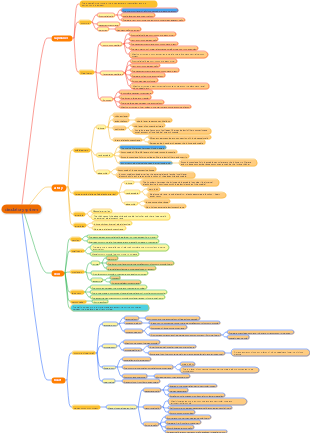
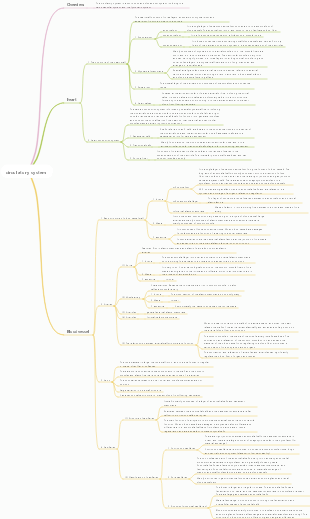
immune system
Overview
concept
The immune system is an important defense system in the body and consists of lymphoid organs, lymphoid tissues, immune cells and immunoactive substances.
Function
immune defense
Recognize and eliminate antigens that invade the body, including pathogenic microorganisms, foreign cells and foreign macromolecules
immune surveillance
Recognize and eliminate cells with mutated surface antigens in the body, including tumor cells and virus-infected cells
Immune stability
Identify and remove aging and dead cells in the body
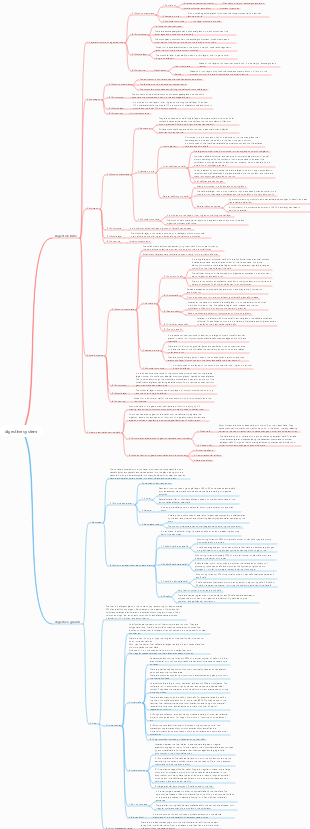
Immune Cells
1. Lymphocytes
(1) Classification of lymphocytes
1. T cells (thymus-dependent lymphocytes)
Cytotoxic T cells (CTL or Tc cells)
By releasing perforin or secreting granzyme, it causes target cell lysis and death or induces target cell apoptosis.
Helper T cells (Th cells)
It can recognize antigens and secrete a variety of cytokines to assist Tc cells and B cells in immune response.
AIDS can specifically destroy Th cells, leading to paralysis of the patient's immune system
Regulatory T cells (Tr cells)
Modulate the functions of other T cells or B cells through contact or secretion of inhibitory cytokines, weakening or inhibiting immune responses.
2. B cells (bone marrow-dependent lymphocytes)
3.NK cells (natural killer cells)
Mature NK cells are mainly distributed in peripheral blood and spleen
(2) Functional characteristics of lymphocytes
1. Specificity
Different lymphocytes have different antigen receptors, and each receptor can only bind to a matching antigen.
2. Transformation
Most lymphocytes in the body are in a resting state. Only when a certain lymphocyte is stimulated by an antigen that matches its receptor is it activated, its morphology changes significantly, and its metabolism increases. This process is called transformation.
3. Memory
memory cells
(3) Lymphocyte recycling
After the lymphocytes in the peripheral lymphoid organs or lymphoid tissues enter the blood circulation, they return to the peripheral lymphoid organs or lymphoid tissues through the post-capillary venules in the diffuse lymphoid tissues. This process repeats itself. This process is called lymphocyte recirculation.
Lymphocyte recycling is conducive to the recognition of antigens and rapid transmission of information, promotes cooperation between immune cells, and enables functionally related lymphocytes scattered throughout the body to form a coordinated functional whole and carry out immune responses.
Lymphoid tissue
1. Diffuse lymphoid tissue
It is diffusely distributed with no obvious boundaries with other surrounding tissues and contains T cells and a small amount of B cells.
In addition to general capillaries and lymphatic capillaries, there are also postcapillary venules in tissues, which are important channels for lymphocytes to enter lymphatic tissue from the blood.
When stimulated by antigen, diffuse lymphoid tissue becomes dense and expanded, and lymph nodes appear.
2. Lymph nodes
It is often located in diffuse lymphoid tissue and has clear boundaries with surrounding tissues.
Lymph nodes contain a large number of B cells and a certain amount of Th cells, follicular dendritic cells, macrophages, etc.
After being stimulated by antigen, the lymph node increases in size, and a lightly stained area appears in the center of the node, called the germinal center, forming the stimulated lymph node. Lymph nodes without germinal centers are smaller and are called primary lymph nodes
Lymph nodes are important morphological markers reflecting humoral immune response
lymphoid organs
central lymphoid organ
The thymus and bone marrow are the places where lymphocytes are cultivated. Lymphoid hematopoietic stem cells form initial T cells in the thymus and initial B cells in the bone marrow.
These cells migrate to peripheral lymphoid organs and lymphoid tissues weeks before birth, and their occurrence and function are not affected by antigenic stimulation.
peripheral lymphoid organs
Including lymph nodes, spleen and tonsils, etc.
Peripheral lymphoid organs develop later than central lymphoid organs and develop fully after several months after birth.
2. Lymph nodes
(1) Structure of lymph nodes
The depression on one side of the lymph node is called the portal, where blood vessels, nerves and afferent lymphatic vessels enter and leave the lymph node.
The surface of lymph nodes is covered with a thin layer of dense connective tissue capsule, and several afferent lymphatic vessels pass through the capsule and enter the subcapsular lymphatic sinuses.
The connective tissue of the capsule and portal extends into the lymph node parenchyma to form interconnected trabeculae, which constitute the thick scaffolding of the lymph node.
1.Cortex
(1) Superficial cortex
Including lymph nodes and diffuse lymphoid tissue between lymph nodes, mainly composed of B cells
(2) Paracortical area
Located deep in the cortex, it is a larger piece of diffuse lymphoid tissue, mainly composed of T cells.
(3) Cortical lymphatic sinus
Including subcapsular sinuses and peritrabecular sinuses
2. Medulla
medullary cord
Mainly contains B cells, plasma cells, mast cells and macrophages
medullary sinus
The cavity is wider and irregular, and there are more macrophages in the cavity, so it has a strong filtration effect.
(2) Lymphatic pathways within lymph nodes
Lymphatic circulation to lymph nodes enters the subcapsular sinus and peritrabecular sinus from the afferent lymphatic vessels, part of which infiltrates into the cortical lymphoid tissue, and then flows into the medullary sinus, and part of which flows directly into the medullary sinus through the peritrabecular sinus, and then merges into the efferent lymphatic vessel
(3) Function of lymph nodes
1. Filter lymph
2. Immune response