MindMap Gallery cartilage and bone
Histology and embryology, cartilage and bone all play an indispensable role in the respiratory system. They work together to maintain the patency and stability of the respiratory tract and ensure the normal gas exchange function of the human body.
Edited at 2024-02-08 17:10:26This article discusses the Easter eggs and homages in Zootopia 2 that you may have discovered. The main content includes: character and archetype Easter eggs, cinematic universe crossover Easter eggs, animal ecology and behavior references, symbol and metaphor Easter eggs, social satire and brand allusions, and emotional storylines and sequel foreshadowing.

[Zootopia Character Relationship Chart] The idealistic rabbit police officer Judy and the cynical fox conman Nick form a charmingly contrasting duo, rising from street hustlers to become Zootopia police officers!
This is a mind map about Deep Analysis of Character Relationships in Zootopia 2, Main content: 1、 Multi-layer network of relationships: interweaving of main lines, branch lines, and hidden interactions, 2、 Motivation for Character Behavior: Active Promoter and Hidden Intendant, 3、 Key points of interaction: logic of conflict, collaboration, and covert support, 4、 Fun Easter eggs: metaphorical details hidden in interactions.
This article discusses the Easter eggs and homages in Zootopia 2 that you may have discovered. The main content includes: character and archetype Easter eggs, cinematic universe crossover Easter eggs, animal ecology and behavior references, symbol and metaphor Easter eggs, social satire and brand allusions, and emotional storylines and sequel foreshadowing.
[Zootopia Character Relationship Chart] The idealistic rabbit police officer Judy and the cynical fox conman Nick form a charmingly contrasting duo, rising from street hustlers to become Zootopia police officers!
This is a mind map about Deep Analysis of Character Relationships in Zootopia 2, Main content: 1、 Multi-layer network of relationships: interweaving of main lines, branch lines, and hidden interactions, 2、 Motivation for Character Behavior: Active Promoter and Hidden Intendant, 3、 Key points of interaction: logic of conflict, collaboration, and covert support, 4、 Fun Easter eggs: metaphorical details hidden in interactions.
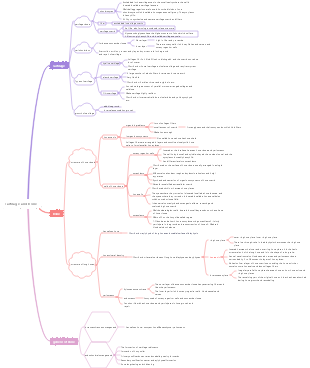
cartilage and bone
cartilage
Cartilage: Made up of cartilage tissue and its surrounding perichondrium. Cartilage tissue: composed of cartilage cells and cartilage matrix, without blood vessels, lymphatic vessels and nerves, has a supporting and protective role.
(1) Structure of cartilage tissue
1. Chondrocytes
Embedded in the cartilage matrix, the cavity in which it is located is called a cartilage lacunae There is a layer of matrix around the lacunae containing more chondroitin sulfate, called cartilage capsule, which stains strongly basophilic.
The chondrocytes located around the cartilage are relatively immature, small in size, oblate, and often distributed singly. The closer to the center of the cartilage, the more mature the cells are, their size gradually increases, and they are round or oval in shape. They are often distributed in groups, and each group can There are 2 to 8 chondrocytes, which are divided from one immature chondrocyte, so it is called a homologous cell group.
Chondrocytes have the ability to secrete cartilage matrix
2.Cartilage matrix
Includes fiber and amorphous matrix, transparent gelatinous form
Cartilage tissue has no blood vessels, but because the cartilage matrix is rich in water and highly permeable, nutrients can enter deep into the cartilage tissue.
(2) Classification of cartilage tissue
hyaline cartilage
The most obvious group of homologous cells is milky white or light blue translucent when fresh, and is mainly composed of collagen fibrils.
Mainly including costal cartilage, respiratory cartilage and articular cartilage, etc.
Hyaline cartilage has strong pressure resistance and a certain degree of elasticity and toughness.
Fibrocartilage
When fresh, it is opaque and milky white and consists of collagen fiber bundles.
Distributed in intervertebral discs, articular discs, and pubic symphysis
Strong toughness, connecting and protecting
elastic cartilage
Homologous cell groups are not obvious
Opaque yellow in fresh state, composed of elastic fibers
Distributed in the ears, throat, epiglottis, etc.
Have strong elasticity
(3) Perichondrium
In addition to articular cartilage, the cartilage surface is covered with a thin layer of dense connective tissue called perichondrium.
The outer layer is mainly composed of collagen fibers, which mainly play a protective role; the inner layer has more cells and contains osteoprogenitor cells that can differentiate into chondrocytes.
The perichondrium contains blood vessels, lymphatic vessels and nerves
(4) How cartilage grows
imposed growth
interstitial growth
bone
Bone is a hard organ in the body, composed of bone tissue, periosteum and bone marrow.
Bones support and protect the body, and the bone marrow within them is the main site for blood cell production. In addition, bones are also the body’s storage reservoir for calcium and phosphorus.
(1) Structure of bone tissue
cells of bone tissue
1. Osteoprogenitor cells (osteogenic cells)
They are stem cells of bone tissue and are located in the inner layer of epiosseum and endosteum.
The cells are small, spindle-shaped, with oval or elongated nuclei and less cytoplasm, which is weakly alkaline.
Can differentiate into osteoblasts and chondroblasts
2. Osteoblasts
Arranged in a single layer on the surface of bone tissue. The cell body is short columnar or cuboidal, with small protrusions on the cell surface, round nucleus, and basophilic cytoplasm.
It synthesizes and secretes organic components in the bone matrix to form osteoid, and itself is embedded in it and transforms into bone cells. Osteoblasts also secrete a variety of cytokines to regulate the formation, absorption and metabolism of bone tissue.
3. Bone cells (most numerous)
The cell body is flat oval or star-shaped, with few organelles, and the nucleus is round or oval, centered.
The spaces where bone cells are located are called bone lacunae; the spaces occupied by protrusions are called bone canaliculi
Osteocytes participate in calcium and phosphorus metabolism
4. Osteoclasts
Distributed at the edge of bone tissue, it is a multinucleated giant cell (mononuclear phagocyte system) formed by the fusion of multiple blood monocytes. The cell body is large, with wrinkled edges (microvilli) formed on the bone side; the number of nuclei ranges from 2 to 50, and the cytoplasm is eosinophilic.
Osteoclasts release a variety of hydrolases and organic acids, which can dissolve and absorb bone matrix and participate in the process of bone growth and reconstruction.
extracellular matrix of bone tissue
Bone matrix, referred to as bone
Organic ingredients (osteoid)
Includes a large amount of collagen fibers and a small amount of matrix
Inorganic ingredients (bone salts)
The main form of existence is hydroxyapatite crystals, which are in the form of fine needles, arranged along the long axis of collagen fibrils and closely combined with them, making the bone matrix both hard and tough.
bone plate
The various components of bone matrix together form a thin lamellar structure
The collagen fibers in the same bone plate are parallel to each other, and the fibers between adjacent bone plates are vertical. This structure increases the strength of the bone.
bone mineral density
In the backbone of long bones, as well as on the surface of long bone epiphyses, short bones, flat bones and irregular bones, the bone plates are arranged regularly and have many layers.
Cancellous bone
Inside the epiphyses of long bones, short bones, flat bones and irregular bones, layers of irregular bone plates form a large number of needle-like or lamellar bone trabeculae. They are criss-crossed to form a porous three-dimensional network structure, forming cancellous bone.
(2) Structure of long bones
1. Backbone
1) Ring bone plate
They are bone plates arranged around the inner and outer surfaces of the backbone, and are called inner ring bone plates and outer ring bone plates respectively. The outer ring bone plates are thicker and arranged more neatly around the backbone; the inner ring bones are thinner and arranged irregularly.
2) Bone unit (Havers system)
Located between the inner and outer ring bone plates, it is the main supporting unit of long bones.
Each bone unit is cylindrical and consists of 10 to 20 layers of Haversian bone plates arranged in concentric circles surrounding a central canal (Haversian canal).
The central canal is connected to the perforating canal, its wall contains periosteum tissue, and its lumen contains capillaries and nerves.
In the cross-sectional specimen of the bone unit, there is a strong refractive contour line, which is a bonding line.
3) Interosseous plate
It is an irregular bone plate located between bone units or between bone units and ring bone plates.
2.Epiphysis
It is mainly composed of spongy bone, with a thin layer of dense bone on the surface. The articular surface of the epiphysis is covered with articular cartilage composed of hyaline cartilage. The small lacunae in the spongy bone are connected with the medullary cavity.
3.Periosteum
Epiosseous membrane
Outer layer
Thicker, with thick and dense fibers, intertwined into a network, and some fiber bundles also penetrate into the outer ring bone plate to make it difficult for the periosteum and bone to separate. They are called penetrating fibers, which play a role in fixation.
inner layer
Thin, rich in blood vessels, nerves, osteoprogenitor cells and osteoblasts
endosteum
Lining the perforating canal, central canal, medullary cavity surface and trabecular bone surface, it is composed of a layer of flat osteoprogenitor cells and a small amount of connective tissue
Function: It nourishes bone tissue and provides osteoblast function for bone growth and repair.