MindMap Gallery blood
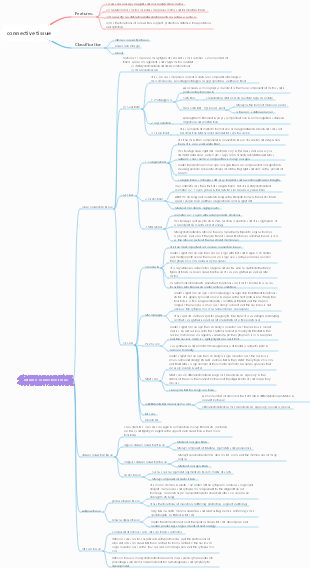
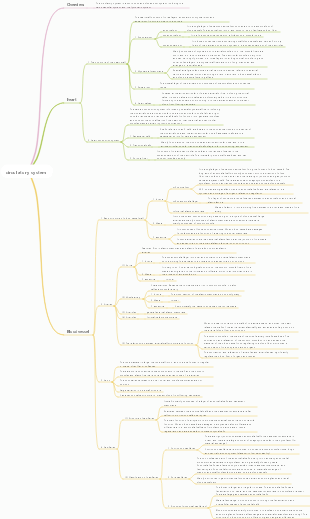
In histology and embryology, blood is a liquid connective tissue flowing in the cardiovascular system. It is composed of plasma, red blood cells, white blood cells and platelets. Plasma accounts for about 55% of the blood volume. The remaining three constitute the tangible components of the blood, accounting for about 55% of the blood volume. 45% of blood, red blood cells and white blood cells can be collectively called blood cells.
Edited at 2024-02-08 17:09:49This article discusses the Easter eggs and homages in Zootopia 2 that you may have discovered. The main content includes: character and archetype Easter eggs, cinematic universe crossover Easter eggs, animal ecology and behavior references, symbol and metaphor Easter eggs, social satire and brand allusions, and emotional storylines and sequel foreshadowing.

[Zootopia Character Relationship Chart] The idealistic rabbit police officer Judy and the cynical fox conman Nick form a charmingly contrasting duo, rising from street hustlers to become Zootopia police officers!
This is a mind map about Deep Analysis of Character Relationships in Zootopia 2, Main content: 1、 Multi-layer network of relationships: interweaving of main lines, branch lines, and hidden interactions, 2、 Motivation for Character Behavior: Active Promoter and Hidden Intendant, 3、 Key points of interaction: logic of conflict, collaboration, and covert support, 4、 Fun Easter eggs: metaphorical details hidden in interactions.
This article discusses the Easter eggs and homages in Zootopia 2 that you may have discovered. The main content includes: character and archetype Easter eggs, cinematic universe crossover Easter eggs, animal ecology and behavior references, symbol and metaphor Easter eggs, social satire and brand allusions, and emotional storylines and sequel foreshadowing.
[Zootopia Character Relationship Chart] The idealistic rabbit police officer Judy and the cynical fox conman Nick form a charmingly contrasting duo, rising from street hustlers to become Zootopia police officers!
This is a mind map about Deep Analysis of Character Relationships in Zootopia 2, Main content: 1、 Multi-layer network of relationships: interweaving of main lines, branch lines, and hidden interactions, 2、 Motivation for Character Behavior: Active Promoter and Hidden Intendant, 3、 Key points of interaction: logic of conflict, collaboration, and covert support, 4、 Fun Easter eggs: metaphorical details hidden in interactions.
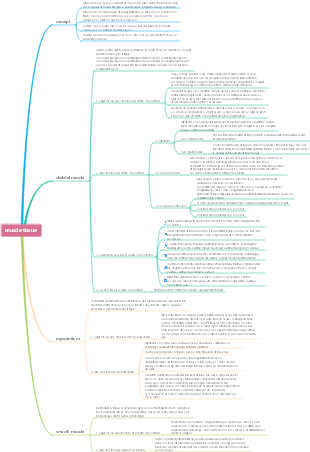
blood
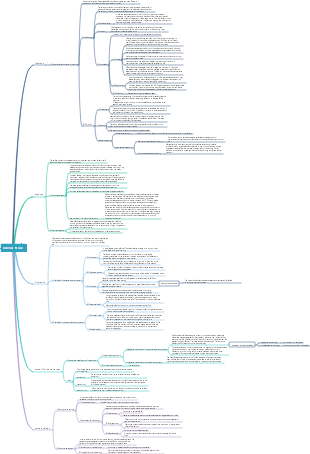
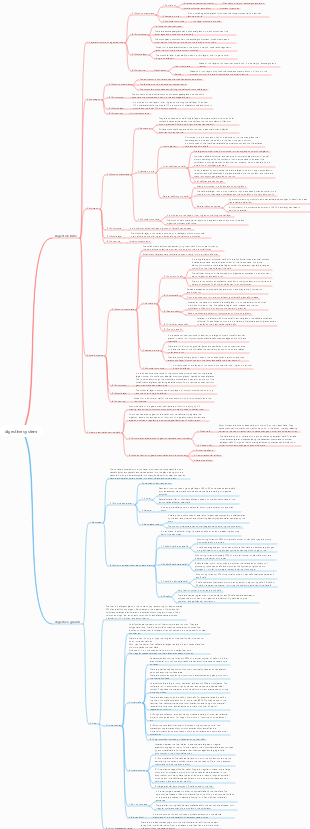
Blood is a liquid connective tissue flowing in the cardiovascular system. It is composed of plasma, red blood cells, white blood cells and platelets. Plasma accounts for about 55% of the blood volume. The remaining three constitute the tangible components of the blood, accounting for about 45% of the blood. Red blood cells and white blood cells can be collectively called blood cells
1. Plasma
Plasma is a light yellow translucent viscous liquid, of which water accounts for 90%, and the rest is plasma proteins (albumin, globulin, fibrinogen, etc.), enzymes, sugars, hormones, vitamins, inorganic salts, and various metabolites. .
2. Formed components of blood
(1) Red blood cells
They are biconcave disk-shaped with a diameter of about 7.5 μm. On blood smears, red blood cells can be seen with light coloring in the center and dark edges. This morphological feature gives them a large surface area and is conducive to gas exchange inside and outside the cells.
Mature red blood cells have no nuclei, no organelles, and the cytoplasm is filled with hemoglobin.
Anemia: When the number of red blood cells or hemoglobin content is lower than normal, it is called anemia
Hemolysis: Under pathological conditions, red blood cells rupture and hemoglobin escapes, which is called hemolysis, and the remaining red blood cells are called blood ghosts.
Red blood cells have certain elasticity and plasticity. The average lifespan of red blood cells is 120 days. Aged red blood cells are mainly cleared by macrophages in the spleen and liver.
Some ribosomes remain in the newly entered red blood cells, which appear in a fine mesh shape when stained with yellow tar blue, so they are called reticulocytes.
(2) White blood cells
nucleated spherical cells
granulocytic leukocytes
1. Neutrophils
The most numerous white blood cells
The nucleus is darkly colored and is rod-shaped or lobed with 2 to 5 leaves, and the leaves are connected by chromatin filaments. The cytoplasm is light pink and contains many small lavender granules, which can be divided into two types: special granules and azurophilic granules. Special particles account for 80%, containing phagocytosin and lysozyme;
The more lobed the nucleus, the more senescent the cell. When severe bacterial infection occurs in the body, the percentage of cells with nuclei in 1 to 2 lobes increases and the nuclei shift to the left; The number of cells in the 4th to 5th lobe nuclei is increased, which is called rightward shift of the nucleus, indicating bone marrow hematopoietic dysfunction.
2. Eosinophils
The nuclei are mostly bilobed, and the cytoplasm is filled with thick, evenly distributed red eosinophilic membrane granules.
Inhibit allergic reactions; the cationic proteins in it can kill parasites that enter the human body
3. Basophils
The smallest number, the nucleus is segmented or irregular, and the cytoplasm is filled with basophilic granules of varying sizes and uneven distribution. The Reiter stain shows blue-purple color, which often covers the nucleus and makes its boundary unclear.
Contains heparin, histamine, eosinophil chemoattractant, etc., and the cytoplasm also contains leukotrienes. Basophils have the same function as mast cells and can initiate inflammatory responses in the body and are also involved in collective allergic reactions.
agranulocytosis
4. Lymphocytes
The lymphocytes in the blood are mainly white blood cells, with a small amount of medium lymphocytes. Large lymphocytes are mainly distributed in lymph nodes, spleen and other lymphoid organs and lymphoid tissues.
The nuclei of small lymphocytes are round, often with shallow concavities on one side, and the chromatin is dense, thick, and deeply stained. There is very little cytoplasm, with a nucleocytoplasmic ratio of 9:1. Only a narrow band is formed around the nucleus, which is basophilic and stained blue.
Thymus-dependent lymphocytes (T cells)
Occurs in the thymus, accounts for 70% to 75% of lymphocytes in the blood, and participates in cellular immunity
Bone marrow-dependent lymphocytes (B cells)
Occurs in the bone marrow, can differentiate into plasma cells, produce antibodies, and participate in the body's humoral immunity
Natural killer cells (NK cells)
NK cells can directly kill certain tumor cells and virus-infected cells.
5. Monocytes
It is the largest white blood cell. The nucleus can be kidney-shaped, round, horseshoe-shaped or twisted and folded irregularly. The chromatin is finely meshed and lightly colored. The cytoplasm is rich, weakly basophilic and often stained gray-blue. , containing many tiny azurophilic particles
Monocytes have obvious chemotaxis, active deformation movement ability and powerful phagocytosis function. They can also secrete a variety of biologically active substances and participate in the regulation of hematopoiesis.
(3) Platelets
It is a small piece of cytoplasm shed from megakaryocytes in the bone marrow. It is biconvex disc-shaped, has no nucleus, but has a complete cell membrane.
When platelets are mechanically or chemically stimulated, they can extend into small protrusions that take on an irregular shape.
Often distributed in clusters on blood smears, blue-purple azurophilic granules can be seen in the center of platelets, called granular areas; The surrounding areas are light blue and are called transparent areas.