MindMap Gallery intrinsic connective tissue
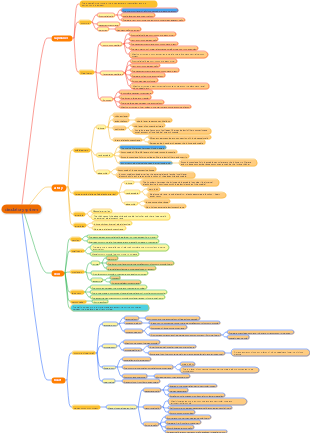
In histology and embryology, intrinsic connective tissue is an important tissue type widely distributed in the body. It has a variety of functions and effects and is of great significance in maintaining normal physiological functions of the human body.
Edited at 2024-02-08 17:11:05This article discusses the Easter eggs and homages in Zootopia 2 that you may have discovered. The main content includes: character and archetype Easter eggs, cinematic universe crossover Easter eggs, animal ecology and behavior references, symbol and metaphor Easter eggs, social satire and brand allusions, and emotional storylines and sequel foreshadowing.

[Zootopia Character Relationship Chart] The idealistic rabbit police officer Judy and the cynical fox conman Nick form a charmingly contrasting duo, rising from street hustlers to become Zootopia police officers!
This is a mind map about Deep Analysis of Character Relationships in Zootopia 2, Main content: 1、 Multi-layer network of relationships: interweaving of main lines, branch lines, and hidden interactions, 2、 Motivation for Character Behavior: Active Promoter and Hidden Intendant, 3、 Key points of interaction: logic of conflict, collaboration, and covert support, 4、 Fun Easter eggs: metaphorical details hidden in interactions.
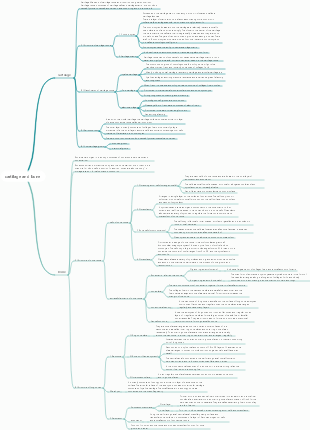
This article discusses the Easter eggs and homages in Zootopia 2 that you may have discovered. The main content includes: character and archetype Easter eggs, cinematic universe crossover Easter eggs, animal ecology and behavior references, symbol and metaphor Easter eggs, social satire and brand allusions, and emotional storylines and sequel foreshadowing.
[Zootopia Character Relationship Chart] The idealistic rabbit police officer Judy and the cynical fox conman Nick form a charmingly contrasting duo, rising from street hustlers to become Zootopia police officers!
This is a mind map about Deep Analysis of Character Relationships in Zootopia 2, Main content: 1、 Multi-layer network of relationships: interweaving of main lines, branch lines, and hidden interactions, 2、 Motivation for Character Behavior: Active Promoter and Hidden Intendant, 3、 Key points of interaction: logic of conflict, collaboration, and covert support, 4、 Fun Easter eggs: metaphorical details hidden in interactions.
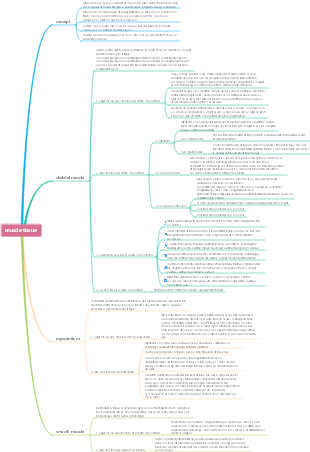
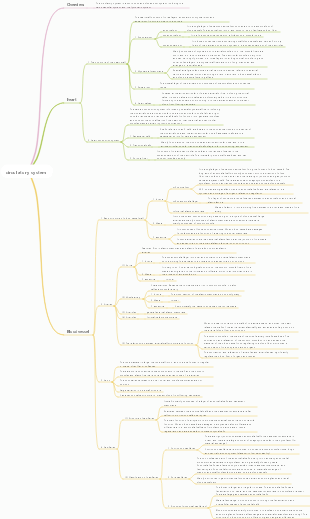
connective tissue
Features:
1) Few cells, loosely arranged, and much intercellular matrix
2) The intercellular matrix includes amorphous matrix and filamentous fibers.
3) No polarity, no distinction between free surface and basal surface
4) Has the functions of connection, support, protection, defense, transportation and nutrition
Classification
intrinsic connective tissue
bone and cartilage
blood
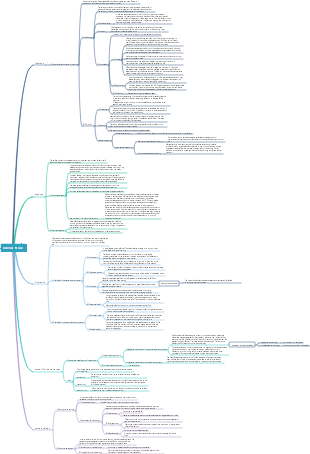
intrinsic connective tissue
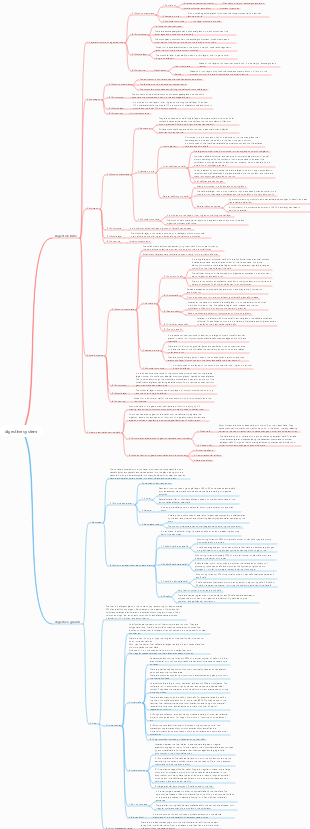
loose connective tissue
Features: 1) There are many types of cells but a small number, a small number of fibers, sparse arrangement, and a high matrix content. 2) Widely distributed and diverse in functions 3) Rich blood vessels
(1) Substrate
It is a viscous amorphous colloidal substance composed of biological macromolecules, including proteoglycans, glycoproteins, and tissue fluid.
1. Proteoglycan
Also known as mucopolysaccharide, it is the main component of matrix and is produced by fibroblasts
Sulfation
Chondroitin sulfate, keratan sulfate, heparin sulfate
Non-Sulfated - Hyaluronic Acid
Mainly in the form of molecular sieves
Is the cell’s defense barrier
2. Glycoprotein
Among them, fibronectin plays an important role in cell recognition, adhesion, migration and proliferation.
3. Tissue fluid
It is an important medium for material exchange between blood and cells and becomes the internal environment for cells to survive.
(2) Fiber
1. Collagen fiber
It is the main fiber component in connective tissue. It is white and shiny when fresh. It is also called white fiber.
HE staining shows light red. The fibers vary in thickness and are wavy in diameter between 1 and 20 μm. They are branched and intertwined into a network. Their chemical composition is mainly collagen.
Under the electron microscope, collagen fibers are composed of collagen fibrils, showing periodic horizontal stripes of alternating light and dark, with a period of 64 nm.
Collagen fibers are tough, soft, easy to bend, and have strong tensile strength
2. Elastic fiber
The content is less than that of collagen fibers, but it is widely distributed. Diameter 0.2~1.0μm, yellow in fresh state, also known as yellow fiber
After HE staining and counterstaining with aldehyde-fuchsin, the elastic fibers appear purple-blue and the collagen fibers remain light red.
Made of microfibrils, highly elastic
3. Mesh fiber
Diameter 0.2~1.0μm, with 64nm periodic striations
HE staining is not easy to stain, PAS reaction is positive, and it is argyrophilic. It can be dyed black with silver staining.
Mainly distributed in reticular tissue (around hematopoietic organs, follicles, capillaries), and also at the junction of connective tissue and other tissues (such as the reticular plate of the basement membrane)
(3) Cells
Fibroblasts
It is the most important cell in loose connective tissue.
Under a light microscope, the cells are large, with flat and irregular cell bodies and multiple protrusions; the nuclei are large, oval, and have obvious nucleoli; the cytoplasm is rich and weakly basophilic.
It can synthesize and secrete collagen and elastin, which constitute the three types of fibers in loose connective tissue. It can also synthesize and secrete matrix.
Transform into fibroblasts when their functions are at rest. Fibroblasts can also transform into fibroblasts under certain conditions.
Macrophages
Under a light microscope, cell morphology changes due to different functional states. It is generally round or oval in shape, with short protrusions. When the function is active, long pseudopods are often extended and the shape is irregular; the nucleus is small, oval, darkly colored, and the nucleolus is not obvious; the cytoplasm is rich and numerous. Eosinophilic
It has specific and non-specific phagocytic functions; it is an antigen-presenting cell that can synthesize and secrete hundreds of active substances.
Plasma cell
Under a light microscope, the cell body is round or oval; the nucleus is round and is a biased nucleus, with thick heterochromatin, mostly distributed in the nuclear membrane, arranged in a wheel shape; the cytoplasm is rich, basophilic, and the nucleus There is a lightly dyed area next to it
Can synthesize and secrete immunoglobulins (antibodies) and participate in humoral immunity
Mast cells
Under a light microscope, the cell body is large, round or oval; the nucleus is small and round, deeply stained, and located in the center; the cytoplasm is rich and filled with a large number of thick metachromatic basophilic granules that are easily soluble in water.
Mast cells are often distributed along small blood vessels, especially in the dermis of the skin, the connective tissue of the digestive tract and respiratory mucosa
Closely related to allergic reactions
undifferentiated mesenchymal cells
A small number of stem cells that still retain differentiation potential in connective tissue
Often distributed in small blood vessels, especially around capillaries
fat cells
blood cells
dense connective tissue
Characteristics: The cells are single in composition, mainly fibroblasts. The fibers are thick and tightly arranged, with support and connection as their main functions.
regular dense connective tissue
Made of collagen fibers
Mainly composed of tendons, ligaments and aponeurosis
Irregular dense connective tissue
Mainly found in the dermis, dura mater, sclera and the membranes of many organs
Made of collagen fibers
elastic tissue
Such as nuchal ligament, ligamentum flavum, media of aorta
Mainly composed of elastic fibers
Adipose tissue
yellow adipose tissue
It is more common in adults. The center of the cytoplasm contains a large lipid droplet. The nucleus and cytoplasm are squeezed to the edge of the cell, forming a crescent shape. The lipid droplet is dissolved into a vacuole shape during HE staining.
It has the functions of insulation, buffering, protection, support and filling.
brown adipose tissue
Very few in adults, more in newborns and hibernating animals, with many small lipid droplets scattered in fat cells.
Under the stimulation of cold, the lipids in brown fat cells decompose and oxidize, producing a large amount of heat energy
reticular tissue
Composed of reticular cells, reticular fibers and matrix
Reticular cells are star-shaped cells with protrusions, and the protrusions of adjacent cells are connected to each other to form a network; the nuclei are large, round or oval, with 1 to 2 nucleoli commonly seen, and the cytoplasm is rich.
Reticular tissue is mainly distributed in bone marrow, spleen, lymph nodes, etc., providing a suitable microenvironment for hematogenesis and lymphocyte development.