 Wondershare EdrawMind
MindMap Gallery pedagogy
- 56
pedagogy
Pedagogy notes summarize education and pedagogy, basic laws of education, educational purposes and educational systems, teachers and students, curriculum, teaching and other knowledge points.
Edited at 2024-01-23 11:33:09
- Aeon SWOT Analysis
This strategic SWOT analysis explores how Aeon can navigate the competitive online landscape, highlighting strengths, weaknesses, opportunities, and threats. Strengths include strong brand recognition (trusted Japanese heritage, quality), omnichannel capabilities (stores + online + mall integration), customer loyalty programs (Aeon Card, points, member pricing), and physical footprint (extensive store network for pickup/returns). Weaknesses encompass digital maturity gaps (e-commerce penetration, app functionality, personalization vs. Amazon, Alibaba), cost structure challenges (store-heavy, real estate, labor), and supply chain complexity (fresh food, frozen logistics for online). Opportunities include enhancing e-commerce competitiveness (faster delivery, wider assortment, lower minimum order), leveraging data-driven strategies (purchase history, personalized offers, inventory optimization), expanding omnichannel integration (buy online pick up in store, ship from store), and private label growth (Topvalu, localized brands). Threats involve online-first players (Amazon, Alibaba, Sea Limited) with lower costs, wider selection, faster delivery, market dynamics (changing consumer behavior post-COVID, discount competitors), and regulatory risks (data privacy, cross-border e-commerce rules). Aeon can strengthen market position by investing in digital capabilities, leveraging store assets for omnichannel, and using customer data for personalization, while addressing cost structure and online competition.
- Aeon Market Segmentation, Targeting and Positioning Analysis
This analysis explores how Aeon effectively tailors offerings to meet the diverse needs of family-oriented consumers through a comprehensive Segmentation, Targeting, and Positioning (STP) framework. Demographic segmentation examines family life stages (young families with babies, school-aged children, teenagers, empty nesters), household sizes (small vs. large), income levels (mass, premium), and parent age bands (millennials, Gen X). This identifies distinct consumer groups with different spending patterns. Geographic segmentation highlights store catchment types (urban, suburban, rural), community characteristics (density, income, competition), and local preferences (fresh food, halal, Japanese products). Psychographic segmentation delves into family values (health, safety, education, convenience), lifestyle orientations (busy professionals, home-centered, eco-conscious). Behavioral segmentation focuses on shopping missions (daily grocery, weekly stock-up, seasonal shopping), price sensitivity (value seekers, premium), channel preferences (in-store, online, pickup). Needs-based segmentation reveals core family needs related to value (good-better-best pricing), budget considerations (affordability, promotions, member pricing), safety (food quality, product recall), convenience (one-stop shopping, parking, store hours). Targeting prioritizes young families with school-aged children, budget-conscious households, and convenience-seeking shoppers. Positioning emphasizes Aeon as a family-friendly, value-for-money, one-stop destination with Japanese quality and local relevance. These insights enhance family shopping experiences through tailored assortments (kids’ products, school supplies), promotions (family bundles, weekend events), and services (nursing rooms, kids’ play areas).
- Nike Market Segmentation, Targeting and Positioning Analysis
This Kream Sneaker Consumption Scene Analysis Template aims to visualize purchasing and consumption journeys of sneakers, identifying key demand drivers and obstacles. User behavior within Kream includes searching, bidding, buying, selling, authentication, and community engagement. External influences include brand drops (Nike, Adidas), social media (Instagram, TikTok), influencer hype, and cultural trends. Target categories: limited editions, collaborations, retro releases, performance sneakers, and general releases. Timeframes: launch day, first week, first month, long-term (seasonal, yearly). Regions: North America, Europe, Asia (Korea, China, Japan). User segments: Collectors: value rarity, condition, completeness (box, accessories). KPIs: collection size, spend, authentication rate. Resellers: value profit margin, volume, turnover. KPIs: sell-through rate, average profit, listing frequency. Sneakerheads: value hype, trends, community validation. KPIs: purchase frequency, social engagement, wishlist adds. Casual trend followers: value style, convenience, price. KPIs: conversion rate, average order value, repeat purchases. Gift purchasers: value ease, presentation, brand trust. KPIs: gift message usage, return rate. Consumption journey: Awareness: social media, email, push notifications. Search: browse, filter, search by brand, model, size. Purchase: bid, buy now, payment, shipping. Authentication: inspection, verification, certification. Resale: list, price, sell, transfer. Sharing: review, unboxing, social post, community discussion. Key performance indicators: conversion rate, sell-through rate, average order value, customer lifetime value, authentication pass rate, return rate, Net Promoter Score. This framework helps understand sneaker trading dynamics, user motivations, and touchpoints for engagement and satisfaction.
pedagogy
- Aeon SWOT Analysis
This strategic SWOT analysis explores how Aeon can navigate the competitive online landscape, highlighting strengths, weaknesses, opportunities, and threats. Strengths include strong brand recognition (trusted Japanese heritage, quality), omnichannel capabilities (stores + online + mall integration), customer loyalty programs (Aeon Card, points, member pricing), and physical footprint (extensive store network for pickup/returns). Weaknesses encompass digital maturity gaps (e-commerce penetration, app functionality, personalization vs. Amazon, Alibaba), cost structure challenges (store-heavy, real estate, labor), and supply chain complexity (fresh food, frozen logistics for online). Opportunities include enhancing e-commerce competitiveness (faster delivery, wider assortment, lower minimum order), leveraging data-driven strategies (purchase history, personalized offers, inventory optimization), expanding omnichannel integration (buy online pick up in store, ship from store), and private label growth (Topvalu, localized brands). Threats involve online-first players (Amazon, Alibaba, Sea Limited) with lower costs, wider selection, faster delivery, market dynamics (changing consumer behavior post-COVID, discount competitors), and regulatory risks (data privacy, cross-border e-commerce rules). Aeon can strengthen market position by investing in digital capabilities, leveraging store assets for omnichannel, and using customer data for personalization, while addressing cost structure and online competition.
- Aeon Market Segmentation, Targeting and Positioning Analysis
This analysis explores how Aeon effectively tailors offerings to meet the diverse needs of family-oriented consumers through a comprehensive Segmentation, Targeting, and Positioning (STP) framework. Demographic segmentation examines family life stages (young families with babies, school-aged children, teenagers, empty nesters), household sizes (small vs. large), income levels (mass, premium), and parent age bands (millennials, Gen X). This identifies distinct consumer groups with different spending patterns. Geographic segmentation highlights store catchment types (urban, suburban, rural), community characteristics (density, income, competition), and local preferences (fresh food, halal, Japanese products). Psychographic segmentation delves into family values (health, safety, education, convenience), lifestyle orientations (busy professionals, home-centered, eco-conscious). Behavioral segmentation focuses on shopping missions (daily grocery, weekly stock-up, seasonal shopping), price sensitivity (value seekers, premium), channel preferences (in-store, online, pickup). Needs-based segmentation reveals core family needs related to value (good-better-best pricing), budget considerations (affordability, promotions, member pricing), safety (food quality, product recall), convenience (one-stop shopping, parking, store hours). Targeting prioritizes young families with school-aged children, budget-conscious households, and convenience-seeking shoppers. Positioning emphasizes Aeon as a family-friendly, value-for-money, one-stop destination with Japanese quality and local relevance. These insights enhance family shopping experiences through tailored assortments (kids’ products, school supplies), promotions (family bundles, weekend events), and services (nursing rooms, kids’ play areas).
- Nike Market Segmentation, Targeting and Positioning Analysis
This Kream Sneaker Consumption Scene Analysis Template aims to visualize purchasing and consumption journeys of sneakers, identifying key demand drivers and obstacles. User behavior within Kream includes searching, bidding, buying, selling, authentication, and community engagement. External influences include brand drops (Nike, Adidas), social media (Instagram, TikTok), influencer hype, and cultural trends. Target categories: limited editions, collaborations, retro releases, performance sneakers, and general releases. Timeframes: launch day, first week, first month, long-term (seasonal, yearly). Regions: North America, Europe, Asia (Korea, China, Japan). User segments: Collectors: value rarity, condition, completeness (box, accessories). KPIs: collection size, spend, authentication rate. Resellers: value profit margin, volume, turnover. KPIs: sell-through rate, average profit, listing frequency. Sneakerheads: value hype, trends, community validation. KPIs: purchase frequency, social engagement, wishlist adds. Casual trend followers: value style, convenience, price. KPIs: conversion rate, average order value, repeat purchases. Gift purchasers: value ease, presentation, brand trust. KPIs: gift message usage, return rate. Consumption journey: Awareness: social media, email, push notifications. Search: browse, filter, search by brand, model, size. Purchase: bid, buy now, payment, shipping. Authentication: inspection, verification, certification. Resale: list, price, sell, transfer. Sharing: review, unboxing, social post, community discussion. Key performance indicators: conversion rate, sell-through rate, average order value, customer lifetime value, authentication pass rate, return rate, Net Promoter Score. This framework helps understand sneaker trading dynamics, user motivations, and touchpoints for engagement and satisfaction.
- Recommended to you
- Outline

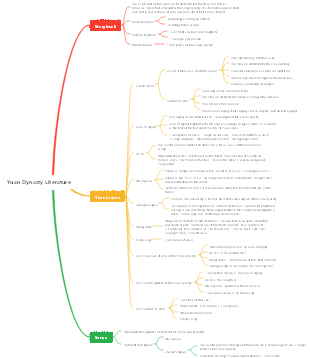
pedagogy
Education and Pedagogy
Education and its emergence and development
1 concept, 2 attributes, 3 elements, 4 origins, 8 functions
1 concept
Social activities that cultivate people with purpose
✘accidentally ✘accidentally ✘instinctive activity✘
usage
Process education - the process of thought transformation - the most basic
eg: I received a profound education from this film
method of education
eg: How do you educate your children?
social system education
eg: Education is the foundation for revitalizing local economy
etymology
The earliest proposal - "Mencius: Devoting Your Heart" - "To obtain the world's talents and educate them, these are the three joys"
The earliest explanation - Xu Shen's "Shuowen Jiezi" - "Teaching is what is given by the superiors and is effective by the subordinates."
social perspective
Education in a broad sense
Social education (earliest), school education (latest main), family education
Education in the narrow sense
school education
Purposeful, planned, organized
more narrowly
moral education
individual perspective
Education is a practical activity that occurs under a certain social background to promote individual socialization and social individualization.
2 properties
essential attributes Basic characteristics qualitative stipulation concrete and real stipulation
Educating people, that is, education is a social activity (sociality) that cultivates people with a purpose (purpose/consciousness).
Unique to humans - sociality and consciousness are the essential differences between human educational activities and animal educational activities
Transmitting social experience - military activities of soldiers defending and fighting do not belong to education
social attributes
eternity
People are in education
historic
Different between ancient and modern times
inheritance
Same as ancient and modern
long term
It takes ten years to grow trees and a hundred years to cultivate people.
relative independence
Education has its own laws; it is ahead of or lags behind the social development at that time (unbalanced)
productive
Education is a productive activity
national character
local characteristics
relative independence
Education has its own laws and plays an active role in politics, economy and productivity.
Performance
Parallels with other forms of social consciousness
imbalance with social development
own historical heritage
3 basic elements
educator
leading
Educated person (learner)
main body
Educational media (educational impact)
bridge
In terms of content - educational content, educational materials, textbooks
Formally - educational means, educational methods, educational organization
subject object Teach teachers students, educational content Learned Student Educational Content
The essence of the relationship between educators and learners - the relationship between education and development
The contradiction between the educated and the learning content - the basic and decisive contradiction; the logical starting point of educational activities
Educators are the main aspect of the basic contradiction of educational activities
Anyone with knowledge can become an educator✘
Educators are the link between educational influences and educated people ✔
Teachers and students are interactive subjects in education✔
Only when education returns to the living world can it have a social status in society✔
The purpose of education is to cultivate subjective people through teacher-student interactions✔
form
According to the degree of formalization
non-institutionalized education
Highly integrated with production or life
It has not been separated from daily production or life and has become a relatively independent social institution and its institutionalized behavior.
institutionalized education
Advanced forms of human education
According to space criteria
Family education, school education, social education
According to time standards, industrial technology, and social forms
Education in agricultural society, education in industrial society, education in information society
8 functions
Object of action
Individual functions (ontological functions/basic functions)
Social functions (derived functions/extended functions)
direction of action
forward function
Positive explicit/positive implicit
negative function
Negative Dominant/Negative Recessive
Presentation form of action (surface properties/external characteristics)
Explicit functions (planned, expected, direct impact)
Hidden functions (unplanned, unanticipated, indirect effects)/potential functions
Potential functions---conscious development and utilization---manifest functions
nature
Conservative functions (unchanged, repeated)
Beyond function (update, change)
Features
objectivity
Educational functions are determined by the nature of education and the structure of the education system
Sociality
changes with history
Diversity
Contemporary education plays an all-round role, both on individual development and on social development.
integrity
The educational function is an orderly combination, which is reflected within education and the overall linkage between education and the social system.
conditionality
The function of education will not be realized automatically
4 origins
myth origin theory
Zhu Xi
Education was created by God
Personal point of view, the oldest point of view of mankind
Biogenesis
Instinct makes Li Xi
Thorndike (USA), Litourneau (France) (the first proposer), Percy Neng (UK)
Education is a biological instinctive phenomenon, not a social phenomenon unique to human beings
The first formally proposed theory about the origins of education, turning to scientific explanation
Failure to grasp the purpose and social nature of human education
psychological origin theory
Psychological imitation of Menglu
Monroe (USA)
unconscious imitation
Denies the social nature of education
Labor origin theory (social origin theory)
Michael loves working
Midinsky, Kailov (Soviet Union), Marxists
unique human labor
Provides a "golden key" to understand the origin and nature of education
development path
primitive society
Simple labor without grades
Dependence
Education and productive labor are closely linked
Spontaneity, universality (popularity), extensiveness, No hierarchy (equality), no stages
primitiveness
The educational content is simple and the educational method is single
! Ancient society!
slave society and feudal society
gave birth to school education—slave society
It is the symbol of the first separation of education and productive labor, and the birth of the human formal education system.
feature
Class nature - education serves the ruling class
Slave society, eg: learning in the government; academic officials guard
Hierarchy - three, six or nine
Feudal society, eg: Six Studies and Two Halls; there are no poor families in the upper class, and no noble families in the lower class.
The separation and opposition between education and productive labor - unproductiveness
eg: Fan Chi asks for crops A gentleman seeks the road but not the food. Plowing is where discouragement lies; learning is where wealth lies. A gentleman worries about morality but not about poverty Those who work hard govern others; those who work hard govern others. Everything is of inferior quality, only reading is of high quality If the four limbs are not diligent, the five grains cannot be separated
Specialized educational institutions and dedicated educational staff
Educational methods advocate books, rote reading, forced corporal punishment, and stick discipline.
Parallel public and private education system
Educational content is richer
The teaching organization form of individual teaching or collective individual teaching
➕Class, orthodoxy, hierarchical, authoritarian, rigid, symbolic (dominant)
➕Education in ancient society was mainly through cultural influence rather than conscious education
develop
ancient China
Five Emperors
Chengjun, Xiang
The bud of ancient schools in my country
summer
Preface, proofread
The earliest school appeared in our country
business
University, primary school, Xiang, Xu, Guzong (Liyue University)
The earliest design of the teaching profession, the earliest primary school, divided into educational stages, a relatively formal educational place
Western Zhou Dynasty
Chinese studies, rural studies
"Unification of politics and education", "learning in the government, academic administration", "unity of officials and teachers", the earliest academic system appeared The "six arts" centered on "rituals and music" (rituals, music, royal scripts, and shu) - basic subjects. Shushu is called a small art and is studied in primary schools.
Teacher - "teacher", "protector" and "fu" Taishi——Academic Tradition CPIC - Physical Health (Sports) Tai Tu——Moral Education
Spring and Autumn Period//Warring States Period
The dividing line between slave society and feudal society
Jixia Academy (Warring States Period) (Academic Freedom)
Official schools declined, private schools rose, and hundreds of schools of thought contended. During the Warring States Period, the trend of raising scholars was prevalent
Western Han Dynasty
The highest institution of higher education: Taixue
Emperor Wu of the Han Dynasty adopted Dong Zhongshu's "depose of hundreds of schools of thought and respect only Confucianism". Dong Zhongshu's "Spring and Autumn Dew"
Eastern Han Dynasty
Hongdumenxue (Study of Literature and Art) (Central Official School) County studies/County studies (local government studies)
The system of selecting scholars - the examination and promotion system, the recruitment system, the development of local official schools began with "Wen Wengxue"
Wei and Jin Dynasties
Guozixue, Taixue, Confucianism, Xuanxuan, Literature and History
The system of selecting scholars - the nine-rank Zhongzheng system (selecting people based on their "family status"), "There are no poor families in the upper ranks, and there are no noble families in the lower ranks."
Sui and Tang Dynasties
Sui Dynasty: Imperial College Tang Dynasty: Six Schools (Guozi, Taixue, Four Schools, Legal Studies, Calligraphy, and Arithmetic), Two Halls (Hongwen Hall, Chongwen Hall)
The system of selecting scholars—the imperial examination system, Tang: Revitalize Confucianism and pay equal attention to the three religions (Confucianism, Taoism and Buddhism)
Song
Six major academies (Bailudong Academy, Shigu Academy, Yuelu Academy, Yingtianfu Academy, Songyang Academy, Maoshan Academy)
Semi-official, semi-private, free lectures. Cheng-Zhu Neo-Confucianism, Four Books and Five Classics
bright
Central official school: Imperial College Local official schools: County schools, social studies (private children)
Eight-legged essay - Feudal society is declining
Late Qing Dynasty
school
In 1905, the imperial examination system was abolished
ancient west
Ancient India
brahmin education
Family education is the mainstay, with monks as the only teachers
Buddhist education
Recite classics and study their meanings
ancient egypt
Palace School (the oldest in the world) School for official positions - with officials as teachers and the law as teaching Schools for scribes (most opened) (alleviating class conflicts)
Characteristics - taking officials (books) as teachers and monks as teachers
ancient greece
athens education
Purpose - politicians and businessmen (Naofumi)
The earliest education in the West that developed harmoniously between morality, intelligence, body and beauty, with rich content and flexible methods. Despise women’s education and focus on private schools
Spartan Education
Purpose - soldier (martial arts)
It mainly focuses on military physical training and political moral indoctrination, with single content and harsh methods. Pay attention to women’s education, mainly public schools
ancient rome
Mainly family education Greek school latin school
Greek, Latin, Quintilian
Medieval Western Europe
church education
Purpose - priests and monks,
Content - "Seven Arts" (three subjects (grammar, rhetoric, dialectics) and four studies (arithmetic, geometry, astronomy, music)), each subject runs through theology
knight education
Purpose - feudal knight,
Content - "Seven Skills" (horseback riding, swimming, fencing, hunting, spear throwing, playing chess, reciting poetry)
modern society
French righteousness
Germany - the first country in the world to popularize compulsory education (compulsory) - the earliest compulsory education law
The state has strengthened its attention and intervention and the rise of public education (nationalization)
Separation of education from religion (secularization)
Legalization
modern society
Modern education features
A public undergraduate student during the end of the country's revolution
productive
Education is economic production
Publicity (popularity, diversity)
scientific
futurity
revolutionary
International
lifelong
Characteristics of late 20th century (modern) education
Everyone shows up + global information science
lifelong
Paul Langland's earliest systematic discussion
The greatest influence, the widest spread, the most vitality, the fundamental principle of the knowledge society
Characteristics - lifelong, universal (democracy and universality), diversity of forms, extensiveness (coherence), Autonomy, flexibility, practicality
democratization
For all students Everyone
democratization
Deny hierarchies, privileges, and autocracy, and pursue the liberalization of education
Diversification
The denial of singleness and unity reflects the diversity of social life and the individuality of people
modernization
globalization
Informatization
scientific
Modern education development trends
Cultivating all-round development of people, integrating education with productive labor, democratizing education, advancing humanistic education and scientific education simultaneously, diversifying the forms of institutionalized education, the concept of lifelong education, and realizing educational modernization are the common pursuits of education in all countries
Educational modernization—the highest goal—realizing human modernization
Educational modernization—core—modernization of teacher quality
Pedagogy and its emergence and development
concept
A science that studies educational phenomena and educational issues (objects) and reveals educational laws (fundamental tasks)
Educational issues are the intrinsic driving force for the development of pedagogy
New characteristics of contemporary pedagogy development
The scope of educational research issues has expanded dramatically
Diversification of educational research foundations and research models
Pedagogy has undergone detailed differentiation, and the educational subject system has initially taken shape.
The relationship between educational research and practical reform is increasingly close
Reflect on oneself and form a meta-theory of education
develop
Representative figures of naturalism: Taoism, Aristotle, Comenius, Rousseau, Pestalozzi, Froebel
budding stage
China's budding stage
Confucius, Mencius, Xun Mo Dao + "Study Notes"
Confucius
Confucius taught his old friend how to make a fortune (material)
"Confucius" - Confucius contributed, not the author
core
"Benevolence" and "Li"
Educational objects
Teaching without distinction (Confucius’ school policy)
eg: If you can do more than self-cultivation, I may not have no teachings.
Training objectives
A gentleman with both ability and political integrity
eg: Learning and excellence leads to officialdom
educational content
Founded a private school, compiled the "Six Classics" (Poems, Books, Li Yi (Yue) Spring and Autumn Period), "Writing and Conducting Faithfully", Emphasis on social personnel and cultural affairs, and despise science and technology and production labor. eg: Fan Chi asked for help.
Confucius divided it into four subjects based on academic expertise: virtue, speech, politics, and literature.
Teaching Principles and Methods
inspirational induction
Confucius was the first educator in the world to propose heuristic teaching
Teaching students in accordance with their aptitude
Combining learning, thinking, practice and action
Review the past and learn the new
The educational role of Confucius
Social (economic) functions: Shu (labor force), rich (productivity), teaching (political theory education)
Individual functions: "Sex is similar, habits are far apart", environment, education
Mencius
great virtuous man
"The Theory of Good Nature"
moral transcendentalism
The purpose of education—“understanding human ethics”
The ideal "manly" personality
Wealth cannot be lascivious, poverty cannot be moved, power cannot be surrendered
step by step
"Mencius" - "Things that flow like water cannot do without Yingke"
Xunzi
Transform evil deeds
"Sexual evil theory"
The role of education - "change one's nature into falsehood"
Dialectical materialism (the day after tomorrow)
Teaching content - Confucian classics, hearing-seeing-knowing-doing
The most respected teacher
Mohist
"Universal love" and "non-attack" - Mo Zhai - knowledge of literature and history + logical thinking + practical technology
Cultivate "concurrent scholars" and "wise men", people who serve the ideal society
Characteristics and value of educational content
Science and technology education and education that trains thinking ability
source of human knowledge
"Know by person", "Know by hearing", "Know by speaking" (acquire knowledge by means of analogy and understanding)
Whether a person's words are correct or not requires a standard of measurement - the "Three Tables Method" (three standards for testing cognition)
Taoist
"Excellent knowledge", "Fooling the people", "Excellent knowledge without worries", "Tao follows nature"
Cultivate "sergeants" and "hidden gentlemen"
Promote skeptical learning methods and pay attention to dialectics
Promote the educational and teaching principles of dialectical thinking such as "using counter-reaction" and "empty tranquility"
"Study Notes"
It is the first educational monograph in the history of education in China and the world. It was written at the end of the Warring States Period.
Author——Le Zhengke
Educational function
"If a gentleman wants to transform the people into customs, he must learn from them" - the importance of education
"To build a country, to build a military and a civilian population, teaching comes first" - the relationship between education and politics
"If a jade is not polished, it will not become a useful tool; if a person does not learn it, he will not know it."——Individual Function
Education and teaching principles
Teaching and learning
After learning, you will realize your shortcomings; after teaching, you will realize your difficulties
Respect for teachers
Master Yan and then Taoist Master
Hiding and breathing complement each other
Combining in-class and extra-curricular activities "Teaching in a university means that when you teach, you must have a real career, and when you retire, you must study abroad."
Sun Mo of Yu Dynasty
Prevent "forbidden things that have not yet happened, it is called Yu", timely "when it can be called it", step by step "give it without the mausoleum festival, it is called Sun", observe and imitate "looking at each other and doing good is called Mo"
inspirational induction
"The teachings of a gentleman are metaphors." "The Tao cannot be restrained, the strong cannot be restrained, the open cannot be reached."
Be kind and save the lost
"Learning without imitation" is a step-by-step approach. "If you practice miscellaneous things without inheriting them, you will become a mess without cultivating."
Zhu Xi
"Collected Notes on Chapters and Sentences of the Four Books" (Collected Notes on Four Books), "Records of Recent Thoughts"
The purpose of school education - "enlighten human ethics"
"There are different kinds of talents, and there are different kinds of them" - teaching students in accordance with their aptitude "A scholar must be determined" "A scholar must be determined" - Ju Jingzhi
Zhu Xi's Reading Method
Step by step, read carefully, think deeply, be humble, observe yourself, work hard, and be respectful and determined.
Follow your mind, observe your willpower
Human nature is divided into "nature of destiny" (absolute goodness) and "nature of temperament" (there is good and evil)
The role of education lies in “changing temperament”
Primary school (teaching things), university (teaching things)
Wang Shouren
Fundamental mission - "preserve the principles of nature and destroy human desires"
Moral education "unity of knowledge and action"
children education
The nascent stage of the West
Three Greek Philosophers + Quintilian
Socrates
Heuristic teaching was first proposed in the West
"Midwifery"
Socratic irony
definition
Repeated questioning and induction
Midwifery
guide
The purpose of education - to cultivate talents for governing the country
The primary task of education—cultivating morals
"Can virtue be taught?" "Virtue is knowledge"
plato
"Utopia" - the source of public education thought
Equal education for men and women
Pay attention to early education
ultimate purpose of education
"Soul Turn" - Changing the World View
Learning through games
Teaching subjects
"Four Arts" (arithmetic, geometry, astronomy, music)
Aristotle
ancient greek encyclopedic philosopher
Inherit Plato's theory of rationality - the pursuit of rationality is the pursuit of virtue - the highest purpose of education
Proposed for the first time “education follows nature”
Provide staged education and harmonious education to children
"Soul theory"
Political science---universal public education, which believes that education is public rather than private
Liberal education--leisure time and free subjects (liberal education)
Theoretical knowledge is the most valuable
Quintilian
"Principles of Oratory" ("On the Education of Orators" or "On the Cultivation of Orators") is the earliest educational work in the West and the first teaching method treatise in the ancient West.
The germination of the idea of class teaching system
Teach students in accordance with their aptitude, act according to their abilities, combine work with rest, and oppose corporal punishment
independent form stage
Easy to confuse knowledge points 1. Bacon - first proposed the independence of pedagogy 2. Comenius - a sign of the beginning of independence in pedagogy 3. Herbart - Symbols of standardized, scientific, modern and formal pedagogy 1. "Xue Ji": the world's first educational book; 2. "Principles of Oratory": the first educational book in the West; 3. "The Theory of Great Teaching": the first educational book in modern times; 4. "General Pedagogy": the first educational book in modern times
Bacon
"On the Value and Development of Science", Induction
For the first time, education was proposed as an independent discipline
Froebel
"Human Education", "Father of Young Children in the World"
Games and handicrafts, kindergarten gamification, "oral language" and "gifts"
Comenius
Emphasis on direct self-study
"The Theory of Great Teaching" - a sign that education began to form an independent discipline, the first educational book in modern times
Pan-smart education
Put forward the idea of universal education, "teaching all things to all human beings" and "all young men and women should enter school", The textbook "World Illustrated" is the world's first textbook with both pictures and text.
Education adapts to nature
Support the theory of sexual goodness
Class teaching system - proposer, theoretical basis
Teaching principles
Intuitive, systematic, capable, consolidated, conscious
Intuitiveness: Teaching is divided into four stages: feeling, memory, understanding and judgment.
Moral education content
Wisdom, courage, temperance, justice, the main or basic virtues, incorporated into the new concept - labor education
academic system
Four-stage single-track education system, 24 years, 6 years each
infancy, childhood, adolescence, adolescence Maternity school, Chinese school, Latin school, university
Rousseau
Rousseau is kind and Emile is natural
On the goodness of nature, "Emile", the first to discover that children
The ultimate goal of natural education is to cultivate “natural persons”
The core of naturalistic education is “return to nature”
The principle of natural education method is "negative education" (it does not mean doing nothing, but observing and understanding to prevent negative external influences)
Kant
Kant gave a lecture on education
"Kant on Education", the first education lecture given in universities
Man is the only animal that needs education
The foundation of education - proper control of human nature, the highest goal of moral education - freedom, the necessary guarantee for the realization of freedom - "discipline" and "discipline"
Pestalozzi
Psychologicalization of Pei Qi's elements
"Lienhard and Gertrude"
"The loving father of children", the first person to clearly put forward the slogan of "psychological education"
The first Western educator to combine education with productive labor and put it into practice
elemental education theory
The education process should start with some of the simplest "elements" that children can accept, such as addition, subtraction, multiplication and division.
Locke
Gentleman Locke draws cartoons on whiteboard at home
"Education Talk", "Whiteboard Theory", everyone's natural intelligence is equal
The purpose of education - cultivating gentlemen, family education, "gentleman education theory" (physical education, moral education, intellectual education)
Herbart
one two three four five
"The father of modern pedagogy", "the founder of scientific pedagogy", "the representative of traditional educational theory"
"General Pedagogy" marks the establishment of normative (modern/scientific/formal) pedagogy, the first modern pedagogy work
Principles of educational teaching①
For the first time, the concept of "educational teaching" (teaching and educating people) was proposed. There is no education without teaching, and there is no teaching without education.
Theoretical basis②
Ethics and Psychology
Old Third Center ③
"Classroom Center", "Textbook Center", "Teacher Center"
Four stages of teaching④
Xiao Ming Contact Xiao Fang
Ming (clear)
United (Lenovo)
system
method
Marks the formal formation of the teaching process theory
Educational purpose⑤
"Possible purpose": a purpose related to the child's future occupation
"Necessary purpose" (the highest purpose and fundamental purpose): five moral concepts-freedom, perfection, mercy, justice, and fairness
six courses
Natural subjects (empirical interests), Mathematics and logic (speculative interests), Art subjects (aesthetic interests), Language subjects (sympathetic interests), Social subjects (social interests), Religious subjects (religious interests)
Child management and training theory
The education process has a certain sequence: three stages: management, teaching, and training.
The purpose of management: to "create an order" in children's hearts and create necessary conditions; the purpose of training: to form the moral power of character
Dewey
Three means two studies without purpose + new three centers
"Representative of modern educational theory", "Representative of pragmatism theory"
"Democracy and Education" ("Democracy and Education")
"Tomorrow's School" "My Educational Creed"
new three-centrism
"Children's Center (Student Center)", "Activity Center", "Experience Center"
"Education is life", "Education is growth", "Education is the transformation of experience", "School is society"
"Learning by doing", "Five-step inquiry teaching method" (create difficult situations; determine where the difficulties lie; propose hypotheses; infer and confirm hypotheses; verify hypotheses)
"Education without teleology", the process of education has no purpose outside itself, it is its own purpose
The traditional school of education represented by Herbart; the modern school of education represented by Dewey
spencer
"On Education"
Purpose of Education - "Preparation for a Full Life"
Scientific knowledge is the most valuable
Diversification stage (20th century)
experimental pedagogy
Meijmann's "Outline of Experimental Pedagogy", Rye's "Experimental Pedagogy", "Lame's Experiment", Germany
Cultural Education
Dilthey, Spranger, Little
Also known as spiritual science pedagogy
Man is a cultural being
pragmatic pedagogy
Dewey, Kerberk
"Democracy and Education", "Experience and Education", "Design Teaching Method"
Education is life
Education is the continuous growth of individual student experience
School is a prototype society
Course organization should be centered on student experience
The teacher-student relationship is child-centered
The teaching process focuses on students' independent discovery and experience, and respects individual differences in students' development.
Marxist pedagogy (socialist pedagogy)
Krupskaya's "National Education and Democratic Education" - the earliest discussion of educational issues based on Marxism
Kalinin's "On Communist Education", Makarenko's "On Communist Education" and "Educational Poetry"
Kailov's "Pedagogy" - the world's first Marxist educational work
Yang Xianjiang's "New Education Outline" - my country's first Marxist educational work
critical pedagogy
In the 1970s, it was the dominant educational trend in contemporary Western educational theory circles.
institutional pedagogy
modernization stage
Modern China
Cai Yuanpei (Mao Zedong’s evaluation: a leader in academic circles and a role model in the world)
Cai Wuyu
The ultimate goal: to create a “complete personality”
Educational policy: Simultaneous development of five educations—— Physical education (military and national education); Intellectual education (strength education); Moral education (civic moral education) (core); Aesthetic education (auxiliary moral education) (aesthetic education replaces religion); World view education (combining moral, intellectual and physical education, the highest state of education)
Cai "Weltanschauung education and aesthetic education are called education beyond politics."
Implement the school-running principle of "freedom of thought and inclusiveness"
Huang Yanpei (a pioneer in vocational education in my country)
Huang career
Promote "great vocational education"
The purpose of vocational education: to make the unemployed have a job and to make the employed happy with their job
Principles of vocational education: use both hands and brain
Basic norms for professional moral education: dedication and happiness
Yan Yangchu (Father of International Civilian Education)
Yan Pingmin
Advocate rural civilian education
“Four major educations”: literary and artistic education, livelihood education, health education, and civic education
"Three major ways": school style, family style and social style
Liang Shuming (advocate of rural construction)
Liangcun Village
Rural Education Theory and Practice
Chen Heqin (the founder of modern Chinese preschool education theory and practice, the father of Chinese early childhood education, The father of Chinese preschool education, Froebel of China)
Chen Yinyou
"Living Education"
Courses: children's health activities, children's social activities, children's science activities, children's art activities, children's literature activities, five-finger activities
Jianshe Literature and Art + Five Fingers
Steps: experimental observation, reading reference, creation and publication, criticism and discussion
Goal: Be a human being, be Chinese, be a modern Chinese
Method: teach by doing, learn by doing and seek progress by doing; pay attention to outdoor activities and life experience, use physical objects as research objects, and use books as auxiliary reference
Tao Xingzhi
Tao life
Mao Zedong's evaluation: a great people's educator; Song Qingling's praise: a teacher for all generations
"China Education Reform"
life education theory
Life is education (core), society is school, teaching and doing are integrated
Two equals one learning
Practice: Xiaozhuang Normal School, Shanhai Engineering Group, Yucai School, "primary school teacher system"
"Thousands of teachings teach people to seek truth, and thousands of studies teach them to be real people."
New developments in contemporary (modern = post-World War II) educational theory
Three major schools of modern teaching theory
Bruner
cloth structure
"Education Process" - Structural Teaching Theory - "No matter what subject we choose to teach, we must make students understand the basic structure of the subject"
discovery method
Zankov
Like development
"Education and Development"
Teaching should be in front of students' development and promote students' general development
The five teaching principles of developmental teaching theory: high difficulty, high speed, theoretical knowledge playing a leading role, understanding of the learning process, and the principle of enabling all students, including "poor students", to achieve general development (intelligence)
Two highs, two principles and one development
Wagenschein
tile example
Example teaching theory (standardized teaching)
"Three Milestones" in the History of Western Educational Thought
Plato's "The Republic", Rousseau's "Emile", Dewey's "Democratic Education"
other scholars
Piaget
The purpose of simplicity is to develop students’ intelligence
Paul Langland
"Introduction to Lifelong Education" A representative work on lifelong education theory
Suhomlinski
"One Hundred Suggestions for Teachers", "Dedicate Your Whole Heart to Children", Harmonious Education Thoughts
The ideal of school education is to cultivate people with comprehensive and harmonious development (ideological core)
Babanski
"Teaching Process Optimization", teaching process optimization theory
bloom
"Classification System of Educational Objectives", educational objectives: cognitive objectives, emotional objectives, motor skill objectives
basic laws of education
Education and Social Development (External)
The social constraints of education (social constraints on education)
Social political and economic system (direct factors)
Lead the revolutionary vision
nature of education
educational leadership
right to education
Educational Purpose (Purpose)
Choice of educational content (ideological aspects)
Education System
Educational reform and development
Education is relatively independent of the political and economic system
Productivity (fundamental factor)
Pairing within special regulations
The scale (talent specifications) and speed of educational development
changes in educational structure
The first industrial revolution - universal primary school; the second industrial revolution - universal junior high school; the third industrial revolution - universal high school; Information technology revolution---popularization of higher education
The content, methods and means of education
The school’s professional settings
Education is relatively independent of the development level of productivity
Science and technology (fundamental driver)
Inner knowledge magic
Educator's Concept
The number of educated people and the quality of education
The content, methods and means of education
educational technology
culture
Visual direction promotes development
value orientation
School curriculum (enrichment of content; update of curriculum structure)
educational purposes
educational content
Educational methods
Dual cultural attributes: Education is not only a component of culture; it is also a means of cultural transmission, deepening and improvement.
population
quantity, quality, structure
The social function of education (education promotes society)
political function
Mermaid Princess
political talent
political democratization
Forming public opinion "To transform the people into customs, it must be learned"---"Xue Ji"
economic function
two reproductions
reproduce labor force
American Schultz proposed human capital theory
Transform potential into reality, change the nature and form, quality and quality of the labor force, develop in an all-round way, and improve labor conversion capabilities
reproduce scientific knowledge
eg: Industry-research-academic integration
Technology function
Intelligent body research and development
reproduction of scientific knowledge
institutionalization of science
Professionals do professional things
scientific research function
Development and utilization of scientific research and technological achievements
cultural function
Two transmissions and two creations
inherit culture
internally
Transmit, preserve and activate culture
Transform culture
Select, organize and improve culture
Spread, exchange and integrate culture
foreign
Renew and create culture
population function
Reduce population size and control population growth
Improve the quality of the population and improve the quality of the population
Rationalize the population structure (ratio of men to women)
Contribute to population migration
Other functions
social mobility function
Lateral flow capabilities
Change work location and unit
Vertical flow function
Professional title promotion, job promotion, salary upgrade (eg: a noble son from a poor family)
ecological function
Establish the concept of building an ecological civilization
Popularize ecological civilization knowledge and improve national quality
Guide social activities to build ecological civilization
Education and Human Development (Internal)
Human development is holistic development
The entire life process from the beginning to the end of life, the positive aspects, the process of change
Three levels: physiological development, psychological development, social development
The particularity of human physical and mental development
Specially able to move
Human physical and mental development is realized in social practice
Human physical and mental development has initiative
Motives for individual physical and mental development
Endogenesis (genetic determinism)
Inner Mongolia
Mencius
"The Theory of Good Nature", "Everything is prepared for me"
Freud
Human sexual instinct - the most basic natural instinct
wilson
Gene duplication—the essential force that determines all human behavior
Gesell
Twin Ladder Climbing Experiment-Maturation Mechanism---Determining Effect on Human Development
Hall
"An ounce of genetics is worth a ton of education."
Repeat Theory: The development of an individual is nothing but a repetition of the evolution of the human race.
Galton
The founder of genetic determinism, "ethnic ancestry theory" and "genealogy research"
+ Confucius "Only the superior wisdom and inferior foolishness remain unchanged" "Innate knowledge"
+Christian "original sin theory"
+Plato’s “Learning is Recollection” and “Theory of Three Degrees”
+Dong Zhongshu and Han Yu’s “Three Grades of Sexuality Theory”
+Rousseau's "Hand of the Creator"
+Thorndike "Twin IQ Study"
External determinism (environmental determinism)
Mozi went out to look for Luo Huasheng
Mozi
"Susi theory": "Dyeing with green will make you green, dyeing with yellow will make you yellow"
Xunzi
"Theory of evil nature": "turning nature into falsehood"
Locke
"Talks on a whiteboard"
Watson
"Give me a dozen healthy babies, regardless of their ancestry, and I can raise (educate) them into any type of person I want." What works is "education"
Convergence theory (two-factor theory)
Styron: “Development equals the sum of heredity and environment.”
impose
Wu Weishi (Woodworth): "Human development is equal to the product of genetics and environment"
Multi-factor interaction theory (joint action theory)
Dialectical materialism: internal factors + external factors, the degree of individual subjective initiative has decisive significance
Main factors affecting individual physical and mental development
A religious realm left behind
Heredity (material premise)
Genetic quality is the material prerequisite for human physical and mental development. It provides possibilities for human development, but it cannot determine human development.
Genetic qualities have a certain degree of plasticity, and their influence on people tends to weaken.
Individual differences in genetic predisposition are one of the reasons
The mature mechanism of genetic quality controls the level and stage of a person's physical and mental development.
Environment (external motivation)
The social environment provides unlimited possibilities to make the developmental possibilities provided by genetics a reality
The environment is the driving force for human physical and mental development (influence ~ process, direction, nature)
The environment is an indispensable external condition for the development of human body and mind
The environment promotes and restricts the speed and level of human physical and mental development
The environment does not determine human development
Humans are proactive in their response to the environment
The impact of the environment on people needs to be realized through individual subjective efforts and social practice activities
(school) education (leading promotion)
Reasons why school education plays a leading role
Three teachers coordinate and control
Cultivate people with purpose, plan and organization
There are teachers dedicated to education
Effectively control and coordinate student development that affects
~Performance (special functions affecting individual development)
Will add Yancai
Social norms for individual development
Develop individual special talents and develop personality
The impact on individual development has immediate and delayed functions
Accelerate individual development
~Conditions
The realization of the leading role and promoting role of school education is relative and conditional
individual subjective initiative
Three levels: physiological activities; psychological activities; social practice activities (determining factors)
Role: internal motivation, decisive factor
Human physical and mental development is realized in social practice
Main theories on the relationship between education and society
The omnipotence and futility theory of education
Kang Shang Aipu Luo Huasheng
The omnipotence of education—British Locke, German Kant, American Watson, and French Helvetius
The theory of educational uselessness - Plato from ancient Greece and Galton from England. Uselessness refers to having little effect.
educational independence
Cai Yuanpei, independence: funding, administration, academics, content, separation from religion
human capital theory
Schultz, American education contributes 33% to national income growth
Education is not only a consumption activity, but also an investment activity
Disadvantage: Ignores other selection criteria in the labor market
Screening Hypothesis Theory (Diploma Theory)
Labor market theory (labor market segmentation theory)
The laws of individual physical and mental development
sequentiality
From low level to high level, from simple to complex, from quantitative change to qualitative change, the directionality is insurmountable and irreversible.
Requirements: Do not pull seedlings to encourage growth or apply them on festival grounds
stage
Age + Characteristics
Requirements: No "one size fits all", "one pot cooks", "zone of proximal development"
Imbalance
Different speeds in the same aspect; out of sync in different aspects (speed of development, time to reach maturity, start and end time of development)
Requirements: Seize the critical period (sensitive period, best period)
eg: Lorenz---The duck imprinting experiment; learning after time will be difficult but difficult.
complementarity
between physiology and physiology; between physiology and psychology
Requirements: Make good use of strengths and avoid weaknesses, use good deeds to save losses
individual differences
The development speed and level of different children in the same aspect: young people succeed and late bloomers
Different children develop in different aspects: some are good at math and poor at Chinese, and some are the opposite.
Individual psychological tendencies of different children: Children of the same age have different interests
Between groups: differences between men and women
Requirements: Teach students in accordance with their aptitude
integrity
Requirements: Comprehensive development
➕Continuity, stability, variability (roughly the same) (still changing)
Educational Purpose and Educational System
Overview of educational purposes
concept
Expected results, ✘Real results✘ It stipulates what kind of person (physical and mental quality) the educated will be cultivated into (core, essence), The requirements of education in terms of people’s efforts and social tendencies (for whom to train people) (social value)
Broad sense: expectations for educated people; narrow sense: what the state proposes that schools of all levels and types must follow
content
Cultivate people's physical and mental qualities and social values
Hierarchy
Teaching purposes are hierarchical
The purpose of education and the goal of training are related to the ordinary and the special. They are similar but different, with prominent focuses and distinctive characteristics.
The purpose of education in a country is the only one
Purpose of Education - National (Universal) (Abstract) Training Goals - School (Special) (Abstract) Course Objectives - Subject (Specific) Teaching objectives - teachers (specific)
Educational purposes and educational policies
Educational policy - general guidelines or general direction Content: the nature and service direction of education; the purpose of education; the basic ways to achieve the purpose of education (how)
Classification
①Function characteristics (value, functionality), (mind has something to belong to, body has something to do)
②Requirement characteristics (ultimate, developmental), (ideal, realistic)
③The degree of actual attention (formal decision-making, informal decision-making)
④Scope of manifestation (internal, external)
⑤ Way of existence (Enron’s: popular, operable, concrete As it should be: theorizing, conceptualizing, idealizing, authoritative, unified)
⑥Expression form (explicit, implicit)
significance
The purpose of education is the core of the entire educational work, the basis and evaluation standard, starting point and destination of educational activities, and plays a dominant role in educational activities. It is the theme and soul of all educational activities and the highest ideal of education. Throughout the entire process of educational activities, it has guiding significance and is the fundamental basis.
core Basis, evaluation criteria starting point, destination leading theme, soul highest ideal Fundamental basis General requirements and fundamentals
Role (function)
Guidance (direction, orientation) (elimination of interference)
Motivational effect (direction + hard work) (removing difficulties)
Evaluation standards (the fundamental basis and standards for measuring and evaluating the effectiveness of education implementation)
➕Regulation function (coordination + control)
➕Selection function (principle education content, educational activities)
✘Monitoring✘Authority✘
Determination basis
objective basis
Social productivity and scientific and technological development level
Certain socioeconomic and political systems
process of historical development
Rules for the physical and mental development of educated people
subjective basis
Philosophical concepts, human nature assumptions, ideal personality and other concepts and value orientations
The theoretical basis for establishing the purpose of education in my country—Marx’s theory of human comprehensive development
Content: All-round development and free development
1. The all-round development of human beings - refers to the comprehensive, harmonious and full development of human labor ability, that is, human physical strength and intelligence, and also includes the development of human morality and the full development of human personality. 2. The old division of labor (social division of labor) resulted in one-sided development of people 3. Machine-based large-scale industrial production provides the foundation and possibility for the all-round development of people. 4. The socialist system is the social condition for realizing the all-round development of human beings 5. The combination of education and productive labor is "the only way to create all-round development of people" The combination of education and productive labor is the basic (fundamental) way and the only way to cultivate all-round development of people.
educational purpose establishing theory
individualism
human nature
Mencius Rousseau Pestalozzi Froebel Maritain Hutchins Naylor Maslow Sartre Rogers Kant Locke
Lummondford Peimachnais Pizzaro
social fundamentalism
Social Needs Citizens/People Externalization
Xunzi Plato Herbart Durkheim (cultivating qualified citizens) Natop Keichensteiner Comte Baglay
Baba Xun Tu Tu Denana
eg: "A gentleman learns the Tao and loves others, while a villain learns the Tao and loves others easily." "The evil in human nature needs to be taught." Otherwise, it will harm others and society.
Education without purpose
external purpose without educational process
Dewey
cultural fundamentalism
Use culture to coordinate education among education, society, and people
Dilthey Spranger
life-centered theory
The theory of education preparing for life focuses on how the educated live
Spencer (Dewey - the theory of educational adaptation, Tao Xingzhi - the theory of education transforming life)
dialectical unity
Our country, individual + society
marx
theological fundamentalism
Kuniyoshi Obara, Comenius (Preparation for Eternal Life)
The purpose of education in our country
historical expression
1957 Mao Zedong's "On the Correct Handling of Contradictions Among the People" - the first education policy promulgated after the founding of New China, Educated people develop in moral education, intellectual education, sports, etc., and become educated workers with socialist consciousness.
1986 "Compulsory Education Law of the People's Republic of China"; 1993 "Outline of China's Education Reform and Development"; 1995 "Education Law of the People's Republic of China";
1999 "Decision of the Central Committee of the Communist Party of China and the State Council on Deepening Education Reform and Comprehensively Promoting Quality Education"; 2001 "Decision of the State Council on the Reform and Development of Basic Education";
2010 "National Medium and Long-term Education Reform and Development Plan (2010-2020)"; 2012 "Report to the 18th National Congress"; 2017 "Report to the 19th National Congress"; 2018 National Education Conference
basic spirit
Successor of the five social educations, labor innovation + individuality
Adhere to the direction of socialism (builders and successors)
Adhere to all-round development (mental and physical)
Cultivate independent personality (innovative spirit and practical ability)
Combining education with productive labor - the fundamental approach to the purpose of education in our country
Builders and successors of the socialist cause—basic mission
Pay attention to improving the quality of the entire nation - the fundamental purpose
spiritual essence
Cultivating workers—the general requirement for the purpose of socialist education
Comprehensive development—socialist education quality standards
Adhere to the direction of socialism—fundamental nature and characteristics
Combining education with productive labor - the basic approach
Basic Features
Marxist theory on the all-round development of human beings - guiding ideology
clear political direction
Comprehensive development and personality development unified
Basic composition
Moral education - direction, soul, motivation, individual enjoyment function, providing support for other education habits and methods
Intellectual education - the basis of understanding
Content tasks - impart knowledge, develop skills, foster autonomy and creativity
Fundamental mission - to cultivate or develop students' wisdom, especially intelligence
Sports - material security/basis
Enhancing students' physical fitness - the fundamental task of school education, the most fundamental difference between school sports and other school activities
The basic organizational form of school physical education - physical education class
The functions of school sports - fitness function, educational function, entertainment function
Aesthetic education
main mission
Feel beauty, understand beauty, appreciate beauty, embody beauty, create beauty (the highest level), spiritual beauty, behavioral beauty, inner beauty, outer beauty
content
(1) Formal education, ideal education, and art education
(ii) Art aesthetic education, natural aesthetic education, social aesthetic education (life beauty), educational aesthetic education
Function
Direct function - "educating beauty" (feeling beauty); indirect function - promoting the other four educations, providing prerequisites, the moral education function of aesthetic education, and the functions of promoting intelligence and physical fitness
The "super-aesthetic education" function of aesthetic education, that is, the transcendent function of aesthetic education
develop
The world's No. 1 advocate for aesthetic education - Schiller's Letters on Aesthetic Education; my country's No. 1 advocate for aesthetic education - Wang Guowei
For the first time, aesthetic education was proposed as part of the education policy - Cai Yuanpei's "Replacing Religion with Aesthetic Education"
labor technical education
Master labor technical knowledge and skills (be able to work), and form labor views and habits (love labor)
"Five Education" Relationship
Imbalance
✘Average development✘
relative independence
Irreplaceable
Moral education - ensuring direction, maintaining motivation and soul, and embodying the direction of socialist education
Intellectual education - the basis of understanding
Sports - material guarantee
Aesthetic education and labor technical education - specific application and implementation
inner relationship
Condition each other, promote each other, and complement each other.
quality education
Three important points - facing all students, allowing students to develop in an all-round way, and allowing students to develop actively
Features
Totality (the most essential provisions, the most fundamental requirements) (for all people)
Comprehensiveness, foundation, subjectivity, development, cooperation and future
Connotation (Education Concept)
Personality creates both worlds
For all students
Promote all-round development
Promote personality development
Focusing on cultivating innovative spirit and practical ability (core), --- the characteristics of the times of quality education, the essential difference between exam-oriented education and quality education
Innovation is essentially the result of people's free and comprehensive development
Fundamental mission—to comprehensively improve students’ quality
Three basic tasks - physical quality, psychological quality, and social quality
✘Quality education means not to have “top students”
✘Quality education requires students to learn everything and learn everything well
✘Quality education means that students are not required to study hard, and “burden reduction” means not giving or giving less homework to students.
✘Quality education is to make teachers become students’ collaborators, helpers, and ✘service providers✘
✘Quality education means carrying out more extracurricular activities and taking more cultural and sports classes
✘Quality education means no exams, especially no 100-point exams
✘Quality education will affect the enrollment rate
School
School culture (the day after tomorrow)
Main body - teacher culture
Basic elements - curriculum culture
Taking the transmission of culture as our responsibility
constitute
school spirit culture
School material culture - the material carrier of school spiritual culture
School institutional culture—traditions, rituals, rules
The epitome of school culture - campus culture
Interactivity, permeability, inheritance
content
campus material culture
eg: campus facilities
Campus Spiritual Culture
The core content of campus culture, the highest level
eg: school spirit, study style, teaching style, class style, school interpersonal relationships
School spirit is the unity of material culture, institutional culture and spiritual culture in the school, which is formed through long-term practice.
Campus Organization and Institutional Culture
The inner mechanism of campus culture
eg: school traditions, rituals, rules and regulations
The same goes for class culture and The (more) most active factor in class culture---class behavior culture
Classification
Explicit culture on campus
Campus invisible culture
The greatest impact on students - campus interpersonal relationships
Generate conditions
Material basis - productivity development and social production level (money)
Objective conditions - separation of mental work and physical work, teachers (people)
Important signs - the creation and application of words, the accumulation of knowledge (words)
The emergence of state machinery requires specialized institutions to train officials and intellectuals to serve the ruling class
Have considerable experience accumulation and provide specific educational content for school education
education system
connotation
The system of educational institutions and organizations at all levels and their various regulations
Broadly: National Education System
In a narrow sense: school education system, that is, academic system
The earliest - Western Zhou Dynasty (learned in the government)
The nature, mission, requirements, admission requirements, years of study and their interrelationships
Willing to take a leave of absence from school
The school education system is the core and main body of the national education system
Basis for establishing academic system
society+people+others
productivity, science and technology
political and economic system
Laws of physical and mental development
population
cultural tradition
Development of domestic academic system and foreign influence
Characteristics of education system
guest calendar system
Objectivity (not changed at will by people)
Normativity (orientation) = standardization
Historic (differences in ancient and modern times)
Mandatory (mandatory, must be implemented)
type
Western European dual-track system (UK, France and Germany)
Elementary school, middle school, university It is conducive to the popularization of education, and the quality of teaching varies greatly.
American single track system
Elementary school, middle school, university It is conducive to the popularization of education, and the quality of teaching varies greatly.
Soviet branch school system
Intermediate academic system, "Y" academic system, Taking into account fairness and efficiency, it is conducive to the popularization of education and maintains a high level of academic quality.
Development History
pre-institutional education
There is a school but no academic system. The school is its important symbol.
institutionalized education
There are schools and academic systems. The formation of the school education system means the formation of institutionalized education. It is a formal education, hierarchical structure, and age-graded education system.
The symbol of the rise of modern institutionalized education in my country is the "abolition of imperial examinations and the establishment of schools" in the late Qing Dynasty, which promulgated a national unified educational purpose and modern academic system.
non-institutionalized education
There are schools and academic systems. Education should no longer be limited to the walls of schools to build a learning society.
Compared with institutionalized education, the more important change is the educational concept
development trend
General education and vocational education in secondary education are developing towards mutual penetration.
The boundaries between academic education and non-academic education are gradually fading
my country’s school education system
Ancient my country: official education system, private education system, academy education system
The establishment of my country's modern academic system began with the "abolition of imperial examinations and the establishment of schools" in the late Qing Dynasty
old china
Ren Xuan Gui Xiang Ugly Men and Women Xu America The first three imitation days, Renxu imitation beauty
1902 "Renyin Academic System" (not implemented)
The "Imperial School Charter" was the first to stipulate the compulsory education stage. It was the first academic system officially promulgated by the state in the history of modern education in China. It was officially announced but has not yet been implemented.
1904 "Guimao Academic System" (the beginning of the implementation of the new academic system)
The term compulsory education first appeared. It was the first academic system promulgated by the state and implemented nationwide in the history of modern education in China. It is a symbol of the institutionalization and legalization of modern education in China.
"Middle school is the body, Western learning is the application", despising women's education - semi-colonial and semi-feudal, the biggest feature---long study period of 26 years
Renzi Guichou academic system
Cai Yuanpei revised and promulgated the regulations, which for the first time stipulated co-education for men and women. It was the first capitalist school system in the history of education in my country. It was the first time that it was clearly stipulated that compulsory education should be implemented (four years of elementary school).
1922 "Renxu Academic System"
The American school, the American-style 633 school system, the "new school system" and the "633 school system" clearly use the laws of physical and mental development of school-age children and adolescents as the basis for dividing school education stages.
new China
October 1, 1951, my country’s first academic reform, “Decision on Reforming the Academic System”
The "Outline of China's Educational Reform and Development" in 1933 proposed "two basics": basically universalizing nine-year compulsory education and basically eradicating illiteracy among young and middle-aged people, and "two completes": fully implementing the party's education policy and comprehensively improving the quality of education. : It is necessary to build a number of key schools and a number of key disciplines
structure
Hierarchy
Preschool education (early childhood education), primary education (elementary school), secondary education (junior + high school), higher education
Category structure
Basic Education (Early Childhood-High School), Vocational and Technical Education, Higher Education, Adult Education, Special Education
type
A branch-type academic system developed from a single-track academic system
compulsory education
Also known as forced education, free compulsory education
Basic Features: Mandatory (obligatory) [most essential] universality (uniformity) Free (compulsory) (public welfare)
The status of primary school education in compulsory education - compulsory, universal and basic
Secularity - using legal means to ensure the separation of education and religion and the state's intervention and control over school education
Easy to mix At present, the academic system implemented in my country’s compulsory education: nine years my country’s compulsory education curriculum structure: consistent for nine years The academic system of compulsory education in my country includes: "June 3", "May 4" and "Nine Years" The division of school stages in compulsory education in my country: multiple forms coexist The current educational system status of compulsory education in my country: multiple forms coexist
lifelong education
Overview
In 1965 (1960s) Paul Langland formally proposed (systematized and conceptualized) the theory, and finally the founder
In 1929, British adult educator Yerkesley published the world's first lifelong education monograph, "Lifelong Education"
Four pillars: learn to know; learn to do; learn to live together; learn to survive
Governor survives
The Third National Education Work Conference in June 1999, "The Decision of the Central Committee of the Communist Party of China and the State Council on Deepening Education Reform and Comprehensively Promoting Quality Education," clearly proposed lifelong education for the first time and formed a socialized and open education grid.
Features
Life-long, universal, extensive, flexible and practical
teachers and students
teaching profession
concept
Full-time personnel who transmit and disseminate human civilization, the main implementers of school education functions, and the main implementers of school education work. Their fundamental task is to teach and educate people.
The "Teachers Law of the People's Republic of China" implemented in 1994 confirmed the professional status of teachers from a legal perspective for the first time.
nature
Comenius: Teaching is the noblest and most superior profession under the sun.
Teachers are professionals, educators, and a profession that promotes individual socialization
effect
The communicator, bridge and link of human culture
Engineer of the human soul - Kalinin
Developer of potential, promoting individual development
Organizer, leader and leading role in educational work
✘Referee✘ ✔Maintain✔
Social status
Political status (prerequisite), economic status (most direct), legal status, professional status
professional image
Taoist humanities
Moral image (the most basic image)
Serve as a role model
Give full play to the role of teachers’ personality charm and role models in education and teaching
Cultural image (core)
Knowledge, great talent, rich knowledge
Personality image (the primary factor in the distance between teachers and students)
Development History
Non-professional stage (part-time)
Shang Dynasty: The earliest teacher profession to engage in education was established
Professional stage (full-time)
Sign: The emergence of private education "Shi" during the Spring and Autumn Period and the Warring States Period, the earliest teacher profession specializing in education; Confucius' "private education"; "Wise Man" in ancient Greece
Specialization stage (teacher education institutions) (specialized training of teachers)
France - the world's earliest teacher education institution, the world's first teacher training school, the beginning of independent teacher education in the world
Late Qing Dynasty - the earliest normal education in my country
The earliest discussion of normal education - Liang Qichao's "Reform and Tong Jiuyi"
1878--Zhang Huanlun--Shanghai--"Zhengmeng Academy"--the beginning of modern (private) primary schools
1897--Sheng Xuanhuai--Shanghai--"Nanyang Public School"--Shanghai Court, Intermediate School, Normal School (the earliest teacher education institution in China), and the Outer School (the earliest public primary school)
Specialization stage
The urgent need for "quantity" was transformed into the improvement of "quality". Normal colleges were gradually merged into liberal arts colleges, and "teacher education became university-oriented".
The status of teachers as professional and technical personnel was confirmed in the 1994 "Teachers Law of the People's Republic of China"
Occupational characteristics (professional roles)---The biggest feature-diversity
"Evangelist" role
(Engineer of the human soul)--Moral education, educating people
eg: Ideological education and transformation of students, ✘Reformer✘
The role of "teacher, solver of doubts" - the most significant
(Transfer of knowledge, transmitter of human culture) - intellectual education, teaching
The role of “demonstrator” (role model)
eg: Learn to be a teacher and set an example through behavior Teaching means what is given above and what is applied below - Xu Shen (No.1 Explaining Education) If his body is upright, he will act without being told; if his body is not upright, he will not obey even though he is told. - Confucius Follow his teacher, imitate his actions, listen to his words, and believe in his ways Learn from the virtues Peaches and plums, the next from Seikei
"Designer, organizer and manager of educational and teaching activities" role
Organizer: The implementer of teaching resource allocation (time allocation, content arrangement, student grouping) and teaching activities
Managers: Tough and arbitrary, benevolent and arbitrary (fake benevolence, true arbitrary (Smiling Tiger)), laissez-faire, democratic management
The roles of “parental agent, parent” and “friend, confidant”
Students hope teachers can share happiness and pain
The role of “researcher” and the role of “learner” and “scholar”
Labor characteristics
Complexity (more)
(1) The complexity of the nature, objects, tasks, processes and means of teachers’ labor
The opponent is too willful
(ii) The comprehensiveness of educational purposes, the diversity of educational tasks, and the diversity of labor targets (all students + teaching in accordance with their aptitude)
creativity(change)
Determined by the characteristics of the labor object, (standing on the podium, I am the course)
Teaching students in accordance with their aptitude (first performance) "One key opens one lock"
Constantly update teaching methods "There are methods for teaching, but there are no fixed methods for teaching" (change)
"Educational agility" (emergency events) (the ability to handle timely and appropriate situations): making the best of the situation, adapting to circumstances, knowing the right measures, and prescribing the right medicine, the complexity, situationality, and practicality of teaching
continuity
Continuity of time, there is no strict time limit for handover, because of the relative stability of labor objects
extension
The extension of space, there is no strictly defined labor place, because of the diversity of factors that affect student development
long term
The talent training cycle is long, and the impact of education is slow-acting.
indirectness
Do not create wealth directly, use students as an intermediary to realize the value of teachers’ labor
subjectivity
Teachers themselves - educational factors and role models
Demonstrative
Lead by example and be a role model for others
Demonstrates almost every aspect of educational activities
Give full play to the role of teachers’ personality charm and role models in education and teaching
The individuality of teachers’ working methods and the group nature of their labor results
Systematic
Comprehensiveness of labor tasks
eg: Teachers must have a healthy body, the skills of a farmer, a scientific mind, an interest in art, and the spirit of comprehensively reforming society - Tao Xingzhi
labor value
Social Value (Main Attribute) (Main Flag)
Personal value characteristics - ambiguity, lag, concealment
Professional literacy (basic conditions for teachers to be competent in their jobs) The prerequisite for teachers to do a good job in education)
Heart can know
Easy to mix The core of moral literacy-love students Core of Knowledge Literacy - Subject Professional Knowledge Differences in abilities from other professions - education and teaching abilities Moral Differences—Being a Teacher by Example Competent for the job - professional quality Teaching tasks - subject expertise
moral quality
Cause: Educational cause loyal to the people - premise, foundation, source of enthusiasm and creativity
Students: Love students - core
Collective: Unity and collaboration
Self: Being a role model for others (good moral quality) - the difference from other professional ethics
Knowledge literacy
Teaching literature and practical affairs
Political theory accomplishment
Profound subject expertise (ontological knowledge, core, basic requirements for competent teaching work)
Extensive scientific and cultural knowledge (general knowledge, general knowledge)
Necessary educational science knowledge (conditional knowledge) (pedagogy, psychology, textbooks of various subjects)
Rich practical knowledge
Competence and literacy
language expression skills
Organizational management capabilities
Education and teaching abilities (differences from other professional abilities, special requirements)
Self-regulation and self-reflection skills (higher educational resourcefulness)
psychological literacy
Noble teacher ethics
pleasant emotion
Good interpersonal relationships - an important symbol of a teacher's perfect personality
healthy personality
"Four Beings"
ideals and beliefs
moral sentiment
solid knowledge
loving heart
Four "guides"
temper character
Learn
Creative Thinking
Dedication to the motherland
Stage theory of teachers’ professional development
Ye Lan——“Self-renewal” orientation
"Not concerned" stage
Before formal teacher education (high school)
"Virtual attention" stage
Teacher training stage, including internship period
"Survival Concern" Stage
Focus on relationships
new teacher
Run-in period
Sudden change and adaptation
"Task Focus" Phase
Focus on survival → focus on teaching (teaching situations, grades, classroom)
Follow "Can I do it" → "How can I do it"
"Self-update attention" stage
Pay attention to students (overall development, personality differences)
Fowler Brown
focus on survival
Focus on the situation
Follow students
Berliner
newbie
Skilled novice (2-3 years) (lack of sufficient sense of responsibility)
Competent (3-4 years) (stronger sense of responsibility) (basic goal)
Business capable (5 years)
expert
Teacher professional development orientation
Intellectual orientation
Knowledge, level of awareness and teaching skills
Practice-reflective orientation
Diary, ideas, document analysis
cultural ecological orientation
Cooperation, collaborative teaching, cooperative teaching and research through learning team building to achieve common development
Teacher professional development content
Establishment of professional ideals (goals, motivation, prerequisites)
The rational fulcrum of teachers’ professional behavior and the core of professional self-spirituality
The formation of professional self (final mark)
Expansion and deepening of professional knowledge
Improvement of professional capabilities (the most prominent external performance, core factors)
Teacher’s professional personality
Perfection of professional attitude and motivation
Paths to teacher professional development
Teacher education (initial and foundational stages)
Orientation training
on the job training
school-based training
Group observation, lesson evaluation, discussion
Part-time study
Self-education (the most direct, common and important way)
self reflection
student
Characteristics of students
Students are the objects (objects) of education
Basis - students have plasticity, dependence, and teacher-oriented nature (students’ teacher-oriented and imitative nature → teacher’s demonstration of labor)
Students are the main body of self-education and development
Students’ subjective initiative performance——
Consciousness (initiative) "I want to learn" - the most basic performance
Independence (autonomy) "I can learn"
Creativity - Highest Performance
Students are developing people
Students have different physical and mental development characteristics (development) from adults
Students have great potential for development
Students have developmental needs
Students have needs for adult education care
Modern student outlook
One shot, two shots
Students are people in the process of development, treat students from a developmental perspective
Students' physical and mental development is regular (sequential, staged, unbalanced, complementary, individual differences)
Students have huge potential for development
Students are people in the process of development
Student development is all-round development
Students are unique (different) people
Students are complete human beings (cognitive + emotional)
Each student has his or her own uniqueness (teaching students in accordance with their aptitude)
There is a huge difference between students and adults (unique)
Teachers do not judge students’ behavior from an adult perspective
Students are independent persons (not dependent)
Every student is an objective existence independent of the teacher’s mind and not subject to the teacher’s will (students’ ideas cannot be suppressed)
Students are the main body of learning (teacher guidance, student inquiry)
Students are the main body of responsibility
essential attributes of students
Students are human beings
. Students are active subjects . Students are subjects with thoughts and feelings . Students have unique creative value . The student is a complete person
Students are developing people
. Have different physical and mental characteristics from adults . Possibility and plasticity of development . Have development needs (potential)
Students are the objects of education, and their main task is to learn
. Taking learning as the main task . Study under the guidance of a teacher . It is a kind of standardized learning
student's social status
minor citizen
Safeguards - Convention on the Rights of the Child
non-discrimination principle
Respect the dignity of children
✘Be independent early✘
The principle of respecting children’s views and opinions and the principle of the best interests of children
Teacher-student relationship
Overview
connotation
The teacher-student relationship is the most basic and important relationship among people in the process of educational activities.
The teacher-student relationship is a person-person relationship
Main forms of expression
Social relations (normativity) (stability)
Performance---intergenerational relationship, political relationship, cultural give-and-take relationship, moral relationship, legal relationship
From the perspective of the characteristics of education and teaching, education and teaching activities themselves are a kind of moral activity
Educational relationship (basic relationship, core) (working relationship)
With "teaching" and "learning" as the intermediary, other teacher-student relationships serve this relationship
Psychological relationship (situational) (diffuse)
Essence---whether teachers and students are emotionally harmonious, whether their personalities conflict, and whether their interpersonal relationships are harmonious.
Reflection---The cognitive relationship between teachers and students is the basis of the psychological relationship between teachers and students, and the emotional relationship is another important aspect
Ethical relations (highest level)
Special moral communities that constrain and regulate other forms of relationships
two opposing views
Teacher-centered theory——Herbart
Child-centered theory (student-centered theory) - Rousseau, Dewey
Content (one-to-one match)
Teachers and students form a give-and-take relationship in teaching educational content
eg: ✘The teacher-student relationship is a grant-and-receiver relationship✘ (in terms of content)
Teachers and students have an equal relationship in terms of personality
Teachers and students have a mutually reinforcing relationship in social ethics
effect
Guarantee (A good teacher-student relationship is an important condition for the smooth progress of educational and teaching activities. A good teacher-student relationship is a prerequisite for mobilizing the enthusiasm, initiative, and creativity of both teachers and students. The teacher-student relationship is significantly related to students' academic performance)
Standards (an important indicator of the quality of school life for teachers and students)
Curriculum resources (teacher-student relationship--an important content of campus culture--an important content of the school's potential curriculum)
The teacher-student relationship is the overall reflection and the most intuitive reflection of the spirit, style and school spirit of a school.
Basic type (Lewin)
Authoritarian teacher-student relationship
Helps improve grades ✘Authority type✘(Parent’s)
Laissez-faire teacher-student relationship (open type)
Democratic teacher-student relationship (participatory type)
Conducive to student development
Influencing factors
Teacher (determination, core, leading, key factor)
Teachers’ attitude towards students (direct impact, key role in improving students’ overall quality)
Teachers’ leadership style, wisdom, and personality factors
student
Students’ understanding of teachers (the main factor affecting students’ teacher-student relationship)
environment
interpersonal relationships in school
classroom organizational environment
Classroom layout, number of students
seat arrangement
"Yangtian style" best reflects the teacher's authority
"Horseshoe" "round" ≤ 25 people
"Double rectangle", "concentric circle", "double horseshoe" > 25 people
"Modular" group activities/individual learning
approaches and methods
Get to know and study students
Establish a correct outlook on students
Improving teachers’ own qualities——(Core)
Love and respect students and treat them fairly
Carry forward teaching democracy
Correctly handle conflicts between teachers and students
Actively communicate with students and be good at interacting with students
Improve legal awareness and protect students’ legitimate rights and interests
Strengthen the construction of teacher ethics and purify the relationship between teachers and students
Characteristics of the new teacher-student relationship (ideal teacher-student relationship)
(one)
Interpersonal relationships: Respect teachers and love students
✘Respect teachers✘
Social relations: democratic equality—core, premise, concrete embodiment
Educational relationship: teaching and learning—stability, normativeness, and formativeness
Psychological relationship: Psychological compatibility - Performance: close relationship, emotional harmony, equal cooperation
(two)
Respect teachers, love students, and cooperate with each other
Democracy, equality, harmony and intimacy
Sharing and co-creation, teaching and learning
(three)
bidirectionality
Effectiveness: The teacher-student relationship will have a direct impact on the teaching effect after it is formed.
Dynamic
asymmetry
course
Determination of the purpose of education - society + people + theoretical basis (Marx) Determination of the education system - society + people + history (domestic and foreign academic systems) Curriculum formulation - society + people + knowledge + curriculum theory Determination of curriculum objectives - society + people + (subject) knowledge
Course Overview
connotation
concept
my country: Tang and Song Dynasties
Proposed: Kong Yingda (Tang Dynasty), "Five Classics of Justice" "To maintain the curriculum, gentlemen must learn from it, and it must be governed by law."
Zhu Xi (Song Dynasty), "The Complete Works of Zhu Zi·On Learning", "Watch the deadlines closely and pay close attention to the courses" (modern significance)
The west:
The earliest: Spencer (English), "What Knowledge is the Most Valuable", the curriculum definition "the process of learning" is referred to as "learning process"
Marking curriculum as a specialized research field, the first monograph on curriculum theory in the history of education - Bobbitt (US) - "Curriculum"
Goodlad Five different courses
Ideal Course (Expert)
Formal Curriculum (Educational Administration Department)
Courses of Comprehension (Teacher)
Operational Curriculum (In Classroom)
Experience courses (students’ actual experience)
Broad curriculum - the sum of educational content and its processes (disciplines)
Curriculum in a narrow sense - a specific subject
defined basic types
Curriculum is a subject (teaching subject) = knowledge is most commonly used
Curriculum is learning experience (Dewey) = individual personal experience
eg: Solve the problem of "no children in education, see things but not people" - education is the experience of activities
Curriculum is the expected learning outcome or goal
Curriculum is an activity or process
significance
Curriculum is the concrete manifestation of the school’s blueprint for cultivating talents.
Curriculum is the basic basis for teachers to engage in educational activities
Curriculum is the main source of knowledge for students
Reasonable curriculum settings play a decisive role in students' all-round development
Curriculum is the main basis and standard for evaluating teaching quality
Curriculum is the basic basis for school education and teaching activities and directly affects the quality of talent training.
Curriculum is an important means to achieve educational goals
type
Inherent properties of course content (basic type)
Subject courses
Based on cultural knowledge (science, morality, art) and according to the logical system of knowledge, the selected knowledge is organized into subject course types
Contribute to the systematic inheritance of excellent cultural heritage
Activity Curriculum (Experiential Curriculum) (Dewey)
Curriculum format organized around students’ needs and interests and organized by activities
Its dominant value is to enable students to gain direct experience and real experience in the real world
The relationship between activity courses and subject courses actually reflects the relationship between people's direct experience and indirect experience, personal knowledge and public knowledge, children's current psychological experience and the logical experience condensed in the subject. It also reflects the relationship between adult learning. Differences and differences between methods and children’s learning styles
How course content is organized
Sub-discipline courses = subject courses (organizing one-sided knowledge)
According to the school education objectives, teaching rules and the development level of students at a certain age, some contents are selected from each subject to form various subjects.
Comprehensive courses (organizing multi-faceted knowledge)
Combining two or more subject areas, ✘Integration between courses✘
Related courses (liaison courses) (A B=A and B)
Find commonalities between two or more disciplines while retaining the independence of the original disciplines
Integrated courses (combined subjects courses) (A B C=D)
Integrate the content of intrinsically related subjects to form a new subject
Broad-field courses (comprehensive courses) (A B C D … … = L (field))
A comprehensive course that combines content from several adjacent subjects
Main course
With social practical issues as the core, the core courses are gradually expanded from near to far, from inside to outside.
Perspective on student learning requirements
Required courses
Cultivate and develop students' common characteristics, including national curriculum and local curriculum National Curriculum: Authoritativeness, Diversity, Mandatory
Elective Courses
Personality development, school-based curriculum
Elective courses are equivalent to compulsory courses. They have equal value and there is no primary or secondary relationship. Elective courses are not ancillary or supplementary to compulsory courses.
Course design, development, management body, management level (three-level course management)
national curriculum
Reflect the country’s educational will
local curriculum
Meet the practical needs of local social development
school-based curriculum
Demonstrate the school's educational purposes and characteristics, improve the school's educational level, and promote students' personality development
eg: A primary school integrates local folk songs into the Chinese (national) curriculum - school-based national curriculum
equality of status
Course tasks
Basic course
Cultivate students' basic academic abilities and basic education of citizens centered on the "three basics" (reading, writing, and arithmetic)
Basic courses are compulsory and common courses
Extended courses
Expand students’ knowledge and abilities
research courses
Cultivate students’ inquiry attitudes and abilities
Course presentation
explicit curriculum
Planned, direct transfer of knowledge, such as curriculum
The main feature - planning - the main sign that distinguishes explicit curriculum from implicit curriculum
Hidden curriculum (potential curriculum, spontaneous curriculum) (intentional or unintentional) (non-public educational experience)
Unplanned, indirect transfer of knowledge, non-publicity
Hidden curriculum is produced along with explicit curriculum
Conceptual hidden curriculum, material hidden curriculum, institutional hidden curriculum, psychological hidden curriculum
Jackson (Jaxon) "Class Life" was first proposed
Course features
instrumental courses
informative courses
skills courses
Practical courses
Playmaker
Subject Center Science
Student Center Curriculum
Social Center Curriculum
Influencing factors Establish basis
society+people+others
Social needs, subject knowledge level, learners’ physical and mental development needs,
Curriculum theory is also a factor that restricts curriculum and directly guides people's behavior in specifying courses.
Curriculum Theory
Subject-centered curriculum theory (knowledge-centered curriculum theory)
Jiebu wants Laiyonghe
Structuralist curriculum theory - Bruner - students master the basic structure of the subject
Elementalist Curriculum Theory - Baglay - "Common Elements", the Interests of the Country and the Nation
Eternalist curriculum theory - Hutchins - the value of traditional "eternal subjects" with intellectual training value is higher than the value of practical subjects
Student-centered curriculum theory (child-centered curriculum theory, empiricist curriculum theory)
Practicality and comprehensiveness
Dewey, Rogers
Basic proposition
empiricism
child-centered activity theory
active homework theory
Psychological Sequential Theory of Curriculum Organization
Social-centered curriculum theory (social transformation curriculum theory)
bramelde
Courses focus on contemporary social issues
Course Objectives (Expected Outcomes)
concept
The expected outcomes of the course, the extent to which students will achieve them after completing the course
It is the most critical criterion to guide the entire curriculum preparation process and the starting point for curriculum development or design.
Time-limited, specific, predictable, operable
Complete course goal system
Resultant goal - "knowledge" comprehension
Experiential Goals—the “Process” Domain
Expressive Goals - "Production" Domain
Classification of orientations
Universal goal orientation (all people, all courses)
Educational purpose or purpose of education, "University", school motto
Behavioral goal orientation normal (outcome)
Expected student learning results and clear what to do
Taylor's curriculum goal theory, Bloom's taxonomy of educational goals (three-dimensional goals - knowledge, skill, mode, valence)
Generative goal orientation (focus on process)
Germinated in Dewey’s “education is growth”
Emphasize the adaptability and generative nature of goals
Expressive goal orientation (personality)
Each student's personalized creative expression is a further development of the generative goal, which focuses on the student's creative spirit
eg: Turn waste into treasure by hand-making, talk about what you like
Establish basis
Society + people + (subject) knowledge
Learner Needs (Study on Students)
The needs of contemporary social life (the study of society)
Subject knowledge and its development (the study of subjects)
3D course objectives
Knowledge and Skills (Learning) - Basic/Core
Process and Methods (Learning) - Key
Emotional attitudes and values (love learning)
Course content (general structure)
Curriculum plan (teaching plan, course plan)
Guidance → School
Guidance documents on school education and teaching work formulated by the education administration department based on certain educational goals and training goals.
Overall planning of curriculum
Setting of teaching subjects (curriculum setting)
Which subjects (curriculum) to offer is the central and primary issue in curriculum planning
Subject sequence (course opening sequence)
Class allocation (number of teaching hours)
School year preparation and school week arrangement
Compulsory education stage teaching plan (curriculum plan) - mandatory, universal, basic
Compulsory education: compulsory, universal, free
Curriculum standards (before the new curriculum reform, teaching syllabus)
Instruction→Discipline
Course Standards Syllabus For all students For some students Minimum requirements Maximum requirements Mass education Elite education Elasticity Rigidity (hard) Learning-oriented Teaching-oriented Focus on the curriculum Focus on the subject (knowledge) Significant difference: establishing experiential goals
concept
In the course plan, each subject is written in the form of an outline and a guiding document.
The teaching objectives, tasks, knowledge scope, depth, structure, teaching progress and basic requirements for teaching methods of the subject
It is the direct basis for writing textbooks and teachers' teaching, and is also an important criterion for measuring the quality of teaching in various subjects.
Design Principles
Description (Foreword)
Course objectives
Course Content Standards
Course implementation suggestions
appendix
Function
National curriculum standards are the basis for textbook compilation, teaching, assessment and examination propositions, and are the basis for national curriculum management and evaluation.
Curriculum standards are the basic basis for teaching materials, teaching and evaluation, but they do not mean that curriculum standards are specific regulations on all aspects of teaching materials, teaching and evaluation.
Textbook
Further development and concreteness of curriculum standards
The basis for teachers’ teaching objectives, the basic (main) basis for teachers’ teaching, and the direct learning object for students
Textbooks and handouts are the main part of teaching materials
course structure
concept
The organization method in which the course content is organically linked and the link that transforms the course objectives into educational achievements is the basis for the smooth development of course activities.
Horizontal structure (proportion between disciplines)
Vertical structure (sequence within disciplines)
Linear course, spiral course (with repetition)
Continuity (breadth), sequence (smoothness)
Main contents of the new course structure
Establish a nine-year consistent compulsory education curriculum as a whole
Comprehensive curriculum is the main focus at the primary school level
Set up a combination of subject-specific and comprehensive courses at the junior high school level
High schools mainly focus on subject-specific courses
Comprehensive practical activity courses are set up from elementary school to high school as a compulsory course, and are fully implemented from the first grade of elementary school to the third grade of high school.
Rural middle school curriculum should serve local social and economic development
Course management
Third-level course management (in order to enhance the adaptability of the course)
national curriculum
local curriculum
school curriculum
The concept of school-based curriculum development
"Student-centered" curriculum concept
The main body of developing school-based curriculum is teachers rather than experts
The cooperative spirit of “all-hands-on-participation”
The democratic concept of “decision sharing”
The basis of school-based curriculum development: good use of on-site curriculum resources
Personalization is the value pursuit of school-based curriculum development
The nature of school-based curriculum development: a complement to the national curriculum
The operation of school-based curriculum development: the pursuit of the same goal
Curriculum Design and Implementation
Course Design
Systematic activities to produce curriculum content (curriculum plans, curriculum standards, textbooks) in a purposeful and planned manner
Taylor's goal model
Taking goals as the basis and core of curriculum development and overemphasis on expected behavioral results
Taylor's principle: goals, content, methods, evaluation
"Basic Principles of Curriculum and Teaching" - the cornerstone of modern curriculum theory
Goals that schools should pursue
Select and shape learning experiences
Organize learning experiences effectively
Course evaluation/evaluation results
Stenhouse's process model
Pay attention to the actual process
First to propose that “teachers are researchers”
Teachers are the central figure in the entire process
Curriculum Implementation
The basic way to put the course into practice and achieve the expected course goals
The core and key aspects of curriculum reform
Basic approach to curriculum implementation—organizing teaching activities
orientation
Loyalty orientation (teaching as written in the textbook)
Mutual debugging orientation (adjust as appropriate, preset + generated)
Creativity orientation (construction and development of curriculum concepts, creation + generation) (teachers are curriculum developers)
Course evaluation
concept
Including evaluation of the course itself and evaluation (judgment) of students' academic performance
Goal: Improve curriculum and improve teaching
The key link that determines the success or failure of reform
It is not only the end point of curriculum design and implementation, but also the starting point for the continued development of curriculum design and implementation.
Starting point for curriculum development or design – curriculum objectives
main mode
target evaluation model
Taylor "Father of Curriculum Evaluation"
Goal-free evaluation model
Scriven
The focus of evaluation shifts from "the expected results of the curriculum plan" to "the actual results of the curriculum plan"
CIPP evaluation model
Lost too much
staffbeam
Background evaluation, input evaluation, process evaluation, outcome evaluation
CSE evaluation model
answer mode
Stark
There are different ways to evaluate courses, and no one method is absolutely correct.
Basic characteristics (evaluation view)
Pay attention to development, downplay screening and selection, and realize the transformation of the evaluation function
Pay attention to comprehensive evaluation, pay attention to personality differences, and achieve diversification of evaluation indicators
Emphasis on qualitative evaluation, combining qualitative and quantitative methods to achieve diversification of evaluation methods
Emphasis on participation and interaction, combining self-evaluation with other-evaluation to achieve diversification of evaluation subjects
Pay attention to the process, combine summative evaluation and formative evaluation to realize the transfer of evaluation center
Course resources
concept
All kinds of resources to help students develop
The core and main component of curriculum resources - teaching materials
Classification
According to spatial distribution
On-campus course resources, off-campus course resources
According to functional characteristics
Material curriculum resources--the direct source of elements that form the curriculum
Directly affects the curriculum, becomes an element of the curriculum, and is internalized into the quality of students' physical and mental development.
Directly forming the curriculum: knowledge, skills
Conditional curriculum resources--necessary and direct conditions for implementing the curriculum
Resources used in course implementation: human, material and financial resources
according to the way of existence
Explicit course resources (visible, tangible), eg: computer network
Hidden Curriculum Resources (Potential Ways)
eg: tables and chairs
Explicit resources
Hidden resources
According to nature
Natural curriculum resources are "natural" and "spontaneous", while social curriculum resources are "artificial" and "conscious"
Basic principles for development and utilization
Sharability principle
economic principle
Use the least expenditure and energy as much as possible to achieve the most ideal results, and the economy of expenditure, time, space, and learning
timeliness principle
Highlight the key points while fully considering the cost, and select course resources that are decisive for students' lifelong development.
principle of adapting measures to local conditions
teaching
teaching
Under certain teaching purpose standards, teachers’ teaching and students’ learning, transmitting and mastering social experience are bilateral activities.
Etymology - "Book·Shang Shu·Dui Ming", but there is no special explanation
Teaching and Education – Parts and Wholes Teaching and intellectual education - cross-relationships Teaching and taking classes—whole and part Education>Teaching>Teaching
Features
Fundamental purpose (mission) - to cultivate all-round development of people
Teaching has many forms and is the unity of commonality and diversity.
It consists of two aspects: teaching and learning. Teaching is a common activity between teachers and students.
Students' cognitive activities are an important part of teaching
significance
Teaching is the basic way to implement educational policies, implement comprehensive education, and achieve educational goals.
Teaching is the central link of school education. School education - teaching-focused, comprehensive arrangements
Task
General tasks (basic tasks) (tasks) of teaching - double basics, four characteristics, personality psychology
basic knowledge, basic skills Intelligence, physical ability, aesthetic taste and ability, moral character personality psychological characteristics
The fundamental task (fundamental purpose) of teaching - to cultivate all-round development of people
The primary task of teaching - double base
The fundamental task of education - cultivating people with moral integrity
The fundamental task of teachers—teaching and educating people
teaching theory
Developmental Pedagogy
Zankov - "Teaching and Development", general development = physical development, psychological development Enable students to achieve the most ideal development level with the best teaching results
Brunner - Intellectual Development: High-Quality Textbooks Discovery Teaching Method
mastery learning theory
paradigm teaching theory
Wagenschein - regular knowledge
Optimal teaching theory
Babanski - "Optimization of the Teaching Process", plan eg: Question sea tactics and time tactics violate this theory
effective teaching theory
Teaching process = class
Education>Teaching>Class>Understanding knowledge>Understanding teaching materials
Elements of the teaching process
Teacher___________________________Student (Leading) Teaching content and teaching methods (Intermediary) (Subject)
Three major elements of the classroom—students, learning process, and learning situation
The teaching process is a special cognitive process, based on cognitive activities
The particularity lies in
Indirectness and generalization of cognitive objects (direct experience and indirect experience)
Simplicity and efficiency of understanding methods
Teachers’ guidance, guidance and teaching (with leadership awareness)
Communicativeness and Practicality of Cognition
The educational and developmental nature of understanding
history
Herbart's "four stages" theory marks the formation of the teaching process theory
1. Confucius: Learn to Think and Practice (Learn to Think and Practice) 2. Simeng School: the learning process of learning extensively, interrogating, thinking carefully, discerning clearly, and practicing it diligently (Book of Rites: Doctrine of the Mean) 3. Comenius: Advocated that teaching should be based on sensory activities. 4. Dewey: The teaching process is a process of continuous transformation and increase of students' direct experience, and a process of "learning by doing". 5. Kailov: The teaching process is a cognitive process. 6. Bruner: Structural Teaching Theory 7. Zankov: Teaching and Development Theory 8. Babanski: Optimization of the teaching process 9. Skinner: Pedagogy of Programming 10. The four teaching stages proposed by Kailov are perception, understanding, consolidation, and application.
Basic rules
double room development
The combination of direct experience and indirect experience (the law of indirectness)
The leading role of teachers and the main role of students are unified (bilateral law)
Mastering knowledge and developing intelligence are unified (developmental law)
The unity of imparting knowledge and ideological and moral education (teaching + educating people) (educational law)
Herbart proposed educational teaching: "I can't think of any teaching without education. Teaching is always educational."
Structure (basic stage)
Urgently get your husband a pregnancy test
Stimulate learning motivation
Comprehending knowledge (perceiving teaching materials + understanding teaching materials (center)) - the central link
Consolidate knowledge - a necessary link
Apply knowledge (mainly achieved through teaching practice)
Check knowledge (obtain timely feedback on teaching effectiveness)
Teaching principles
Want to straighten your hair and consolidate your physical strength
Basic principles for guiding teaching work
The principle of unity of ideological (educational) and scientific nature
Educational rules. Scientific knowledge, moral character, education
eg: Writing to convey the truth, teaching and educating people
Application scenario: culture and moral character
Implement requirements
Ensure the scientific nature of teaching
Carry out ideological and moral education based on the characteristics of teaching content
Provide ideological and moral education to students through all aspects of teaching activities
Continuously improve your business capabilities and ideological level
The principle of integrating theory with practice
Indirect experience is unified with direct experience. Apply knowledge to solve practical problems and problem-solving abilities
Application scenario: knowledge life
Implement requirements
Pay attention to the teaching of book knowledge, and pay attention to connecting knowledge with practice
Pay attention to cultivating the ability to apply knowledge
Strengthen the practical link and the ability to comprehensively apply knowledge, "the third learning"
Correctly handle the relationship between knowledge teaching and ability training
Supplement necessary local teaching materials
intuitiveness principle
Multiple senses - perceptions, experiences - vivid representations
Xunzi "Not hearing is worse than hearing it, and hearing it is worse than seeing it." "Hearing it but not seeing it, even if you are knowledgeable, you will be wrong." Comenius first proposed the principle of intuition Ushinsky also pointed out the importance of the principle of intuition Tao Xingzhi "Gathering knowledge is like grafting"
eg: Intuitive with physical objects (specimens), intuitive with models (substitutes, globes), intuitive with words
heuristic principle
Mobilize, guide, improve
Comply with - interesting activities, question and answer mode Violation - the problem of teachers rejecting students
First in the West: Socrates’ “Midwifery” The best in the world: Confucius "If you are not angry, you will not be inspired; if you are not angry, you will not be angry." "Xue Ji": "The Tao cannot be restrained, the strong cannot be suppressed, the open cannot be reached" Distohui
step by step principle
Systemic principles. The inner logic of knowledge and the laws of cognitive development
"Xue Ji": "Learn without neglecting others", "Give without cultivating the mausoleum", "Give miscellaneously without grandson, it will lead to chaos without cultivation." Zhu Xi: "Step by step, read carefully and think carefully" Comenius, Ushinsky, Bruna
the principle of consolidability
review
Principle of teaching students in accordance with their aptitude
The principle is to start from the students’ actual situation. Unified requirements, facing all students, individual differences, differentiated teaching
Confucius: "Look at the reason, observe the origin, and observe where it is settled." "If you seek, you will retreat, so you advance. If you seek, you will retreat, so you will retreat." Gardner's "Multiple Intelligences Theory"
principle of quantification
The principle of development and acceptability. Content, method, weight, and pace are suitable for physical and mental development, acceptable but somewhat difficult
Mozi: "A wise man must do what he can and do what he can." Russell, Bruner, Zankov
teaching method
common activities
Two opposing teaching methods guiding ideology
Injection
heuristic
The key is to see whether teachers can stimulate students to actively learn, rather than judging based on form alone.
Classification
Focus on language transmission
Teaching method
The most widely used, basic and commonly used teaching method
conversation method
Question and answer method, one question and one answer
discussion method
Discussion method, one question and many answers
reading guide method
self-study guide
Focus on intuitive perception
demonstration method
Teachers do it, students watch it
Visit method
Field teaching methods, field trips and research
Focus on practical training
Practice method
Consolidate knowledge and develop various skills and techniques, commonly used teaching methods
Experimental Method
Students do it, teachers guide it
Internship method
Students apply the knowledge they have learned in practical operations
practical activity method
social practice activities
Focus on guiding inquiry
discovery method
discovery learning or problem teaching method students work independently Bruner
Teaching methods based on emotional cultivation (experience)
Appreciative teaching method
Guide students to experience the truth, goodness and beauty of objective things
situational teaching method
Teachers introduce or create situations purposefully to arouse certain emotional experiences in students
Special teacher Qiu Xuehua - "Trial teaching method" - practice first and then teach, learn first and then teach
Choose and apply
Teaching objectives (purpose tasks)
Course nature and characteristics
Key points of the course
Student age characteristics
Teaching time, equipment, conditions
Teacher professional level
Teaching methods and teaching environment
Teaching organization form
form of social association
Ancient schools—individual teaching system
The basic organizational form of modern teaching - class teaching system
Germination - Quintilian
Laying the theoretical foundation - Comenius's "The Great Teaching"
Perfection - Herbart (formal stage theory of the teaching process (clarity, association/combination, system, method)), Kailov (type and structure of lessons)
The first to be adopted in my country - Jingshi Tongwen Hall
Basic Features
Class, lesson, hour (take class as unit, teach by subject, teach on time)
advantage
Large-scale cultivation of talents, systematic scientific knowledge, multi-faceted development, the leading role of teachers, the collective educational role of students, teaching management and teaching inspection
shortcoming
It is easy to cause a disconnect between theory and practice
Auxiliary forms of modern teaching-individual teaching and on-site teaching
Individual teaching is an auxiliary form of class teaching system
A special organizational form of modern teaching—duplex teaching
Students of different grades. Suitable for rural and remote areas with few students, few teachers, poor school buildings and teaching equipment.
Other teaching organization forms
Group teaching
External grouping - ability/age Internal Grouping – Age Ability
dalton system
Contractual system, Birkhurst, teacher-specified learning content-student self-study
Trump system
Flexible Class Schedule, Lloyd Trump, A combination of large class lectures (40%), small class discussions (20%), and individual self-study (40%), with flexible class time
design pedagogy
Kerberk (originator, founder), Dewey, student-defined learning content-self-study
Bell-Lancaster System
guidance system,
Basic aspects of teaching work
Prepare for class and study
Prepare lessons
starting link, prerequisite, premise
Require
Study the teaching materials, understand the students, and design teaching methods (Prepare teaching materials) (Prepare students) (Prepare teaching methods) (First) (understand and understand)
Academic year (semester) teaching plan, subject (unit) plan, lesson plan (lesson plan)
Lesson plan - memo, first - study the teaching materials, main body - design the teaching process
Attend class
central link, key
The criteria for a good lesson
Take a note
concentrate active mind participate actively take care of individuals
Basic requirements for taking a good class
Motherboard internal design method
Clear teaching goals
Teaching content is accurate
Reasonable teaching structure
Appropriate teaching methods
Pay attention to the art of teaching
Blackboard writing in order
Give full play to students’ subjectivity (the most fundamental requirement)
Homework assignments and feedback
The meaning of homework—an extension of teaching
Tutoring
It is a necessary supplement to class and an important measure to adapt to the individual differences of students and implement teaching in accordance with their aptitude.
Examination and evaluation of academic performance
Commonly used - test method
Teaching Evaluation
Judgment of teaching activities and their results
Purpose - Make decisions about curriculum, teaching methods, and student training programs Including (divided) - student academic evaluation, classroom teaching evaluation, teacher evaluation
Function
Diagnostic functions - find problems
Incentive function
Regulatory function
Teaching function
research function
Management functions (certification/screening)
✘Supervision✘Organization✘
basic type
According to the evaluation function
diagnostic evaluation
Teaching begins to understand students’ learning readiness status, eg: probing test
formative assessment
During the teaching process, improve and perfect teaching activities, eg: oral questions, written tests
summative evaluation
Summative evaluation, the end of the course, to examine the overall level of students, eg: midterm/final exams
According to evaluation criteria
absolute evaluation
Goal-referenced evaluation (criterion-referenced evaluation), Look at the score line, suitable for certification exams and customs clearance exams, eg: driver's license, general examination, proficiency test
relative evaluation
norm-referenced assessment Look at the rankings, suitable for selection categories, eg: recruitment examination, public examination, college entrance examination
Assessment of intra-individual differences
Portrait - past and present Horizontal – different aspects
According to the evaluation subject
Internal evaluation – self-evaluation
external evaluation
Teaching mode
framework program
Classification
Inquiry-based teaching
Guidance - discovery teaching model
Piaget, Bruner - constructivist theory
Question--Hypothesis--Inference--Verification--Summary and Improvement
anchored teaching
Example-based teaching, problem-based teaching, situational education
Create situations--determine problems--autonomous learning--collaborative learning--effect evaluation
Example teaching
Wagenschein
suggestive teaching model
Lozanov
Create situations--Participate in various activities--Summary and transform
The basic principle
Pleasant but not stressful principle
The principle of unity of conscious and unconscious
The principle of interaction of means of suggestion
non-directive teaching model
Create situations - ask questions - conduct open exploration
Humanism-Rogers
Application of modern educational technology in teaching
Micro Lesson
Fragmented learning content, structured digital resources to expand materials
Features
Less teaching time
5-8min
Yihuan: micro-teaching - training normal students and in-service teachers - 5-20 minutes
Less teaching content
Resource capacity is small
mpg·rm·wmv·flv Mobile learning, ubiquitous learning
Timely feedback
flipped classroom
Upside Down the Classroom, Upside Down the Classroom
Learn first, teach later, autonomous, interactive and personalized
moral education
Overview of Moral Education
The etymology of morality - Xunzi
The etymology of education - Mencius
Moral education in teaching - "Shang Shu"
Moral education in a broad sense
Social moral education, community moral education, school moral education, family moral education
Moral education in a narrow sense
School moral education/moral education
Function
social function
Personality function
Three aspects: survival, development and enjoyment
The highest state - enjoy sexual function, spiritual happiness eg: helpfulness
educational function
Motivational effect, directional effect, liking and method support
➕Determine the nature of the school
The nature of moral education and its role in human development fundamentally determine the nature of school education
Target
Quality standards, starting point
content
the sum of norms and norms
(i)
The most basic - A political education B ideological education C moral education legal education mental health education
(ii)
Patriotism education—eternal theme and core
ideal education
Collectivist education—the core of social moral principles
labor education
Humanitarian and Social Morality Education
Conscious discipline education
Education on concepts of democracy and rule of law
Scientific worldview and outlook on life education
moral education process
Essence - the unified process of individual socialization and individualization of social norms
Moral education process - an educational process Moral formation - the process of human development
Structure—educators, educated people, moral education content, moral education methods
Basic (main) contradiction
The contradiction between the requirements of moral education (moral norms required by society) and the existing moral level of the educated
Basic rules
Four internal conflicts and long-term interactions
The process of moral education is the process of cultivating and improving students' knowledge, emotion, intention and behavior.
Knowledge - moral knowledge (premise, foundation, core)
Emotion - moral emotion (internal motivation, catalyst)
Yi - moral will (mental strength, maintenance and regulation)
Action - moral behavior (an important symbol and key to measurement)
The process of moral education has many beginnings The real beginning and starting point - stimulating motivation for moral development
The process of moral education is a development process that promotes the internal contradictions and struggles of students' minds. It is a process that combines education and self-education.
The moral education process is a process of organizing students’ activities and interactions and unifying the influence of multi-faceted education.
Activities and interactions - foundations and sources
The process of moral education is a long-term, repeated, and gradual improvement process
moral education principles
According to the educational purpose, moral education goals, and moral education process rules, basic requirements = basic principles
guiding principles
Guide students to develop in the right direction
Diversion principle
Be persuasive and persuade people with reason
eg: Yan Hui: Master is always good at seducing people. He persuades me with literature and invites me with courtesy. He can't stop. When students make mistakes, teachers do not blame them but use other methods
Principle of teaching students in accordance with their aptitude (based on students’ actual conditions)
The principle of unity of knowledge and action
Theoretical education on ideological and moral ethics, participation in practical exercises, combined with improving behavioral cognition and behavioral development
eg: A gentleman is ashamed of his words but overdoes his deeds; hesitant in his words but quick in his deeds; his actions are close to benevolence.
The principle of combining collective education and individual education
Makarenko’s “Principle of Parallel Education” Collective-Individual-Collective
The principle of combining respect and trust in students with strict requirements on students
Makarenko "should demand as much from a person as possible and respect a person as much as possible" Yanci Xiangji
The principle of combining positive education and discipline
Positive guidance + discipline
The principle of relying on positive factors and overcoming negative factors (the good will save the bad)
eg: advantages, features, strengths
The principle of consistency and coherence in educational impact
eg: In line with the three combinations of education, home-school society Violation--5 2=0
Ways and methods of moral education
Path - various classes + various activities + various meetings + work of the class teacher
Basic approaches to teaching ideological and moral courses and other subjects
The most common, basic and effective way to teach other subjects besides ideological and moral courses
The work of the class teacher - an important and special way
Method - teaching method + learning method
Persuasion education method (reasoning education method)
Use language to persuade
eg: explanation, report, conversation, discussion, debate, reading guidance
Use facts to persuade and educate
eg: visit, interview, investigation
role model
Role model, excellent moral character, influencing students
Model - outstanding people; Demonstration - parents and teachers; Typical - outstanding individuals
eg: The peach and plum trees are silent, and they create their own mistakes.
emotional edification
Create situations, exert subtle influences, and influence
personality influence environmental cultivation Art cultivates "people's words are not as penetrating into the human body as the human voice"
Practical exercise method
actual activities
eg: entrust tasks, organize activities
Moral Cultivation Guidance Method (Self-Education Method)
Students consciously and proactively study, self-criticize, motto, self-practice experience and exercise
subtopic
moral evaluation method
Other evaluations include rewards, punishments, evaluations, and conduct evaluations
Role playing method
cooperative learning method
moral education model
organic combination
cognitive model
re-knowledge
The most widespread and dominant
Piaget proposed (dual research method)
Kohlberg deepening (ethical dilemma research method)
considerate mode
Chongqing
Learn to care, put yourself in others’ shoes, and consider others
Characteristics - theory of good nature, people have an innate tendency towards self-realization
Created by Peter MacPhail
Central Position—The Cultivation of Moral Sentiments
social imitation model
restart
learn from others
The task environment is an interactive body
Founded by Bandura
value clarification model
Lars, Hamming, Simon
choice free choice
collective education model
Makarenko
Class teacher and class management
class
The formation of classes and levels, the basic educational unit, the most basic administrative organization in the school, and the basic unit of teaching activities
Erasmus first proposed
A sign of production - human educational activities have entered a stage where individual guidance is the main focus to a stage where collective guidance is the main focus.
Function
social function
Convey social values and guide life goals
Teach scientific and cultural knowledge and form basic skills for social life
Teach social life norms and train social behavior patterns
Provide role learning conditions and cultivate social roles
individual function
Need to break hair
improve development
suit one's needs
Diagnosis - finding problems
Correction - correcting a problem
Class management
is a dynamic process
The organizational activity process of planning, organizing, coordinating, and controlling various resources to achieve educational goals
content
Class organization building
Internal Forms of micro-structure: linear (earliest and simplest), functional, linear functional (most common)
Class organizational structure: authority structure, role structure, teacher-student relationship structure, student-student relationship structure ✘Guide students to establish autonomous organizations (external) ✘Guide students to learn to study✘
Principles - conducive to education (first principle); consistent goals; conducive to physical and mental development
Class system management
Class teaching management
Core - Teaching Quality Management
Class activity management
model
Regular class management
rules and regulations
eg: class rules, duty student system, attendance system
Class parallel management
Makarenko’s educational thought of “parallel influence”
Collective-individual-collective → two-pronged approach
Class democratic management
Everyone actively participates
eg: cadre rotation system, regular evaluation system, daily duty student system, weekly duty student system, democratic education activity system
Class goal management
Drucker
in principle
directional principle
Guide students with correct ideas
principle of autonomous participation
The class teacher does not do what the class cadres can do, and the class cadres do not do what the students can do.
The principle of combining education and discipline
Total Management Principles
Motivation principle for all employees
parallel management principle
Core - Student Development
Cultivation of good class collectives
Social psychological community class collective is an advanced form of class group
feature
Clear common goals - the basis for class formation
guide
A certain organizational structure and a strong collective leadership
core
Code of living together, sound rules and regulations
ensure
Have correct collective public opinion and united, harmonious and upward interpersonal relationships
Base
Loose space for individual development
Correct public opinion and good class style
educational role
group consciousness
Social skills and adaptability
self-education ability
The class collective is the best carrier for training class members to manage themselves, educate themselves, and carry out activities independently.
development stage
A loose group in the early stages of establishment
Not familiar with it The busiest period for the class teacher and the critical period when the work ability of the class teacher is tested.
Collaborative groups in the consolidation period
Half-baked, with a certain understanding, class cadre, activist The core of the class collective is initially formed. It is an important period for the class teacher to cultivate the backbone of the class.
mature collective
Personality strengths are developed
formation and cultivation
Determine development goals
The foundation, the key, the goal is the direction and motivation
Establish a class collective core
activist, student leader
establish normal order
Classes with poor educational foundation must first do a good job
Organize educational activities
Cultivate correct public opinion and good class style
An important sign of class collective formation
Overview of the work of the head teacher
The main implementer of student management work
status and role
Designer of class construction
The formulation of class construction goals is the most important
Leader of the class organization
Leader, artist, coordinator who coordinates class interpersonal relationships
✘Bystander of class activities✘
leadership style
Authoritative, democratic, laissez-faire
Used more - "teaching center" and "collective center"
Task
Take good care of Xiaoji First of all, establish a class group The central mission is to promote both
Basic tasks - leading the class and teaching students well
Ideological and moral education - focus and regular work
The primary task (Central link, central work) - Organize and establish a good class collective
Central mission - Promote the all-round development of all members
Content and methods
Get to know and study students
significance
Prerequisite and foundation, primary link/work
main content
Individual students, student group relationships, students’ learning and living environment
method
Observation method - the most basic method
conversation method
Survey
written material analysis
Effectively organize and cultivate outstanding class groups
central link
Coordinate various educational forces inside and outside the school
Study guidance, study activity management and life guidance, life management
Organize extracurricular and extracurricular activities and guide extracurricular life
Create student profile
conduct assessment
Guiding ideology—educational purpose
Basic basis - Student Code of Conduct
General steps - student self-evaluation; group evaluation; class teacher evaluation; information feedback
Class teacher work plan and summary
individual education work
Advanced students, middle students, and underachievers (primary concern)
Organization of class activities
Handling of accidental events
Extracurricular and off-campus education
Extracurricular and off-campus education
In addition to curriculum plans and subject curriculum standards, use after-school time to conduct purposeful, planned and organized educational activities
Elective courses and self-study courses are not considered extracurricular education
Extracurricular, off-campus education and classroom education
Contact: Consistent purpose, purposeful, planned, organized, formal education plan
Extracurricular and off-campus education are not an extension of classroom teaching activities, but a necessary supplement
main content
Ideological and moral education activities
Subject activities
Topic section
Science and technology activities
Literary and artistic activities
sports activities
social activity
traditional holiday activities
extracurricular reading activities
organizational form
Mass activities (most people)
Group activities - basic organizational form
Individual activities (one person)
main feature
Open comprehensive voluntary spiritual pan real
Voluntariness
Free choice, voluntary participation
autonomy
Organize, design and do it yourself, with teachers playing a supporting role
flexibility
Practicality
extensive
openness
Comprehensive
Integrated education of school, family and society
Family Education - Chief Teacher
The basis and supplement of school education, the basis of school education and social education
Features
pioneering
The first educators are parents
Infectious
authoritative
Targeted
“There is no better person who knows his son than his father, and no one knows his daughter better than his mother.”
lifelong
Individuality
social education
Features
openness
Mass nature
Diversity
compensatory
What can’t be learned in school
Integration
Form an educational synergy
School education dominates
The three are coordinated and cooperate with each other
Plus the interconnection between school and family
Home-school integration, families visit each other, establish communication links, hold regular parent-teacher meetings, organize parent committees, and hold parent schools (parenting lectures)
Strengthen the interconnection between schools and social education institutions
Establish regular contact and maintain close contact with all sectors of society by going out and inviting people in.
Educational research and its methods
Educational Research Overview
Object - Educational issues, discovering and summarizing educational laws The ultimate goal - to improve the current situation of education and promote educational development
basic process
Choose a research topic
The first step, the crucial step, the starting link
Research topics originate from educational practice or educational theory
Educational literature search and review
Throughout the entire research process
The fastest way to access information—online search
Develop a research plan (blueprint)
Determine research type and methods
Choose research subjects
Analyze study variables
Form a research plan
Collection, organization and analysis of educational research data
Writing educational research papers and reports
educational research methods
observational research method
Systematic investigation of objective things in the natural state
survey research method
Observations, lists, questionnaires, interviews, case studies, tests
The most basic and widely used-questionnaire survey
The interview method is most conducive to in-depth understanding of the problem
experimental research method
Human means, active intervention or control
Purpose - to discover causal relationships between things
The only study that can determine cause and effect
Main features - strict control of independent variables
case study method
a/kind of person/thing
comparative method
different countries
Emerging
action research method
Practical workers (teachers) need to solve practical problems
Come from work, go to work
qualitative research method
"Field research method" "Participant observation method"
Characteristics—emphasis on naturalness and interaction with research objects
Educational Narrative Research
Telling educational stories, describing and narrating in depth
Educational Essay
Educational experience
school-based research
It is school-oriented, with school principals and teachers as the main force, and aims at the actual problems existing in the school.
Come from school, go to school
Basic elements
self reflection
The core factors of teachers’ professional development and self-growth, and the basis and prerequisite for conducting school-based research
peer assistance
Professional leadership
Educational teaching skills
Teaching Skills Overview
Instructional Design Skills
classroom teaching skills
Speaking skills and teaching reflection skills
Bruner