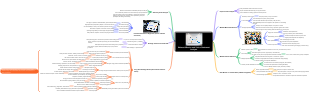
MindMap Gallery Aeon SWOT Analysis
Discover how Aeon can navigate the competitive online landscape with a strategic SWOT analysis. This comprehensive overview highlights Aeon’s strengths, such as its strong brand recognition, omnichannel capabilities, and customer loyalty programs, alongside its weaknesses, including digital maturity gaps and cost structure challenges. Opportunities for growth include enhancing e-commerce competitiveness and leveraging data-driven strategies, while threats from online-first players and market dynamics require attention. Explore how Aeon can strengthen its market position through innovation and customer-centric approaches in the ever-evolving retail environment.
Edited at 2026-03-26 01:23:04Discover how Aeon can navigate the competitive online landscape with a strategic SWOT analysis. This comprehensive overview highlights Aeon’s strengths, such as its strong brand recognition, omnichannel capabilities, and customer loyalty programs, alongside its weaknesses, including digital maturity gaps and cost structure challenges. Opportunities for growth include enhancing e-commerce competitiveness and leveraging data-driven strategies, while threats from online-first players and market dynamics require attention. Explore how Aeon can strengthen its market position through innovation and customer-centric approaches in the ever-evolving retail environment.

Discover how Aeon effectively tailors its offerings to meet the diverse needs of family-oriented consumers through a comprehensive Segmentation, Targeting, and Positioning (STP) analysis. Our approach begins with demographic segmentation, examining family life stages, household sizes, income levels, and parent age bands to identify distinct consumer groups. Geographic segmentation highlights store catchment types and community characteristics, while psychographic segmentation delves into family values and lifestyle orientations. Behavioral segmentation focuses on shopping missions, price sensitivity, and channel preferences. Finally, needs-based segmentation reveals core family needs related to value and budget considerations. Join us as we explore these insights to enhance family shopping experiences at Aeon.
Discover the dynamics of sneaker transactions with our Kream Sneaker Consumption Scene Analysis Template. This comprehensive framework aims to visualize the purchasing and consumption journeys of sneakers, identifying key demand drivers and obstacles. It covers user behavior within Kream and external influences, targeting various sneaker categories over specific timeframes and regions. The analysis defines user segments, including collectors, resellers, sneakerheads, casual trend followers, and gift purchasers, each with unique values and KPIs. It outlines the consumption journey from awareness to resale, highlighting critical touchpoints such as search, purchase, inspection, and sharing experiences. Key performance indicators are established to measure engagement and satisfaction throughout the process. Join us in exploring the intricate world of sneaker trading!
Discover how Aeon can navigate the competitive online landscape with a strategic SWOT analysis. This comprehensive overview highlights Aeon’s strengths, such as its strong brand recognition, omnichannel capabilities, and customer loyalty programs, alongside its weaknesses, including digital maturity gaps and cost structure challenges. Opportunities for growth include enhancing e-commerce competitiveness and leveraging data-driven strategies, while threats from online-first players and market dynamics require attention. Explore how Aeon can strengthen its market position through innovation and customer-centric approaches in the ever-evolving retail environment.
Discover how Aeon effectively tailors its offerings to meet the diverse needs of family-oriented consumers through a comprehensive Segmentation, Targeting, and Positioning (STP) analysis. Our approach begins with demographic segmentation, examining family life stages, household sizes, income levels, and parent age bands to identify distinct consumer groups. Geographic segmentation highlights store catchment types and community characteristics, while psychographic segmentation delves into family values and lifestyle orientations. Behavioral segmentation focuses on shopping missions, price sensitivity, and channel preferences. Finally, needs-based segmentation reveals core family needs related to value and budget considerations. Join us as we explore these insights to enhance family shopping experiences at Aeon.
Discover the dynamics of sneaker transactions with our Kream Sneaker Consumption Scene Analysis Template. This comprehensive framework aims to visualize the purchasing and consumption journeys of sneakers, identifying key demand drivers and obstacles. It covers user behavior within Kream and external influences, targeting various sneaker categories over specific timeframes and regions. The analysis defines user segments, including collectors, resellers, sneakerheads, casual trend followers, and gift purchasers, each with unique values and KPIs. It outlines the consumption journey from awareness to resale, highlighting critical touchpoints such as search, purchase, inspection, and sharing experiences. Key performance indicators are established to measure engagement and satisfaction throughout the process. Join us in exploring the intricate world of sneaker trading!
Aeon SWOT Analysis (Online Competition Focus)
Strengths
Brand & market position
Established retail brand recognition and trust in core markets
Large customer base that can be migrated to digital channels
Strong bargaining power with suppliers due to scale
Omnichannel assets
Extensive store network enabling click-and-collect and same-day pickup
Potential to leverage stores as micro-fulfillment points to reduce last-mile costs
Physical touchpoints for customer service, returns, and exchanges (advantage vs pure-play online)
Customer data & loyalty
Loyalty programs that can support personalization and targeted promotions
Ability to combine offline + online behavior for richer customer insights
Membership benefits can help defend against online price competition
Operational capabilities
Existing merchandising expertise across multiple categories
Established relationships with logistics providers and distributors
Experience in private label development to improve differentiation and margins
Financial and organizational resources
Capacity to invest in digital transformation, automation, and marketing
Ability to negotiate tech partnerships and platform integrations
Weaknesses
Digital maturity gaps
E-commerce user experience may lag online-native competitors (search, recommendations, checkout speed)
Mobile app performance and feature set may be inconsistent across markets
Slower iteration cycles due to legacy processes and approvals
Cost structure disadvantages vs online-first players
Higher fixed costs from store operations impacting ability to match online pricing
Complex inventory allocation between stores and online increasing inefficiencies
Returns handling may be costly without streamlined reverse logistics
Supply chain and fulfillment limitations
Limited automation in fulfillment centers compared to leading e-commerce firms
Challenges achieving fast delivery promises (same-day/next-day) at scale
Stock accuracy issues across channels can cause cancellations and dissatisfaction
Product and marketplace competitiveness
Less assortment breadth online compared to large marketplaces
Private label differentiation may be weaker in categories dominated by online brands
Dependence on third-party brands that are widely available online
Digital marketing and acquisition challenges
Higher customer acquisition costs due to competition in paid search and social ads
Lower organic visibility if SEO and content capabilities are underdeveloped
Limited influencer/creator commerce capabilities relative to digital-native brands
Opportunities
Strengthen omnichannel differentiation
Expand click-and-collect, curbside pickup, and ship-from-store coverage
Offer seamless cross-channel returns to reduce friction vs online competitors
Enable real-time inventory visibility and “reserve online, try in store” experiences
Enhance e-commerce competitiveness
Improve site/app UX: personalization, recommendations, faster checkout, flexible payments
Introduce subscription/replenishment models for staples to reduce churn
Expand assortment through curated marketplace or third-party sellers with quality controls
Data-driven growth
Advanced segmentation and personalization to increase conversion and basket size
Dynamic pricing and promotion optimization to respond to online price pressure
Retail media network monetization using first-party data (ads for suppliers/brands)
Logistics and fulfillment upgrades
Micro-fulfillment automation in high-density areas using existing stores
Partnerships with last-mile delivery services to reach faster delivery SLAs
Optimize reverse logistics and refurb/resell channels to reduce return losses
Differentiated value propositions vs online rivals
Emphasize fresh/food quality assurance where physical retail has an edge
Expand exclusive/private label lines and limited-time collaborations
Provide services: installations, warranties, consultations, in-store experiences
Customer engagement and retention
Strengthen membership benefits: free delivery thresholds, exclusive deals, early access
Expand digital community features: recipes, lifestyle content, live shopping
Integrate digital payments and fintech offers to lock in frequent shoppers
International and cross-border commerce
Leverage cross-border sourcing to offer unique products not easily found on marketplaces
Localize digital storefronts and fulfillment models by region
Threats
Intensifying online competition
Marketplaces (e.g., Amazon-like platforms) competing on price, assortment, and delivery speed
Vertical DTC brands capturing niche categories with strong digital storytelling
Social commerce and livestream shopping shifting discovery away from traditional retail sites
Price transparency and margin compression
Easy price comparison drives down margins and increases promotion dependency
Algorithmic pricing by online competitors triggers rapid price wars
Rising ad costs on search/social reduce profitability of customer acquisition
Customer expectations escalation
Demand for fast, reliable delivery and effortless returns becoming baseline
Expectations for personalized experiences and real-time support (chat, 24/7 service)
Negative reviews spread quickly online, harming conversion
Platform and ecosystem dependency risks
Reliance on third-party ad platforms and app stores for traffic and distribution
Changes in privacy regulations and cookie restrictions limiting targeting effectiveness
Marketplace dominance can force unfavorable terms for brands and retailers
Operational and cyber risks
Cybersecurity threats (data breaches, ransomware) increasing with digital expansion
Fraud and chargebacks rising in online transactions
Supply chain disruptions impacting online fulfillment promises and ratings
Strategic substitution threats
Subscription services and quick-commerce players reducing store visits
Competitors using AI to optimize merchandising and customer service faster
Cross-border e-commerce increasing competition from lower-cost international sellers
Online Competition: Key Implications & Focus Areas
Competitive dimensions
Price: match vs differentiate; targeted price matching on key value items
Assortment: breadth vs curated quality; avoid “infinite aisle” disadvantage
Convenience: delivery speed, pickup options, checkout simplicity
Trust: authenticity, freshness, warranties, customer service
Experience: personalization, content, community, loyalty perks
Compete beyond price by combining convenience, trust, and personalized experiences with a curated assortment.
Recommended strategic priorities (SWOT-driven)
Use store network to win on convenience (pickup, ship-from-store, returns)
Invest in UX, personalization, and search to close digital-native gaps
Build differentiated assortment via private label and exclusives
Improve fulfillment speed and reliability through micro-fulfillment and partnerships
Reduce CAC via loyalty, SEO/content, and retail media monetization
Turn stores + data into defensible advantages while closing core e-commerce and fulfillment gaps.
Metrics to monitor against online competitors
Conversion rate, repeat purchase rate, and churn
Delivery promise accuracy (on-time rate) and return cycle time
Price index vs key competitors on top-selling SKUs
App engagement (DAU/MAU), NPS/CSAT, and review ratings
Digital marketing efficiency (ROAS, CAC, LTV)