MindMap Gallery Super Fast Reading by Christian Gruening
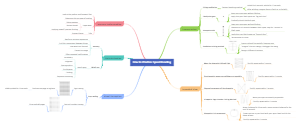
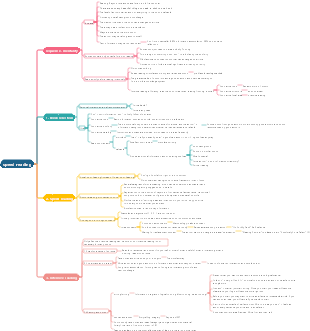
This book is the author's experience. Although the key word in the title is "speed reading", speed reading, understanding and memory are not separated. If we want to summarize the content of this book, perhaps the word "learning" is more accurate. Especially suitable for studying professional textbooks.
Edited at 2022-05-09 21:18:58This strategic SWOT analysis explores how Aeon can navigate the competitive online landscape, highlighting strengths, weaknesses, opportunities, and threats. Strengths include strong brand recognition (trusted Japanese heritage, quality), omnichannel capabilities (stores + online + mall integration), customer loyalty programs (Aeon Card, points, member pricing), and physical footprint (extensive store network for pickup/returns). Weaknesses encompass digital maturity gaps (e-commerce penetration, app functionality, personalization vs. Amazon, Alibaba), cost structure challenges (store-heavy, real estate, labor), and supply chain complexity (fresh food, frozen logistics for online). Opportunities include enhancing e-commerce competitiveness (faster delivery, wider assortment, lower minimum order), leveraging data-driven strategies (purchase history, personalized offers, inventory optimization), expanding omnichannel integration (buy online pick up in store, ship from store), and private label growth (Topvalu, localized brands). Threats involve online-first players (Amazon, Alibaba, Sea Limited) with lower costs, wider selection, faster delivery, market dynamics (changing consumer behavior post-COVID, discount competitors), and regulatory risks (data privacy, cross-border e-commerce rules). Aeon can strengthen market position by investing in digital capabilities, leveraging store assets for omnichannel, and using customer data for personalization, while addressing cost structure and online competition.

This analysis explores how Aeon effectively tailors offerings to meet the diverse needs of family-oriented consumers through a comprehensive Segmentation, Targeting, and Positioning (STP) framework. Demographic segmentation examines family life stages (young families with babies, school-aged children, teenagers, empty nesters), household sizes (small vs. large), income levels (mass, premium), and parent age bands (millennials, Gen X). This identifies distinct consumer groups with different spending patterns. Geographic segmentation highlights store catchment types (urban, suburban, rural), community characteristics (density, income, competition), and local preferences (fresh food, halal, Japanese products). Psychographic segmentation delves into family values (health, safety, education, convenience), lifestyle orientations (busy professionals, home-centered, eco-conscious). Behavioral segmentation focuses on shopping missions (daily grocery, weekly stock-up, seasonal shopping), price sensitivity (value seekers, premium), channel preferences (in-store, online, pickup). Needs-based segmentation reveals core family needs related to value (good-better-best pricing), budget considerations (affordability, promotions, member pricing), safety (food quality, product recall), convenience (one-stop shopping, parking, store hours). Targeting prioritizes young families with school-aged children, budget-conscious households, and convenience-seeking shoppers. Positioning emphasizes Aeon as a family-friendly, value-for-money, one-stop destination with Japanese quality and local relevance. These insights enhance family shopping experiences through tailored assortments (kids’ products, school supplies), promotions (family bundles, weekend events), and services (nursing rooms, kids’ play areas).
This Kream Sneaker Consumption Scene Analysis Template aims to visualize purchasing and consumption journeys of sneakers, identifying key demand drivers and obstacles. User behavior within Kream includes searching, bidding, buying, selling, authentication, and community engagement. External influences include brand drops (Nike, Adidas), social media (Instagram, TikTok), influencer hype, and cultural trends. Target categories: limited editions, collaborations, retro releases, performance sneakers, and general releases. Timeframes: launch day, first week, first month, long-term (seasonal, yearly). Regions: North America, Europe, Asia (Korea, China, Japan). User segments: Collectors: value rarity, condition, completeness (box, accessories). KPIs: collection size, spend, authentication rate. Resellers: value profit margin, volume, turnover. KPIs: sell-through rate, average profit, listing frequency. Sneakerheads: value hype, trends, community validation. KPIs: purchase frequency, social engagement, wishlist adds. Casual trend followers: value style, convenience, price. KPIs: conversion rate, average order value, repeat purchases. Gift purchasers: value ease, presentation, brand trust. KPIs: gift message usage, return rate. Consumption journey: Awareness: social media, email, push notifications. Search: browse, filter, search by brand, model, size. Purchase: bid, buy now, payment, shipping. Authentication: inspection, verification, certification. Resale: list, price, sell, transfer. Sharing: review, unboxing, social post, community discussion. Key performance indicators: conversion rate, sell-through rate, average order value, customer lifetime value, authentication pass rate, return rate, Net Promoter Score. This framework helps understand sneaker trading dynamics, user motivations, and touchpoints for engagement and satisfaction.
This strategic SWOT analysis explores how Aeon can navigate the competitive online landscape, highlighting strengths, weaknesses, opportunities, and threats. Strengths include strong brand recognition (trusted Japanese heritage, quality), omnichannel capabilities (stores + online + mall integration), customer loyalty programs (Aeon Card, points, member pricing), and physical footprint (extensive store network for pickup/returns). Weaknesses encompass digital maturity gaps (e-commerce penetration, app functionality, personalization vs. Amazon, Alibaba), cost structure challenges (store-heavy, real estate, labor), and supply chain complexity (fresh food, frozen logistics for online). Opportunities include enhancing e-commerce competitiveness (faster delivery, wider assortment, lower minimum order), leveraging data-driven strategies (purchase history, personalized offers, inventory optimization), expanding omnichannel integration (buy online pick up in store, ship from store), and private label growth (Topvalu, localized brands). Threats involve online-first players (Amazon, Alibaba, Sea Limited) with lower costs, wider selection, faster delivery, market dynamics (changing consumer behavior post-COVID, discount competitors), and regulatory risks (data privacy, cross-border e-commerce rules). Aeon can strengthen market position by investing in digital capabilities, leveraging store assets for omnichannel, and using customer data for personalization, while addressing cost structure and online competition.
This analysis explores how Aeon effectively tailors offerings to meet the diverse needs of family-oriented consumers through a comprehensive Segmentation, Targeting, and Positioning (STP) framework. Demographic segmentation examines family life stages (young families with babies, school-aged children, teenagers, empty nesters), household sizes (small vs. large), income levels (mass, premium), and parent age bands (millennials, Gen X). This identifies distinct consumer groups with different spending patterns. Geographic segmentation highlights store catchment types (urban, suburban, rural), community characteristics (density, income, competition), and local preferences (fresh food, halal, Japanese products). Psychographic segmentation delves into family values (health, safety, education, convenience), lifestyle orientations (busy professionals, home-centered, eco-conscious). Behavioral segmentation focuses on shopping missions (daily grocery, weekly stock-up, seasonal shopping), price sensitivity (value seekers, premium), channel preferences (in-store, online, pickup). Needs-based segmentation reveals core family needs related to value (good-better-best pricing), budget considerations (affordability, promotions, member pricing), safety (food quality, product recall), convenience (one-stop shopping, parking, store hours). Targeting prioritizes young families with school-aged children, budget-conscious households, and convenience-seeking shoppers. Positioning emphasizes Aeon as a family-friendly, value-for-money, one-stop destination with Japanese quality and local relevance. These insights enhance family shopping experiences through tailored assortments (kids’ products, school supplies), promotions (family bundles, weekend events), and services (nursing rooms, kids’ play areas).
This Kream Sneaker Consumption Scene Analysis Template aims to visualize purchasing and consumption journeys of sneakers, identifying key demand drivers and obstacles. User behavior within Kream includes searching, bidding, buying, selling, authentication, and community engagement. External influences include brand drops (Nike, Adidas), social media (Instagram, TikTok), influencer hype, and cultural trends. Target categories: limited editions, collaborations, retro releases, performance sneakers, and general releases. Timeframes: launch day, first week, first month, long-term (seasonal, yearly). Regions: North America, Europe, Asia (Korea, China, Japan). User segments: Collectors: value rarity, condition, completeness (box, accessories). KPIs: collection size, spend, authentication rate. Resellers: value profit margin, volume, turnover. KPIs: sell-through rate, average profit, listing frequency. Sneakerheads: value hype, trends, community validation. KPIs: purchase frequency, social engagement, wishlist adds. Casual trend followers: value style, convenience, price. KPIs: conversion rate, average order value, repeat purchases. Gift purchasers: value ease, presentation, brand trust. KPIs: gift message usage, return rate. Consumption journey: Awareness: social media, email, push notifications. Search: browse, filter, search by brand, model, size. Purchase: bid, buy now, payment, shipping. Authentication: inspection, verification, certification. Resale: list, price, sell, transfer. Sharing: review, unboxing, social post, community discussion. Key performance indicators: conversion rate, sell-through rate, average order value, customer lifetime value, authentication pass rate, return rate, Net Promoter Score. This framework helps understand sneaker trading dynamics, user motivations, and touchpoints for engagement and satisfaction.
Super fast reading
Christian Gruening
Introduction
The author was a German law student. He "didn't do his job properly" during college, and finally passed the German judicial examination with the fifth highest score in Germany. The passing rate for this exam is less than 50%, and students in related majors need to prepare 1 to 2 years in advance. This book is the author's experience. Although the key word in the title is "speed reading", speed reading, understanding and memory are not separated. If we want to summarize the content of this book, perhaps the word "learning" is more accurate. Especially suitable for studying professional textbooks. In addition, the author also elaborates on some insights on life, which are very pertinent and highly recommended.
illustrate
*
Author's suggestion
Optional
**
My own opinion
!
pay attention
×
mistake
√
correct
How the brain works
brainstem
No learning function
auxiliary instinctive reaction
facing threats
example
pressure
compete
brainstem dominant thinking
can't think
Reduced efficiency
Yuan Nao
Function
control emotions
Ensure physical and mental balance
Way of working
avoid pain
Urgent needs
have fun
Dispensable needs
Make predictions
Facing too much uncertain/unstable information
create pressure
Filter information
Similar information
Have brought negative feelings
intercept
brought positive feelings
release
No tendency
Reassured but unable to access long-term memory
Incomplete information reception
learning difficulties
Why do we resist learning?
past experience
Learning ≈ negative emotions
Yuan Nao
Block large amounts of information
Learning becomes more difficult
panic
Can't learn
solve
with a clear purpose
Divide into zeros
Sort out the structure
Contact old knowledge
How to avoid brain stress
with a clear purpose
Sort out the structure
Know the whole picture
Divide into zeros
Reduce strangeness
Contact old knowledge
Reduce strangeness
cerebral cortex
Advanced Features
speed of conscious processing of information
126 neural bits/second
Neurons
Learning is the process of making new connections
① Don’t know what you can’t do
② Knowing oneself cannot do it
③ Knowing oneself is already possible
④ Don’t know what you can do
Why is it difficult to venture into new fields?
The connection is based on an existing network
New knowledge has no roots
Solution
difficulty
jump over
read through
Look back
After the connection is established, the sheath must be protected
Connecting surfaces to generate myelin
Biological processes take a long time
long term memory formation
Manifested as a bottleneck period for learning
brain waves
α
easy
Conducive to learning
Adagio or adagio music from the Baroque period
Guiding the brain into alpha
β
nervous
θ
sleepy
δ
Deep sleeping
unconscious
facial features
Responsible for information input
!
Information processing is a function of the brain
Staring all the time won't do anything to help you understand
Eye
Dynamic sensitive
The natural working principle of the eyes is to find and track moving objects
Reading process
① Jump to the target
② Stop sight
③ Focus
④ Read
excitation function
roll your eyes to
upper left
recall images
upper right
imagine
Left - ear height
recalling sounds
Right - ear height
imagine sounds
lower left
Talking to oneself
Call up
lower right
touch
up
feel positive
down
feel negative
power
external
cause stress response
Adrenaline
Paralyzed dendrites
hinder information transfer
Neurotransmitters stop secreting
Decreased thinking ability and ability to accept new information
Subjective feelings deviate from objective facts
inner
lasting
from
Learning is rewarding
The brain produces pleasure
read
Word-for-word reading problems
Inefficient
Distracted
reason
brain processing speed
126 neural bits/second
Actual reading information intake speed
40 neural bits/second
More than 80 idle
free brain
Attracted to external stimuli
Automatically process other information in the background
Daydream
Attention is divided
If you force yourself to concentrate
The brain becomes bored due to insufficient information intake
Want sleep
The brain automatically uses idle space to process information
Attention is divided
Wandering eyes
miss/pass through
step
Preparation before reading
Macro control
object
sequence
Table of contents
learn
Industry positioning
Summary content
book structure
5 minutes to read
object
title
subtitle
picture
surface
Bold/italic keywords
learn
General content
value
Activate old knowledge networks
Review what is known
planning progress
When the human brain knows in advance that time is limited, it will automatically increase work efficiency in order to make better use of the limited time.
Thinking while reading
speed reading
line guide
reason
Eyes are naturally sensitive to dynamic objects
Can avoid sight wandering
Line breaks are easier
Auxiliary tools
finger
Expand your field of view
Take in every time your eyes focus
√
semantic unit
A phrase consisting of multiple words
Able to express full meaning
×
single word
Horizontal
Skip reading
2 to 3 focus points
portrait
S-shaped curve
Read multiple lines simultaneously
Brain reorganizes semantic units
Sorting out logical relationships
Eyes jump back
When reading, it is not necessary to read every piece of information in strict accordance with the order of expression of the author.
Capture the keywords of the previous sentence
Activate vision
Eyes subconsciously move to the left
Say silently
√
Key words
×
every word every sentence
think
How to do it
Avoid passive reading
Read with a purpose
combine new information with existing knowledge
Compare
connect
I am the author, how can I explain?
Did the author make any omissions?
Summarize while reading
Refining keywords
Sorting out logical relationships
When context is needed
Refined information
short
Fast recall retrieval
original
long
Difficulty recalling retrieval
Mind map of ideas in mind
*Make mind maps
For content that is difficult to understand
!
Faster is reading
time saved
×
Swallowing jujube, reading blindly
√
think deeply
understand content
notes
Purpose
More detailed processing of text
The deeper the memory
Integrate new information into existing knowledge networks
visual cards
Similar to mind map
mind Mapping
Application scenarios
When the author writes
① Summarize and sort out divergent thinking
Make visual cards
② Information sorting
③Creation: linear expression
readers read
① Reading
② Transform linear expression into divergent thinking
③Visual cards
Determine whether the author's logic is reasonable
macro analysis
Avoid confusion
Understand and absorb
form
central divergence
extending all around
tree shape
main content
center
Secondary content
edge
content
Key words
concentrate
connect
horizontal line
arrow
Logical relation words
eye-catching images
irritate eyeballs
Enhance memory
Advantage
clear logic
Highlight the priorities
Stimulate left and right brain collaboration
Production principles
Horizontal layout
Conditioned reflexes formed in childhood
Vertical paper
Word
Horizontal paper
painting
central subject heading
Color illustration*
Stimulate the image thinking of the right brain
1 keyword for each branch line
Use as many symbols, illustrations, and colors as possible
Neat handwriting
Check for completeness
Retell content
Answer questions asked before reading
Class Notes
Mentality management
flow effect
fully get involved
confidence
factors
challenge
Competent ability
big difference
Out of power
pressure
release stress
prevention
Avoid excessive demands
sports
long term exercise
Adrenaline is low and stable
rebalance
autosuggestion
progressive muscle relaxation
Breathe and relax
meditation
long term training
Adrenaline is low and stable
alpha wave
interest stress reduction method
do what you like
endorphins
Neutralize adrenaline
time management
Purpose
×
Plan your entire life minute by minute
deprivation of liberty
√
Arrange time for study and work
have more free time
spend time with family
enjoy life
clear goal
life goals
If you are 80 years old this year
birthday party
Your spouse/child/former boss/old colleague/old friend/neighbor
Raise a glass and say my heartfelt words to you
imagine this scene
what do you want to hear
System planning
stage
Long-term goals
5 years later
What kind of life do you want to live?
annual target
Goal for the week
Today's goal
short term goals
based on
Do not conflict
long term goals
Record your thoughts when setting a goal
Place the target in a conspicuous place
avoid procrastination
Set principles
specific
Quantifiable
Motivated
Reasonable
too high
Losing motivation
too low
lose interest
There is a time limit
time management
time thief
Record a day's actions
content
thing
time period
reason
Ask a question
Who stole the time?
Meet short-term goals/long-term goals?
How to adjust?
Make a daily plan
four quadrant rule
list tasks
Important & Urgent
immediately
personally
Important & not urgent
long term planning
Determine processing time limit
Not important & urgent
reject
entrust others
Not important & not urgent
ignore
estimate time
reserve buffer time
40%
puzzle day
Arrange tasks according to efficiency
Make an exam preparation plan
Divide knowledge points
Assigned to daily tasks
implement
Always keep your goals in mind
Check completion every day
Reflection
Are priorities followed?
Whether to focus on trivial matters
Was it interrupted/disturbed?
learn lessons
improvement plan
balanced life
three pillars
work and study
family and relationships
Physical health and self-worth realization
Pay attention when making plans
play life role
List the 7 most important roles
≥2 per pillar
Delete junk characters
imposed by others
Waste of time and energy
Unable to obtain happiness
Allocate time by role
No less than 1 hour per role per week
How to deal with interruptions from the outside world
interrupt
Take a moment to quickly summarize what you are currently doing
back to work
Review previous summary
method
method
speed reading
Main points
Practice makes perfect
form a habit
! Daily reading should still focus on comprehension, do not include practice requirements
321 method
tool
Prepare a training book
plain text
dull
Finger/pen etc.
guide sight
step
① Select unread chapters
② Read for 3 minutes
normal speed
Finger line
③ Reread the above content and finish it in 2 minutes
Speed up your finger drawing speed
Repeat until successful
Can be ignored to understand
But make sure to read
④ Re-read, finish reading in 1 minute
principle
freeway effect
After driving fast for a period of time, our brains and senses will develop inertia, which invisibly increases the benchmark for subjective judgments of speed.
Let your brain adapt to the new reading speed
!
Practice points
√
accelerate
×
Deliberately read multiple words
understand
triple jump method
step
① Content underline x3
② Skip text
Consciously let your eyes only stay on these three vertical lines
③ Advanced marking x2
!
No aids are used
whole line reading method
tool
report
card
step
① The card quickly reveals a row
② Cover it immediately
③ Close your eyes and think back
Repeat until content is reproduced clearly
321 Visual Cards
② Read for 3 minutes
Make visual cards
Take no more than 2 minutes
Ask a question
Which branches lack keywords
What content is insufficiently understood?
③Reread, complete in 2 minutes
Supplementary visual cards
④ Reread and complete in 1 minute
Supplementary visual cards
321 S-Curve
finger
Draw S line
Reading ability ≥ 3 lines of text
speed increase
The S line becomes looser as you draw it
Make visual cards
321 Visualization of key content
Read while visualizing key sentences in your mind
imagine specific images
Expand your field of view
Consciously read all the words within your field of vision
finger guide
Each line starts with the 2/3/4... words
Each line ends with the last 2/3/4... words
Five Senses
waterfall exercise
The context in which training takes place
When you have difficulty concentrating
When the body is stressed
time
two minutes
step
① Imagine yourself on vacation on a tropical island
relaxed state of mind
② You wear a bright bikini and soak in the cool lake water
It's easier to imagine yourself
③ You swim towards the small waterfall by the lake
④ Activate the senses
Senses
Vision
environment
water
plant
hearing
Sound of water
animal sounds
Sound of wind
touch
Main points
Consciously stay on the sensory channel to be trained
Block other senses
The subjective experience must be rich enough
Single sensory training first
improved
Then train multiple at the same time
Training anytime, anywhere
Vision
① Observe materials
Street advertising, etc.
a minute or two
memory image
non-text
② Close your eyes and recall details
③ Compare with eyes open
④ Supplement with eyes closed
cycle
The actual image is exactly the same as imagined
memory
memory folder method
tool
12 spaced folders
Monday 1
Monday 2
…
weekend 1
weekend 2
4 spaced folders*
Week 1
Week 2
Week 3
Week 3
step
① Monday: Study
Make visual cards
② Monday: Review
Review after studying
Or review them together after a certain period of time
③ After review, put the visual card into [Tuesday 1]
1 means review every other day
④ Tuesday: Review [Tuesday 1]
⑤ After review, put the visual card into [Tuesday 2]
2 means review every other week
⑥ Next Tuesday: Review [Tuesday 2]
⑥ After review, insert [Week 1]*
If you are reviewing for the 4th time, you need to set aside 1 day per week to review the corresponding content of the previous month.
⑦ Next month: Review [Week 1]*
Name mnemonics
Name
appearance
Personal characteristics
exaggerated features
Other features
tone
body language
age
temperament
combine
make up a story
digital image mnemonics
number
Lenovo
image
use
Lenovo
digital image content image
Main points
imagine concrete
Use all five senses
trace memory method
memory palace
Content and track connection
example
route home
Residential
speed reading training plan
day1
Adaptation aids
day2
Expand your field of view
3~7
321
the second week
alternately
321 Visual Cards
321 S-Curve
The third week
321 Visualization of key content
!
1 minute a day
Measuring speed
Record
memory
process
sensory memory
20 seconds
Filter information
More information on intake goals
Connect to existing knowledge networks
electrical pulse
short term memory
few minutes
RNA matrix protein
Limited capacity
primacy effect
Answer immediately after reading
The content at the beginning can be remembered clearly
recency effect
Take a break after reading to answer
The information at the end is remembered clearly
Memory and understanding are out of sync
Memory is completed while resting
Manage memory capacity
proper rest
brain processes information
Free up capacity
Continuous learning
Full capacity
New knowledge does not enter the brain
understand
Can be carried out for a long time
memory
need to have a rest
40 5 (minutes)
Completely relax
Don’t feed new information into your brain
before break
1 minute
review content
Sort out the structure
after break
memory structure
long term memory
How to get information into long-term memory
Produce permanent protein
strong stimulation
Review again and again
**Nutrition should also keep up.
How to do
concentrate
Positive attitude
relaxed state
plenty of motivation
Use your five senses
dominant sense
visual
auditory type
tactile
Exercise weaker senses achieve sensory balance
Why we should try to mobilize other senses as much as possible
Information about sensory intake learning
More complete, centralized, and highly relevant information
beneficial to
divergent thinking
Connect to existing knowledge networks
Sensory intake of disturbing information
Information is scattered and irrelevant
Distracted
Lenovo
Connect to existing knowledge networks
New information needs a place to stay
Content transformed into stories
Specific details
The plot is absurd
Keywords need to be mapped
example
demonstration
Review in time
Spend 1/4 of your day reviewing
stage
Review at that time
*Review before going to bed
sleeping
The subconscious mind is still processing information
after one day
a week later
one month later
Review content
visual cards
method practice
speed reading
semantic unit
3 focus
search for the keyword
S-curve restructuring
Visualization of key content
read
Preparation before reading
speed
mind Mapping
memory
review
notes
Thought notes
Class Notes
Soothe the brain
set goals
Sort out the structure
Divide into zeros
Contact old knowledge
Build positive feedback over the long term
Review
time management
time thief
Processing was interrupted
goal setting
four quadrants
life role
Goals at each stage
Five senses training
Fall
Visually restore details
memory
Document Law
45 minutes|5 minutes to completely empty
Lenovo story
Memorize names
pressure relief
Adagio or adagio music from the Baroque period
long term exercise
meditation