 Wondershare EdrawMind
MindMap Gallery position
- 33
position
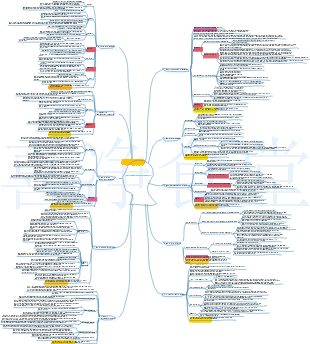
Positioning is the masterpiece of Messrs. Trout and Rees and is one of the most basic theories in marketing. This book mainly explains the emergence of the concept of "positioning", analyzes the reasons why "satisfying needs" cannot win users, and gives the positioning method on how to enter the user's mind to win the choice.
Edited at 2024-01-13 01:44:14
- Valentine's Day marketing campaign
This Valentine's Day brand marketing handbook provides businesses with five practical models, covering everything from creating offline experiences to driving online engagement. Whether you're a shopping mall, restaurant, or online brand, you'll find a suitable strategy: each model includes clear objectives and industry-specific guidelines, helping brands transform traffic into real sales and lasting emotional connections during this romantic season.
- 30 Creative Ideas for Valentine's Day
This Valentine's Day map illustrates love through 30 romantic possibilities, from the vintage charm of "handwritten love letters" to the urban landscape of "rooftop sunsets," from the tactile experience of a "pottery workshop" to the leisurely moments of "wine tasting at a vineyard"—offering a unique sense of occasion for every couple. Whether it's cozy, experiential, or luxurious, love always finds the most fitting expression. May you all find the perfect atmosphere for your love story.
- Milano Cortina 2026 Ice Hockey Schedule
The ice hockey schedule for the Milano Cortina 2026 Winter Olympics, featuring preliminary rounds, quarterfinals, and medal matches for both men's and women's tournaments from February 5–22. All game times are listed in Eastern Standard Time (EST).
position
- Valentine's Day marketing campaign
This Valentine's Day brand marketing handbook provides businesses with five practical models, covering everything from creating offline experiences to driving online engagement. Whether you're a shopping mall, restaurant, or online brand, you'll find a suitable strategy: each model includes clear objectives and industry-specific guidelines, helping brands transform traffic into real sales and lasting emotional connections during this romantic season.
- 30 Creative Ideas for Valentine's Day
This Valentine's Day map illustrates love through 30 romantic possibilities, from the vintage charm of "handwritten love letters" to the urban landscape of "rooftop sunsets," from the tactile experience of a "pottery workshop" to the leisurely moments of "wine tasting at a vineyard"—offering a unique sense of occasion for every couple. Whether it's cozy, experiential, or luxurious, love always finds the most fitting expression. May you all find the perfect atmosphere for your love story.
- Milano Cortina 2026 Ice Hockey Schedule
The ice hockey schedule for the Milano Cortina 2026 Winter Olympics, featuring preliminary rounds, quarterfinals, and medal matches for both men's and women's tournaments from February 5–22. All game times are listed in Eastern Standard Time (EST).
- Recommended to you
- Outline
ley del servicio profesional de carrera en la administracion publica federal
- 7
Reading Summary of Marketing Management by Philip Kotler - Chapter 10 Brand Positioning
- 64
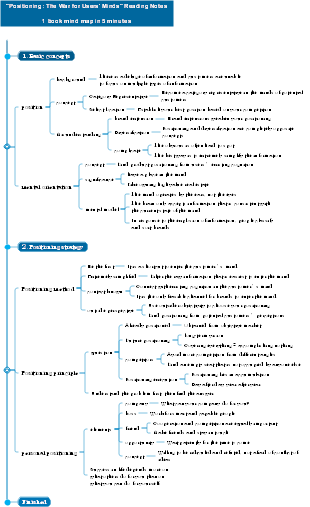



"position"
1. context
main characters
figure Al Reese Co-founder of positioning theory, the father of "positioning theory", known as the founder of modern marketing theory, and currently the chairman of Reese Partners (Global) Marketing Company. In 2007, he was named one of the "Top Ten Business Masters in the World" by the American "Advertising Age" magazine. His major works include: "Positioning", "Business War", "Marketing Revolution", "22 Business Rules", "Focus", "22 Laws of Branding", "The Origin of Brands", "War in the Boardroom" and other marketing masterpieces. Jack Trout Co-founder of positioning theory, highly regarded by Morgan Stanley as a marketing strategist higher than Michael Porter, and president of Trout Consulting in the United States. In addition to co-authoring positioning books such as "Positioning", "Business Warfare", "Marketing Revolution" and "22 Business Rules" with Mr. Rees, thus creating positioning theory, he also authored books such as "New Positioning" and "What is Strategy". Elevate the positioning to the corporate strategic level - the strategic positioning level.
Development History
In 1963, Mr. Al Reese established Reese Company in New York, USA. In 1968, Mr. Jack Trout joined Rees Company. In 1969, Jack Trout first proposed the concept of "Positioning" to express and define Reese's marketing philosophy "in the simplest and clearest way". In the same year, the first signed article of positioning theory, "Positioning - The Way to Compete in the Era of Homogenization" [2], was officially published in the magazine "Industrial Marketing". In 1970, Philip Kotler first introduced Positioning into marketing as the most important P before the 4Ps to lead the direction of corporate marketing activities. In 1971, David Ogilvy published an advertisement in the New York Times and listed 38 ways to create "salesable advertising." At the top of the list is what he calls "the most important decision" - "The effectiveness of an advertising campaign depends more on the positioning of the product than how the ad is written." In 1972, "Advertising Age" published a series of articles by Al Ries and Jack Trout, "The Coming of the Positioning Era." It was this series of articles and subsequent single volumes that created the famous "positioning theory" in the history of marketing. In 1980, as business competition became increasingly intense, Michael Porter introduced positioning into corporate strategy as the core of the strategy and created competitive strategy. In 1994, Al Reese and Jack Trout separated, and Al Reese and his daughter formed Reese Partners; Jack Trout formed Trout Partners. After the two broke up, Mr. Al Reese wrote "Public Relations First, Advertising Second", "Focus", "The Origin of Brands", etc., and Mr. Jack Trout wrote "Difference" and "What is Strategy" , "Repositioning" and so on. In 2001, "Positioning Theory" defeated Reeves' "USP Theory", Ogilvy's "Brand Image Theory", Kotler's "Marketing Management Theory", and Michael Porter's "Competitive Value Chain Theory" and was adopted by the United States. The Marketing Institute selected it as the concept that has had the greatest impact on American marketing in history. In 2002, Trout China Company was established. In 2004, the Wong Lo Kat case article "Five Positioning Points to Join the Billion-Yuan Brand Club" by Trout China Company was published in the Chinese version of Harvard Business Review. In 2007, Al Ries was selected as one of the "Top Ten World's Top Business Strategy Masters" by authoritative American media, alongside Peter Drucker and Jack Welch. In the same year, Reese Partners China was established. In 2008, Mr. Reese opened a column in China's authoritative marketing and management magazines "Sales and Market" and "Chinese and Foreign Management" and continued to publish a series of articles, which greatly promoted the spread of positioning in China. In 2013, the "Positioning and Discovering Brand Value" forum hosted by Trout Henan Education Center opened in Zhengzhou on September 28. [3]
The formula summarized by the Yi Marketing Method public account on 23 books (it can only be used as a reference and is probably incorrect): Positioning is the mind occupation based on brand communication = competition orientation, category differentiation, value endorsement, operational guidance, marketing strategy
2. The nature of positioning
The customer's mind will screen and reject most information in order to defend against massive dissemination. Normally, the mind only accepts information that is consistent with its previous knowledge and experience.
Once the mind has formed a cognition, it is almost impossible to change it. People generally can accept being told something they know nothing about, but they cannot accept being told that they are wrong. Changing minds is the road to advertising disaster.
extremely simplified mind
In an over-communicated society, people's only defense is to oversimplify their minds
The average person's mind is already like a dripping sponge. Only by squeezing out existing information can we absorb more information.
The media itself may not be the message, but it greatly affects the message. The media is more like a filter than a delivery system.
Extremely simplified information
The best way to deal with an over-communicated society is to radically simplify information. You must turn the information into a knife tip so that it can cut into people's minds. You have to cut out vague words and simplify your message, and if you want to leave a lasting impression, simplify it even more.
What hinders the effectiveness of information is the amount of information disseminated. Only when you understand the nature of the problem can you know how to solve it. Since information that reaches customers' minds is so rare, you should ignore the source of the information. Instead focus on the receiver. You should focus on potential customers’ perceptions, not your product.
It may be ironic to take the wrong way of communication and the right way of ending as the premise of communication. But if you want your message to be received by others. You really have no choice.
The facts don't matter, what matters is the perception in people's minds. The essence of positional thinking is to accept perceptions as reality and then reconstruct those perceptions. You are in the mind of the customer. Establish the positioning you want. We later called this process outside-in thinking.
3. The mind is bombarded with information
Communication channels blocked
In many cases, no communication will be more beneficial to you, at least until you make long-term positioning plans, because once the first impression is established, you will have no chance to change it.
Public relations, as a marketing tool, is increasingly used.
When it comes to advertising, self-esteem and pride can lead to destruction, and arrogance can lead to ruin.
4. into the mind
Positioning is a systematic method of finding mental vacancies. It is built on the idea that communication requires the right timing and context.
Practices that easily enter the mind
Being first is the shortcut to the mind
Want to leave an indelible message in the mind. What you need first is not information at all, but a pure mind, a mind that has not been occupied by other brands.
The most important thing is acceptability. Both parties must meet in a situation where they can accept each other. There is still space in the minds of both of them, that is to say, neither of them has anyone else they love deeply.
Reviewing the history of modern communication
product era
In the 1950s, advertisers had to first try to find product features or related benefits that could impress the market, and then use a large number of advertisements to drive them into the mind.
image age
In the 1960s, advertisers discovered that a company's reputation or image was more important than any single product feature.
Positioning era
In the 1970s, advertisers quickly adopted positioning tactics, which was to find a position in the minds of potential customers that had not been occupied by other brands.
Amerigo's discovery
Amerigo, Vespucci. Although he arrived in America five years later than Columbus, he did two things right.
First, he positioned the new world he discovered as an independent continent, completely different from the Asian continent. This caused a revolution in geography at the time.
Second, he wrote a lot and publicized his findings and theories. Of particular importance are the five letters he wrote during his third voyage, one of which mentioned the New World. In 25 years, it has been translated into 40 languages.
As a result, Europeans thought it was Brother Amelie. Vespucci discovered the New World of America and named it after him.
Amerigo told me. Don't let the second place do what the first place should do, otherwise the value of the first place will be lost.
Now for many people or products, one path to success is to look at what your competitors are doing, and then remove the poetry or creativity in their advertising that blocks the message from reaching the mind, and replace it with a refined and simplified message. , used in your own advertising slogans, you can penetrate into the minds of potential customers.
5. Little stairs in the mind
The mind is like a computer's memory stick. Each unit of information has a space set up for storage. In operation, the mind is much like a computer.
One important difference, however, is that a computer accepts everything you feed it, whereas a mind does not. In fact, quite the opposite.
The mind has a defense mechanism. He will reject information that cannot be calculated, accept new information that is consistent with the current state of his mind, and filter out all other information.
See what you want to see
In fact, you see what you want to see. What you taste is what you want to taste. , otherwise there would be no need for advertising at all.
The primary goal of any advertising is to raise expectations, that is, to create the illusion that the product or service will deliver the miracles they expect, immediately.
Don't play word games. Could be self-defeating. Because customers are accustomed to accepting simple information rather than complex guessing questions.
Ventricular capacity is limited
The human mind not only rejects information that is inconsistent with previous knowledge and experience, but also does not have enough knowledge and experience to process this information.
This is very important. What a person doesn't know, he doesn't know that he doesn't know. It takes time to learn a new thing alone. If you just sell products to customers, which customer do you think will spend the time and cost to learn your products?
People generally remember positioning concepts more easily than names. A brain-damaged man might be able to identify and call his eldest daughter his eldest daughter. Although she probably couldn't recall his eldest daughter's name.
This sorting of character brands is not only convenient for management, but also absolutely necessary to cope with the complexity of life.
product ladder
For every type of product, there is almost such a ladder in the minds of potential customers. The market leader is on the top level, the second place is only on the second level, and the third place is on the third level. This mental ladder varies, with level three being the most common. Seven levels may be the most "seven laws".
If advertisers want to launch a new category, they must bring up a new ladder in their minds. This is also difficult, especially when this new category is not positioned against the old category. The mind has no room for new and different things unless it is related to the old.
So if you have a brand new product, telling potential customers what the product is not is often more useful than telling them what it is.
targeted positioning
Your competitor's position is as important as your own, sometimes even more important.
Mengniu has successfully positioned itself as the second largest dairy company in China, directly targeting Yili. was successful.
Non-coke positioning
By connecting the product with the existing cognition in the minds of potential customers, the non-Cola positioning is that 7-up becomes an alternative to cola drinks. Imagine the ladder of the cola category, with Coca-Cola on the first level, Pepsi-Cola on the second level, and Pepsi-Cola on the third level. , Qixi.
To find a unique positioning, you must abandon traditional logical thinking. Traditional logical thinking believes that you have to find the positioning concept from yourself or your product. wrong!
You have to look inside the mind of your potential customer. You can't find a non-Cola positioning in 7-Up's beverage cans. You can only find it in the minds of consumers.
Forget about the traps created by “success”
The most important thing for successful positioning is consistency, which requires decades of persistence. When you become stronger and you say you want to be number one, that is just advertising your desire.
If you want to succeed, you cannot ignore the positioning of your competitors, nor can you deviate from your own positioning. You must remember an immortal saying - seek truth from facts.
Through non-Cola promotion, 7-Up has been successfully positioned as an alternative drink to Coca-Cola and Pepsi-Cola; but its current advertisement is that the United States is switching to drinking 7-Up. This has not happened in the United States, and 7-Up is just promoting its own wishes.
6. This road is blocked
The fate of many people, politicians and products is at a dead end.
The spirit of “I can do it” never dies
A company launches a great product, has a great sales force, and launches a great advertising campaign, but if it happens to be in a dead-end position, it will still fail miserably, and no amount of money will make a difference. .
confirmed prophecy
Any company that launches a head-on challenge to IBM's position is unlikely to win. The key word in this sentence is of course "positive".
Positioning has nothing to do with whether you mention your competitors or not. He required that the strengths and weaknesses of both competitors must be considered before launching marketing campaigns.
Jack Welch of General Electric Company almost completely rejected the I-can-do spirit, and he was either one of the best or eliminated.
How to compete with IBM
How to compete with industry leaders? It is foolish to fight fire with fire. You can put out fire with water.
Followers are easily misled into thinking that the answer is to try harder. However, for a company that is in an outdoor position, no matter how hard it tries, it will not help.
It’s not a question of what, but when to put in the extra effort, and even if it’s going to be effective, it should be built on product leadership.
Product leadership is precious, with it anything is possible, without it things would be really hard. As drinkers say, only the lead dog can appreciate the scenery along the way.
leader position
How to become a leader? It's actually very simple, just strike first and give it your all.
Establish leadership position
Practice has proved that the long-term market share occupied by the first brand to enter people's minds is usually twice that of the second place and four times that of the third place, and this proportional relationship will not change easily.
Many marketing experts overlook the huge advantage of being first to mind, often crediting companies like Kodak, IBM, and Coca-Cola with marketing wisdom.
Leaders fail too
What makes a leader is, of course, many followers. A leader should not drive away all competitors, but need them to jointly create a category.
Leadership is the best differentiation and the guarantee of brand success.
Almost all substantive advantages will be attributed to the leader. Unless there is a strong reason against it, consumers will still choose the same brand they chose the last time they shop next time.
Larger, more successful companies that are able to prioritize top college graduates actually tend to attract more and better employees.
unstable equality
If two brands have equal status, one will gradually gain the upper hand and dominate the market for a long time to come.
Obviously, when the pattern is unclear and neither party has obvious advantages, extra efforts should be made. Sales leadership in a single year often lasts for decades.
A jet requires 110% of the rated power to get the wheels off the ground, but when it reaches an altitude of nearly 10,000 meters, the pilot can adjust the mileage to 70% of the rated power. The aircraft can fly at a speed of 965 kilometers per hour.
Strategies to remain a leader
A leader can do whatever he wants, and in the short term, a leader is almost indestructible. The momentum of leading alone can sustain him. There is an old saying in the wrestling world that you cannot lose if you suppress your opponent.
The leader's advice should be to keep going until the government says stop.
what not to do
Once a company has established its number one position, there is no need to shout through advertising that we are number one.
Strengthening the category has a much better value in the minds of customers.
The strategy of maintaining a leadership position and the strategy of not claiming to be a leader are combined and used comprehensively.
Stab someone where it hurts
The key to establishing yourself as a leader is to get in the head first
The key to maintaining leadership is to strengthen the concept of originality and establish standards so that competing brands can be judged by this standard.
When Tesla makes its technology public, it means announcing to the world that Tesla is the inventor of electric cars, even though many people already think so.
Comprehensive interception
Leaders should fully intercept all possibilities of success. In other words, leaders need to guard against arrogance and impetuosity. Once they discover a potential new product on the market, they should follow up immediately. However, by the time leaders wake up, it is often too late. Night.
The essence of interception is to protect yourself from accidents.
Strength from products
This is a typical mistake made by leaders, who mistakenly believe that the strength of the product comes from the strength of the company.
On the contrary, the strength of a company comes from the strength of its products, that is, the positioning it occupies in the minds of potential customers.
respond quickly
When a competitor launches a brand-new concept, the usual reaction of those conceited American professional managers is, wait and see. However, the key to effective interception operations is timing. You must respond actively and quickly to talk about new products. Snipe your opponents before they take root in the minds of potential customers
Marketing warfare is very similar to interception in a sailboat race. Never let your opponent escape your blockage and enter open water, because you can't predict the future and you have no idea which way the wind is blowing. As long as the opponent's actions are intercepted, the leader will always be ahead, no matter which way the wind blows.
Use multiple brands to intercept opponents
Multi-brand strategy is actually a single positioning strategy that remains unchanged in response to changes. . A brand represents a positioning. Use a brand to defeat the opponents of this positioning. This is the right approach, rather than swinging your brand around and challenging multiple rivals.
Intercept opponents with broader names
Pure interception operations often find it difficult to gain support within the company, and management often views new products or services as competition rather than opportunities.
Sometimes a name change can lead to a smooth transition to a broader name, which can lead to a shift in thinking within the company.
From Harloyd to, Harloyd-Xerox, and then to Xerox, this is the general formula.
Benefits of Leadership
The rich get richer, the poor get poorer
This absolute leading advantage will still promote the development of enterprises for many years to come. At the same time, it is worth noting that what makes an enterprise strong is not its size, but its mental status, which determines the size of its market share.
The ultimate goal of positioning should be to establish leadership in a category. Once leadership is achieved, the company can enjoy its success for many years to come.
It's hard to be number one, but it's much easier to stay number one.
7. Follower positioning
Only in one situation will followers' following behavior occasionally succeed, and that is when the leader's actions have not yet established a position.
Dangers of following the trend
The second-place company believes that the key to success lies in "people are better than others." This is an extremely wrong idea.
It's not enough for a product to be better than its competitors, companies must take advantage of uncertain times and launch an offensive.
Before the leader has had time to establish a leadership position, conduct larger advertising and promotions, and give the product a better name.
William Benton put it this way: “I look for weak links in the business structure of large companies.”
Find an opening
To find vacancies, companies must have the ability to think in reverse and do the opposite. If everyone is in the network, then look west to see if they can find vacancies.
Size space
The Volkswagen Beetle has successfully found its niche. At that time, Americans were building large, long cars with lower chassis. The Beetle was positioned as a shorter and smaller car.
High priced space
The secret to a successful high-price strategy
First you must be the first brand to establish a high price positioning
Must have an effective brand story
You must choose a high-priced category that is acceptable to customers, otherwise high prices will only scare away potential customers.
High price positioning should be established in advertising, not in stores. If positioning is done well, customers will not be surprised by prices while in the store.
Advertisements do not necessarily need to state specific prices. What should really be done is to clearly position your brand in a certain segment.
It is a good choice for mature categories such as cars, watches, and televisions, especially those products where customers are unlikely to be satisfied with existing repair services.
Low price vacancy
A low-price strategy is also more profitable than a high-price strategy.
For new products such as fax machines and video recorders, low-price slots are often a good choice.
Customers who buy such products always try to try something new. If it doesn't work, I won't lose much money.
If you combine the three price strategies of high, medium and low, generally speaking, you have a powerful marketing mix strategy.
Other valid slots
When positioning a product, there is no better strategy than being the first to enter the mind.
factory vacancy trap
When looking for a niche, a common mistake is to stand on your own product line and fill the factory product slot instead of the mental slot.
Technology trap
If there is no space in people's minds, even great technological achievements developed in laboratories will not be successfully positioned.
Don’t play word games with potential customers. Advertising is not about debate, but about tempting consumers.
Potential customers won't sit there quietly waiting for you to finish explaining the nuances. As a politician once said, if it looks like a sheep and walks like a duck, I dare say it is a duck.
A trap that satisfies everyone's needs
The competition is so fierce that it is impossible to succeed without making enemies or trying to satisfy everyone's needs.
To win in today's competitive environment, you have to go out and make friends and carve out a niche market, even if you lose other markets.
Instead of asking ourselves who we want to attract, we should ask ourselves who shouldn’t use our brand. If we don’t make trade-offs, we have no chance of winning.
8. Reposition competitors
Create your own slot
Given the glut of products in every category, how can companies use advertising to get into the minds of consumers? The most basic business strategy is to reposition competitors.
In order to move a new concept or product into the mind, one must first clear the mind of the original related concepts or products.
Once the old concepts are overturned, the promotion of new concepts often becomes extremely simple. In fact, people often actively look for new concepts to fill the void.
In addition, there is no need to be afraid of conflict. The key to repositioning is to shake the existing conceptual positioning of products or people.
Conflict can also make people famous overnight.
People like to see bubbles burst.
To make a repositioning strategy effective. You must reveal the weaknesses of your competitors’ products. You change a potential customer's perception of your competitor's product, rather than just saying how good your own product is.
Repositioning American Vodka
There is an advertisement that says that most American vodka appears to be produced in Russia, but in fact it is produced in the United States. They list the origin of a certain brand. This proves that these vodkas are not authentic vodkas. The ad goes on to say that the Red Card, on the other hand, is truly made in Russia.
Repositioning Pringles
The ingredients of smart potato chips are potatoes, vegetable oil and salt! Pringles are made from dehydrated potatoes. Monoglycerides and diglycerides and butyl anisole?
This makes Pringles feel like cardboard to customers.
In some little corner of your mind, there’s a loser’s box written on it, and once your product is in there, it’s game over. It’s better to go back to square one and start over with new products.
Is repurposing ethical?
The traditional advertising method is to ignore competitors and describe one's own characteristics as if they were these characteristics. If the competitors only mention the competitors as if they have not been mentioned before, it will be considered not only vulgar taste, but also poor strategy.
In the era of positioning. These laws are broken. To establish your positioning, not only must you constantly mention your competitors by name, but you must also throw out most of the old advertising rules.
For many categories of potential customers, they have long understood the benefits of your products. If you want to climb the ladder of their minds, you must connect the existing brands in the core of your brand.
Education and nobility may be admirable qualities, but not in advertising campaigns.
When repositioning and promoting competitors, be fair, which means you should treat competitors in an ethical manner.
The media is like a gossip, living off bad news, not good news.
This may not be the society you expected, but it is the reality. If you want to succeed in this over-communicated society, you have to follow the established rules of the game, not your own set.
Don't be discouraged. In the long run, a little disparagement of your competitors will be more meaningful than a lot of self-promotion in the past. Honest and fair repositioning can prevent competitors from neglecting you.
9. The power of a name
The name is like a hook. Use it to hang the brand on the product ladder in the minds of potential customers. In the era of positioning, the only most important marketing secret you can do is to name your product.
which names are good
Don’t take this as a lesson. What worked in the past may not work now or in the future.
Look for a name that starts the positioning process and tells potential customers what the product's main profit points are.
The name should not push the boundaries, that is to say, the name, if it is too close to the product itself, will become a generic name that can refer to all products in the same category, rather than the trademark name of a specific brand.
Choosing a name that is loud, close to universal, and descriptive can deter competitors from following suit and entering your territory. A good name is the best guarantee for long-term success.
What names are bad
Names also become obsolete, leaving room for wary competitors.
Smart companies don't waste money defending the past, but take advantage of the opportunities brought by change and launch new brands at the right time.
Since product differences in many categories are negligible, a better name can mean millions of dollars in difference in sales.
When to use names without meaning
For many people, one of the difficulties in learning positional thinking is not understanding the importance of timing.
Only when you are a brand new product and the first to enter their minds, and the majority of consumers definitely need you, can you choose a name without any meaning.
Negative names can also become positive names
Soy butter is still a very good positioning concept. Margarine has always been regarded as fake butter. Once the mind is formed, it is difficult to change the perception. A better strategy to eliminate the negative effects is to call it another name, soy butter, room temperature butter, except that it is derived from soybeans, not milk.
Reveal the original appearance of the product
The first step in counteracting negative customer reactions is to reveal the truth about the product and intentionally turn the tables by using a name with negative connotations, such as soy butter.
This way, a long-term communication program can be developed to promote the advantages of soy butter over cow's milk butter. The point of doing this is to take pride in the origin of the product.
When naming people or products, you should not let your competitors take over. You need to use the words to describe your own products, such as the word "sugar" in the case of margarine or the word "sugar" in the case of corn syrup.
Find a way to get on the same starting line. In addition, don't say that your product is better, but show that your product is different.
A better strategy is to invert the meaning of the name, that is, use the same words to express opposite meanings in order to reposition the original concept.
terrible airline name
Eastern Airlines
A bad name will never become a good name no matter how many years it is used. The name is the first point of contact between information and the mind. The effectiveness of information does not depend on the aesthetic quality of the name, but on whether the name is good or bad. Suitable or not.
China Eastern Airlines is like flying to the east. You can only see the name of a local airline that you want to see, which cannot carry the good name of one of the human beings. If you can choose potential customers, it is more inclined to be national. Rather than a local airline.
akron twins
It tells the story of Goodrich and Goodyear. Although the former is more advanced and powerful than the latter, consumers will be more inclined to Goodyear.
Gutrich invents a technology, Fengchitong will perfect it, and Goodyear will get the greatest sales because of this technology.
toledo twins
There are also three similar names appearing here, which are almost the same as the Goodyear version.
What to do if there's something wrong with your name, change it.
A name that goes too far
Names can sometimes go too far, be too graphic, or be too suggestive, especially for products that are consumed in public.
When choosing a name for a low-calorie and low-price product, be careful to hint at its benefits but also be cautious. If it is too explicit, it will scare away potential customers.
For example, for example, a slimming tea, or a product with a trademark of three yuan or two yuan, you will feel that these things are too iconic, which will make people lose face, leading to them leaving the product.
10. Nameless Trap
Customers refer to companies by their pronunciation, but companies see themselves in a completely different way. Businesses care about how it looks and just make the name look good, but ignore how the name sounds, so they run into a lot of trouble.
visual abbreviation
Business people fall into the same trap. The first problem they encounter is the name. Do not use abbreviations at the beginning, middle or end of your name. Only use initials after you are famous.
Which companies will grow faster? Or use the full name of the company.
There is no shortcut to success
Many companies use abbreviations. They fail to think clearly about how to position themselves in people's minds, and suffer the consequences of blindly following fans of abbreviated names.
If your name is already very famous, but it is an abbreviation and all your customers in this area know it, then do the next generation need to let them know the meaning of this name again? This is very time-consuming, laborious and expensive.
Positioning a lifelong career is a long-term process. Wise decisions made now may not have results until many years later. You need to be careful when choosing a name.
The mind works by the ears
The main reason why companies make common mistakes in choosing names is that managers live in a sea of paper every day, including letters, memos, and reports.
If the message is designed for broadcast first, it will sound better in print.
The correct way is to read it in order first and then print it.
Names become obsolete
Nothing is permanent in the world. Times are changing, products will become obsolete, markets will rise and fall, corporate mergers are common, and companies must change their names when the time comes.
Confusing cause and effect
The correct causal relationship is that after a certain company became famous, it changed its name into an abbreviation.
11. free rider trap
Corporate grouping
A typical business life cycle begins with an entrepreneur and a business concept. Once the business succeeds, in order to avoid the impact of the entrepreneur's death and taxation, the business will eventually become part of a certain group company.
divide and conquer
Procter & Gamble's multi-brand strategy has this effect, with one brand occupying a position.
For new products to be successful, they need to establish a new product ladder in their minds. A new ladder should have a new name.
seesaw rule
One name cannot represent two distinct products; if one goes up, the other will go down.
If someone wants to seize your position, it can be said to be very bad. If you voluntarily give up your position, this is simply a tragedy.
Anonymity is a resource
What is the value of anonymity? ? ? ?
The book says that Nixon may be the most famous politician in the world, but almost any unknown person could defeat him.
It is not enough to be famous, you need to have a positioning. The advantage of anonymity is that you can locate it, while famous names have already been positioned and are not easy to change.
You need a positioning that doesn’t push you into a loser position. How should this location be considered? This needs to be expanded upon.
I can understand it this way: Anonymous resources are a kind of publicity capital that has not been exploited. If it had been exploited, wouldn't some people stop paying attention to it?
When dealing with the media, you must protect your anonymity until you are ready to use it.
When you use this kind of anonymous resource, leave no stone unturned.
What you need to remember is that your goal is not to promote for the sake of promotion, but to establish a positioning in the minds of potential customers.
Andy Warhol once predicted: In the future everyone will be famous for 15 minutes. When your 15 minutes comes, make the most of every second.
12. The Pitfalls of Brand Extension
Skip this chapter, which basically gives examples to illustrate this trap.
13. When does a brand extension work?
Brand extension is beneficial in the short term but detrimental in the long term.
Test Methods
shopping list test
bartender test
The principles of brand extension
We call brand extension a trap, not a mistake. Under certain harsh conditions, brand extension is feasible. as follows:
If your competitors are stupid.
If your product sales are small.
If you have no competitors.
If you don't expect to create a positioning in the mind of your potential customer.
If you don't do any kind of advertising.
Some communication is better than no communication, and strong communication is better than weak communication.
When should you use a company name as a brand? Principles of appropriateness and inappropriateness
1. Estimated sales and products with high sales potential should not use the company name; products with small sales should use it.
2. Competition landscape. Company names should not be used in markets without competition; in markets with fierce competition, company names should be used.
3. For advertising resources, brands supported by large advertising budgets should not use company name budgets; small ones should use them.
4. Product prominence. Breakthrough innovative products should not use the company name; commodity products should use chemicals such as chemicals.
5. Distribution channels, products sold on shelves should not use the company name; use of products promoted by sales representatives.
14. Corporate positioning, Monsanto
Why position your business? Aside from a few large firms that specialize in M&A, who buys businesses, and why do businesses market themselves to whom?
Buying and selling a business
When a new employee accepts a job, it is equivalent to buying the employer's business. The company holds recruitment activities, which is actually promoting itself.
As for whether you are willing to bid a price-to-earnings ratio of 600 or 60 times, it depends on how strong the company's positioning is in the minds of investors.
Let’s talk about names again
The name anchors the company in its past reputation.
Even with a suitable name, the positioning of the company is not yet complete. The company name should also occupy a concept within the industry.
The bigger and more successful the company, the better employees it has.
On the contrary, the smaller the company, the less successful it is, and the only choice is to select the remaining employees.
If the above conclusion is true, then as long as the company occupies the first place on the product ladder in the minds of potential customers, it is certain that potential customers will also think that the employees of the company are also the best.
And if the company is not second to none, but tells potential customers that its employees are better, this contradictory statement is often detrimental to the company.
A basic principle of positioning is to avoid what everyone is talking about. This avoids following the trend. If you want to get ahead, companies must create new areas on their own.
Monsanto explained the nature of chemistry to the public while the public opinion circle was discussing the harm of chemicals to the body.
Returning to the positioning strategy, if Monsanto wants to become a recognized leader in the labor industry, it must do what a leader should do, which is to speak for the entire industry.
If Monsanto waits for others to do the work of speaking for the industry first, Monsanto will miss a great opportunity to establish a leadership position.
15. Belgium
If there is a certificate of trust provided by an objective third party to support it, the marketing effect will be much better.
Creating a positioning in the mind cannot be done with pictures alone, but with words. To establish an effective positioning, images must be translated into language.
In this process, alliteration can effectively help memory.
The positioning of Belgium as a tourist country has not been successfully implemented. The lesson here is that a successful positioning project requires the long-term and full implementation of the person in charge, whether that person is a corporate church or an airline leader competing for tourist interest. Just like waging a war, the entire army must have the same goal.
16. Product positioning: milk ball
The first step in positioning: Understanding the mind of potential customers is the first thing to do in any targeted project.
Reposition your competitors: Leverage the millions your competitors spend on advertising. Making "milk balls" a better alternative than candy bars.
The competitor has an obvious weakness that can be exploited. This weakness is evident when you look at the size, shape, and price of Hershey's candy bars at the time.
Durable alternative
What this case tells us is that the solution to positioning problems is usually found in the minds of potential customers, rather than in the product itself.
17. Service positioning: Post and telegraph
Vision vs language
Product advertisements are usually dominated by pictures and highlight visual elements.
Service advertising is dominated by growth and text, highlighting language elements.
Visual images are extremely helpful in memory, but lose their effectiveness unless combined with verbal concepts.
If you want to enter the mind of potential customers, you must establish a connection with the existing cognition in the mind, and finding the right connection is the most difficult thing.
18. long island bank
If you want to successfully position a retail store, you must understand its battlefield situation.
Create a mental map of potential customers
"Semantic Difference" Research Method
Positioning theory says you have to start by building on the strengths that potential customers already think you have.
It's a no-brainer for a bank to claim that it only serves its region, and it's true. As long as this is your advantage in the minds of customers, then use publicity to strengthen it!
The best positioning is so simple that most people turn a blind eye to it.
19. Catholic Church
The essence of any religion is communication. God passes it on to the missionaries, and the missionaries pass it on to the congregation.
The problem is not with a perfect God or an imperfect congregation, but with the preacher.
When formulating a positioning strategy for an enterprise, it is usually necessary to review the development history of the enterprise until it is clear what the enterprise's fundamental business is. This requires reviewing various past plans and projects to see the historical effects.
Looking for niche is looking for obvious concepts. They are the easiest to spread because they are the easiest to understand for the recipient of the message.
Obvious concepts are also the hardest to gain buy-in and the hardest to sell. The human mind tends to admire complexity, and choosing something is often rejected as too simple.
The title of the book expanded here is called "The Power of Simple".
20. Personal and career positioning
define yourself
what do you? People and products all suffer from the same mistake of wanting to be all things to all people.
The hardest part of positioning is picking out the specific concept you want to occupy. If you want to gain the attention of your customers, you have to make a choice.
what do you? What is your position in life? Can you sum up your positioning in one simple concept? And is your business able to establish and leverage this positioning?
dare to make mistakes
Anything worth doing is worth doing even if it's done poorly, and if it's not worth doing, it shouldn't be done at all.
On the other hand, if it is something worth doing, you want to wait until you can do it perfectly before doing it. If you don't do it now, you risk losing the opportunity. It can never be done.
So anything worth doing, even if done poorly, is worth doing.
Have a good name
Don't be confused with other people's names
If you need to change your name, you should change your name.
Some aspiring and smart people find that their future is at a loss. What do they usually do?
They will work harder. They want to turn things around through long hours of hard work and dedication. The secret to success is to work hard and do your job better than others. Then fame and fortune will naturally come to you, right?
Mistake, trying harder is rarely the path to success, trying smarter is the better way.
Their personal strategies are often based on the naive assumption that as long as they have the ability and work hard, they can succeed. So they worked hard and waited for the opportunity to favor them one day. But that day rarely comes.
It is difficult for a person to find his own way to fame and fortune. The only way to ensure success is to find a horse for himself to ride. It may be difficult for you to accept this out of self-esteem, but success in life depends more on others. What people do for you, not what you can do for yourself.
Focus: Find a horse to ride
The first horse is your company
Where is your company headed? Or to put it bluntly, does he have a development direction? Too many outstanding people are concerned about their own The future is full of expectations, but you end up in a situation where you are destined to fail. But failure at least gives you a second chance, which is worse than failure. , are companies with lower-than-average growth opportunities.
It doesn't matter how good you are if you work for a company that's doomed, the best crew on the Titanic ended up He has to be in the same lifeboat as the worst sailor, and he has to be lucky enough not to fall into the water.
The second horse is your boss
For your boss, as long as the company is the same, you have to ask yourself the same question, does he have a future? If no one has it, it will last forever Aim to work for the smartest and most capable people you can find.
Suppose there are two types of people who come to apply for a job. One type is extremely proud of their expertise. They usually say, you really need me here because You are weak in my expertise; another person would say the opposite, you are strong in my expertise, you are doing great, and I think Work with the strongest people. Which type of person is more likely to get the job? Yes, it's the latter type of person.
The third horse is a friend
Most major breakthroughs in personal careers often occur because of recommendations from business friends.
The way to ride the friendship horse well is to keep in constant contact with all your business friends.
They are always grateful if someone can send in a relevant article that they missed.
The fourth horse is an idea
When an idea comes, nothing can stop it, not even all the armies in the world combined.
Everyone knows that an idea can make you improve faster than anything else, but sometimes people have too high expectations for an idea, and they don’t Just want a great idea and want others to think it is a great idea.
There is no such idea in the world, and if you wait until an idea is accepted, it will be too late. Someone has been talking about this idea for a long time.
This is a horse that you must be willing to be ridiculed and contradicted, and you must be willing to go against the grain unless you are willing to take risks. Be willing to accept a lot of criticism, otherwise you It is impossible to be the first to come up with a new idea or concept.
You have to be patient and wait until the time comes. A sign of the validity of a principle is the intensity and persistence of its opposition.
If the theory is hard to disprove and calls into question some of the underlying assumptions on which they are famous, they will have to step up and find ways to find fault. If a principle is hard to disprove and calls into question some of the underlying assumptions on which they are famous, they have to step up and find ways to find fault.
An idea or concept without conflict is not an idea at all.
The fifth horse is confidence
Have faith in other people and their ideas
The McDonald brothers were not confident in their idea and sold it and the brand cheaply to Ray Kroc.
Ray Kroc had faith in the McDonald brothers' idea and built McDonald's.
We all have confidence in other people's ideas, and of course we should have confidence in our own. This depends on calm thinking and systematic analysis.
The sixth horse is yourself
It is possible to succeed in business or life entirely on your own, but it is not easy.
Take sales as an example. You cannot achieve sales by yourself, someone must buy it.
The jockey who wins the race is usually the one who rides the best horse, so choose a good group of horses for you and go for it.
21. Six Steps to Success
First, what positioning do you already have?
Positioning is reverse thinking. Positioning does not start from yourself, but from the minds of potential customers. Don't ask yourself what you are, but ask yourself what position you already have in the minds of potential customers?
Changing the mind can be an extremely difficult task. In contrast, it is much easier to use the knowledge already in the mind. This is the key point.
To avoid "egoism" when determining the cognitive state of a potential customer's mind, what have we already established? The answer to this question should be obtained from the market, rather than asking your own company's sales manager.
If you need to spend money on market research, then spend the money to do it. You should figure out the true state of your customer's mind and the difficulties you will face now, so that you won't be at your wits end when you finally figure it out.
You should have a broad mind, grasp the big picture, and avoid getting bogged down in minutiae.
Second, what position do you want to have?
What is the best position you can have in the long term? "Have" is the key word.
Sometimes your goals are too high and the position you want to occupy is too broad. It's impossible to establish that kind of positioning in your mind, and even if it could be established, it wouldn't be able to defend you against attacks by products with a narrower positioning. It’s a trap that caters to everyone’s needs.
In personal career, it is easy to make the same mistake. If you try to do everything, you will achieve nothing. It is best to focus on one major to establish the unique position of an expert.
Entrepreneurs are different. Entrepreneurs must not only become experts in one aspect, but also at least become experts in several other aspects. This is something that cannot be helped and cannot be changed. So successful entrepreneurs are admirable.
Third, who do you have to surpass?
Don't confront the leader head-on, that's courting death.
Take a step back and find a way to choose a position that is not already occupied. As much time as you analyze the situation from your own perspective, you must spend just as much time analyzing it from your competitors' perspective.
Dealing with competitors is a major issue in most marketing situations.
Fourth, do you have enough money?
It costs money to occupy a place in the minds of customers, it costs money to establish a positioning, and it also costs money to help you establish a positioning.
When funds are limited, it is much better to spend enough money in one city than to invest insufficiently in multiple cities. If you succeed in one place, You can push it to other places, of course, provided that the first place is chosen correctly.
Fifth, can you persist to the end?
To cope with changes, it is important to have a long-term perspective. You have to be discerning, determine your basic positioning, and then stick to it.
Positioning is an accumulated concept, taking advantage of the long-term cumulative nature of advertising. With very few exceptions, a company should almost never change its basic positioning. Instead of strategy, all that can be changed are tactics, which are short-term actions taken to implement long-term strategies.
The trick here is to keep the basic positioning strategy and improve upon it, which includes finding new ways to dramatize the positioning. and the adoption of new presentation methods to avoid tedium.
Having a position in your mind is like owning high-value real estate. Once you give it up, you will find that it is impossible to get it back.
Sixth, does your communication reflect your positioning?
Creative people usually don’t accept positioning thinking because they believe in positioning, which constrains their creativity.
Creativity itself is worthless and can only contribute if it is for the purpose of dramatization and positioning.
The role of the outsider
What are the qualities of an outsider? This quality is called ignorance, also called objectivity. Outsiders do not know the internal operations of the company. Therefore, you are more able to see the external situation clearly, which is related to the mental state of potential customers.
Objectivity is an important quality that advertising agencies, marketing consultancies and public relations firms can provide.
What outsiders have to offer
cannot provide miracles
I just want you not to trust too much in the strategic guidance given to you by outsiders. They don’t May turn stone into gold. You still have to figure out the strategy yourself.
22. positioning literacy
Some people cannot do well in positioning because they are framed by words. They have a wrong assumption that memorizing words has meaning. They let dictionaries dominate their lives.
words must be understood
Universal semanticists have been saying for decades that words have no meaning. The meaning is not in the words but in people's use of the words.
If you want to add meaning to a flawed word, it's better to abandon the flawed word and use another word.
Nowadays, if you want to be successful in positioning, your thinking must be very flexible, and you must be able to choose and use words. Defy the authority of history books and dictionaries.
We are not saying that accepted traditional meanings are unimportant. Quite the contrary, you must choose words that trigger the meaning you want to establish.
Remember, words have no meaning. They are empty vessels until you fill them with industry. If you want to give a product, you usually have to change the container first.
Must understand people
Words are triggers, they trigger meanings that are embedded in people's minds.
Most people are irrational
Mentally disturbed people try to make the world fit into their minds.
Rational people constantly analyze the real world and then change their thoughts to conform to the facts.
For most people, this is too much trouble, and besides, how many people are willing to constantly change their beliefs to conform to the facts?
It's much easier to change facts to fit your own point of view.
Unreasonable people first have an opinion and then look for facts to confirm their opinion, or even more often, He can adopt the opinions of the experts around him, thus completely eliminating the trouble of finding facts. This is the essence of word-of-mouth.
Names that can inspire positive cognition in the mind are very powerful, and the mind will understand the real world from the meaning of the name.
The mind operates on language. Conceptual thinking of the mind requires the use of words. Choosing the right words can influence the thought process itself. .
But there are limits to the application of language. If a word is completely divorced from the real mind, it will be refused to be used. For example, if you write big words on a toothpaste tube except the manufacturer, People will call him a small tube of toothpaste. If he writes "Economy Size" on the toothpaste tube, people will call him a "big tube".
Must be alert to changes
The world is changing, but everything remains true to its origins
Change has become a constant for many businesses, but is making changes the only way to keep up? exactly the opposite!
In order to keep up with changes, many companies hastily launched some projects, only to fail miserably.
At the same time, companies with part-time directors who stuck to their guns have achieved great success.
Literacy
Be far-sighted
To make a good positioning, you must make decisions about the company's business in the next five or ten years, not next month or next year's business. In other words Having said that, businesses must move in the right direction and not adjust course for every change.
You must learn to distinguish what is the result of personal efforts and what is the result of social and economic trends. The success of many marketing experts is due to luck. The form of the economy has changed. Be careful that the marketing genius who is popular today may become a poor person tomorrow.
Be patient. Those who make the right decisions today will have good results tomorrow.
have courage
Usually when the situation is uncertain, leaders invest a lot of marketing funds to establish their leadership status.
It depends not only on luck and timing, but also on the determination to go all out when others are standing back and watching.
Be objective
In the era of positioning, if you want to succeed, you must be extremely honest. In the process of decision-making, you must try to eliminate all egoism, otherwise it will only cover up the essence of the problem.
One of the most important aspects of positioning is being able to objectively evaluate products and understand how existing customers and potential customers view these products.
You need a partner to bounce ideas off of. As soon as you think you've found the simple concept of positioning that solves your problem, you've lost something.
What you lose is objectivity, and you need others to re-examine all your thinking from a new perspective.
be simple
Today only obvious positioning concepts will work, and the answer to the problem will be simple.
A simple positioning concept, expressed directly and clearly in simple language.
There was once an advertising company owner who insisted that his account manager put the marketing strategy on the back of every advertising design. This way, if a customer asks about the strategic intent of the ad, the account manager You can turn over the design draft and read out the strategy. However, advertising should simply be the strategy itself. The advertising agency made a mistake and should have changed the strategy on the back of the design to the front.
Be keen
Newbies to positioning often say it's too easy, just find a niche. It's easy to say it, but it's not easy to do. The difficulty lies in finding an effective opening.
Find an open space near the middle zone, or you must be liberal with a little conservative, conservative with a little liberal. This requires extreme restraint and sensitivity. The big winners are all near the middle zone, not Both extremes found the man who was open.
be patient
Gradually expand by region
Expand gradually according to the group of people
Gradually expand according to age groups
Gradually expand according to distribution channels
To have a global perspective, all I need is a national perspective.
Have an external guide
There are two types of marketers, one is internally oriented and the other is externally oriented.
Internally oriented marketers struggle to understand the nature of the concept of positioning.
Positioning a product takes place not in the sales manager's office, but in the mind of the potential customer.
This type of marketer likes to participate in various motivational seminars in groups. They believe that as long as they are determined, everything is possible.
Externally oriented marketers often see things more clearly.
They focus on their competitors. They scan the market environment like generals patrolling a battlefield. They identify their competitors' weaknesses. point, take advantage of it, and learn to avoid its edge.
In particular, they quickly let go of the illusion that great employees are the key to success.
If there are a large number of soldiers, the inherent abilities of the overall soldiers will be equal.
Of course, unless the company's employees have higher wages, this is a matter of quality over quantity and may not be an advantage.
Victory is due to better generals and strategies, not better soldiers.
Don't want anything
You don’t need a reputation as a marketing genius; in fact, that can be a fatal flaw.
Some companies always want to go head-to-head with entrenched competitors. This suicidal determination is really puzzling.
Let me reiterate again, the first rule of positioning is that if you want to win the battle of minds, you cannot go head-to-head with a company that already has a strong and powerful position in the minds of customers.
You can attack from all directions, but never head on.
If you are not a leader, create a new category that will make you a leader.
See "Business War" for details.