MindMap Gallery How to manage a team well! ——A must-read for team managers!
"How Can You Manage a Team", MBA Business School's most popular team management course, teaches you step by step how to build a cutting-edge team in the enterprise! You can understand it at a glance and learn it at a glance. There are many goals, executions, innovations, and incentives! Save five years of detours and increase efficiency by 10 times. General Electric, Toyota, Lenovo, Apple, Microsoft... the "less people are more efficient" rule is used by the world's top 500 companies! This book will focus on describing: 4 principles that team managers must adhere to and 10 steps to ensure implementation; 6 keys to motivating a team; 3 methods to achieve critical growth; 3 principles and 10 obstacles to delegation; management 11 common mistakes in business; 12 needs of team members; 10 characteristics of great leaders
Edited at 2022-11-09 15:54:45Avatar 3 centers on the Sully family, showcasing the internal rift caused by the sacrifice of their eldest son, and their alliance with other tribes on Pandora against the external conflict of the Ashbringers, who adhere to the philosophy of fire and are allied with humans. It explores the grand themes of family, faith, and survival.

This article discusses the Easter eggs and homages in Zootopia 2 that you may have discovered. The main content includes: character and archetype Easter eggs, cinematic universe crossover Easter eggs, animal ecology and behavior references, symbol and metaphor Easter eggs, social satire and brand allusions, and emotional storylines and sequel foreshadowing.
[Zootopia Character Relationship Chart] The idealistic rabbit police officer Judy and the cynical fox conman Nick form a charmingly contrasting duo, rising from street hustlers to become Zootopia police officers!
Avatar 3 centers on the Sully family, showcasing the internal rift caused by the sacrifice of their eldest son, and their alliance with other tribes on Pandora against the external conflict of the Ashbringers, who adhere to the philosophy of fire and are allied with humans. It explores the grand themes of family, faith, and survival.
This article discusses the Easter eggs and homages in Zootopia 2 that you may have discovered. The main content includes: character and archetype Easter eggs, cinematic universe crossover Easter eggs, animal ecology and behavior references, symbol and metaphor Easter eggs, social satire and brand allusions, and emotional storylines and sequel foreshadowing.
[Zootopia Character Relationship Chart] The idealistic rabbit police officer Judy and the cynical fox conman Nick form a charmingly contrasting duo, rising from street hustlers to become Zootopia police officers!
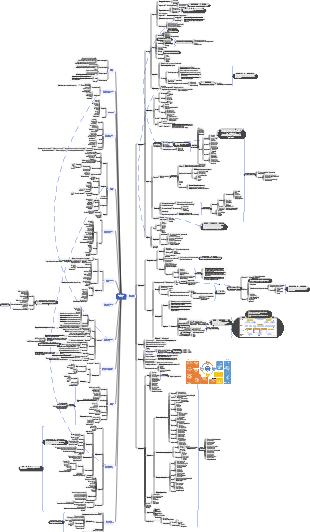
"How can you manage a team if you are given one?" reading notes
Chapter One
1. Culture and beliefs need to be “tailor-made”
Having common goals, culture and beliefs are the basis for achieving goals
Team managers must do these four basics
1. Face up to the team’s practical problems
2. Clearly understand the ideas of different team members
3. Understand what you want as a manager
4. Never try to twist a crooked melon vine.
2. Internal communication methods
Four principles
1. Team thinking
2. Team language
3. Team culture is the team LOGO
4. Team coordination
3. Unified team spirit
true team spirit
1. Goal-oriented
2. Team energy gathering
3. Incentive effect
4. Control function
team spirit
Team management is a process of managing conflicts
1. Consistency between personality and collective goals
2. Encourage confrontation and mutual assistance among team members
3. Team spirit serves team performance
4. The importance of balance: taking into account the authority of managers and the autonomy of members
5. The triangular relationship that cannot be ignored
4. Complete execution system
(1) Team composition
Emotional and IQ (backbone), people with both ability and political integrity
A qualified leader
Understand management
Strong communication skills and good communication methods
Comprehensive skills to convince your subordinates
Regular management and tracking
(2) Execution ability
Three core links to ensure execution:
Doing the right thing - the strategic process
Use the right people - people process
Doing things right - the operational process
Communication is the prerequisite for the implementation of execution (SMART principle)
Goals are specific
Goals are measurable
Goal achievable
Goals are related to other goals
target deadline
Coordination is a means of implementation
Feedback from execution is the guarantee of efficiency
The assessment of responsibility should cover every link
1
Determination in execution is the cornerstone of execution
Have the courage to deeply transform the team
Must aim to build a core team
Strong ability and good attitude---let go and reuse
Strong ability but poor attitude - guided management
Poor ability but good attitude---Use persuasion
Poor ability and poor attitude---informative training
Rules need to be unified and monitored for compliance
Pay attention to fairness, set yourself as a benchmark, and be an example
Basic elements to improve execution
Complete training
clear goals or tasks
Job Description
Follow up and control
Motivating performers
(3) Work diary
(4) Defect tracking
Chapter 2: Finding the Foundation of the System
1. Progress quantification and punishment system under the "lazy factor"
Reasonable and scientific reward and punishment system
provide fair opportunities
2. Individual Responsibility and Shared Responsibility
Factors to consider for the balance point
fairness factor
Program on
As a result
performance evaluation
Coordination of interpersonal relationships
Emphasize team honor and the courage to take responsibility
Influenced by ears and eyes
Lead by example
3. Efficiency, beware of time “theft”
Strict assessment system, everyone has a sense of urgency
Clear team division of labor can improve team efficiency
4. Are you a manager or a leader?
leader
Designer of the building, idealist
Creative work of the team, pursuing risks with a forward-looking attitude
manager
realizer of drawings, realist
Focus on maintaining sex work, avoid risks with a backward-looking attitude, and focus on the facts that have already happened
Chapter 3: The Value of Morality
1. Do you have these charms?
Act and speak naturally and appropriately, effortlessly gaining the attention and love of others
four qualities
2. Fatal leadership mistakes
Refusal to take personal responsibility
Failure to cultivate competent talents
Just want to control the results of my work
3. Play three roles well:
teacher
brother
friend
Chapter 4: Checks, Balances and Sharing
1. Prevent members from establishing their own small circles
There are 2 forms of small circles
A circle of interests extending from the inside out
Outside-in participatory circles
2. Restrict the mediocre and reuse the capable.
How to make mediocre leaders successful
loyalty
Know how to let those who can do it
Provide employees with platforms and opportunities for growth and guide their growth
3. Not pursuing perfect balance
Need to prevent absolute power from damaging the team
The best check and balance is to balance the interests of all parties
4. Only by sharing benefits can we create more benefits.
Revenue sharing for any team follows 4 principles
fair
clear
participate
promise
Chapter 5: Wuwei, sitting in the crater
1. The team does not need mediocre leaders
Qualified leader
Comprehensive abilities and qualities
The behind-the-scenes conductor who disappears and disappears at the right time
3 qualities of a leader
courage
confidence
initiative
2. Obstacles to decentralization
Decentralization must be scientific and reasonable
Rights and responsibilities should be equal when delegating power
Delegate power and retract it freely
3. Authorization and Authorization
Authorize
There are 3 elements to authorization
Task
right
responsibility
flexible
Be wary of excessive delegation, leading to "Parkinson's disease"
Chapter Six: Ways of Motivation
1. Understand and meet individual needs
Notice
Design specific and appropriate goals
The assigned job and position must be consistent with his personality
Give appropriate rewards for completing set goals
Different employees and different needs will be given different corresponding rewards.
2. How to motivate the entire team?
Find each employee’s dream and make him believe that you have the ability to help him realize his dream
Low efficiency relies on management, while high efficiency relies on incentives.
Make employees feel like owners
Let energetic employees drive overall efficiency
Spend plenty of time communicating with employees
Develop a motivating team system
Rewards must be fair and reasonable
Six basic principles of motivation
It is achievable by everyone, it is not something that is unattainable or a few people can achieve.
public reward
The best rewards: “gifts” of high reputational value and low monetary value
Cash rewards - the most worthless and clumsy way
Any rewards are short-term and work-cycle related
Reward methods change over time
3. The ladder of promotion is endless.
Don’t give all the benefits at once. Promote talents step by step and set up a transitional stage.
Chapter 7: Provide a platform for promotion
1. Give him opportunities for performance and promotion
2. Use value to determine distribution opportunities
3. Only when there is crisis can there be competition.
Only with pressure and competition can there be growth
Learn to view pressure and crisis dialectically, and learn how to turn crises into safety
Chapter 8: Leadership
1. A good leader must be a master of dreaming
What makes a good leader
We must rely on our own character and wisdom to inspire members to move forward bravely towards their goals.
You can be a hero, but you must be a leader who can be grown and trained
Three characteristics of leadership
guidelines
excitation
character
2. A little tolerance will bring endless benefits.
Tolerant leadership and humane management of subordinates
Be aware of the size when criticizing and give your subordinates face
Never in public
Criticism should be directed not to the person concerned, but to discuss the reasons together.
Employees who take the initiative to take responsibility for their mistakes, guide and encourage them
3. Establish rules to suppress evil and promote good
Rewards and punishments must be controlled with intensity
The method of reward and punishment is very important
object of reward and punishment
Operating Rules Reward and Punishment Time
Chapter 9: Establish an elimination mechanism
1. The last elimination rule
Pay attention to 4 key points
A necessary system in the performance appraisal system
The judgment of last place elimination is very important because it involves issues of sorting and standards.
Focus on the issue of proportion. How much is appropriate to eliminate?
Arrangement issues after elimination
2. Equal treatment means obliterating the contributions of outstanding people.
3. Don’t let bad people ruin the team atmosphere
Ten Types of Team Bad Guys
Talking nonsense
No distinction between public and private
Rhetoric
Dual-purpose
Half-hearted
Love to make excuses
Troublemaker
narrow-minded
Don't know how to be grateful
complain
4. Develop an emergency incident handling system
Determine where the problem is
Develop response plans in a timely manner
Be prepared to respond
At the right time, resume the team’s work or the company’s operations
Chapter 10: Change and Innovation
1. The relationship between change and conservatism
2. Avoid the trap of change
3. Achieve critical growth
Optimal human resource allocation
Tailor-made rational matching
Overall interests always come first