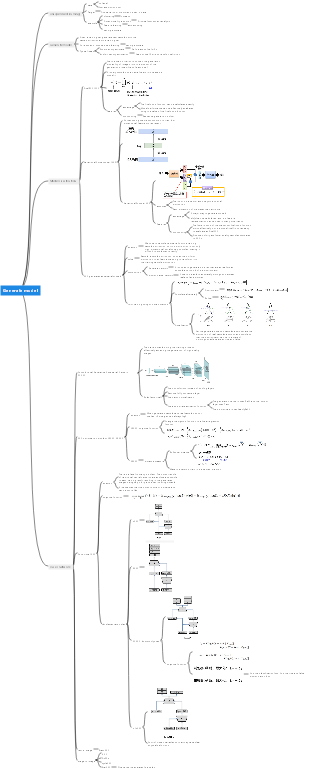
MindMap Gallery Convolutional Neural Network (CNN)
Convolutional Neural Networks (CNN) is a deep learning model that is particularly suitable for image recognition, video analysis, natural language processing and other fields. The design of CNN is inspired by biological vision systems and uses a hierarchical structure to capture local features and global patterns in data.
Edited at 2024-01-21 17:08:57This is a panoramic infographic—currently sweeping across the web—illustrating the comprehensive applications of OpenClaw, a popular open-source AI agent platform. It systematically introduces this intelligent agent framework—affectionately dubbed "Lobster Farming"—helping readers quickly grasp its core value, technical features, application scenarios, and security protocols. It serves as an excellent introductory guide and practical manual.

這是一張最近風靡全網關於熱門開源AI代理平台OpenClaw的全網應用全景圖解。它系統性地介紹了這款被稱為「養龍蝦」的智慧體框架,幫助讀者快速理解其核心價值、技術特性、應用場景及安全規範,是一份極佳的入門指南與實操手冊。此圖主要針對希望利用AI建構自動化工作流程的技術從業人員、中小企業主及效率追求者,透過9大模組層層遞進,全面剖析了OpenClaw從概念到落地的整個過程。 圖中核心內容首先釐清了「養龍蝦」指涉的是OpenClawd開源智能體,並強調其本質是「AI基建」而非一般聊天機器人。隨後詳細比較其與傳統AI助理的區別,擁有記憶管理、權限控制、會話隔離和異常恢復四大基礎能力,支援跨平台存取和多模型相容(如GPT、Claude、Ollama)。同時,圖解提供了完整的部署方案(雲端/本地/Docker),並列舉了辦公室自動化、內容創作、資料收集等五大應用程式場景。此外,還展示了其火爆程度、政府與大廠佈局、安全部署建議及適合/不適合的人群分類。幫助你快速掌握OpenClaw技術架構與應用價值,指導個人或企業建構AI自動化系統,規避資料外洩與權限失控風險,是學習「執行式AI」轉型的權威參考圖譜。
本圖由萬興腦圖繪製,是針對IT研發崗位的結構化個人履歷模板,完整涵蓋求職核心資訊模組。基本資訊區包含姓名、電話、信箱、求職意願及GitHub連結;專業概要要求以2-3句提煉核心優勢;工作經驗以「公司A高級Java開發工程師」為例,以「透過(行動),達成(量化成果)」格式呈現微服務架構設計、系統效能優化、團隊技術規範制定等職責,公司B經歷則聚焦功能模組開發與Elasticsearch搜尋優化;技能專長分程式語言、後端框架、中介軟體、資料庫、容器雲等維度,清楚展示技術堆疊;專案成果以「電商平台秒殺系統」為例,說明技術棧、架構設計、個人貢獻(Redis Lua庫存原子扣減)及KPI;教育背景包含一流大學電腦專業學歷,以及AWS認證解決方案架構師、軟考中級軟體設計師證書。模板邏輯嚴謹,涵蓋IT研發求職全流程關鍵訊息,幫助求職者清晰、量化展示專業能力。
This is a panoramic infographic—currently sweeping across the web—illustrating the comprehensive applications of OpenClaw, a popular open-source AI agent platform. It systematically introduces this intelligent agent framework—affectionately dubbed "Lobster Farming"—helping readers quickly grasp its core value, technical features, application scenarios, and security protocols. It serves as an excellent introductory guide and practical manual.
這是一張最近風靡全網關於熱門開源AI代理平台OpenClaw的全網應用全景圖解。它系統性地介紹了這款被稱為「養龍蝦」的智慧體框架,幫助讀者快速理解其核心價值、技術特性、應用場景及安全規範,是一份極佳的入門指南與實操手冊。此圖主要針對希望利用AI建構自動化工作流程的技術從業人員、中小企業主及效率追求者,透過9大模組層層遞進,全面剖析了OpenClaw從概念到落地的整個過程。 圖中核心內容首先釐清了「養龍蝦」指涉的是OpenClawd開源智能體,並強調其本質是「AI基建」而非一般聊天機器人。隨後詳細比較其與傳統AI助理的區別,擁有記憶管理、權限控制、會話隔離和異常恢復四大基礎能力,支援跨平台存取和多模型相容(如GPT、Claude、Ollama)。同時,圖解提供了完整的部署方案(雲端/本地/Docker),並列舉了辦公室自動化、內容創作、資料收集等五大應用程式場景。此外,還展示了其火爆程度、政府與大廠佈局、安全部署建議及適合/不適合的人群分類。幫助你快速掌握OpenClaw技術架構與應用價值,指導個人或企業建構AI自動化系統,規避資料外洩與權限失控風險,是學習「執行式AI」轉型的權威參考圖譜。
本圖由萬興腦圖繪製,是針對IT研發崗位的結構化個人履歷模板,完整涵蓋求職核心資訊模組。基本資訊區包含姓名、電話、信箱、求職意願及GitHub連結;專業概要要求以2-3句提煉核心優勢;工作經驗以「公司A高級Java開發工程師」為例,以「透過(行動),達成(量化成果)」格式呈現微服務架構設計、系統效能優化、團隊技術規範制定等職責,公司B經歷則聚焦功能模組開發與Elasticsearch搜尋優化;技能專長分程式語言、後端框架、中介軟體、資料庫、容器雲等維度,清楚展示技術堆疊;專案成果以「電商平台秒殺系統」為例,說明技術棧、架構設計、個人貢獻(Redis Lua庫存原子扣減)及KPI;教育背景包含一流大學電腦專業學歷,以及AWS認證解決方案架構師、軟考中級軟體設計師證書。模板邏輯嚴謹,涵蓋IT研發求職全流程關鍵訊息,幫助求職者清晰、量化展示專業能力。
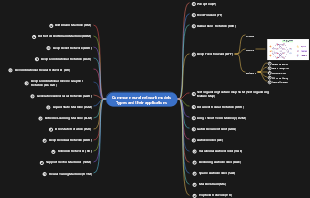
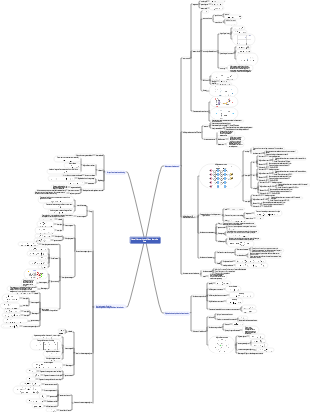
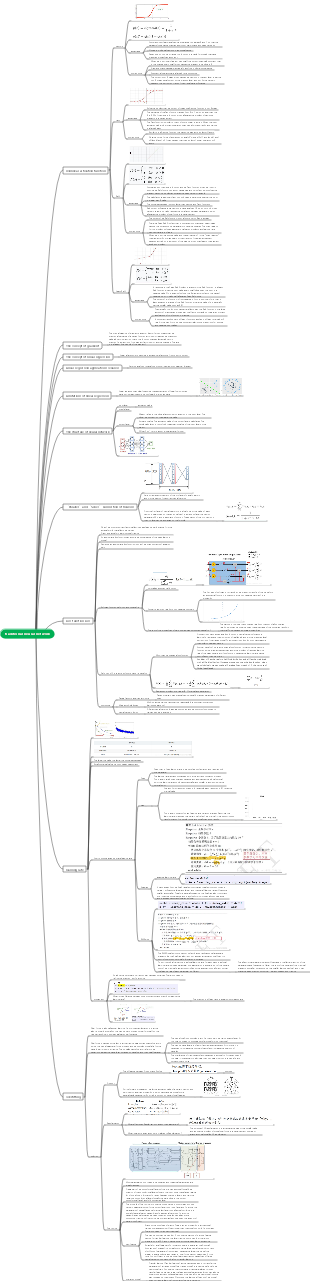
Convolutional Neural Network (CNN)
Introduction
Convolutional Neural Networks (CNN) is a deep learning model that is particularly suitable for image recognition, video analysis, natural language processing and other fields. The design of CNN is inspired by biological vision systems and uses a hierarchical structure to capture local features and global patterns in data.
development path
1950s: Frank Rosenblatt proposed the Perceptron, one of the earliest neural network models.
1980s: Yann LeCun and others proposed LeNet-5, which was the first CNN successfully applied to handwritten digit recognition.
1998: Yann LeCun and others further developed LeNet-5 and proposed an improved version of LeNet-5 for handwritten postal code recognition.
2012: Alex Krizhevsky and others proposed AlexNet, the first CNN to achieve breakthrough results in the ImageNet Large-Scale Visual Recognition Challenge (ILSVRC).
2014: VGGNet achieved better results in ILSVRC, demonstrating the advantages of deeper network structures.
2014: Google proposed the Inception architecture (GoogLeNet), which improved the computing efficiency of the network by introducing the Inception module.
2015: Microsoft proposed ResNet (Residual Network), which solved the vanishing gradient problem in deep network training through residual connections.
So far: CNN continues to evolve, with the emergence of new network structures such as EfficientNet and Vision Transformer, as well as further optimization in various application fields.
...
Hierarchy
Input layer: receives raw data, such as the pixel values of an image.
Convolution layer: Use convolution kernels to extract local features.
Activation layer: introduces nonlinearity, such as ReLU.
Pooling layer: Reduce the data dimension, reduce the amount of calculation, and prevent over-fitting.
Fully connected layer: maps features to final output, such as classification labels.
Output layer: outputs the final result of the network.
Detailed explanation of core concepts
Convolution operation: slide the convolution kernel on the input data to extract local features.
Weight sharing: The same convolution kernel shares weights on the entire input data, reducing model parameters.
Pooling: Downsampling a local area, such as maximum pooling or average pooling.
Activation function: introduce nonlinearity, such as ReLU, Sigmoid, Tanh, etc.
Convolution kernel (Filter): The weight matrix used to extract features in the convolution layer.
Stride: The step size for the convolution kernel to move on the input data.
...
Typical CNN model
LeNet-5: Early CNN model for handwritten digit recognition.
AlexNet: Introducing the ReLU activation function, reducing the number of parameters and improving training speed.
VGGNet: uses small convolution kernels and deeper network structure.
InceptionNet: Introducing the Inception module to improve the computing efficiency of the network.
ResNet: Solve the vanishing gradient problem in deep network training through residual connections.
SqueezeNet: Demonstrates that CNNs can maintain high performance even with a small number of parameters.
...
principle
CNN extracts local features of the image through multi-layer convolution and pooling operations, and performs classification through fully connected layers. Convolution operations can capture low-level features such as edges and textures in images, while deep networks can learn more complex patterns. Through weight sharing and pooling, CNN can effectively handle large data sets and reduce the risk of overfitting.
application
Image recognition: such as handwritten digit recognition, object recognition, etc.
Image segmentation: Segment the image into multiple regions for medical image analysis, etc.
Video analysis: used for behavior recognition, video surveillance, etc.
Speech recognition: Although CNN is mainly used for image processing, it can also be used for feature extraction of speech signals.
...
technical limitations
Computing resource requirements: Deep networks require a large amount of computing resources and storage space.
Data volume requirements: In order to train a high-performance model, a large amount of annotated data is required.
Interpretability: The internal working mechanism of CNN is not as transparent as shallow models, making it difficult to explain its decision-making process.
Sensitive to input size: CNNs are somewhat sensitive to the size and scale of input data and may require preprocessing steps.
Local feature extraction: CNN is good at extracting local features, but may have difficulty capturing global context information.
...