MindMap Gallery Network Engineer Wide Area Communication Network and Next Generation Internet
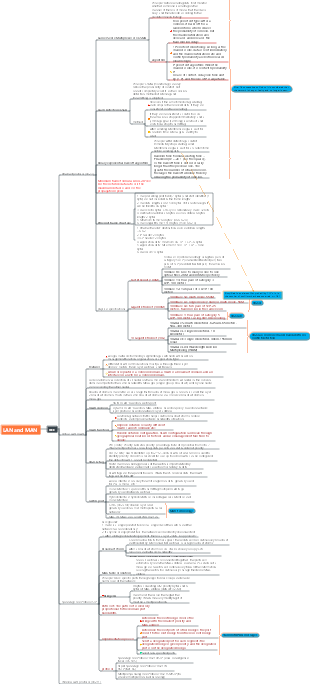
Regarding the wide area communication network and the next generation Internet mind map, the earliest wide area communication was based on PSTN (Public Switched Telephone Network). Users only need to connect a data terminal or computer to the telephone network to communicate.
Edited at 2023-11-10 16:39:58Avatar 3 centers on the Sully family, showcasing the internal rift caused by the sacrifice of their eldest son, and their alliance with other tribes on Pandora against the external conflict of the Ashbringers, who adhere to the philosophy of fire and are allied with humans. It explores the grand themes of family, faith, and survival.

This article discusses the Easter eggs and homages in Zootopia 2 that you may have discovered. The main content includes: character and archetype Easter eggs, cinematic universe crossover Easter eggs, animal ecology and behavior references, symbol and metaphor Easter eggs, social satire and brand allusions, and emotional storylines and sequel foreshadowing.
[Zootopia Character Relationship Chart] The idealistic rabbit police officer Judy and the cynical fox conman Nick form a charmingly contrasting duo, rising from street hustlers to become Zootopia police officers!
Avatar 3 centers on the Sully family, showcasing the internal rift caused by the sacrifice of their eldest son, and their alliance with other tribes on Pandora against the external conflict of the Ashbringers, who adhere to the philosophy of fire and are allied with humans. It explores the grand themes of family, faith, and survival.
This article discusses the Easter eggs and homages in Zootopia 2 that you may have discovered. The main content includes: character and archetype Easter eggs, cinematic universe crossover Easter eggs, animal ecology and behavior references, symbol and metaphor Easter eggs, social satire and brand allusions, and emotional storylines and sequel foreshadowing.
[Zootopia Character Relationship Chart] The idealistic rabbit police officer Judy and the cynical fox conman Nick form a charmingly contrasting duo, rising from street hustlers to become Zootopia police officers!
Wide area communication network and next generation Internet
WAN communication basics
1. DTE and DCE The earliest wide area communication was based on PSTN (Public Switched Telephone Network). Users only A data terminal or computer needs to be connected to the telephone network to communicate. The user's data terminal or computer is called DTE (data terminal equipment); and DTE and communication The equipment connected to the communication network is called DCE (data circuit equipment). Typical DCE includes debugging Modems, data transmission machines, baseband transmitters, signal converters, automatic calling and answering Equipment, etc.
2. Traffic and error control technology Flow control is a technology that coordinates the work pace of sending stations and receiving stations. Its main purpose is to avoid Avoid sending data too fast, causing the receiving station to have no time to process it and thus losing data. It's work counting According to the technology on the link layer, some error control technologies are usually combined to improve the flow control effect. Common flow control technologies include stop-and-wait protocols and sliding window protocols.
Error control techniques commonly combined with flow control include: ● Positive response (positive response ACK is sent after receiving correct data) ● Negative acknowledgment retransmission (a negative acknowledgment NAK is sent when it is detected that the received frame is in error, and the sender must resend the error frame) ●Timeout retransmission (the sender does not receive the response signal of the frame within a certain time interval and resends the frame)
Error detection technology is usually used to automatically retransmit lost frames and error frames (called ARQ-automatic retransmission technology). Combining ARQ with the stop-and-wait protocol produces the stop-and-wait ARQ protocol. Combining the sliding window protocol with ARQ technology produces the selective retransmission ARQ protocol and the fallback N-frame ARQ protocol.
(1) Stop-and-wait protocol (simplex communication): Every time the sending station transmits a frame, it stops sending, and waits for the response signal to be received before sending the next frame. The efficiency is high in the city network, but the efficiency is too low in the Guangzhou network.
E=1/(20 1) a= (Rd/v)L
(2) Sliding window protocol (duplex communication) allows multiple frames to be sent continuously without waiting for a response. The number of frames allowed is a fixed value, also called a window. When a confirmation packet is successfully received, the window slides forward. 1 person
E=W/(2a 1)
(3) Stop-and-wait ARQ protocol (simplex communication in a noisy environment) It is a combination of stop-and-wait protocol and automatic request retransmission technology. Every time the sending station transmits a frame, it stops sending and waits for an affirmative response signal (ACK). Then send the next frame. If the frame is resent after receiving a negative acknowledgment (NAK), and no ACK is received within a certain time interval, it will also be resent.
E=(1-P)/(2a 1) P: frame error probability
(4) Select retransmission ARQ protocol (Duplex in Noisy Environment) It is a combination of sliding window protocol and automatic request retransmission technology. When a negative response (NAK) is received, only the wrong frame is retransmitted. In order to avoid anomalies, its maximum value is less than half of the total number of frame numbers, that is, Wx=W≤2*-1
If the window value is >20+1, then E=1-P: If the window value ≤ 2a + 1, then E = W (1-P)/(2a 1) W: Leave value
(5) Fallback NAR protocol (duplex in a noisy environment) is also a combination of sliding window protocol and automatic request retransmission technology. However, when a negative response (NAK) is received, the N messages that have been sent will be retransmitted from the error point. frame. In order to avoid exceptions, the size of the sending port must be limited to W≤2*-1 (K is the number of digits in the serial number)
If the window value>2a+1, then E=(1-P)/(1-P NP) If the window value ≤2a+1, then E=W(1-P)/(2a 1)(1-P NP)
R is the data rate, L is the frame length (number of bits), and d/v is the propagation delay. In the link utilization calculation formula in the fallback N-frame ARP protocol N is the number of retransmitted frames. When the window value > 2a 1, N is approximately 2a 1; when the window value ≤ 2a 1,
[First half of 2021] 21. 22. The flow control protocol used by TCP is (B), and the related field in the TCP header is (C). A. Waiting for a response B. Variable-size sliding window protocol c. Fixed-size sliding window protocol D. Select retransmit ARQ protocol A. Port number B. Offset C window D. Emergency pointer
Commonly used WAN technologies
1. WAN link layer serial port encapsulation protocol
1. HDLC HDLC High-Level Data Link Control is a bit-oriented data link layer protocol that transmits data over a synchronous network. It was developed by the International Organization for Standardization (ISO) based on IBM's protocol extension. of
1. Basic configuration of HDLC HDLC defines three types of stations: Master station: controls the link, and the frames sent are called command frames. Slave station: operates under the control of the master station, and the frame sent is called a response frame Composite station: has dual functions of master station and slave station
2. Key fields of HDLC frame structure ●Frame mark F: HDLC uses 01111110 as the frame boundary mark. ●Address field A: used to identify the address of the slave station, used in point-to-multipoint links, The address length is 8 bits and can be expanded as needed. ●Control field C: used to distinguish the type of frame. Information frame I frame, carrying user data Management frame S frame, used for traffic and error control Unnumbered frame U frame, used for link control ● Frame check field FCS: It is for other fields besides the flag field. For the checksum of the field, CRC16 is often used, but CRC32 is also used.
Flag field(F) The flag field is a bit pattern of 01111110, which is used to mark the beginning and end of the frame, and can also be used as filler characters between frames.
Address segment (A) When the first bit of the address field is 1, it means the address field is 8 bits; when the first bit is 0, it means the address field is 16 bits.
Control field(C) The control field is used to form various commands and responses to monitor and control the link. The sender master node or combination node uses the control field to notify the addressed slave node or combination node to perform the agreed operation; on the contrary, the slave node uses this field as a response to the command to report the completed operation or status change. This field is key to HDLC. The first or second bit in the control field indicates the type of transmission frame, namely three different types of frames: information frame (I frame), monitoring frame (S frame) and unnumbered frame (U frame). The fifth bit of the control field is the P/F bit, which is the polling/termination bit (POLL/Final) bit.
Monitoring frame (S frame) Monitoring frames are used for error control and flow control, and are often called S frames. The S frame is marked by the first and second bits of the control field being "10". The S frame does not have an information field, only 6 bytes or 48 bits. The third and fourth bits of the control field of the S frame are S frame type codes. There are 4 different codes, namely: n 00--Receive ready (RR), sent by the master node or slave node. The master node can use the RR type S frame to poll the slave node, that is, it wants the slave node to transmit an I frame numbered N (R). If such a frame exists, it can be transmitted. The slave node can also use the RR type S frame to poll the slave node. In response, the slave node wishes to receive the next I frame number N(R) from the master node. n 01--Reject (REJ), sent by the master node or slave node to require the sender to resend the frame starting with number N (R) and all subsequent frames, which also implies that the frame before N (R) The I frame is received correctly. n 10--Receive not ready (RNR), indicating that an I frame numbered less than N (R) has been received, but is currently in a busy state and is not ready to accept an I frame numbered N (R). This can be used Perform flow control on the link. n 11--Selective rejection (SREJ), which requires the sender to send a single I frame numbered N (R), and implies that all other numbered I frames have been acknowledged.
Second half of 2021 (morning) 18. In the HDLC protocol, the frame number and response number are stored in the (C) field. A. Flag B. Address C. Control D. Data
PPP
PPP protocol HDLC protocol provides a reliable confirmation mechanism in the control field, so reliable transmission can be achieved, while PPP protocol does not provide reliable transmission and relies on the upper layer to ensure its correctness. Therefore, in links with relatively high bit error rates, the HDLC protocol plays a great role. However, with the development of technology, the probability of errors occurring at the data link layer is small. Therefore, it is now used more frequently around the world. The data link layer protocol is the PPP protocol. The PPP frame format is similar to the HDLC frame format. The main difference between the two is that PPP frames are character-oriented, while HDLC frames are bit-oriented. The PPP protocol is a data link layer protocol that transmits and encapsulates network layer data packets on point-to-point links. The PPP protocol provides a complete set of solutions to solve problems such as link establishment, maintenance, teardown, upper layer protocol negotiation, and verification. The PPP protocol specifically includes Link Control Protocol (LCP), Authentication Protocol and Network Layer Control Protocol (NCP). (1) LCP phase: The LCP phase mainly manages PPP data links, including negotiation and establishment of data link layer parameters. dismantling, and monitoring data links, etc. (2) Verification stage: In this stage, the client will send its own identity verification request to the remote access server for verification. Authentication protocols include PAP and CHAP.
2. X.25 X.25 is a connection-oriented interface that uses virtual circuits to transmit individual data packets to An appropriate end point on the network. The X.25 protocol can be described as a three-layer structure. In the X.25 network, the user's computer terminal equipment will be combined with the assembly/disassembly equipment (PAD) connection, responsible for completing the work of splitting packets, addressing, and reassembling packets, and Different X.25 networks use the X.75 protocol for interconnection. X.25 is a network built based on packet switching technology. Packet switching itself is suitable for For connectionless services, if you want to provide users with connection-oriented interface services, you must borrow Assist virtual circuit (VC) technology.
(1) Permanent virtual circuit (PVC): Predefined, like a dedicated line, no need to establish and clear In addition to the connection, data can be transferred directly.
(2) Switched virtual circuit (SVC): When users need to temporarily establish a virtual circuit, during data transmission Removed at the end of the session.
The flow control and error control protocol used by X.25 is the backward N-frame ARQ protocol, and its encoding sequence is There are two types of sequence numbers: 3 digits and 7 digits. The default window value is 2. When the encoding sequence number is 3 digits, The default window value is up to 7 (allowing 8 frames to be sent before acknowledgment is received).
3. Frame Relay (FR) Frame relay originates from X.25 packet switching technology. It is a simplified and improved version of X.25. A fast packet switching technology. Frame Relay provides virtual circuit management at the second layer. Bandwidth management and blocking prevention features. Compared with traditional circuit switching, physical The processing circuit implements statistical time division multiplexing, that is, multiple logic can be multiplexed on one physical connection. Editing connections realize bandwidth multiplexing and dynamic allocation, which is conducive to multi-user and multi-rate Data transmission makes full use of network resources. Main features of Frame Relay networks:
(1) Frame Relay provides a connection-oriented transmission service: Before two users transmit data, a logical path is established through the network. This The path is called a virtual circuit. The data transmitted by the user will arrive at the destination through the network in sequence, No reordering of data is required at the network endpoint.
(2) Virtual circuits are divided into two types: permanent virtual circuit (PVC) and switched virtual circuit (SVC)
(3) Frame relay has congestion control capabilities: only error detection, no retransmission, and no sliding window flow control
(4) Not suitable for delay-sensitive applications (audio, video), Reliable submissions are not guaranteed.
(5) Data link connection identifier (DLCI): consists of high and low parts, a total of 10 bits, used for uniqueness Identifies a virtual circuit.
(6) Forward congestion bit (FECN): When the value is 1, it indicates that there is congestion in the transmission direction of the frame. The receiver can adjust the sender's data rate accordingly.
(7) Backward congestion bit (BECN): When the value is 1, it indicates that congestion occurs in the reverse direction of frame transmission. The sender can adjust the sending data rate accordingly.
(8) Priority discard bit (DE): When network congestion occurs, frames with a value of 1 are discarded first.
4. ISDN ISDN (Integrated Services Data Network) can be divided into narrowband ISDN (N-ISDN) and broadband ISDN (B-ISDN) two types. Among them, N-ISDN integrates data, voice and video signals into one The technology of rooting phone lines.
Channel for transmitting data (B channel, 64Kbps per channel) Processing management signals and calling control signaling channels (D channel, 16Kbps or 64Kbps per channel)
These two types of channels are combined to form two different ISDN services: Basic Rate Interface (ISDN BRI) and Primary Rate Interface (ISDN PRI)
1. Basic rate interface (ISDN BRI) Generally composed of 2B D, it is often used in small offices and homes. Users can use 1B as a number. According to communication, the other 1B is reserved for voice communication, but the D channel cannot be used (the rate is 16Kbps) for data transmission. If necessary, the 2B channel can also be used simultaneously (total 128Kbps) for data communication, the maximum data rate is 144kbps. Note: If not specified, N-ISDN usually refers to ISDN BRI.
2. Primary rate interface (ISDN PRI) PRI includes two types: US standard 23B D (64Kbps D channel), which achieves the same performance as T1 DS1 speed of 1.533Mbps. European standard 30B D (the rates of B and D channels are both 64Kbps), reaching the same speed of 2.048Mbps as E1
The disadvantage of N-ISDN is that the data rate is low, which is not suitable for high-bandwidth applications such as video information, and It is still based on circuit-switched network technology. The key technology of B-ISDN is asynchronous transmission mode (ATM), which uses Category 5 twisted pairs or optical fibers. The data transmission rate can reach 155Mbps and can transmit uncompressed high-definition television (HTV). It defines the physical layer, ATM layer, ATM adaptation layer and high-level 4-layer architecture
5. ATM ATM is a device that can combine LAN functions, WAN functions, voice, video and data Integrated into a unified protocol design. The ATM standard was first developed as the B-ISDN standard. Appeared as part of the Internet of Things, it has outstanding performance in QoS.
(1) Synchronous transmission and asynchronous transmission Circuit-switched networks all send information from one node to another based on the principle of time division multiplexing. to another node. According to different working modes, it can be divided into two types
(1) Synchronous transmission mode STM: According to the required data rate, a logical channel is divided into It is configured as 1 to multiple time slots. During the connection existence period, the time slots are fixedly allocated, that is, Synchronous time division multiplexing mode is used.
(2) Asynchronous transfer mode ATM: user data is composed into 53B cells, and the cells are random Arrival, there can be a gap in the middle, and the cell can enter the channel when it is ready, that is, using is the statistical time division multiplexing mode.
In ATM, the cell is not only the basic unit of transmission, but also the unit of information exchanged. It is a special case of virtual circuit packet switching. Compared with packets, since cells are fixed Fixed length, so high-speed processing and exchange can be performed. The typical data rate of ATM is 150Mbps, which means about 360,000 data per second (150M/8/53) cells. ATM is connection-oriented
(2) ATM layered architecture
1. ATM physical layer Physical Medium Sublayer (PMD): Specifies the transmission medium, signal levels, bit timing, etc. However, ATM does not provide corresponding rules, but lists some available transmission standards. For example, based on Category 5 twisted pair or optical fiber, it can reach 155.52Mbps, 622.08Mbps, 2488.32 Mbps (SONET standard); on the T3 channel, it can reach 44.736Mbps, and on FDDI, it can reach 100Mbps. Transmission Convergence Sublayer (TC): Provides a unified interface with the ATM layer. This layer completes functions similar to the data link layer.
2. ATM layer The ATM layer is equivalent to the function of the network layer, which provides connection-oriented services through virtual circuit technology. In ATM, there are two levels of virtual circuits: virtual path (VP) and virtual channel (VC). A virtual channel is equivalent to an X.25 virtual circuit, and a virtual channel is formed by bundling multiple virtual channels. Since ATM is usually built on optical fiber, it does not provide a response and leaves a small number of errors to the upper layer for processing. In addition, the purpose of ATM is to achieve real-time communication, so accidental cell errors are not retransmitted, and communications that need to be retransmitted are handled by the higher layer.
The 53-byte ATM cell consists of a 5-byte cell header and 48 bytes of data. In the cell header, the important fields are as follows. Virtual path identifier (VPI): 8 bits or 12 bits, 8 bits are commonly used, so the number of virtual paths on a host is usually 256. Virtual channel identifier (VCI): 16 bits, so theoretically a virtual channel can contain 65536 virtual channels, but some channels are used for control and do not transmit user data. 8-bit header checksum, which only checks the cell header, using an 8-bit CRC check of X8 X2 X 1
3.ATM Adaptation Layer (AAL) The ATM adaptation layer is responsible for processing the information from the higher layer. The sender cuts the data from the higher layer into 48-byte long ATM payload, the receiver reassembles the payload of the ATM cell into for user data packets. AAL supports four types of services, and there are five AAL layer protocols that meet these requirements. some business
4.ATM high-rise The upper level of ATM mainly stipulates 4 categories and 5 business types to meet different ATM customers. household needs.
next generation internet
1. IPv6 address representation The 128-bit IPv6 address is divided into 8 segments with 16 bits as one segment. The 16-bit binary of each segment is represented by a 4-digit hexadecimal number, and the segments are separated by colons (:). 2001: 0da8: d001: 0001: 0000: 0000: 0000: 0001 Compressed representation: 2001: da8: d001:1:0:0:0:12001: da8: d001:1: :1
2. IPv6 address with embedded IPv4 address Use embedded IPv4 address within IPv6 address The first part of the address is represented in hexadecimal, while the IPv4 part is represented in decimal. this Is a unique representation of IPv6 addresses used by the transition mechanism. Such as fe80::200: 5efe: 58.20.27.60, the second half of this IPv6 address is an IPv4 address.
IPv6 provides two types of special addresses embedded with IPv4 addresses: 0000:0000:0000:0000:0000:FFFF:xxxx:xxxx or 0000:0000:0000:0000:0000:0000:xxxx:xxxx
Example: Among the four IPv6 addresses below, the invalid address is (B). A. ::192:168:0:1 B. :2001:3452:4955:2367:: C. 2002:c0a8:101::43 D. 2003:dead:beef:4dad:23:34:bb:101
1. IPv6 protocol, the full name is "Internet Protocol Version 6", which is the next generation of Internet Protocol. Compared with IPv4, its main changes are: ● Extended address, extending the 32-bit IP address of IPv4 to 128 bits. ● Simplified packet header: IPv6 packet header has 8 fields with a total length of 40 bytes; while IPv4 The header contains at least 12 fields, the length is 20 bytes when there is no option, and when there is option The item length is 60 bytes. The IPv6 header reduces the number of fields and improves routing efficiency. ● Flow flag: IPv4 treats all packets equally, and the router does not track two hosts. package sent between. IPv6 introduces the concept of flow to efficiently process packets in the flow. ● Authentication and confidentiality: IPv6 uses two security extensions, namely IP authentication header and IP encapsulate the security payload.
Question 2 (Question 60 and Question 61 in the first half of 2017) The prefix of the global unicast address that can be aggregated is (1111111010) The prefix of the local unicast address of the IPv6 link is (001)
Question 1 (Question 59 and Question 60 in the second half of 2014) The aggregated global unicast address prefix of IPv6 is (59) and the composition of anycast address is (60). (59) A. 010 B. 011 C. 001 D. 100 (60)A. Subnet prefix + all 0s B. Subnet prefix + all 1s C. Link local address prefix + all 0s D. Link local address prefix + all 1s
59.C 60.A
4. IPv6 address type IPv6 still has three address types, namely unicast, multicast (also called multicast), and anycast (also called anycast). Broadcasting is no longer used in IPv6.
3. Format prefix IPv6 format prefix FP (Format Prefix) is used to indicate the address type or subnet address. Using a method similar to CIDR in IPv4 addresses, it is expressed as "IPv6 address/prefix length" Degree", for example, the 60-digit address prefix 12AB00000000CD30 has the following legal Representation form: ● 12AB:0000:0000:CD30:0000:0000:0000:0000/60 ● 12AB:0:0:CD30::/60 ● 12AB::CD30:0:0:0:0/60
Question 4 (Question 60 and Question 61 in the second half of 2015) The format prefix (FP) of the IPv6 address is used to represent (60). To achieve automatic configuration of the IP address, the IPv6 host appends (61) to the address prefix 1111111010 to generate a link-local address. If the neighbor discovery protocol is passed Verification indicates that the self-configured link-local address is valid. (60)A. Area code B. Address type or subnet address C. Network type D. Broadcasting method or subnet number (61)A. 32-bit binary random number B. Host name C. Network card MAC address D. IPv4 address
Reference answers to the previous question: (60)B; (61)C. Key points analysis: The format prefix (FP) of the address is used to indicate the address type or subnet address, expressed using a CIDR representation method similar to IPv4. Link local address: The prefix is 1111111010, used for communication between adjacent nodes on the same link, equivalent to the automatic dedicated IP address of IPv4. To achieve automatic configuration of IP addresses, the IPv6 host appends the MAC address to the address prefix 1111111010 to generate a link-local address.
(1) Unicast IPv6 address Uniquely identifies a network interface. There are two special addresses for unicast addresses: ● Uncertain address: The address 0:0:0:0:0:0:0:0 is called an uncertain address. Cannot be assigned to any node. You cannot use the destination address in the IPv6 routing header. ● Loopback address: The address 0:0:0:0:0:0:0:1 is called the loopback address. Can be assigned to any physical interface.
IPv6 unicast addresses include: ● Can aggregate global unicast addresses ● Link local address The device is automatically generated and used in the local network. ● Site local address Equivalent to the private network address in the IPv4 network ● Other special unicast addresses
Unicast
link local address
site local address
(2)Multicast IPv6 address A multicast address, also known as a multicast address, is an identifier for a group of interfaces (generally belonging to different node), packets sent to a multiplay address are delivered to all interfaces of that address. ● There is no broadcast address in IPv6 and is replaced by multicast address. ● The format prefix of IPv6 multicast address is 1111 1111
Example: The format prefix (FP) of the IPv6 address is used to represent ( ). To implement the IP address Automatically configured, the IPv6 host will append ( ) to the address prefix 1111 1110 10, Generates a link-local address. If it passes the neighbor discovery protocol verification, the table This indicates that the self-configured link-local address is valid. A. Area code B. Address type or subnet address C. Network type D. Broadcast method or subnet number A. 32-bit binary random number B. Host name C. Network card MAC address D. IPv4 address
(3) Anycast IPv6 address An anycast address (anycast address) is assigned to an interface on multiple nodes. Send to anycast address The data packet will only be delivered to one of the interfaces (the closest interface). ● Anycast addresses cannot be assigned to IPv6 hosts, but can only be assigned to IPv6 routers. ● Anycast cannot be used for source addresses, only destination addresses. ● The subnet prefix must be fixed, and the remaining positions are all 0
Subtopic question 1 (58 questions in the second half of 2017) In the following description of anycast addresses in IPv6, the error is (58) A. can only be assigned to IPv6 routers B. can be used as a destination address D. represents an identifier of a group of interfaces (58) C. can be used as Source address reference answer: (58) C. Point analysis: Anycast address is a situation where one identifier corresponds to multiple interfaces. If a datagram is required to be sent to an arbitrary point address, it will be sent to the nearest interface (determined by the router). An IPv6 anycast address can only be used as a destination address but not a source address. It cannot be assigned to an IPv6 host but can only be assigned to an IPv6 router.
Example: IPv6 adds a new anycast address, this address (). A. Can be used as source address or destination address B. Can only be used as a source address, not as a destination address C. An identifier representing a set of interfaces D. Can be used as an address for a router or host
5. Transition from IPv4 to IPv6 At present, there are three main basic technologies for solving transition problems: ●Dual protocol stack ● Tunnel technology ● NAT-PT
(1) Dual Stack Nodes using this technology run two protocol stacks, IPv4 and IPv6 at the same time. This is enabling IPv6 The most direct way for nodes to remain compatible with pure IPv4 nodes is for the communication end. Nodes (including hosts and routers). This method provides full compatibility with IPv4 and IPv6, but is not suitable for IP address exhaustion. The question didn't help. Since dual routing infrastructure is required, this approach instead Increases the complexity of the network.
(2) Tunnel technology (Tunnel) Tunnel technology provides a method for transmitting IPv6 data using the existing IPv4 routing system. IPv6 packets are encapsulated in IPv4 datagrams as unstructured data and are IPv4 network transmission. Its significance is to provide a way to enable communication between IPv6 nodes during the transition period. method, but it does not solve the problem of mutual communication between IPv6 nodes and IPv4 nodes.
1. Tunnel intermediary technology: This method requires that the tunnel endpoints must run dual protocol stacks, and NAT technology cannot be used between the two endpoints.
2. Automatic tunnel
3. 6to4 tunnel
4. 6over4 tunnel
5. ISATAP
Question 6 (58 questions in the first half of 2015) IPv6 sites need to use tunneling technology to communicate through IPv4 networks. The three commonly used automatic tunneling technologies are (58). (58)A.VPN tunnel, PPTP tunnel and IPSec tunnel B.6to4 Tunnel, 6over4 Tunnel and ISATAP Tunnel C. VPN tunnel, PPP tunnel and ISATAP tunnel D.IPSec tunnel, 6over4 tunnel and PPTP tunnel
Reference answer: (58) B. Key points analysis: Automatic tunnel means that the destination address in the tunnel interface does not need to be configured and is directly extracted from the IPv6 address.
(3) NAT-PT (Network Address Translator with Protocol Converter) In addition to converting IPv4 addresses and IPv6 addresses, the conversion gateway also includes protocol information. translate. As an intermediate device for communication, the conversion gateway can convert IP packets between IPv4 and IPv6 networks. header address, and at the same time perform corresponding semantic translation on the packet according to different protocols, so that Pure IPv4 and pure IPv6 sites can communicate transparently.
Example: In a mixed network of IPv4 and IPv6, protocol translation technology is used (). A. Two IPv6 hosts communicate over an IPv4 network B. Two IPv4 hosts communicate over an IPv6 network C. Communication between pure IPv4 hosts and pure IPv6 hosts D. Communication between two dual-stack hosts
Mobile IP
Can connections be automatically re-established at new networking locations, transitioning from a connection that relies on fixed locations to a flexible, mobile connection? The solutions given by IETF are RFC 3344 (IP Mobility Support for IPv4) and RFC 3775 (MobilitySupport in IPv6).
Mobile IP communication engineering
Mobile IP provides two ways to obtain the care-of address
One is the foreign agent care-of address. This care-of address is the address provided by the foreign agent in its agent announcement message, which is the IP address of the foreign agent.
Another acquisition mode is to configure the care-of address (Collocated Care-of Address), which is an IP address temporarily assigned to a certain port of the mobile node. Its network prefix must be the same as the network prefix of the foreign link to which the mobile node is currently connected. A configured care-of address can only be used by one mobile node. It can be an address dynamically allocated through the DHCP server, or a private network address selected from the address buffer pool.
Mobile IPv6
1. Working mechanism of mobile IPv6
There are two ways of communicating between the mobile node and the peer node. The first method is a two-way tunnel. In this case, mobile IPv6 support is not required. Even if the mobile node is not registered on the peer node, its current binding can still communicate. The second method is routing optimization, which requires the mobile node to register its current binding information with the peer node, so that the packets sent by the peer node can be directly routed to the care-of address of the mobile node.
2.Routing extension header
A new type 2 routing header is defined in RFC3775, in which the routing address provided has only one - the mobile node's home address.
Question 5 (Question 58 and Question 59 in the first half of 2014) The so-called mobile IP refers to (58); the key technology to realize mobile IP is (58); the key technology to realize mobile IP is (60). (58)A. Change the IP address of the host through address translation technology B. A host IP address can be transferred to another host C. The mobile host maintains network connectivity by roaming in the wireless communication network D. Mobile hosts can connect and work at remote sites away from their home network (59)A. The mobile host has a universal IP address that can access any network B. The mobile host has a home network address and obtains a foreign care-of address C. The mobile host applies for network access services through the management center that controls the entire network D. Mobile hosts always obtain access services through their home network address.
[Question 5] Answer: (58)D; (59)B. Analysis: Mobile IP is designed to allow mobile nodes to maintain their connectivity while moving. Mobile IP now has two versions, namely Mobile IPv4 (RFC 3344, which replaced RFC 3220 and RFC 2002) and MobileIPv6 (RFC 3775). Mobile IPv4 is still widely used. Simply put, mobile IP technology allows computers to roam in real time on the Internet and local area networks without any restrictions. It is also called mobile computer technology. Professionally speaking, mobile IP technology enables mobile nodes (computers/servers/network segments, etc.) to use fixed network IP addresses to implement roaming functions across different network segments, and ensures that network permissions based on network IP do not occur during the roaming process. any changes. The key technologies of Mobile IP include proxy search, care-of address, login, and tunnel. (1) Agent search: It is used by the computing node to determine whether it is in roaming state. (2) Care-of address: It is the temporary address obtained from the external network agent when the mobile node moves to the external network. (3) Login: It is a process in which the mobile node performs a series of authentication, registration, and tunnel establishment when it reaches the external network. (4) Tunnel: It is a temporarily established two-way data channel between the local agent and the external agent.
test questions
Courseware test questions
1. Example: The following description about frame relay is incorrect ( ).
A. Create a virtual circuit on layer 3 B. Provide connection-oriented services C. It is a high-efficiency data link technology D. Make full use of the advantages of optical fiber communication and digital network technology
2. The ISDN service provided by telecom operators has two different interfaces, one of which is for small Maximum data rate available on the Basic Rate Interface (BRI) for enterprise and home use for(). Maximum data available from the Primary Rate Interface (PRI) for large enterprises The rate is ( ). A. 128Kb/s B. 144Kb/s C. 1024Kb/s D. 2048Kb/s 2B D=2*64 16 A. 128Kb/s B. 144Kb/s C. 1024Kb/s D. 2048Kb/ 30B D=
Synchronous tutoring questions
Question 1 (Question 18 in the second half of 2017) Among the following packet switching networks, the switching technology used is different from the other three networks (18). (18) A. IP B. X. 25 C. Frame Relay D. ATM
Question 2 (Question 17 and Question 18 in the first half of 2017) The router is connected to the computer serial interface. The interface for local configuration of the router using a virtual terminal is (17). The interface for the router to connect to the WAN through optical fiber is (18). (17)A.Console port B. Synchronous serial port C. SFP port D. AUX port
Reference answer: The Console port of the router is directly connected to the serial port of the computer using a dedicated cable to perform local settings on the router. The SFP (Small Form-factor Pluggable, small rack pluggable device) port is used to install SFP modules. This module can convert electrical and optical signals and can be used to connect fiber channels.
Question 3 (Question 12 in the second half of 2016) The role of LCP in point-to-point protocol PPP is (12) A. Packaging various upper-layer protocols B. Encapsulating the carried network layer protocols C. Converting packets into D. Establishing and configuring data links
Cell reference answer: (12) D. Key point analysis: PPP protocol is a point-to-point protocol working at the data link layer, which includes LCP and NCP protocols. Among them, ICP is responsible for the establishment, maintenance and termination of the link: NCP is responsible for the network Negotiation of layer protocols.
Question 4 (50 questions in the second half of 2016) Since intranet P2P, video streaming, online games and other traffic occupy too much, affecting network performance, (50) can be used to ensure normal Web and email traffic requirements. (50)A. Use a gatekeeper B. Upgrade core switches C. Deploy traffic control equipment D. Deploy network security audit equipment
Question 5 (Question 18 in the first half of 2016) In xDSL technology, the technology that can provide asymmetric transmission of uplink and downlink channels is (18). (18) A. HDSL B. ADSL C. SDSL D. ISDNDSL
Reference answer: (18) B. Key points analysis: Digital Subscriber Line (DSL) allows users to provide high-speed data transmission on traditional telephone lines. The user's computer is connected to the telephone line with the help of a DSL modem, and is connected through DSL Access the Internet or corporate network. DSL uses cutting-edge digital modulation technology to provide much faster rates than ISDN. The actual rate depends on the type of DSL service and many physical layer factors, such as the length, diameter, crosstalk and noise of the telephone line. There are many types of DSL technologies, the following are the common ones. ADSL: Asymmetric DSL, with asymmetric uplink and downlink traffic, generally has three channels, which are high-speed downlink channels of 1.544~9Mb/s, duplex channels of 16~640Kb/s, and voice channels of 64Kb/s. SDSL: Symmetrical DSL, the user's upstream and downstream traffic is symmetrical, up to 1.544Mb/s. ISDNDSL: Between ISDN and DSL, it can provide 128Kb/s two-way symmetrical transmission with a maximum distance of 4600~5500m. HDSL: High bit rate DSL is a technology that provides 1.544Mb/s on two line pairs or 2.048Mb/s symmetric communication on three line pairs. Its biggest feature is that it can run on low-quality lines. The maximum distance is 3700~4600m. VDSL: Very high bit rate DSL, a fast asymmetric DSL service that can provide data and voice services on a pair of telephone lines.
Question 6 (question 67 in the first half of 2016) To use ADSL dial-up Internet access, you need to install it on the client. (67) A. PPPC B. SLIP protocol C. PPTP D. PPPoE
Reference answer: (67) D. Key points analysis: PPPoE is an access technology that uses Ethernet to send PPP and supports the establishment of multiple PPP connections on the same Ethernet. It combines the comprehensive attributes of Ethernet and PPP connections. In ADSL dial-up Apply often. PPPoE generally provides authentication and accounting services to ordinary users, and can also be used for fixed users to apply for a dedicated public IP address. The main features of PPPoE certification are that it is widely used, mature, and has good standardization and interoperability. It is well compatible with existing mainstream PC operating systems and has no compatibility issues.
Test Question 7 (2015 Next Year Test Question 18 and Test Question 19) (18) Find a technique to divide PSTN lines into fittest ones. There are three independent channels for uplink and downlink, providing telephone and Internet services at the same time. Using ADSL networking, the computer needs to be connected to the telephone home junction box through (19) and a splitter. (18) A. Divide multiplexing B. Frequency division multiplexing C. Space division multiplexing D. Code division multiple access (19)A.ADSL switch B.Caltile Modem C.ADSL Modem D.Wireless router
Reference answers: (18)B, (19)C. Key points: ADSL technology uses frequency division multiplexing technology to divide ordinary telephone lines into three relatively independent channels: telephone, uplink and downlink, thereby avoiding mutual interference. Without interference, users can make landline calls and surf the Internet without worrying about the decline in Internet speed and call quality. Theoretically, ADSL can provide the highest uplink rate of 1Mbs and the highest downlink rate (which is what we usually call bandwidth) on a pair of copper double-wire lines within a range of 5m, and can provide speakers and data at the same time. business. On the user side, users need to use an ADSL terminal, that is, an ADSL Modem, to connect to the phone line. The function of ADSLModm is to complete the modulation and demodulation of data signals so that digital signals can be transmitted on analog channels.
Question 8 (Question 68 and Question 69 in the second half of 2015) To achieve broadband access through the HFC network, the equipment required by the user is (68), and the central office is used for control and management. The user's device is (69). (68) A. Cable Modem B. ADSL Modem C. OLTD CMTS
Reference answer: (68)A; (69)D. Key points analysis: HFC is a technology that lays optical cables to residential areas, and then uses the bus coaxial cable of cable TV CATV to connect to users through photoelectric conversion nodes to provide comprehensive telecommunications services. . This method can make full use of the original CATV network, build the network quickly and at low cost, and has gradually become one of the best access methods. HFC is a combination of optical fiber trunk network and coaxial cable distribution network through optical node stations. Generally, the optical fiber trunk network adopts star topology and the coaxial cable distribution network adopts tree structure. In the technical solution of coaxial cable, the user needs to use a device called Cable Modem (cable modem). It is not just a modem, but also integrates a tuner, encryption/decryption equipment, bridge, network interface card, The virtual private network proxy and Ethernet hub are all in one, eliminating the need for dialing and providing a permanent connection that is always online. Its uplink rate has reached more than 10Mb/s, and its downlink rate is even higher. CMTS (Cable Modem Terminal System), CMTS is a device that manages and controls Cable Modem. Its configuration can be completed through the Console interface or Ethernet interface. Its configuration contents mainly include: downlink frequency, downlink modulation method, downlink level, etc.
Question 9 (Question 12 in the first half of 2015) The default encapsulation protocol of the Cisco router's high-speed synchronous serial port is (12) A. PPPC B. LAPB C. HDLC D. AIM-DXI
(12) C. Key point analysis: In the WAN connection of the router, the most used port is the "high-speed synchronous serial port" (SERIAL). This port is mainly used to connect DDN and Frame Relay (DDN), which are currently widely used. Frame Relay), X.25, PSTN (analog telephone line) and other network connection modes, the SERIAL interface supports HDLC, PPP and Frame Relay WAN encapsulation protocols. HDLC is the default protocol used by CISCO routers. A new router uses HDLC encapsulation by default when no encapsulation protocol is specified.
Question 10 (Question 33 in the first half of 2015) Among the following descriptions, those that are not advantages of passive optical networks are (33) A. The equipment is simple, the installation and maintenance costs are low, and the investment is relatively small B. Flexible networking, supporting multiple topologies C. Easy to install, no need to rent or build another computer room D. Passive optical networks are suitable for point-to-point communications
Reference answer: (33) D. Key points analysis: Passive Optical Network (PON) is a point-to-multipoint optical fiber transmission and access technology. It adopts broadcast mode for downlink and time division multiple access mode for uplink. It can be flexible The ground can be formed into tree, star, bus and other topologies. Only a simple optical branch needs to be installed at the optical branch point. Therefore, it has the advantages of saving optical cable resources, sharing bandwidth resources, saving computer room investment, fast network construction, and comprehensive Advantages include low network construction cost. Passive optical networks include ATM-PON and Ethernet-PON.
Comprehensive knowledge test questions
Question 1 (Question 13 in the second half of 2014) Among the following wide area networks, they are circuit-switched networks (13) (13) A. ADSL B. X. 25 C. FRN D. ATM
[Test Question 1] Answer: (13) A. Analysis: There are three communication methods in WAN: point-to-point connection, circuit switching and packet switching. The existing telephone network is mainly based on circuit switching. ADSL is a type of DSL technology. Its full name is Asymmetric Digital Subscriber Line (asymmetric digital subscriber line). It can also be called asymmetric digital subscriber loop. It is a new data transmission method. ADSL technology uses frequency division multiplexing technology to divide ordinary telephone lines into three relatively independent channels: telephone, uplink and downlink, thus avoiding mutual interference. The official name of X.25 is "the interface between data terminal equipment (DTE) and data circuit terminating equipment (DCE) working in packet mode on public data networks". It uses packet switching, so it is often It is called "X.25 packet network switching". FRN relay technology is a further development of packet switching technology. It uses a simplified method to transmit and A technology for exchanging data. ATM is a data transmission technology and one of the core technologies for realizing B-ISDN services. ATM is a packet switching and multiplexing technology based on cells. It is a universal connection-oriented transmission mode designed for a variety of services. It is suitable for LANs and WANs, has high-speed data transfer rates, and supports many types of communications such as voice, data, fax, real-time video, CD-quality audio, and images.
Question 2 (Question 17 and Question 18 in the second half of 2014) The ISDN services provided by telecom operators have two different interfaces. Among them, the Basic Rate Interface (BRI) for small businesses and homes can provide a maximum data rate of (17 ), the primary rate interface (PRI) for large enterprises can provide a maximum data rate of (18) A. 128Kb/s B. 144Kb/s C. 1024Kb/s D. 2048Kb/s
[Question 2] Answer: (17)B; (18)D. Analysis: ISDN is divided into narrowband ISDN (Narrowband ISDN, N-ISDN) and broadband ISDN (BroadbandISDN, B-ISDN). The purpose of N-ISDN is to use digital The system represents an analog telephone system and uniformly transmits audio, video and data services on a network. The ISDN system provides two user interfaces: the basic rate 2B D and the base rate 30B D. The so-called B channel is a 64Kb/s voice or data channel, while the D channel is a 16Kb/s or 64Kb/s signaling channel. For home users, the communication company installs a first-class network termination device NT1 at the user's residence. Users can connect up to 8 devices to the bus connected to NT1, sharing the 144Kb/s channel of 2B D. Large commercial users need to connect to ISDN through the second type of network termination equipment NT2. This access method can provide an interface rate of 30B D (2. 048Mb/s).
Question 3 (Question 19 in the second half of 2014) PPP is an encapsulation protocol that connects WANs. The following error in the description of PPP is (19) A. Ability to control the establishment of data links B. Ability to allocate and manage IP addresses of WANs C. Only IP can be used as the network layer Protocol D. Capable of effective error detection
[Test Question 3] Answer: (19) C. Analysis: Point-to-Point Protocol (PPP) provides a standard method for transmitting multi-protocol data packets over point-to-point connections. PPP was originally designed to provide an encapsulation protocol for the transmission of IP traffic between two peer nodes. In the TCP/IP protocol set, it is a data link layer protocol (the second layer in the OSI model) used to synchronize modulation connections, replacing the original non-standard second layer protocol, namely SLIP. In addition to IP, PPP Other protocols can also be carried, including DECnet and Novell's Internet Packet Exchange (IPX).
Question 4 (Question 20 and Question 21 in the second half of 2014) The following description about Frame Relay is incorrect (20). The Frame Relay local management interface type (Lmi-type) supported by Cisco routers does not include (21). (20) A. Establish a virtual circuit on the third layer B. Provide connection-oriented services C. Is a highly efficient data link technology D. Make full use of the advantages of optical fiber communication and digital network technology (21) A. Cisco B. OCE C. ANSID. Q933A
[Test Question 4] Answer: (20)A; (21)B. Analysis: Frame relay establishes a virtual circuit on the second layer and carries data services in frames. Local Management Interface (LMI) is a signaling standard between DTE equipment and FR. It is responsible for managing link connections and maintaining status between devices. The LMI standards supported by Cisco routers are Cisco, ANSI T1. 617 ANNEX D, ITU-TQ.933 ANNEX A.