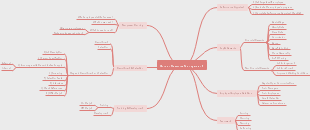
MindMap Gallery Buffett's Way (Thoughts, Methods, Records)
Study notes are for reference only! This book elaborates on Buffett's investment philosophy and strategies to help readers understand and learn Buffett's investment methods.
Edited at 2024-03-22 17:01:00Avatar 3 centers on the Sully family, showcasing the internal rift caused by the sacrifice of their eldest son, and their alliance with other tribes on Pandora against the external conflict of the Ashbringers, who adhere to the philosophy of fire and are allied with humans. It explores the grand themes of family, faith, and survival.
This article discusses the Easter eggs and homages in Zootopia 2 that you may have discovered. The main content includes: character and archetype Easter eggs, cinematic universe crossover Easter eggs, animal ecology and behavior references, symbol and metaphor Easter eggs, social satire and brand allusions, and emotional storylines and sequel foreshadowing.
[Zootopia Character Relationship Chart] The idealistic rabbit police officer Judy and the cynical fox conman Nick form a charmingly contrasting duo, rising from street hustlers to become Zootopia police officers!
Avatar 3 centers on the Sully family, showcasing the internal rift caused by the sacrifice of their eldest son, and their alliance with other tribes on Pandora against the external conflict of the Ashbringers, who adhere to the philosophy of fire and are allied with humans. It explores the grand themes of family, faith, and survival.
This article discusses the Easter eggs and homages in Zootopia 2 that you may have discovered. The main content includes: character and archetype Easter eggs, cinematic universe crossover Easter eggs, animal ecology and behavior references, symbol and metaphor Easter eggs, social satire and brand allusions, and emotional storylines and sequel foreshadowing.
[Zootopia Character Relationship Chart] The idealistic rabbit police officer Judy and the cynical fox conman Nick form a charmingly contrasting duo, rising from street hustlers to become Zootopia police officers!
The Buffett Way
Chapter 1 Learn investing from the “Stock God”
Section 1 Value Investing, the Golden Ruler
The essence of value investing: looking for the difference between value and price
Utilize the difference between the company's value and the stock market price to achieve investment profits
The market value cannot grow far beyond its intrinsic value
The stock price will remain at the same level as the company's intrinsic value for a long time.
Stay away from stocks whose price is higher than the company's long-term growth rate
Stocks whose stock prices are trading below the company's long-term growth rate can be considered a buy signal.
Because the gap between stock price and company value must be bridged
The cornerstone of value investing: margin of safety
The specific calculation method of safety margin is as follows:
Margin of safety = current (expected to be achievable in the future) sales volume - breakeven sales volume.
Margin of safety rate = margin of safety ÷ existing (expected to be achieved in the future) sales volume.
Safety margin = normal sales (or actual order amount) - profit and loss critical point sales.
The larger the values of safety margin and safety margin rate, the smaller the possibility of a company losing money, the safer the company is, and the smaller the business risk.
The concept of margin of safety can be used as a touchstone to help distinguish investment operations from speculative operations.
The margin of safety can be proven by data, rational reasoning, and a lot of experimental experience
If you ignore the margin of safety, even if you buy stocks of very good companies, it will be difficult to make a profit if the purchase price is too high.
The risk of buying at too high a price is considerable
The margin of safety is the most important thing in investing. It can:
Reduce investment risk
Reduce the risk of forecast errors
The investment return of value investment with safety margin is not directly proportional to sharing but inversely proportional. The lower the risk, the higher the return.
If a common stock is calculated to be worth only slightly more than its value, there is no need to be interested in buying it
The triangle of value investing: investors, market, company
Assess business value and think about market price
Ordinary investors do not necessarily need to learn empty theories, they only need to learn company valuation and correctly view market fluctuations
You must cultivate the right personality and carefully understand the companies within your capabilities.
An investment career does not require genius IQ, vision and inside information. What is required is the correct mindset, rational thinking and hard work and knowledge in investment.
The dumber the market behaves, the greater the winning rate for investors who are good at catching opportunities.
The Golden Triangle of Successful Value Investing
Cultivate a rational and self-controlled character
You need to be rational when analyzing company history
Predicting a company's future requires sensitivity and intuition
Treat market fluctuations correctly
In addition to good company analysis skills, we must also isolate ourselves from the emotions raging in the market.
Mr. Market is a servant, not a guide
The stock market can never be accurately predicted
Invest contrarian rather than following market trends
Efficient market theory doesn’t work
The efficient market hypothesis believes that in a stock market with sound laws, good functions, high transparency, and sufficient competition, all valuable information has been timely, accurately, and fully reflected in stock price trends, including the current and future value of the enterprise, unless there is Market manipulation, otherwise investors would not be able to obtain excess profits above the market average by analyzing past prices
Properly assess the company’s value
Investors first need to assess the value of the company
Intrinsic value, "true value" or "reasonable value" is far below the market share price and there will be a large margin of safety.
Value assessment is the premise, foundation and core of value investing
Intrinsic value is a very important concept that provides the only logical means of assessing the relative attractiveness of investments and businesses.
1. Asset value evaluation method: This method is a static evaluation method that uses the company's existing financial statement records to evaluate the company's assets item by item and then adds them up. There are mainly book value method and replacement cost method. Book value refers to the value or net value of shareholders' equity in the balance sheet, which is mainly composed of the capital invested by investors plus the operating profits of the company. Replacement cost refers to the cost that the acquiring company will spend to rebuild a company that is exactly the same as the target company. The depreciation of the equipment of the existing company must be taken into consideration.
2. Relative method: This method is more commonly used, mainly including the price-earnings ratio method, the price-to-book ratio method and the PEG method. The P/E ratio is the ratio of the market price to the average net profit per share in recent years. Generally speaking, if the P/E ratio is less than 10 times, it is obviously undervalued, and if the P/E ratio is higher than 40 times, it is obviously overvalued. The price-to-book ratio is the ratio of market price to net assets per share. Generally speaking, a price-to-book ratio less than 1 is an undervaluation. PEG is an extension of the price-to-earnings ratio, adding the consideration of growth rate. If PEG is less than 1, it is undervalued.
3. Absolute method: This is one of the more useful methods, which is the "discounted future cash flow" method. Discounted future cash flow is the ratio of the cash flows a company expects to generate over its future lifetime divided by the discount rate. The specific calculation method is relatively complex, and parameter selection varies from person to person.
The law of value in the stock market
Stock prices are essentially determined by value
Market prices often deviate from a security’s actual value
When deviations occur, a self-correcting tendency occurs in the market
Intrinsic value and speculative factors are factors that influence stock market prices
Value factors indirectly affect market prices
Value factors are not easy to be discovered directly by the market or traders and require a lot of analysis.
Speculative factors directly affect market prices
Their interaction causes stock market prices to fluctuate up and down around the stock's intrinsic value.
Buy low, sell high and make profit
The prices of financial securities are governed by a number of far-reaching but unpredictable factors.
Call these factors Mr. Market, he is a strange guy who buys and buys every day
Mr. Market and I are competitors
Market prices fluctuate, but many good stocks have relatively stable basic economic values.
Basic economic value refers to the realistic expected value of an asset's future income cash flows, which can also be understood as the present value of future cash flows. It represents the economic significance of anything to people and society, such as the "commodity value" in economics.
We must make rational use of this fundamental economic value that wants to be stable.
Its intrinsic value usually deviates from the current stock price
If the price is much higher than the value, you can go short
The price is far below the value and you can go long
Buy when the market price is significantly lower than the calculated intrinsic value
The difference between value and price is approximately equal to one-half of the underlying value and is at least not less than one-third of the underlying value
Some excellent companies are loved by everyone (mental resources), so the price-to-earnings ratio will not be very low.
As long as a company is growing rapidly and steadily, a price-to-earnings ratio of 30 to 40 times may not be excessive.
You can observe historical price-to-earnings ratio data
The price-to-earnings ratio, also known as the price-to-earnings ratio or PER, is the ratio of a stock's price to its earnings per share. It is one of the important indicators for evaluating stock value. The calculation formula is: price-to-earnings ratio = market price per share of common stock / annual earnings per share of common stock.
The numerator in this ratio refers to the current market price per share, while the denominator can be the profit of the most recent year or the forecasted profit of the next year or several years.
Generally speaking, a P/E ratio between 10 and 20 is considered normal. If the P/E ratio is too small, it means that the stock price is low and the risk is low, and it may be worth buying; if the P/E ratio is too large, it means that the stock price is high and the risk is high, so you should be cautious when buying.
However, it should be noted that the price-to-earnings ratio does not fully reflect the investment value of a stock. It is also necessary to consider the company's profitability, future development prospects, industry status and other factors. In addition, investors also need to pay attention to its limitations when analyzing the P/E ratio, for example, it cannot reflect the company's financial condition and future profitability.
Overall, the price-to-earnings ratio is an important stock analysis tool that can help investors better understand the investment value and risk profile of a stock. However, when making investment decisions, you also need to consider other factors and make rational judgments.
Value investing can continue to beat the market
The performance of every value investment comes from exploiting the difference between a business's stock market price and its intrinsic value
Invest in stocks with low price-to-earnings ratios, low stock price dividend-to-income ratios, and low stock price to cash flow ratios
Although the indicator cannot directly indicate the size of the margin of safety, it can indirectly prove that companies with lower ratios have larger margins of safety.
The key to value investing lies in stock market fluctuations and rational use of the law of value
Value investing is not difficult to understand, but it is difficult to practice it literally because it conflicts with certain inertial effects in human nature.
The important thing for investors is not to understand other people’s investment ideas, but to know how to apply them in practice.
Five factors affecting value investing
Value investing is the investment behavior of buying low and selling high due to price fluctuations around the value axis. A simple understanding is value return.
Having long-term value expectations and value realization follows the long-term appreciation of the company's assets, not short-term speculation.
A mature stock market lies in its value assets
Value investing is not only a correct concept, but also a correct investment method and technique
Value investing is based on the analysis of basic aspects such as market environment, industry status and intrinsic value, building a model of data to express prices, and achieving effective investment through comparison.
The value of listed company stocks is mainly composed of five major factors
Dividend payout ratio
A reasonable dividend payout ratio reflects the company's good cash flow situation and obligation prospects, and is also an important sign of high-quality blue-chip stocks.
The dividend payout rate of high-quality assets should be sustained, stable, and higher than bank deposit rates for the same period, and both corporate development and shareholder interests should be given equal emphasis.
Dividends and dividends are too low, indicating that the company's business lacks competitiveness, shareholders' interests are not protected, and the stock is unattractive.
Unstable differentiated dividends and sudden high dividends reflect the company's lack of long-term plans or unclear business prospects.
Profitability
Reflects the company's overall operating conditions and profitability per share
The main indicators are the company's marginal profit margin, net profit and earnings per share. The higher the indicator, the better.
The profitability of a valuable company should be sustained and stable growth, and the annual profit growth rate should be higher than the growth rate of GDP
asset value
It is mainly measured by the net asset value of listed companies. It is the remaining part of the total assets that is easy to exclude liabilities. It is the core value of assets and can reflect the operating capabilities and liability structure of the company's assets.
Net assets = total assets - liabilities
A reasonable debt ratio reflects the company's better asset structure and operating efficiency.
A higher asset-liability ratio reflects the company's greater financial and operational risks.
P/E ratio
Refers to the ratio of market price per share to earnings per share
High earnings per share reflects high return on market investment
Price-to-earnings ratio or current year's earnings per share/price per share
A company with strong competitiveness is more attractive and can support a relatively high price-to-earnings ratio.
boundary of safety
The difference between the stock price and the intrinsic value of the asset is called the margin of safety
Intrinsic value refers to the discounted value of the cash flows a company can generate over its life cycle.
Short-term asset value is usually measured in terms of net asset value. If it is significantly lower than the net asset value per share, the risk is considered low.
Annual rate of return = (dividend for the year, closing price at the end of the year - closing price at the beginning of the year)/stock purchase cost*100%
Return on individual stocks = (estimated income from dividends - stock purchase cost)/stock purchase cost * 100%
Section 2 Evaluating the Value of a Stock
mental resources
market leader
Number one on the consumer mind ladder
No. 1 in sales
Have good leadership and management
Is there any investment in communication?
Companies with high return on equity
Return on equity = net income/(beginning capital, ending capital)/2 When a company achieves a higher level of return on equity, it indicates that it is efficient in using the assets provided by shareholders. Therefore, the company will increase its equity value at a higher rate, which will also lead to a corresponding increase in the stock price.
You should buy when the stock price reaches an attractive level relative to its earnings growth and return on equity.
Performance grows, yield returns return to expectations
Returns to stock investors include dividend payments plus the increase in stock price
Stock holders’ rate of return = (dividend stock price change)/initial stock price
Sustained equity returns are good, 20% is a staggering number
The national economic growth is only about 5%
To achieve 20% growth, the country must have 10% growth
Companies that maintain high profits are rare.
It is easy for a company with a small share capital (1 billion) to earn a high rate of return, but it is extremely difficult for a company with a large share capital (10 billion) to earn a high rate of return.
Valuation using the “total earnings” approach
Earnings per share = Net income after tax/Special stock dividends Number of ordinary shares outstanding
Per share makes up for the fact that we only know the dividends received per share but do not understand the full picture of earnings.
Our task is to find a profit situation that can convert every dollar of retained earnings into at least one dollar of market value.
The money retained can also create value
Retained earnings are the net profits realized by an enterprise from its operating activities. After deducting the income tax payable, it is not directly distributed to shareholders, but is retained within the enterprise to support its development. The ownership of this part of the funds belongs to shareholders, and its purpose is to convert profits into investments in the hope of bringing higher returns in the future. Retained earnings usually include two parts: surplus reserves and undistributed profits.
1. **Surplus reserve**: This is a part of the funds withdrawn from net profits in accordance with the provisions of the law or the company's articles of association. It usually has a specific purpose, such as making up for losses, converting it into capital, etc. In China, according to the provisions of the Company Law, corporate enterprises are required to allocate a certain proportion of net profits to statutory surplus reserves. This is not only a protection for internal accumulation within the enterprise, but also reflects the protection of shareholders' rights and interests.
2. **Undistributed profits**: This part refers to retained earnings without specific purposes, that is, undistributed net profits. It is not distributed to shareholders or earmarked for any other specific use, so companies have greater discretion in how to use undistributed profits.
The cost of retained earnings refers to the loss of opportunities for external investment that shareholders lose due to undistributed dividends, that is, the potential gains from other investment opportunities that shareholders give up. When a company decides whether to retain earnings, it needs to consider the cost of retained earnings. If the rate of return on reinvestment of retained earnings is lower than the rate of return that shareholders can obtain by making similar risky investments themselves, the company should consider distributing profits to shareholders.
There are many methods to calculate the cost of retained earnings, one of which is the dividend growth model method, which assumes that dividends increase at a fixed annual growth rate and estimates the cost of retained earnings by calculating the relationship between the expected annual dividend amount and the market price of common stocks.
In accounting, the formula for calculating the ending balance of retained earnings is: Ending balance of retained earnings = Opening balance of retained earnings Credit amount of retained earnings - Debit amount of retained earnings. This reflects the changes in the company's retained earnings during a certain accounting period.
As a source of capital for company reinvestment, the cost of retained earnings is not zero because retained earnings can also be used for other investments. When a company decides whether to retain earnings, it needs to comprehensively consider factors such as the company's operating conditions, market environment, investment opportunities, and shareholders' interests. If operating conditions are good, retained earnings can bring higher returns, thereby increasing shareholder value; but if operating conditions are poor, the opportunity cost of retained earnings increases, and it may be necessary to reconsider whether to distribute profits to shareholders.
The goal of every investor is to build a portfolio that will generate the highest overall earnings for many years to come.
The total earnings approach provides a metric for value investors to examine their portfolios
When evaluating future earnings, one should first study the past. Historical records are an indicator of future trends.
Regardless of whether the economy is strong or weak, profits can grow at a long-term and stable rate, and it is possible to do equally well in the future.
The company's growth level cannot be extrapolated beyond the true growth rate, and it cannot be completely disconnected from the past.
Sooner or later, the company's overall earnings will eventually decline, as it becomes more difficult to find new markets and expand sales.
Valuation using cash flows
Simple and effective when using cash flow assessments
Stock investment returns are viewed in relation to bond returns
Every company is different, and the discount rate also changes, so there is no need to spend energy researching unified values.
If a company does not have any business risks, its future profits are completely predictable.
Three things must be done to make an accurate assessment
1. Choose the correct valuation model - discounted cash flow model DCF
bonds
Have a dividend and maturity date so that future cash flows can be determined
It is difficult to artificially influence dividends
stock
You must estimate future dividends yourself
Managers have a greater impact on dividends
Advantage
(1) This model calculates the company's equity value based on the evaluation of the value created by each component that constitutes the company's valuable business. This allows investors to clarify and understand the source of the company's value, the situation of each business and the ability to create value.
(2) The amount of the company's free cash flow reflects the level of competitive advantage. The period for generating free cash flow is consistent with the duration of the competitive advantage. The level of capital cost also reflects the risk of investment in competition. The risk is high or low.
(3) The model is very precise and can handle most complex situations.
(4) This model is consistent with the capital budget preparation process that most companies are familiar with, and the calculation is relatively simple and easy to operate.
Calculation method
The DCF (Discounted Cash Flow) calculation method is a method to evaluate the value of a company. It estimates the intrinsic value of the company by predicting its future cash flow and discounting it to its present value. The following are the steps of the DCF calculation method:
1. **Forecast future cash flow**: Forecast the company's free cash flow (Free Cash Flow, FCF) in the next few years. Free cash flow refers to the cash flow remaining to all capital suppliers (including shareholders and creditors) after a company has paid for capital expenditures and working capital. Typically, free cash flow equals net income plus depreciation and amortization minus changes in capital expenditures and working capital.
2. **Determine the discount rate**: Choose an appropriate discount rate, which is usually the rate of return required by investors, which can be the cost of capital, the weighted average cost of capital (WACC), or other appropriate rate of return. The discount rate reflects the risk and opportunity cost of the investment.
3. **Calculate present value**: Discount future cash flows to their present value according to the discount rate. For each period's cash flows, calculate their present value using the following formula:
PV = CF/(1 r)^n
Among them, PV is the present value, CF is the future cash flow, r is the discount rate, and n is the number of periods.
4. **Calculate total enterprise value**: Add the present value of all future cash flows to get the total enterprise value. If it is an equity investment, it is necessary to subtract debt from the enterprise value and add cash and cash equivalents to obtain the value of shareholders' equity.
5. **Calculate the value per share**: If you are valuing a stock, divide the value of the shareholder's equity by the total number of outstanding shares to get the intrinsic value per share.
The key to the DCF calculation method is to accurately predict future cash flows, choose an appropriate discount rate, and reasonably consider long-term growth potential. The DCF model can be applied to different types of businesses, but for growing businesses or businesses with unstable cash flows, the accuracy of forecasts may be greatly affected. Therefore, the DCF model usually needs to be used in conjunction with other valuation methods and qualitative analysis to obtain more comprehensive valuation results.
2. Choose the correct cash flow definition and discount standard
The long-term Treasury bond rate is the best indicator chosen as the discount rate
3. Choose the correct method for forecasting the company’s future long-term cash flows
Uncertain investments are all manifestations of speculation
The Circle of Competence Principle and the Margin of Safety Principle are conservative methods to prevent errors in estimating future cash flows.
Use probabilistic valuation
Multiply the probability of loss by the amount of possible loss, then multiply the probability of gain by the amount of possible gain, and subtract the former from the latter.
The use of probability in investing
Calculate probability
Adjust probabilities based on new information
As the probability increases, the amount of investment should also increase
Only invest when the odds of success are completely in your favor
Find price and value differences
In the stock market, if you don't find the difference between price and value, you can't determine the appropriate price to buy a stock.
Intrinsic value is the discounted value of the cash flows a business can generate during its lifetime
Primarily an estimate of a forecast of future cash flows, rather than an exact value
Value investing is also limited to a value range for evaluating the intrinsic value of a small number of stocks, and it is by no means those numbers that appear to be accurate but are actually fallacious.
What we actually have to do is find out the difference between the overall value of the company and the stock market price and make investments.
Valuation is both an art and a science
Important Aspects of Intrinsic Value Assessment
1. Cash flow discount model
The John, Burr, and Williams model is the most scientific intrinsic value evaluation model
2. Correct cash flow forecast
Accounting earnings per share is only the starting point for judging the intrinsic value of a company, not the end point.
Only free cash flow is meaningful in accounting profit valuation. It is best to have a surplus on the money earned.
In addition to cash flow in accounting standards, owners' equity also includes capital expenditures by the company to maintain its long-term competitive advantage.
3. Appropriate discount rate
The Treasury bond rate is the risk-free rate that anyone can obtain
If the investment cannot exceed the interest rate of government bonds, it is better to buy government bonds
Excellent companies are as risk-free as government bonds
Therefore, the Treasury bond interest rate is the best discount rate
4. Economic goodwill
Economic goodwill usually refers to the capitalized value of the excess profits that a company expects to bring in the future. It is an integral part of the overall value of the company. The existence of goodwill means that the company's profitability exceeds the normal profitability of its identifiable assets, such as the average social return on investment. It may come from various factors such as the company's geographical location, brand reputation, management efficiency, and technological advantages.
Specifically, the economic meaning of goodwill is reflected in the following aspects:
1. **Capitalization of excess profits**: Goodwill reflects the expected profitability of the enterprise, which is capitalized as an asset of the enterprise in accounting terms. It is the expectation that a company will be able to generate profits above the industry average in the future.
2. **Components of enterprise value**: Goodwill is a part of enterprise value that cannot be ignored. Especially for some enterprises with high brand value and large market influence, their goodwill value may account for a large part of the total enterprise value. Proportion.
3. **Reflection in M&A activities**: In corporate mergers and acquisitions, goodwill usually refers to the portion paid by the buyer that exceeds the fair value of the net assets of the purchased enterprise. The value of this overpayment reflects the buyer's expectations for the future excess profitability of the purchased enterprise.
4. **Difference from intangible assets**: Although goodwill is an intangible value, it is not as clearly identifiable and quantifiable as other intangible assets (such as patents, trademarks, etc.). It is more reflected as a kind of expectation and trust, which is closely related to the overall operating environment and future prospects of the enterprise.
5. **Impairment Test**: Due to the uncertainty of goodwill, companies need to conduct impairment tests on goodwill regularly to ensure that its value will not drop significantly due to changes in the market environment.
The value of goodwill is not fixed; it will change with changes in the actual business operations and market conditions. If a company's operating conditions are poor, resulting in a decline in its expected excess profitability, the corresponding goodwill value will also be affected. In practice, the value adjustment of goodwill is usually reflected in corporate mergers and acquisitions, asset appraisals or annual financial reports.
Some important value evaluation indicators
The accountant's job is to record, not to value. Valuation is the job of investors and managers
Neither the relative value valuation method nor the asset-based valuation method is suitable for the valuation of enterprises with sustained competitive advantages.
Asset-based valuation method determines the value of a company's stock based on the value of a formula's assets
1. Book value adjustment method
The book value adjustment method is a method of estimating the value of a company. It is based on the book value of the target company's net assets and makes necessary adjustments based on the actual situation to determine the company's value.
Specifically, the calculation formula of the net asset book value adjustment method is as follows:
Value of the target company = book value of the target company’s net assets × (1 adjustment factor) × proportion of the shares to be acquired to the total shares of the target company
For example, assume that Company A is in the process of merging Company B, and Company B's book net assets at the time of the merger are 80 million yuan. Considering some factors such as asset appreciation, the adjustment coefficient is 25%. If Company A acquires all the shares of Company B, then The value of Company B is calculated as follows:
Company B’s value = 80 million yuan × (1 25%) × 1 = 100 million yuan
This method is mainly used in M&A activities. When the acquirer evaluates the value of the acquired company, it will make adjustments based on the book value of the acquired company's net assets to more accurately reflect the company's actual value.
It should be noted that the adjustment coefficient here is determined based on actual conditions and may involve factors such as asset appreciation and depreciation. In addition, this method is mainly applicable to equity investments. When the investor has control, joint control or significant influence on the investee, the equity method is usually used for accounting. If the investor has no control, joint control or significant influence over the investee, and there is no quoted price in an active market and the fair value cannot be measured reliably, the cost method is usually used for accounting.
But one disadvantage of book value is that the book value of assets and liabilities in the balance sheet is likely not equal to their market value.
Inflation causes an asset's current market value to be different from its historical cost value minus depreciation
Technological advances cause certain assets to lose value before their depreciation period expires or they are scrapped
Due to the effective and reasonable combination of various assets formed by the company's organizational capabilities, the overall value of the company's multiple asset portfolios will exceed the sum of the values of individual assets, and the value of this organizational capability is not reflected in the company's books.
Therefore, when conducting asset value analysis, the book value needs to be adjusted to reflect the market value of the company's assets.
Commonly used adjustment methods include the liquidation value method and the replacement cost method.
2. Liquidation value method
The liquidation value method is a method of assessing the value of a business that determines its value based on the net sale value of its assets in liquidation. Specifically, this approach does not consider a business's ability to continue as a going concern, but instead focuses on the per-share value that shareholders would receive if all assets were sold and all debt was paid off if the business was forced to liquidate.
The core of the liquidation value method is to estimate the realizable value of corporate assets at the time of liquidation. This often means the asset needs to be sold for quick cash, potentially resulting in a price lower than the market normal. The premise for the application of the liquidation value method is that the enterprise cannot continue to operate and must be closed through liquidation.
Two types of liquidation value methods include:
1. Orderly Liquidation Value: Assume that the company has enough time to sell assets in an orderly manner and choose the best sales time and method to obtain the best selling price.
2. Distress Liquidation Value: This occurs when a company must sell assets in a short period of time, usually to a single or a small number of buyers. This urgency results in prices well below normal market value.
Implementation of the liquidation value method involves the following steps:
- Determine the total assets of the enterprise, including tangible assets (such as equipment, real estate) and intangible assets (such as patents, goodwill).
- Assess the liquidation value of these assets, i.e. the amount that could potentially be obtained if liquidated quickly.
- Deduct the total liabilities from the liquidation value of the assets to obtain the net liquidation value of the enterprise.
- Calculate total liabilities, including debt, accounts payable, etc.
- Allocate the net liquidation value to shareholders in proportion to the shares held to determine the liquidation value per share.
It is important to note that the liquidation value method may be lower than book value because book value generally reflects the historical cost of the asset rather than its quickly realized market value. In addition, the liquidation process will also incur expenses, such as liquidation costs, legal fees, etc., which also need to be taken into account when calculating the liquidation value.
Overall, the liquidation value method provides a way for a company to assess its value in a liquidation state, which is of great significance to creditors, shareholders and potential acquirers when assessing the status of the company and making related decisions.
The liquidation value method holds that the value of a company is equal to the residual value after the company has liquidated all assets and compensated all liabilities.
If the company is in a declining industry and the company's profitability drops significantly, the company's liquidation value may be much higher than the company's operating value.
If the company is in a growth industry and the company's profitability continues to increase, the company's liquidation value may be significantly lower than the company's operating value.
Liquidation is equivalent to the sale price, which is equal to the second-hand market price. Only bankruptcy will choose liquidation. General organizational capabilities are not counted in the liquidation value.
3. Replacement cost method
The replacement cost method, also known as the cost method, is an asset valuation method. In this method, the value of an asset is determined by calculating the cost required to reacquire or rebuild the same or similar asset in current conditions and then deducting the asset's wear and tear value. This method is widely used in asset evaluation, especially when the economy is developing rapidly and prices are rising rapidly.
The core idea of the replacement cost method is to reflect the actual cost value of the asset, that is, the cost required to rebuild or replace the asset under existing technology, materials and expense standards. This cost includes direct costs (such as the cost of new materials and new processes) and indirect costs (such as the effects of inflation and obsolete depreciation).
Under the replacement cost method, the value of an asset consists of the following elements:
1. Replacement cost: refers to the total cost required to repurchase or build an asset in a brand-new condition under current market conditions.
2. Physical depreciation: The loss of asset value caused by the loss of physical performance or the decline in function of an asset due to wear and tear or the action of natural forces.
3. Functional depreciation: The loss of asset value caused by the promotion of new technologies that makes original assets technically backward and degrades in performance.
4. Economic depreciation: refers to changes in external environmental factors of assets, such as intensified market competition, reduced demand, etc., resulting in a decline in asset value.
The advantage of the replacement cost method is that it can more truly reflect the cost of intangible assets such as human resources, especially when the value of human resources is difficult to directly measure. However, this method also has disadvantages, such as increasing the workload of accounting, and the determination of replacement cost is often subjective and may deviate from the actual cost principle.
Applicable environment: In situations where the economy is developing rapidly and prices are rising rapidly, especially for industries with rapid technological upgrading, such as the information technology industry.
Purpose: Suitable for managers to make decisions, evaluate the current value of assets, and provide a basis for corporate investment, financing and operating decisions.
It is difficult to relate an asset's profitability to its distant historical cost, but it is easy to relate it to its current replacement cost.
The main method of adjusting for inflation is to use a price index to convert the value of the asset in the year of acquisition into the current value.
No matter how perfect the replacement cost method is, it can only reflect the sum of the individual values of each asset, but it ignores the value of the company's organizational capabilities. The fundamental reason for the company's existence is to use organizational capabilities.
Relative valuation method evaluates the value of a company based on comparison with other similar companies
1. Price-to-earnings ratio
The P/E ratio cannot determine buying and selling, and is mostly used for comparisons with the same industry and historical comparisons.
It is difficult to compare whether stocks with similar price-to-earnings ratios are good or bad, because risk, growth and capital needs are the basis for determining the price-to-earnings ratio of a stock.
Companies with growth potential should have a higher P/E ratio
Companies with high risk should have a lower P/E ratio
Companies with high capital needs should have a lower P/E ratio
2. Price to Book Ratio
It is an evaluation of the company's tangible assets. The company's performance created by intangible assets is not immediately included in the book value.
Programs, brands and databases, especially in service industries
A company with a low price-to-book ratio relative to peers or the market and a high ROE may be a potential bargain, but some digging needs to be done
However, the price-to-book ratio is very useful when evaluating financial companies, because most financial companies have a large number of liquid assets on their balance sheets, such as deposits, insurance funds, etc.
The advantage of financial companies is that the book value of assets is priced at market price, because they are revalued every quarter based on market price, which means that the book value is close to the actual value.
Financial company stocks lower than their book value often indicate that the company is in some kind of trouble. Below 10
3. Market-to-sales ratio
Less variable sales revenue makes the price-to-sales ratio more valuable in quickly valuing companies relative to larger changes in profits.
For the evaluation of profit indicators with different gold content, the price-earnings ratio is of little help. In the same time period, sales revenue does not change much, so the price-to-sales ratio comes in handy.
One big disadvantage of the price-to-sales ratio is that the value of sales revenue can be very small or very large, depending on the company's profitability
If a company discloses billions in sales but loses money on eyebrow pencils, it will be difficult for us to track the stock's price-to-sales ratio.
In short, neither the asset value assessment method nor the relative value assessment method is suitable for advantageous enterprises that continue to compete. This is because the fundamental characteristic of advantageous enterprises that continue to compete is to create more value with fewer assets. The value of their assets is often Much lower than the company's operating value as a going concern; in addition, in addition to the tangible assets reflected in the books of advantageous enterprises that continue to compete, their brand, reputation, management capabilities, sales network, core technology and other important intangible assets are not on the books at all reflection, so it is also difficult to evaluate based on replacement cost or liquidation value. Or Yuan Di, smoke a big chapter
Chapter 2 Buffett’s Concentrated Investment Strategy
Section 1 The highest rules gather in the market
Let Mr. Market work for you
Mr. Market is the sum of all stock investors, he has emotions
Reason and calmness are the keys to defeating Mr. Market
Mr. Market buys when his mood is bad and sells when his mood is good.
Go against the grain and beat the market
In the investment market, we do not follow the trend or blindly follow market sentiments, but through in-depth research and long-term observation, we discover and invest in high-quality stocks that are undervalued by the market. The core of this strategy is to find the intrinsic value of the enterprise rather than chasing short-term fluctuations in the market.
Correctly grasp the value laws of the market
Buffett believes that Mr. Market ultimately follows the law of value when reporting stock trading prices. The reason is simple: the law of value is the basic law of the commodity economy, and the stock market is a product of the commodity economy, so it is natural that it must follow the law of value.
The basic principle of the law of value is: the value of commodities is determined by the socially necessary labor time to produce commodities, and commodity exchange must be carried out according to the value of commodities.
The expression of the law of value is: in the process of commodity exchange, affected by the relationship between supply and demand, the price fluctuates around the value. In the short term, prices often deviate from value; in the long term, prices will definitely return to value.
Graham believed that there are two most important factors that affect stock prices:
One is the intrinsic value of the enterprise, and the other is market speculation.
It is the interaction and pull between the two that causes the stock price to fluctuate around the intrinsic value of the company.
The value factor can only have a certain influence, so it is common for stock prices to deviate from the intrinsic value.
The stock market may ignore corporate success for a period of time, but will eventually reflect that success in the stock price
This relative lag in success is likely a good thing for investors and will lead to many opportunities
How to profit from inflation
Buffett is good at selecting companies that can create higher profits with smaller net tangible assets. Because of this advantage, the market still allows Sees to have a higher price-to-earnings ratio even if it is affected by inflation. . Although inflation will harm many companies, companies with consumer exclusivity will not be harmed. On the contrary, they can benefit from it.
In 1983, Buffett wrote in a letter to shareholders: "Over the years, accumulated experience tells us that companies with tangible assets such as resources, equipment and plants are more advantageous in resisting inflation, but in fact they are not. Not so, with rich
Section 2: The most effective concentrated investment that has been ignored by Wall Street
Carefully select stocks and invest concentratedly
Diversification is a kind of protection against ignorance. Not only will it not reduce your investment risk, but it will share your investment profits. Concentrated investment can help us concentrate our returns.
The prerequisite for concentrated investment is careful stock selection
Focus on investing in the best companies
Companies with long-term competitive advantages
Company with reasonable prices
“Actually, as investors, our income comes from the efforts of a super team of business managers. Although the companies they manage run very ordinary businesses, they have achieved extraordinary results. What we are looking for in concentrated investment That’s the kind of great company.”
Focus on investing in companies you are familiar with
Follow the principles of your own circle of competence
There are only a few companies worthy of our long-term investment
Concentrate investments in companies with minimal risk
Buy at a reasonable price, the probability of investment loss is usually very small
The investment risk of concentrated investment in excellent enterprises is much lower than that of diversified investment in enterprises that you do not understand at all.
Concentrated investment, fast and accurate
Concentrated investment is an advantage given to individual investors by the market, and should be taken advantage of
Life doesn't need to be repeated three times, it only needs one chance
When selecting stocks, we must be very rigorous and our standards must be very strict.
Limiting the number of choices to a small number of stocks makes it easier to make correct investment decisions and achieve better investment results.
Concentrate investment and focus on long-term returns
I would rather have a choppy 15% return than a steady 12% return
Adopting a centralized sustainable competitive advantage value strategy will have certain competitive advantages.
Concentrated investment can both reduce risks and increase returns, so what's the harm in short-term performance fluctuations?
Accurately assess risks and unleash the power of concentrated investment
Determine risk not through price fluctuations, but through changes in a company's value
The accuracy of computer model predictions is nothing more than a basis for price fluctuations, which may very well induce decision makers to make completely wrong decisions.
The highest probability of winning is to place a large bet
The so-called winning probability is actually the accuracy of the value assessment of the enterprise invested in.
The accuracy of valuation depends on the accurate probability of predicting the company's long-term sustainable competitive advantage in the future.
Unlike probability calculations for other things, investing companies will always face a different competitive environment than in the past. Everything is uncertain and unrepeatable, so there is no way to estimate the probability of success.
Therefore, we must collect as much information as possible. As the situation develops, we will continue to add new information on the basis of the original information. We should always consider the probability of winning or losing. If there is a chance of success, then do it.
Determine target companies for concentrated investment
Concentrate investment in outstanding companies that are within the investment circle of competence, have simple and stable businesses, and can reliably predict future cash flows
If the company is complex and the industry environment is constantly changing, then we don’t have the intelligence to predict future cash flows.
As long as you try to avoid making major mistakes, investors only need to do a few correct things to ensure profits.
What types of companies does Buffett hold in his stock portfolio?
Choose a small number of stocks that can produce above-average returns in the long term, and concentrate most of your capital on these stocks. Regardless of the short-term ups and downs of the stock market, stick to holding shares and seek steady victory.
Eighty percent of investment profits come from 20% of stocks
Two main advantages of concentrated investment
The smaller the holding, the lower the risk
Risks are related to investors’ investment time
Time can wash away all risks, because excellent stocks will definitely rise sharply in ten years.
The fewer shares you hold, the more profit you make
Diversified investment is effective in the short term, but may reduce investment profits in the long term.
Invest the most money in the stocks with the highest probability of winning
Chapter 3 Buffett teaches you how to choose a business
Section 1 Basic Criteria for Choosing a Company
Choose companies with competitive advantages
For investors, the key is not to determine how much impact an industry will have on society, or how much it will grow.
Rather, it is about determining the competitive advantage of the chosen enterprise and, more importantly, the sustainability of this advantage
Investment is most sensible when it is closest to business operations
Enterprises with outstanding competitive advantages have excess profitability that exceeds industry levels and can create value-added that is much higher than that of ordinary enterprises in the long run.
It is best for a global company not to be affected by cycles
Stocks are not an abstract concept. When investors buy stocks, no matter the quantity, it is not the market or the macroeconomics that determines the stock price, but the company's own operating conditions.
In investing, we must regard ourselves as company analysts, not market analysts, nor macroeconomic analysts, securities analysts, etc. Our ultimate destiny depends on the economic destiny of the company.
Analyze businesses rather than stocks, the key to business analysis is competitive advantage
Is the company's business stable in the long term and has it been competitive in the past?
Does the company's business have economic concessions and does it now have a strong competitive advantage?
Can the company's current strong competitive advantage be maintained in the long term?
Making the original business bigger and stronger is the foundation for long-term sustainable competitive advantage. Therefore, Buffett's favorite investments are companies that are unlikely to undergo major changes.
Choose a company with high profits
Sustained and stable profitability, a company's equity capital and shareholder return rate are the most important indicators of a company's profitability.
The capital used by management to achieve profitability includes two parts:
Part of it is the historical capital originally invested by shareholders.
Part of it is retained earnings formed from undistributed profits
Invest in the company's continued development and in projects that increase core business performance, rather than meaningless business that may even cause disaster.
In times of inflation or economic depression, companies with extraordinary competitive advantages in their core business can generate high rates of return by investing only a small portion of their incremental assets in that business.
The future profitability of a company is the key to the success of an investor's investment, and future cash flow is a way to reflect it.
Choose a reasonably priced company
Investing in the best companies does not necessarily have the best returns, because a necessary condition for investment success is to buy at an attractive price
After an investor finds a company with sustainable competitive advantages, buying its shares does not guarantee him a profit.
You should first evaluate the company's intrinsic value and determine the value of the company's stock.
This value is then compared to the stock market price
The stock price has a large enough margin of safety compared to the calculated value
Stocks whose share price is less than 2/3 of their net present value
Pay attention to the market price and intrinsic value of the company to ensure that you buy it at the ideal price
As long as the performance is outstanding, even if it is ignored by the market in the short term, its value will eventually rise.
Choose companies with economic franchises
We must remember that we are not buying stocks, but companies. Economic franchise is the force that affects stock prices.
Economic franchises are the key for companies to continue to achieve excess profits. Compared with companies without economic franchises, companies with economic franchises are much less likely to be eliminated, and long-term profit forecasts are easier to make.
In the principles of business warfare, franchises have extremely strong defensive advantages, and the entire economic world can be divided into two categories:
A small number of enterprises operating under franchises
The products or services provided by a company have market demand or even strong demand, and there are no close substitutes, and they have not received price controls from the government.
Not afraid of losing market share
Can have pricing power
Have economic credibility to withstand inflation
Can tolerate management mistakes
Possess the five laws of mind in positioning
Five Laws of Mind
1. Limited mental capacity
There are ladders and differences in the mind.
2. The mind hates confusion.
Simply repeat until you puke
3. Lack of mental security
Design certificates of trust to solve security issues
① Money risk (will it be expensive?)
② Functional risk (functional effectiveness?)
③ Physiological risks (harm to the body?)
④ Social risks (what do others think?)
⑤ Psychological risks (psychological guilt problems, buying is expensive and may be painful for a while, but it feels good when you use it)
4. The mind refuses to change.
Follow consumer perceptions
5. The mind easily loses focus
The more you do, the less you gain. It is powerful to focus on one point and make the brand and category inseparable. The more you focus, the more representative the category will be.
Most common commercial enterprises
Daily commodities that can be replaced
From fuel minerals to computers, cars, and air transport
Choose companies with super capital allocation capabilities
The most important job of a business manager is capital allocation. Once managers make capital allocation decisions, the most important thing is that the basic criterion of their behavior is to promote the growth of the intrinsic value of each share, thereby avoiding the decrease of the intrinsic value of each share.
The ability of capital allocation is mainly reflected in whether management can correctly invest a large amount of capital in projects that maximize the long-term growth of shareholder value in the future. The foresight of allocation determines the company's future development prospects.
A simple understanding is to invest the remaining funds or buy back the stock price
Coca-Cola Co. continues to invest in soft drinks and buy back low-priced stock
Negative case: Yunnan Baiyao used its surplus funds to invest in stocks and lost all its historical money.
Consumer monopolies are priority investment targets
For investors, the key is not to determine the impact of an industry on society, or how much the industry will grow, but to determine the competitive advantage of any chosen enterprise, and most importantly, to determine this advantage. Continuity
Concession
Many companies fall into two broad categories:
The first category is that investors should buy companies with consumer monopolies.
The second category is product companies that investors should try to avoid.
Brand enterprise
Brand and product definitions
(1) Goods
The cheaper the goods, the better, but there is no future in using price as differentiation.
(2) Placeholder brand
Without a clear concept of differentiation, consumers don’t know why they buy you, but everyone knows you exist. This is called a placeholder brand, occupying a position without differentiation.
(3) Differentiated brands
Have clear differentiation and can lead the market
(4) Personal brand
Personal branding is the highest level of brand differentiation. The founder of a real-person company 100% represents the company's differentiation. He also represents the company's public relations.
Section 2: How to identify superstar companies (how to find developing companies)
Grasp the company’s development potential
It is not the stock class itself that is of interest to us, but the underlying value of the company and its prospects for growth.
Invest accordingly based on a company's long-term prospects, not be a stock market gambler
When the company makes a profit, investors will naturally make profits.
A company's profit is directly proportional to its ownership. Suppose a company earns 5 yuan per share. When we own 1,000 shares, we can earn 5,000 yuan.
The company's profit processing is divided into two situations, no matter which one is beneficial to the investment
One is to pay 5,000 yuan through dividends
The second is to retain earnings for current investment, thereby increasing the company’s intrinsic value.
Small and medium-sized enterprises also deserve it
It doesn’t matter the size of the company. The really important factors are how much we know about the company and business, whether people we like are managing them, and whether the products are competitive.
The company has good fundamentals
One thing you must do before buying a stock is fundamental analysis. Determine the quality and strength of the stock through analysis, which is the process of distinguishing its advantages and disadvantages.
Fundamental analysis mainly analyzes the company's earnings, sales, equity returns, profit margins, assets and liabilities, stock market, as well as the company's products, management, and industry conditions.
The company's profitability is the most important factor that affects the stock price. That is to say, only buy stocks of companies whose profits and sales are constantly increasing, and whose profits and return on equity are high. This can be measured by earnings per share.
Pay full attention to companies whose earnings growth rate has reached or exceeded 30% for three consecutive years.
Business can remain stable for a long time
The company will not undergo major changes, the operating industry is simple, the single brand is competitive, and the products have monopoly rights for more than ten years and will not decline.
Refuse to invest in companies that are solving certain problems. Choose companies to solve problems one by one. It is better to directly choose companies that have no problems.
For enterprises whose previous plans failed and are preparing to change their business direction, enterprise transformation means that the original competitive products have lost the market and must not make changes. Once changes are made, there will be many problems, which must be solved one by one. A crow cannot become a phoenix.
Choose a company with an excellent governance structure
To test whether a company has a good governance structure, you should focus on checking the company materials such as shareholder power of attorney, whether it is open, transparent and clear, and whether the company's management puts the interests of shareholders first, always from the perspective of investors Consider whether there is a good fit between the company's management team and the board of directors
Chapter 4 Buffett teaches you how to read financial reports
Section 1: 8 pieces of information on the income statement items
The less marketing costs a good company has, the better
The income statement allows investors to understand how the business performed over a period of time.
Whether a company can be profitable is only one aspect. We should also analyze the way the company obtains profits. Whether it requires a lot of research and development to maintain competitiveness, and whether it needs financial leverage to obtain profits can determine the driving force behind the company's economic growth.
The cost of sales can be the purchase cost of the products a company sells, or it can be the material costs and labor costs of manufacturing the products.
The key indicators of long-term profitability are gross profit margin and gross profit
Total revenue minus the cost of raw materials consumed by the product and other costs required to manufacture the product
Gross profit margin = gross profit/operating income × 100%
More than 40% have sustainable competitive advantages
Less than 40% are in highly competitive industries
Excessive competition exists below 20%
It is key to determine whether the company's products with high gross margins are sustainable, which excludes selling and general administrative expenses, depreciation expenses and interest expenses.
Companies with high gross profits may also be a risk,
First, excessive research costs
Second, excessive sales and administrative expenses
Third, excessive debt interest expenses
If any of these three costs is too high, it may weaken the company's long-term economic driving force.
Pay special attention to operating expenses
Various expenses incurred by the enterprise in the process of selling goods and the operating expenses of the sales agency specially set up to sell the company's goods.
If operating expenses are too high, it will greatly affect the overall efficiency of the enterprise, such as excessive advertising fees and channel construction fees.
Operating expenses include five aspects
Product self-selling expenses
Packaging, transportation, insurance, etc.
Product promotion expenses
Sales department expenses
Entrusted sales fee
Purchase costs for commodity circulation companies
Measure the level of selling expenses and general administrative expenses
A truly great enterprise has very few sales expenses and general administrative expenses. Only through strict control can it stand out in the fierce market competition.
Expenses incurred by an enterprise in the process of selling products, making semi-finished products, and providing labor services
If a company can control the proportion of selling expenses and general administrative expenses to gross profit below 30%, then it is a company worth investing in.
If it exceeds 80%, there is no need to consider it. If the industry average ratio exceeds 80%, then the industry does not need to consider it. Aviation is
Non-recurring gains and losses cannot be ignored when calculating operating indicators
When examining a company's profitability, we must not only look at the company's profit amount, but also the company's profit structure, that is, which profits can be obtained continuously and which profits are obtained accidentally.
No matter what indicators are used to measure whether an enterprise has a sustainable competitive advantage, we should exclude the impact of recurring items. Only by excluding the impact of contingency can we make a more accurate judgment.
When judging whether a certain profit or loss is a non-recurring profit or loss, the nature, amount or frequency of occurrence of the profit or loss should be considered.
Whether the nature is necessary for the company's continued operation, and whether it is a special business of the company
The size of the profit and loss amount. For simplicity and convenience, sometimes the amount that is too small is directly put into the recurring profit and loss statement.
The frequency of occurrence, which can be encountered but may not occur or the time of occurrence cannot be determined, is accidental
Section 2: 11 Important Messages on Balance Sheet Items
A truly good company is one that has no debt
A truly good company does not need to borrow money, and among these excellent companies, except for a few high-tech companies and pharmaceutical companies, most companies are in very ordinary industries. The products they currently sell are the same as those in 10 years. No different from before
A very low debt ratio allows for less interest payments, plus low assets require less money to operate. In the end, the company's after-tax profits will be huge.
Cash and cash equivalents are a company’s security
For a truly great company, abundant free cash flow must be one of its prerequisites
Cash is incorporated into monetary funds in the balance sheet and listed as current assets, but cash with special purposes can only be listed as non-current assets as funds or investment projects.
Cash equivalents are investments held by enterprises with short term, strong liquidity, easy to convert into known amounts of cash, and with little risk of value changes. They are generally bond investments that do not exceed three months, are easy to liquidate, and have low transaction costs. Therefore it can be regarded as cash
If the company holds a large amount of cash and equivalents and has no debt, the company can successfully save itself. If there is no money, it will be useless no matter how powerful it is.
Three ways to obtain large amounts of cash. If a company can continue to obtain large amounts of cash through these three methods, it will often have sustainable competition.
Offering and selling new bonds or stocks to the public
Acquired by selling part of an existing business or other assets
The company has always maintained that the cash inflow from operating income is greater than the cash outflow from operating costs.
A high debt ratio means high risk
f Debt management is not a very safe way to operate. A good company or a good investment decision will definitely achieve satisfactory results in the end even if it does not rely on financial leverage.
Many people believe in the current theory of debt management. They believe that debt management can not only effectively reduce the weighted average cost of capital of an enterprise, but also bring higher returns on equity capital to the enterprise through financial leverage.
It would be foolish to expose confidential corporate information to unnecessary risks for a little extra reward.
Debt ratios vary by industry
Different industries have different debt ratios. Although there are differences, they will not be very high.
If the debt ratio is too high, the operating income will not be worth the interest paid.
The fewer fixed assets, the better
Enterprises with sustainable competitive advantages generally do not frequently update their factories and machinery. They will only purchase new equipment when the original equipment is scrapped.
It is not easy to spend money on equipment and it is not easy to go into debt, such as making wine and cola drinks
Companies that do not have sustainable competitive advantages often need to update or adjust in order to meet the constant competition from their peers.
Equipment needs to be updated and profits invested in the equipment. If things go on like this, profits will decline and it is easy to go into debt. For example, in the automobile industry, updating vehicles requires new production lines.
Good companies rarely have long-term loans
Really excellent companies do not need long-term loans (more than 5 years)
Excellent enterprises can generate a steady stream of cash flow and can maintain normal operation of the enterprise without further investment.
When choosing an investment target, you should pay attention to whether it has debts and how much debt it has. You should also observe the debt situation of the company over the past 10 years, as well as the company's ability to repay debts.
9 secrets in the cash flow statement
A company with abundant free cash flow is a good company
Only companies with abundant free cash flow are good companies, and their growth rate should be greater than the interest rate on government bonds.
How can investors profit from a business if it generates no cash flow at all?
Companies with strong cash strength will do better and better
Having strong and abundant cash flow can bear all risks independently. If an insurance company has a strong business-bearing capacity, it will naturally receive more premiums, which will result in higher profits.
Free cash flow represents real money
If a company can generate sufficient free cash flow on its own, without relying on subsequent investment from investors or relying on corporate debt to operate, it can achieve stable development and even promote the growth of operating performance and free cash flow, then it is truly worth investing in. enterprise
Fund allocation is essentially the most important management action
How to allocate a company's funds is closely related to the life cycle of the company.
In the early stages of a company's development, a large amount of capital is needed, so profitable funds will be invested in company operations.
During the company's rapid growth stage, profitable funds are not enough to support operations and financing is needed.
When the company enters a mature stage, the growth rate of the enterprise slows down and the profits exceed the funds required for development. This time involves the issue of fund allocation.
First, continue to use all excess funds for internal investment, and worry about the emergence of a multi-brand strategy.
The second is to invest in other companies and worry about buying other companies at too high prices.
The third is to return it to shareholders in the form of dividends, which is the best
One is to increase dividends and pay more dividends
The second is to buy back shares
It is impossible for us to grow together with the company when investing, because the profits of the company that grow together are invested in the development of the company. We can only find companies that stand out and wait to buy when the stock price is cheap.
Cash flow can’t just look at book numbers
Free cash flow is a good indicator to measure the intrinsic value of a company, but you can't just focus on the numbers on the books. You must truly understand whether the cash flow earned by the company is at the disposal of the company. If the free cash flow obtained by the company must be handed over to the head office , if a state-owned enterprise belongs to the state and the company has very little discretionary power and cannot retain it, the value of the company may be greatly reduced, and the company will be abandoned once it encounters difficulties.
Free cash flow that can be retained is good cash flow
Chapter 5 Buffett teaches you how to pick stocks
Section 1 5 Criteria for Choosing Growth Stocks
Profit is the last word
The company's profitability is ultimately reflected in the creation of value for shareholders, and the growth of shareholder value is ultimately reflected in the growth of stock market value.
We must value the company's profitability, which we understand and can maintain. A company may not be the most profitable, but its product profitability is often beyond the reach of competitors in the same industry.
company profitability
Product sales profit margins are significantly higher than those of competitors in the same industry. Simply put, the company's products are more profitable than those of competitors.
Company Equity Capital Analysis Profitability
How much money can be earned from the money invested by shareholders, and whether the return on net assets is higher than that of competitors?
Company retained earnings profitability
This is the return on investment made by management using profits not distributed to shareholders, and represents management's ability to use new capital to achieve value growth.
We can't just care about one year's performance, but more about the long-term average performance over four or five years. The long-term average performance indicators more truly reflect the company's true profitability, because the company's profits are constantly fluctuating.
The profitability of a company's products is mainly reflected in the company's sales profits. If managers cannot turn sales revenue into sales profits, then the products produced by the company will not create any value.
Choose stocks that can sustain profits
Not all stocks bought need to be held for a long time. Only stocks with sustained profitability are worth holding for a long time.
How is the company's share price reflected in its share price? That is reflected through the holding time
(1) When a stock is held for 3 years, its correlation range is 0.131~0.360 (correlation 0.360 means that 36% of the stock price changes are affected by changes in the company's earnings).
(2) When the stock is held for 5 years, the correlation range moves upward to 0.574~0.599.
(3) When the stock is held for 10 years, the correlation range increases to 0.593~0.695.
Choose safe stocks
Stock investment is a risky investment, and the existence of risks forces you to first consider the safety of your investment.
Stock investment risks come from three aspects: the enterprise, the stock market and purchasing power. The safety of the invested funds depends on the operating conditions of the enterprise.
Investors need to pay attention to tips for choosing safe stocks
(1) The company's performance grows by about 15% every year. This is our first requirement for stock selection. It is not difficult to achieve this requirement. China's annual GDP growth rate can reach 9% to 10% per year, and the growth rate of many domestic industries is much higher than this level. For example, the dairy industry can grow by 30% per year, and the retail industry can grow by 20%.
(2) In addition to looking at the historical performance of listed companies, an excellent company should also have:
①Excellent management. Management includes the company's governance structure, management capabilities, management team, etc.
② A long enough growth or boom cycle. This is also an important factor in judging how much room a company has for growth.
③The core competitiveness of the enterprise. The core competitive advantages are reflected in:
One is technology;
The second is management;
The third is brand;
The fourth is marketing;
The fifth is cost control;
Sixth are some other factors.
④ The industry you are in has steady growth in demand, rather than an industry where demand has skyrocketed or plummeted.
⑤Have good performance and dividend records.
⑥The valuation is relatively low. Mainly consider whether the company's growth is outstanding and sustainable, and whether the growth expectations are reasonable.
(3) Determine companies with investment value in China. First of all, it must echo China's macroeconomic development and benefit from the "Eleventh Five-Year Plan" in the short to medium term; secondly, benefit from the appreciation of the RMB, and its capital, human resources, and product value will be enhanced; thirdly, major themes bring Come to investment opportunities; finally, substantial asset restructuring.
(4) Comprehensively evaluate these aspects, carefully analyze companies of the same type and industry, shop around, and finally make an investment decision at a reasonable price.
Discover high-growth stocks
High-growth companies have rapidly growing profits and are extremely scalable. Investing in such stocks can often turn your stock selection risks into invisible and ensure that investors receive excess profits.
Therefore, when selecting stocks, investors should study the growth potential of listed companies, discard the false while retaining the true, discard the rough and select the essential, and remember that growth is gold.
Generally speaking, companies with high growth potential have the following three characteristics:
The company's products or services have broad development prospects
Any industry has a process from growth to decline, and we must seize the current growing industry.
The company has a profit rate of return worth investing in
From an investor's perspective, sales only have investment value when they increase profits.
The company operates on a new basis, and there are no major changes in the raw material market and product market.
The early discovery of new project operations can enable investors to promptly discover the company's profit growth points, thereby enabling stock investments to obtain greater returns in a shorter period of time.
Growth business similarities
With sustained competitive advantages and excellent management, be preferred
A company with mental resources has a single product that occupies the first place in the mind.
Diversified business customers are confused, management is complicated, and the initial investment in new products is relatively large, which is not conducive to the company's development.
Section 2: Select company stocks whose business operations are easy to understand
Business is the foundation of enterprise development
To judge whether a company is excellent, the first thing to analyze is the company's business. Only with good business can the company develop better
Many people think that good management and high-quality products will definitely turn losses into profits, but the most important thing for a company is good business coupled with smart products first, good horses with good riders and good horses with average riders. All can achieve good results, but it is difficult for a clever woman to make a meal without straw.
If a company does not have a good business, even if its stock price is cheap, it has no prospects. Just like the positioning theory, only good business products are good products that are recognized by consumers.
Don’t go beyond the boundaries of your circle of competence
What investors really need is the ability to correctly evaluate the companies they invest in, not to be an expert in every industry.
Investors only need to correctly evaluate a few stocks within their circle of competence.
Everyone's circle of competence may be large or small, but the size is not important as long as you know where the boundaries of your circle of competence are.
Looking for companies that gain mental resources is my assessment of the circle of competence.
Business content must first be simple and easy to understand
The more a company has a sustainable competitive advantage, the simpler and easier its business operations are.
Excellent companies that have only focused on a certain field for decades will naturally have more time and money to improve production technology, services, production equipment, etc., and their products will naturally become better.
A simple business with extraordinary achievements. The positioning theory is simple and easy to understand and focuses on category development.
Chapter 6 Buffett teaches you how to trade
Section 1: How to judge the buying time
We must know how to ignore changes in the macro situation
The macroeconomic situation is not the basis for us to make purchases and sales. In the field of investment, what we need to do is to understand what is important and what can be understood.
Inflation is not a simple economic phenomenon
(1) From a domestic perspective, inflation is caused by excessive increase in money supply. Inflation will only occur when the amount of money issued seriously exceeds the actual demand for money in commodity circulation. It can be seen from this that to a certain extent, inflation can be said to be the result of government actions. If the government's issuance behavior is not restrained, inflation cannot be completely eliminated. There have been no strict limits on U.S. government spending, making it almost impossible to eliminate inflation. Therefore, Buffett always believes that inflation is a political phenomenon to some extent.
(2) From an international perspective, trade exchanges between countries are inevitable, whether from the theoretical perspective of classical economics or modern Western economics. As long as there is international trade, there may be trade surpluses and deficits. Surplus situations are generally easier to solve, but once a deficit develops, the country may use inflation to resist this economic pressure, and this is what Buffett is worried about. Although this was a government response, it had a significant impact on the economy. The method of inflation used in this situation does great harm to the domestic economy.
(3) From the perspective of investors, inflation has a great impact on investors. The level of inflation is equal to the loss of real value of cash in hand. Assuming the inflation rate is 25%, real purchasing power is reduced by 25%. At this time, Buffett believes that at least a 25% return on investment is required to maintain the real purchasing power.
(4) In addition to the above disadvantages, from another perspective, there are also opportunities in inflation. For example, Berkshire paid about US$35 million to buy See's Corporation in 1972, which was equivalent to an after-tax rate of return of 8%. Compared with the 5.8% return rate provided by government bonds that year, See's after-tax return was A return rate of 8% is obviously not bad. Buffett benefited from inflation.
If you can't profit from inflation, you should find other ways to avoid companies that will be hurt by inflation
A large number of fixed assets will be seriously harmed
Fewer fixed assets are much less harmed
Those with high economic goodwill are much less harmed.
The basis for judging that the price of a stock is lower than the value of the enterprise
It doesn’t make much sense to predict the direction of the stock market, which is the top or the bottom. As long as you evaluate the value of the stock, buy it at a reasonable price and make a long-term investment.
We have to wait for high-quality, cheap and cheap stocks that are priced much, much, much lower than their intrinsic value, with a sufficient margin of safety.
Shares trade between one-third and two-thirds of value
And the stock price is less than half of the value
Buy more, sell more
In addition, there are several indicators that can be used as reference
The first is the price-to-earnings ratio, which is usually lower than 10 times for blue-chip stocks and lower than 5 times for cyclical stocks. There is a margin of safety.
The second is net assets per share, which is the most reliable indicator. Once the stock price falls below the net assets per share, theoretically it will be broken.
Buying Points: Put your favorite stocks in your pocket
Resist stocks that are attractive but uncompetitive
Only stocks with reasonable stock prices and good investment potential can be bought.
You must not follow the trend of stocks that have no value due to their relatively low prices.
No value means no competitiveness
Be patient and wait for the stock price to drop until it becomes very attractive, and then buy at a suitable time
Stock name
Current price
Desired purchase price
Review
When a good company is in trouble, it’s a good time to buy
No matter how good a company is, it will not always grow at a high rate and will be broken one day. However, if it is a good company but it has problems, it is a good time to buy.
When the market is overly enthusiastic, few stocks are trading below their intrinsic value, and there are fewer stocks to buy.
When the market is excessively depressed, many stocks are priced below their intrinsic value, and there are more stocks to buy.
We need to use funds when the market is overly depressed. The market crash has a large margin of safety and is a good time.
When a good company's stock price temporarily falls due to operating difficulties, doubts, fears or misunderstandings, it is a good entry investment.
Section 2: Selling stocks, stop loss is the highest principle
In the heyday of a bull market, selling is more important than buying
If some companies have maintained their competitive advantage, don't sell them
But there are four situations where selling is also a favorable option
There are better investment companies
Company loses competitive advantage
Exceeds long-term intrinsic value
Realize that you have made mistakes
When the stocks you hold no longer meet the investment standards, you must sell them decisively.
Investment strategy standards are very important. They are important standards for guiding investment transactions.
If stocks are the same as love, it means holding shares for ten thousand years
Economic theory tells us that the vast majority of stocks we buy are for the purpose of selling, otherwise we will never get the maximum profit return. Otherwise, what we buy should be real estate, not stocks.
To sell, first of all, the investment object no longer meets your long-term investment standards.
Sell the original stock when a more attractive target is found
Resolutely use investment strategy standards to measure the companies you have invested in. Once they do not meet one of the standards, sell them decisively without considering other factors, because they are related to
For example, PetroChina, the rise in raw materials will affect the company's profits, but the increase in product prices will not be too great. As a result, the company will lose continued competition or its profits will not rise.
In the past, newspapers had income, but now the impact of the Internet has diversified the ways to obtain knowledge.
Buffett sets stop loss point
As an investor, you must determine three price points before each purchase.
buying price
Take profit price
Stop loss price
You must have a 50% loss reserve when entering the market, so you must have a sufficient margin of safety to reduce risks.
The principle of buying more and selling more
The return of capital is not the return of the stock price, but the return of capital.
Determine the basis for stop loss based on your own situation
Determine the appropriate stop loss range, technology and capital
Implement the stop loss plan resolutely, do not take chances, and stop losses when it is favorable.
Combined with positioning model
Sell losing stocks and keep blue chip stocks
Eliminate the weak and retain the strong, sell the losing stocks and keep the blue-chip stocks
Several situations of high-quality stocks losing money
The growth potential is average, the stock price has increased by more than 30%, and there are no subsequent hot spots.
For cyclical stock companies, supply exceeds demand, inventory prices and costs change, or business is saturated, production capacity is expanded, or strong competitors enter the market.
Growth stocks cannot grow forever, and when they reach a certain scale, their performance returns to the industry average.
Growth stock companies are overly dependent on a small number of customers, or their products are vulnerable to economic cycles, or their senior managers join competitors.
After regeneration, the regeneration stocks are converted into other stocks, and the business changes after the company saves itself.
If there is a risk of decline in the market or daily fluctuations, it is fine, but there is no problem with the sector, and individual stocks continue to panic and fall, which requires great attention.
Specifically, the positioning model is mainly used
Section 3 Buffett’s Arbitrage Rules
Understand the principles of arbitrage trading
If each trade is favorable, by putting together a series of arbitrage trades, investors can turn each low-yielding trade into a lucrative annual return.
Good arbitrage opportunities generally appear at various points when a company changes hands, reorganizes, merges, withdraws capital, and is taken over by a rival.
Arbitrage generally means using the cash to be invested in short-term investments first. There are two methods of arbitrage.
First, medium-term tax-free bonds replace cash
The second is to receive investment entrustment of long-term funds.
Merger arbitrage like Buffett
Buffett Relative Value Arbitrage
Assess arbitrage conditions and take prudent actions
What is the probability of the expected event occurring?
How long is your cash allowed to be tied up?
What are the chances that something better will happen?
What to do when expected events don’t happen
Do short-term bond purchases, Yu'e Bao, short-term investment, and have funds at your fingertips
Chapter 7 Buffett teaches you how to prevent risks
Section 1 Buffett’s 6 rules for avoiding risks
When facing the stock market, don’t think about getting rich overnight
Try to avoid risks and preserve principal
firmly remember
When the bull market comes, be prepared to stop. When the big bear market comes, be prepared to buy
When risks are unpredictable, retreat quickly without hesitation
Once investment encounters unpredictable risks, never be reluctant to fight
We will always encounter unpredictable risks in our investment career. Most investors seem to hold on to a glimmer of hope, but this slim hope will only sink deeper and deeper.
The correct thing to do is to cut off the position and exit resolutely, no matter how painful it is
When China's A-shares were overvalued in 2007, the subprime mortgage crisis in 2008, real estate in 2020, the Fed's interest rate hike and snowball liquidation in 2023
special preferred stock protection
Use margin of safety to achieve zero risk in buying prices
We need to leave a margin of safety in our buying price
The higher the buying price, the higher the risk. The main business of a good company is not affected. A temporary setback is actually a good opportunity.
We cannot accurately calculate and predict stock prices, but we can use a multi-buy strategy to steadily build a position
Buffett’s magical “15% rule”
There is no infinite growth in a finite world
It is impossible to maintain a compound annual growth rate of 20%-30% for a long time.
However, failure to achieve an annual compound rate of return of 15% is also disqualified.
In order to obtain an annual compound return of 15%, the purchase price must be lower than 15% of the intrinsic value. Of course, this is just a simple fallacy. How can there be profit margins if it does not fall, because the world is limited.
Changes with changes in market environment
When we invest in stocks, we also invest in businesses
The number of the same green vegetables varies in different seasons, because the standards for measuring their value are also different in different periods.
Depreciation explains the formation of hot spots. When vegetables are in winter, people's value standards for them go up, and the company's price-to-earnings ratio increases. This is reflected in the stock market, forming a hot spot, and the stock price also rises.
Therefore, as long as the value standard determines the company's final stock price, if the value standard given by the market goes up, the stock price will also go up, and vice versa.
For example, if a company has new business, profits increase, and value increases, the stock price will always move closer to the value and increase accordingly.
The development direction of the country has prompted changes in the industry. In the past, whether the competition was fierce or becoming mature, with the emergence of new value standards, there will be new values. As long as the company stands on the new value standard, then the company will stand firm. In terms of hot spots, there is no way to become a hot company anyway.
my country's stock market
The shares are fully circulated, and the true nature of the stock market is restored, with more than two-thirds of the shares in circulation.
Overall listing has become a trend, and more and more national assets are being transferred to a tradable state.
The scale of international capital entering and exiting our country is expanding day by day, and the social and economic impact is increasing
The virtual economy has an increasingly strong reaction against the real economy
Section 2 Buffett reminds you of investment misunderstandings
Be wary of investment diversification traps
The more concentrated the investment, the better the performance; the more diversified the investment, the worse the performance.
Put your eggs in one basket and invest in a few good companies.
Just like positioning theory, diversification is a trap
Study stocks rather than major trends
The market is said to be turbulent because there are some so-called expert institutions in the market. They control tens of thousands of funds. However, the main focus of these institutions is not to study the next development status of listed companies, but to analyze the future development of listed companies. The main energy is spent on studying the trends of how peers will operate next.
No matter how much money you have, everyone is equal before the stock market. Instead, try to buy cheap stocks when the stock market fluctuates.
Investors should focus on the stock, rather than judging whether the major institutions have entered the stock and will then pull up the stock.
Misunderstandings of “Value Investing”
The essence of value investing lies in whether the reason for each operation is based on the relationship between enterprise value, price, certainty and safety margin, rather than the operation itself.
Misunderstandings about value investing
Value investing means long-term holding?
If the purchase price is higher than the enterprise value, then there is little meaning in holding, and the value return will never reach your cost.
Do you equate buying good companies with value investing?
The purpose of enterprise value growth is to drive price growth, but if the price has been overdrawn for many years, the company may be good, but it is a dwarf and cannot grow.
Buying expensive is also a wrong purchase
This can only be done if we can buy an attractive enough company at a reasonable price, and we also need moderate cooperation from the stock market.
For investors, if the buying price is too high, the profit will be small, and they may be stuck forever.
We must have enough patience to wait for good companies to have good prices
Failure to develop an appropriate investment strategy
Our economic destiny depends on the economic destiny of the company. There are many experts in the market who only care about the price of the stock market and do not care about the development direction of the enterprise. They are like chess pieces in the hands of Monopoly.
Whether it is short-term, central or long-term investment, all have their own strategies. The short-term cannot be made into the center, the center can be made into the long-term, and the long-term can be made into the short-term due to temporary fluctuations.
We should focus on investing in the stocks of outstanding companies at prices well below their intrinsic value and hold them for the long term.
Avoid falling into the blind spot of long-term stock holdings
The premise of long-term investment is that the enterprise is worthy of long-term investment. You can only buy it if you are sure there is no risk.
Two prerequisites for long-term investment
First, the company you invest in must be an excellent company
Second, even if a company's basic advantage still exists, if you find that there is a competitor company that also has this advantage, but the stock price is only half of it, you can sell the former or buy the latter.
Mistakes Buffett made in the first 25 years
Invest in companies that do not have long-term and durable competitive advantages
Competing with hot spots in the short term will only lead to a quagmire
Invest in depressed industries
It seems very high-end, but the performance is not satisfactory. For example, the operating cost of the airline is too high.
Investing in stocks instead of cash
Over time, stocks will grow and cash will lose value.
Sell too quickly
As long as it is a good company, it is worth holding for a lifetime.
Although I saw the investment value, I did not take any action
Invest in a good place, and sticking to it will only make you more and more passive. Unwinding is about capital, not stocks.
too much cash
Be patient and wait for great investment opportunities when we have cash
Chapter 8 Buffett’s Investment Record
Section 1 The Coca-Cola Company
Investment of US$1.3 billion, profit of US$7 billion
Unique drink recipes
Yunnan Baiyao, Pien Tze Huang
More than 130 years of growth
Record-breaking sales record in Guinness Book of Records
A well-known brand that cannot be shaken
The genius manager who led Coca-Cola to take over the world
$1 of retained earnings creates $9.51 in market capitalization
High margin of safety under high growth potential
Section 2 Government Employees Insurance Company
Profit of US$2.3 billion, investment value increased 50 times in 20 years
Buffett's love affair with Government Employees Insurance Company
Invincible low-cost competitive advantage
Jack Bourne, the genius manager who turned the tide
Super profitability creates excess value
Huge margin of safety from GEICO's bankruptcy risk