MindMap Gallery Oral Medicine-Treatment of periapical and pulpal diseases
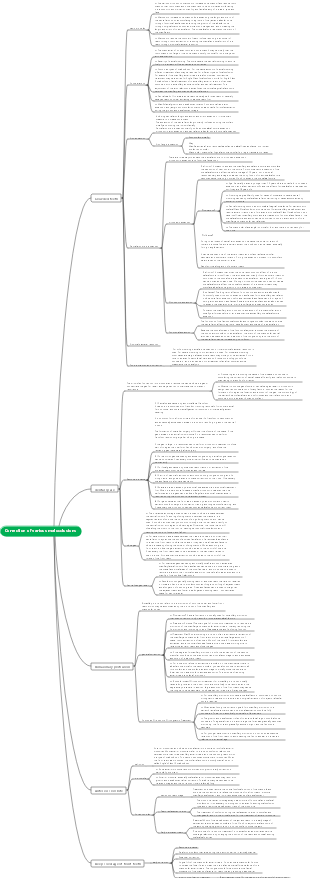
The fifth edition of the People's Health Organization's Oral Medicine - A large framework of the mind map for the treatment of apical periodontal disease and pulpal diseases, including treatment principles Pre-treatment work, treatment procedures, etc. Friends in need hurry up and collect it!
Edited at 2023-12-18 18:37:11Discover how Aeon can navigate the competitive online landscape with a strategic SWOT analysis. This comprehensive overview highlights Aeon’s strengths, such as its strong brand recognition, omnichannel capabilities, and customer loyalty programs, alongside its weaknesses, including digital maturity gaps and cost structure challenges. Opportunities for growth include enhancing e-commerce competitiveness and leveraging data-driven strategies, while threats from online-first players and market dynamics require attention. Explore how Aeon can strengthen its market position through innovation and customer-centric approaches in the ever-evolving retail environment.

Discover how Aeon effectively tailors its offerings to meet the diverse needs of family-oriented consumers through a comprehensive Segmentation, Targeting, and Positioning (STP) analysis. Our approach begins with demographic segmentation, examining family life stages, household sizes, income levels, and parent age bands to identify distinct consumer groups. Geographic segmentation highlights store catchment types and community characteristics, while psychographic segmentation delves into family values and lifestyle orientations. Behavioral segmentation focuses on shopping missions, price sensitivity, and channel preferences. Finally, needs-based segmentation reveals core family needs related to value and budget considerations. Join us as we explore these insights to enhance family shopping experiences at Aeon.
Discover the dynamics of sneaker transactions with our Kream Sneaker Consumption Scene Analysis Template. This comprehensive framework aims to visualize the purchasing and consumption journeys of sneakers, identifying key demand drivers and obstacles. It covers user behavior within Kream and external influences, targeting various sneaker categories over specific timeframes and regions. The analysis defines user segments, including collectors, resellers, sneakerheads, casual trend followers, and gift purchasers, each with unique values and KPIs. It outlines the consumption journey from awareness to resale, highlighting critical touchpoints such as search, purchase, inspection, and sharing experiences. Key performance indicators are established to measure engagement and satisfaction throughout the process. Join us in exploring the intricate world of sneaker trading!
Discover how Aeon can navigate the competitive online landscape with a strategic SWOT analysis. This comprehensive overview highlights Aeon’s strengths, such as its strong brand recognition, omnichannel capabilities, and customer loyalty programs, alongside its weaknesses, including digital maturity gaps and cost structure challenges. Opportunities for growth include enhancing e-commerce competitiveness and leveraging data-driven strategies, while threats from online-first players and market dynamics require attention. Explore how Aeon can strengthen its market position through innovation and customer-centric approaches in the ever-evolving retail environment.
Discover how Aeon effectively tailors its offerings to meet the diverse needs of family-oriented consumers through a comprehensive Segmentation, Targeting, and Positioning (STP) analysis. Our approach begins with demographic segmentation, examining family life stages, household sizes, income levels, and parent age bands to identify distinct consumer groups. Geographic segmentation highlights store catchment types and community characteristics, while psychographic segmentation delves into family values and lifestyle orientations. Behavioral segmentation focuses on shopping missions, price sensitivity, and channel preferences. Finally, needs-based segmentation reveals core family needs related to value and budget considerations. Join us as we explore these insights to enhance family shopping experiences at Aeon.
Discover the dynamics of sneaker transactions with our Kream Sneaker Consumption Scene Analysis Template. This comprehensive framework aims to visualize the purchasing and consumption journeys of sneakers, identifying key demand drivers and obstacles. It covers user behavior within Kream and external influences, targeting various sneaker categories over specific timeframes and regions. The analysis defines user segments, including collectors, resellers, sneakerheads, casual trend followers, and gift purchasers, each with unique values and KPIs. It outlines the consumption journey from awareness to resale, highlighting critical touchpoints such as search, purchase, inspection, and sharing experiences. Key performance indicators are established to measure engagement and satisfaction throughout the process. Join us in exploring the intricate world of sneaker trading!
Treatment of periapical disease
Treatment principles
Preserve vital pulp (dental pulp with normal physiological functions)
young permanent teeth
reversible pulpitis
Save the affected tooth
Pre-treatment work
Assess patient and tooth status P188
Infection control before surgery P190
treatment procedures
Control acute pulpitis pain or periapical pain
Pain Control191
local anesthesia
Inactivation method (wet and dry method) P194
Deep caries exposing marrow
After the pulp is opened, it is placed at the medullary hole.
Emergency treatment P195
Open marrow drainage
Incision and drainage of pus
remove irritation
Adjust the bite
Anti-inflammatory and analgesic
Complete endodontic treatment of the tooth with chief complaint
Treatment of reversible pulpitis
Pulp capping P138
pulpotomy
Preserve vital marrow
young permanent teeth
Apical induction plasty P237
Apical Barrier Surgery P240
pulpotomy
irreversible pulpitis
root canal therapy
DefinitionP199
Principle P198
Control infection and promote healing
Infected root canal type P199
tooth with vital pulp
tooth with dead pulp
Retreat the affected tooth
IndicationsP199
ContraindicationsP200
Operating Principles P203, P200
Completely remove infection in the root canal and properly shape it
Fill root canals tightly and repair defects to prevent microleakage.
Adhere to the principle of preservation
Steps
The use of inactivating agents after the marrow is opened is called the wet and dry method.
Root canal preparation
Classification P201
Mechanical preparation
Purpose
Clean root canals
shaped root canal
The meaning of forming P201
Chemistry preparation
Basic principles (operating principles) P219
Quality Control Standards (Quality Evaluation) P219
Preparatory process
Root canal entrance preparation
Crown 2/3
middle and upper root canal
Root tip 1/3 preparation
method
Preparation of hand instruments
Standard technology P219
Step-by-step backward method P219
Indications
Mild to moderate curved root canals can also be used for straight canals
<5, straight canal
5~20, moderately curved root canal
>20, severely curved root canal
Steps
Determine working length
Exploring root canals P210
Root canal orifice probe DG16 probe
smooth marrow needle
Unclogging root canals P218
unobstructed
Smaller setbacks (8, 10, 15K setbacks)
No. 10 file can slightly exceed the apical foramen
No. 15 reaches the apex.
K type reamer
triangular section
Enlarge root canals and clear root canals
C pioneer setback
Determine working length
apical insertion point
0.5~1mm from the dissection apical foramen
rough estimate
Length of affected tooth-1mm
X-ray film
Use a rough estimate as the initial length and insert the No. 15 curve according to the reference point.
Distance 1mm
Distance 2mm
3mm
Electrical measurement method
apex locator
An electrode (lip hook) is hung at the corner of the mouth
The other is connected to the root canal file
Apical preparation
Initial sharp setback
Determine initial working width (IWW)
The first file that feels friction when entering the root canal and reaching the working length
main sharp setback
Determine the final working length FWW
Greater than the initial sharp decline No. 2~3
At least No. 25
set back
The first high or the previous high
operate
The initial tip of the file is pre-bent, inserted into the working length and expanded to no resistance
Get ready to change to a larger size
Each time a file is replaced, the root canal must be irrigated and retracted.
Retrograde preparation (or apical zone preparation))
Automatically withdraw the tip file 2 to 4 steps/retreat to the straight part of the root canal
Every time you increase the number of strokes, the working length is -1mm
Retrograde preparation (or apical zone preparation)
Automatically withdraw the tip file 2 to 4 steps/retreat to the straight part of the root canal
Every time you increase the number of strokes, the working length is -1mm
set back
main tip file
The middle and upper section of the root canal is open
Preparing the middle and upper section of the root canal
G diamonds are numbered 1 to 3 in order
Operating length for every larger size -2mm
The main peak retreats
Root canal wall modification
The main tip file cuts the root canal wall clockwise
Advantages (2)
Disadvantages (4)
Gradually deepen the technology P220
step
advantage
Mechanical equipment preparation method
Root preparation technology
Single Length Technology P221
step
NotesP221
Root canal irrigation during root canal preparation (reflected in the preparation steps) P222 P202
Flushing purpose P222
Flushing agent P222
Hypochlorous acid (0.5%~5.25%)
17% ethylenediaminetetraacetic acid EDTA
Chelating agents (gels)
Rinse with distilled water or dip dry
3% hydrogen peroxide
Chlorhexidine
Recommended flushing procedure P222
Hypochlorous acid and EDTA are used alternately
Flushing method P222
injection flush method
Ultrasonic washing method
NotesP223
pain
emphysema
needle aspiration
Root canal disinfection P223
Indications
infected root canal
Classification
root canal irrigation
root canal sealant
Root canal disinfectants
calcium hydroxide paste
Chlorhexidine gel
The cave is temporarily closed
Material
glass ionomer
Zinc oxide eugenol ZOE
zinc phosphate
zinc polycarboxylate
Place a cotton ball at the bottom of the pulp chamber
Material thickness should be at least 3~4mm
Root canal preparation and disinfection completed at the same time
root canal filling
PurposeP226
TimingP226
Material
performance
type
Gutta-percha tip P227
Root canal sealer P228
ZOE
Resins
AH26
AHPlus (commonly used in clinical practice)
Calcium hydroxide
Silicones
Nanobiomaterials
root canal filling technology
Side compression technology P288
Select the main gutta-percha tip
The same size as the main tumbler
Can reach working length or slightly shorter than 0.5mm
Slight resistance to pullback
exceeds mark length
Shorter than operating length (marking length) P288
Root canal preparation issues
Preparatory work length is short, prepare again
Not continuously tapered
Root canal preparation
Choose a side pressurizer
Placing root canal sealer
Place the primary gutta-percha tip
Pressurized primary gutta-percha tip
Place secondary tip
The reason why the depth cannot be reachedP229
Complete root canal filling and pulp chamber filling
Vertical pressure filling technology P230
Quality evaluation of root canal filling P235
Just fill in
The distance between the filling material and the root tip is 0.5~2mm
Not filled in
More than 2mm from root apex
Overfill
overcharge
Beyond the apical foramen
The apical foramen is not tightly sealed
Complications of root canal treatment P256
Root canal retreatmentP265
Dental restoration after root canal treatment (coronal restoration) P272
Efficacy and evaluation standards P204
Tissue Healing Patterns P204
Root canal treatment failure/severe root canal anatomic variation
Apical surgery P250
Incision and valve design
flap
Boneless
Scrape out periapical diseased tissue
Apical resection
Resection length 3mm
Root canal preparation
root canal back filling
Flap reduction and suturing
Extract the affected tooth without preservation