MindMap Gallery Physiology-Urine production and excretion
Physiology The production and excretion of urine include the blood circulation of the kidney, the reabsorption and secretion functions of the glomeruli and collecting ducts, the regulation of urine production, etc.
Edited at 2023-12-10 22:11:55Avatar 3 centers on the Sully family, showcasing the internal rift caused by the sacrifice of their eldest son, and their alliance with other tribes on Pandora against the external conflict of the Ashbringers, who adhere to the philosophy of fire and are allied with humans. It explores the grand themes of family, faith, and survival.

This article discusses the Easter eggs and homages in Zootopia 2 that you may have discovered. The main content includes: character and archetype Easter eggs, cinematic universe crossover Easter eggs, animal ecology and behavior references, symbol and metaphor Easter eggs, social satire and brand allusions, and emotional storylines and sequel foreshadowing.
[Zootopia Character Relationship Chart] The idealistic rabbit police officer Judy and the cynical fox conman Nick form a charmingly contrasting duo, rising from street hustlers to become Zootopia police officers!
Avatar 3 centers on the Sully family, showcasing the internal rift caused by the sacrifice of their eldest son, and their alliance with other tribes on Pandora against the external conflict of the Ashbringers, who adhere to the philosophy of fire and are allied with humans. It explores the grand themes of family, faith, and survival.
This article discusses the Easter eggs and homages in Zootopia 2 that you may have discovered. The main content includes: character and archetype Easter eggs, cinematic universe crossover Easter eggs, animal ecology and behavior references, symbol and metaphor Easter eggs, social satire and brand allusions, and emotional storylines and sequel foreshadowing.
[Zootopia Character Relationship Chart] The idealistic rabbit police officer Judy and the cynical fox conman Nick form a charmingly contrasting duo, rising from street hustlers to become Zootopia police officers!
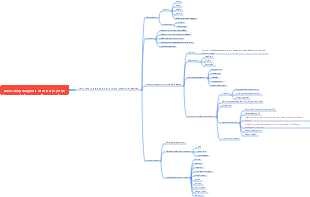
Production and excretion of urine
kidney blood circulation
Blood supply characteristics
Renal blood flow is large and unevenly distributed (equivalent to 20% to 25% of cardiac output)
Twice forming a capillary network
Regulation of renal blood flow (autoregulation)
myogenic theory
tube-ball feedback theory
Reabsorptive and secretory functions of glomeruli and collecting ducts
Characteristics of reabsorption patterns in renal tubules and collecting ducts
some definitions
Original urine (ultrafiltrate): When circulating blood passes through the glomerular capillary network, except for blood cells and plasma proteins, other substances can filter into the renal capsule to form original urine.
Tubular fluid: After the ultrafiltrate enters the renal tubules, it is called tubular fluid.
Reabsorption: The process by which substances in tubular fluid are transported back into the bloodstream by epithelial cells in the renal tubules and collecting ducts.
Ways and means of reabsorption
transcellular transport
paracellular transport
Characteristics of reabsorption
reabsorption selectivity
Most of the water and electrolytes such as sodium, potassium, and chloride are reabsorbed
A small portion of urea is reabsorbed
Creatinine is not reabsorbed at all
Differences in reabsorption
The proximal convoluted tubule has the strongest reabsorption capacity (brush border) and reabsorbs a large amount and variety of substances.
The medullary loops mainly reabsorb water and NaCl
The distal convoluted tubule and collecting duct also have the function of reabsorbing Na⁺ and water (the amount of absorption is less than that of the proximal convoluted tubule and is regulated by vasopressin and aldosterone)
Limited reabsorption
Renal tubules and collecting ducts have certain limits on the reabsorption of different substances.
Reabsorption of several major substances
Reabsorption of Na⁺, Cl⁻ and water
Proximal tubule (65%-70% of filtration capacity)
mechanism
first half
On the luminal membrane
Na⁺-X symporter (X equals glucose, amino acid)
Na⁺-H⁺ exchanger (H⁺ enters the tubular fluid →HCO₃⁻ is reabsorbed)
on basolateral membrane
Na⁺-K⁺ pump (creates concentration difference)
X facilitated diffusion
tissue gap
The hydrostatic pressure in the tissue space increases, prompting Na⁺ and water to enter the capillaries
the second half
In addition to transcellular transport, it mainly occurs through the paracellular pathway.
Passive reabsorption of Na⁺ and Cl⁻ via the paracellular pathway (the concentration of Cl⁻ in the tubular fluid is higher than that of the peritubular interstitial fluid, so it is reabsorbed into the blood via the paracellular pathway along the concentration gradient; at the same time, due to the reabsorption of Cl⁻, the ductal fluid Negative charges increase in the interstitial space of peripheral tissues, and Na⁺ is passively reabsorbed along the concentration gradient via the paracellular pathway)
Loop (NaCl is 20% of the filtered amount, water is 15% of the filtered amount)
thin segment of descending branch of medullary loop
The Na pump activity on the basal membrane of epithelial cells is low, and the luminal membrane is not easily permeable to Na⁺, but has a high reabsorption of water. (The osmotic pressure of the tubular fluid gradually increases)
Thin segment of ascending branch of medullary loop
It is impermeable to water, but easily permeable to Na⁺ and Cl⁻. NaCl diffuses into the interstitial fluid (the osmotic pressure of the tubular fluid gradually decreases)
Thick segment of ascending branch of medullary loop
Features
NaCl is at an important site for medullary loop reabsorption, but it is impermeable to water. (The osmotic pressure of the canalicular fluid continues to decrease)
mechanism
luminal membrane
Electroneutral Na⁺-2Cl⁻-K⁺ symporter (inhibited by furosemide)
K⁺ channel
basolateral membrane
sodium pump
Cl⁻ channel
Na⁺ enters the cells along the chemical gradient, and is then pumped to the interstitial fluid through the Na pump; Cl⁻ enters the interstitial fluid through the Cl⁻ channel on the basolateral membrane along the concentration gradient; K⁺ returns to the tubule fluid along the concentration gradient through the luminal membrane, causing the tubule fluid to assume a positive potential.
The potential difference in turn causes the positive ions such as Na⁺, K⁺ and Ca²⁺ in the small tube liquid to Reabsorbed via the paracellular pathway (passive reabsorption)
Distal tubule and collecting duct (NaCl is 12% of the filtered amount, and varying amounts of water are reabsorbed)
distal convoluted tubule
Features
It is still impermeable to water, but can still actively absorb Na⁺, causing the osmotic pressure in the tubular fluid to continue to decrease.
mechanism
on the membranous cavity
Na⁺-Cl⁻ symporter (inhibited by thiazides)
basement membrane side
Na pump
Cl⁻ channel
Posterior distal tubule and collecting duct
Features
Can actively reabsorb Na and secrete K⁺ and H⁺
mechanism
Leap cells (secret H⁺)
luminal membrane
proton pump
basement membrane
HCO₃⁻Channel
Principal cells (90%, Na⁺-K⁺ exchange)
luminal membrane
Na⁺ channel, K⁺ channel
basement membrane
Sodium pump, K⁺ channel
(Na⁺-H⁺ exchanger, Na⁺-K⁺ exchanger) (Na⁺ reabsorption is mainly regulated by aldosterone; water reabsorption depends on the water content in the body, mainly through transcellular pathways, and is regulated by vasopressin )
Reabsorption of HCO₃⁻
difference
80%-90% is reabsorbed in the proximal tubule (Na⁺-H⁺)
10% is reabsorbed in the thick ascending branch of the medullary loop
A small amount is reabsorbed in the distal tubule and collecting duct
mechanism
On the luminal membrane
Na⁺-H⁺ symporter
basolateral membrane
sodium pump
HCO₃⁻ transporter
It enters the cells as CO₂ and enters the intercellular fluid through the transporter on the basolateral membrane along the electrochemical concentration.
Reabsorption of K⁺
difference
65%-70% is reabsorbed in the proximal tubule
25%-30% is reabsorbed in the thick ascending branch of the medullary loop
K⁺ in final urine is mainly secreted by the distal convoluted tubule and collecting duct
mechanism
Active transport, transport against electrochemical gradient (the mechanism is not yet clear)
Glucose and amino acid reabsorption
glucose
parts
Limited to the proximal tubule, especially the first half of the proximal tubule
mechanism
Na⁺-glucose symporter Secondary active transport, glucose entering the cell enters the intercellular fluid through facilitated diffusion through the glucose transporter 2 on the basement membrane side
amino acids
Same as glucose, but with multiple amino acid transporters
protein
The small amount of protein that normally enters the ultrafiltrate is reabsorbed through the phagocytosis function of the proximal tubule epithelial cells.
Secretory function of renal tubules and collecting ducts
Secretion of H⁺
Proximal tubule (the strongest secretory capacity, accounting for 80%-90%)
Thick segment of ascending branch of medullary loop
distal convoluted tubule
Secretion of H⁺ through secondary active transport by Na⁺-H⁺ exchanger, which is closely related to the reabsorption of HCO₃⁻
The second half of the distal tubule and collecting duct
Rhythm cells secrete H⁺. There is a proton pump (H⁺-ATPase) on the luminal membrane of the distal convoluted tubule and collecting duct, which can pump intracellular H⁺ into the tubule fluid.
Secretion of K⁺
parts
Distal tubule and collecting duct
Features
The secretion of K⁺ by the second half of the distal tubule and collecting duct chief cells (accounting for 90% of epithelial cells) is closely related to the active reabsorption of Na⁺. Only with the reabsorption of Na⁺ can there be secretion of K⁺ (Na⁺- K⁺ exchange)
power
The Na pump on the basement membrane side pumps Na⁺ out of the cell and at the same time pumps K⁺ in the interstitial fluid into the cell, making the K⁺ concentration in the epithelial cells higher than the K⁺ ion concentration in the tubular fluid.
The concentration difference causes K⁺ to enter the small tube liquid along the concentration gradient.
Active reabsorption of Na⁺ brings the tubular fluid to a negative potential (K⁺ enters the tubular fluid along the electrochemical gradient)
PS
There is H⁺-Na⁺ and K⁺-Na⁺ exchange on the renal tubular epithelial cells, and the two are in a competitive relationship
Secretion of NH₃
parts
Proximal tubule, thick ascending branch of medullary loop, distal tubule and collecting duct
mechanism
proximal tubule
In the proximal tubule epithelial cells, Na⁺-H⁺ (with NH₃ instead of H⁺) exchanger on the luminal membrane is secreted into the tubule fluid.
collecting tube
The collecting duct has good permeability to NH₃, but low permeability to NH₄⁺ (NH₃ H⁺→NH₄⁺). The collecting duct epithelial cells secrete H⁺ into the small tubule lumen through H⁺-ATPase. It combines with NH₃ and Cl⁻ to form NH₄Cl and is excreted in the urine.
Secretion of uric acid and other substances
uric acid
2/3 of free uric acid is excreted by the kidneys and 1/3 by the intestines
Mode Glomerular filtration and tubular secretion
…
Regulation of urine production
Renal autoregulation
Solutes in tubular fluid (osmotic pressure) "Osmotic diuresis"
Tube balance proximal tubule "constant specific gravity absorption"
body fluid regulation
Vasopressin (VP, antidiuretic hormone)
effect
Improve the water permeability of distal convoluted tubule and collecting duct epithelial cells, promote water reabsorption, concentrate urine, and reduce urine output.
secretion regulation
Plasma crystalloid osmolality (the most important factor) "water diuresis"
Changes in circulating blood volume
aldosterone
effect
"Bao Na⁺ row K⁺"
secretion regulation
RAAS
stretch receptors in afferent arteriole
macula densa
other
( )
Renal sympathetic nerves, blood adrenaline, norepinephrine
(-)
Vasopressin, angiotensin II, atrial natriuretic peptide, endothelin, NO
Concentrations of Na⁺ and K⁺ in blood →Zona glomerulosa of adrenal cortex
other
Atrial natriuretic peptide (ANP)
effect
Hormones synthesized and secreted by the atrial muscles to promote the release of NaCl and water
neuromodulation
…
Na⁺-K⁺ exchange and Na⁺-H⁺ exchange have a competitive inhibitory effect