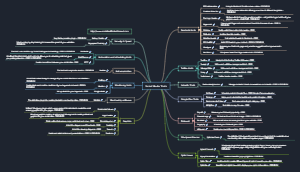
MindMap Gallery Biology-Inner membrane system of cells and vesicle transport
This is a mind map about biology - the inner membrane system and vesicle transport of cells. It is introduced in detail and described comprehensively. I hope it will be helpful to interested friends!
Edited at 2023-12-07 19:25:44This Valentine's Day brand marketing handbook provides businesses with five practical models, covering everything from creating offline experiences to driving online engagement. Whether you're a shopping mall, restaurant, or online brand, you'll find a suitable strategy: each model includes clear objectives and industry-specific guidelines, helping brands transform traffic into real sales and lasting emotional connections during this romantic season.
This Valentine's Day map illustrates love through 30 romantic possibilities, from the vintage charm of "handwritten love letters" to the urban landscape of "rooftop sunsets," from the tactile experience of a "pottery workshop" to the leisurely moments of "wine tasting at a vineyard"—offering a unique sense of occasion for every couple. Whether it's cozy, experiential, or luxurious, love always finds the most fitting expression. May you all find the perfect atmosphere for your love story.
The ice hockey schedule for the Milano Cortina 2026 Winter Olympics, featuring preliminary rounds, quarterfinals, and medal matches for both men's and women's tournaments from February 5–22. All game times are listed in Eastern Standard Time (EST).
This Valentine's Day brand marketing handbook provides businesses with five practical models, covering everything from creating offline experiences to driving online engagement. Whether you're a shopping mall, restaurant, or online brand, you'll find a suitable strategy: each model includes clear objectives and industry-specific guidelines, helping brands transform traffic into real sales and lasting emotional connections during this romantic season.
This Valentine's Day map illustrates love through 30 romantic possibilities, from the vintage charm of "handwritten love letters" to the urban landscape of "rooftop sunsets," from the tactile experience of a "pottery workshop" to the leisurely moments of "wine tasting at a vineyard"—offering a unique sense of occasion for every couple. Whether it's cozy, experiential, or luxurious, love always finds the most fitting expression. May you all find the perfect atmosphere for your love story.
The ice hockey schedule for the Milano Cortina 2026 Winter Olympics, featuring preliminary rounds, quarterfinals, and medal matches for both men's and women's tournaments from February 5–22. All game times are listed in Eastern Standard Time (EST).
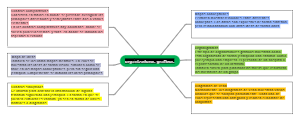
Cellular inner membrane system and vesicle transport
endomembrane system
definition
Those in the cytoplasm whose structure, function and occurrence A general term for organelles with membranous structures that are closely related to each other
content
Including endoplasmic reticulum, Golgi complex, lysosomes, various transport vesicles, nuclear membrane, etc. However, mitochondria and chloroplasts are not included.
Function
It can form an atrioventricular regionalization effect, allowing biochemical reactions to occur simultaneously in cells. And effectively improve the overall metabolic level and functional efficiency of cells.
mainly include
endoplasmic reticulum
distributed
Widely distributed in the cytoplasm of all eukaryotic cells except mature red blood cells
structure
membranous tube
small bubbles
flat sac
are connected to each other and form a network surrounded by unit membranes. Continuous modular three-dimensional tube network structure system
type
Rough endoplasmic reticulum (granular endoplasmic reticulum RER)
Morphological characteristics
Ribosomes attached to the surface
structure
neatly arranged flat sacs
Function
protein synthesis
Synthetic protein
exported or secreted protein
membrane integral protein
Resident proteins that make up organelles
endogenous protein
Process: Signal Peptide Hypothesis
Involving substances
Signal peptide (used for positioning, is a section of the polypeptide chain)
Signal recognition particle SRP (located in the cytoplasm, recognizes and binds to signal peptide)
Signal recognition particle receptor SRP-R (located on the endoplasmic reticulum membrane, recognizes and binds SRP, and connects the polypeptide chain to the endoplasmic reticulum membrane)
Transporter (hydrophilic channel protein on the RER membrane, a dynamic structure)
process
1. Signal peptide synthesis on free ribosomes
2. SRP recognizes and combines with ribosomes and the signal peptide of the nascent peptide chain to form an SRP-ribosome complex.
3. SRP and SRP-R bind to ribosomes
4. SRP leaves, the transporter opens, and the polypeptide chain resumes elongation.
5. The signal peptide is hydrolyzed and the polypeptide chain continues to extend.
6. The synthesis is completed, the peptide chain is released, the large and small subunits are separated, and the transporter is closed.
protein processing modification
Folding and assembly of nascent polypeptide chains
Chaperone protein or molecular chaperone (has KDEL resident signal at the carboxyl terminus and has error correction function)
Protein disulfide isomerase (PDI)
Glycosylation of proteins (referring to the combination of monosaccharides or oligosaccharides with proteins The process of forming glycoproteins through covalent bonds between white matter)
N-linked glycoproteins: N-linked glycosylation (present in RER and Golgi complex)
O-linked glycoproteins: O-linked glycosylation (only found in the Golgi complex)
Protein sorting and transport
Exported proteins are transported by budding to form membranous vesicles
Most proteins pass through the Golgi complex, and a small amount of proteins directly form zymogen particles.
Smooth endoplasmic reticulum (granule-free endoplasmic reticulum)
structure
Tube and bubble-like network structure with smooth surface
Function
Participate in lipid synthesis and transport
Participate in glycogen metabolism
occurs in the cytoplasm
The main site of cellular detoxification
Convert fat soluble to water soluble
The storage site of muscle cell Ca²⁺
The sarcoplasmic reticulum membrane contains Ca²⁺-ATPase, Voltage-gated Ca²⁺ channels
Related to the synthesis and secretion of gastric acid and bile
The third structural type form
Chemical composition (as microsomes: formed from fragments of damaged endoplasmic reticulum small closed vesicles rather than intrinsic functional structural components within the cell)
Lipids and proteins are the main chemical components of the endoplasmic reticulum
Membrane lipid (30% ~ 40%)
Protein (60%~70%)
The endoplasmic reticulum contains glucose-6-phosphatase Many enzyme systems of major landmark enzymes
Oxidation reaction electron transfer enzyme system related to detoxification function
Enzymes related to functional reactions of lipid metabolism
Enzymes related to functional reactions in carbohydrate metabolism
Enzymes involved in protein processing and transport
clathrin
distributed
A class of proteins commonly found in the lumen of the endoplasmic reticulum
commonality
Both contain resident signals (KDEL and HDEL)
feature
It can reside in the lumen of the endoplasmic reticulum without being transported through the recognition and binding of the resident signal to the corresponding receptor on the endoplasmic reticulum membrane.
Classification
Immunoglobulin heavy chain binding protein
endoplasmic protein
calreticulin
protein disulfide isomerase
golgi complex
Morphology
Composed of different types of membranous vesicles
Flat vesicles (cisternae)
The convex side faces the nucleus and is called the cis or formative side
The concave side faces the cell membrane and is called the reverse side or mature side.
Neatly arranged and stacked together Make up the Golgi stack.
small vesicles (vesicles)
In Shunmian
Large vesicles (vacuoles)
on the reverse side
Remarkable polarity (asymmetry) and transitional
Different distribution forms in different tissue cells
chemical components
Lipids
Glycosyltransferase (signature enzyme)
protein
Function
protein transport secretory transit station
Intracellular substance processing and synthesis site
protein processing and synthesis
Glycosylation
Classification
O-linked glycosylation
Serine, threonine, tyrosine
N-linked glycosylation
asparagine
effect
protect protein
transport signal
sugar coat that forms the surface of the cell membrane
Hydrolytic processing of proteins (hydrolytic modification)
Some proteins can only become active after being specifically hydrolyzed within the Golgi complex.
is the sorting and membrane of intracellular proteins A hub for directional transport
Mannose-6-phosphate (M-6-P) is a lysosomal sorting signal
Supervision and repatriation role
The C-terminus of ER-resident proteins has an ER-resident signal, the KDEL signal sequence.
lysosomes (digestive organ )
chemical components
Highly heterogeneous
Different lysosomes exhibit different biochemical and physiological properties
All contain acid hydrolase (marker enzyme)
Lysosomal membrane glycoprotein family has high homology
commonality
They are all sac-like structures wrapped by a layer of unit membrane.
Rich in two highly glycosylated transmembrane integral proteins lgpA and lgpB (Prevents the acid hydrolase of lysosomes from digesting and decomposing its own membrane structure)
Proton pump embedded in membrane
formation and maturation process
N-glycosylation of enzymatic proteins and ER transport
Enzyme proteins are processed and transferred within the Golgi complex
M-6-P forms, which is Important recognition signals for lysosomal hydrolase sorting
Sorting and transport of enzyme proteins
Endosomal lysosome formation and maturation
type
Function points
primary
Usually inactive lysosomes
secondary
Autophagy
Xenophagy
Devour
The substrates for autophagy and heterophagy are both cellular foreign substances. So there is no essential difference between the two
Level three (residual body)
End state of lysosomal physiological functions
For example, lipofuscin, myeloid structures, iron-containing bodies
Formation process points
endosomal lysosome
phagolysosome
Function
Able to decompose foreign substances inside and outside cells and remove aging and damaged organelles
Substance Digestion and Cell Nutrition
Components of the body’s defense and protective functions
Participate in the regulation of secretion processes of certain gland tissue cells
Plays an important role in individual growth and development
peroxisome
Basic physical and chemical characteristics
Classification
oxidase
Catalase (marker enzyme)
peroxidase
characteristic
highly heterogeneous membranous saccular organelles
High material permeability
Function
Effectively remove hydrogen oxide and other toxic substances produced during cell metabolism
Effectively regulate cellular oxygen tension
Participate in the decomposition and transformation of high-energy molecular substances such as fatty acids in cells
occur
Proliferate through division
vesicle transport
vesicle
intracellular protein transport
way
gated transport
transmembrane transport
Vesicle transport: budding mode formation
Transfer of protein molecules between membranous organelles, cell secretion activities and The transport of macromolecules and particulate matter across the cell membrane is carried out in this form.
Type and Source
Clathrin is produced in coated vesicles at the Golgi complex and cell membranes
Clathrin budding occurs within the Golgi complex
Adapter proteins are components of the vesicle coating
Dynamin (constriction protein) can bind and hydrolyze GTP
COP II is produced in the ER by vesicles and mediates the transport of substances from the ER to the Golgi complex.
Produced by ERE, there are clothes and quilts
The main function of COPI coated vesicles is to recycle and transport ER escape proteins
Reverse transport of proteins within membranes from the Golgi complex
Anterograde transport from ER to Golgi complex
vesicle transport
It is the basic pathway for directional transport of cellular materials.
It is a highly ordered and strictly selected and precisely controlled material transport process.
Specific recognition and fusion is the basic guarantee for directional transport and accurate unloading of vesicle materials
The SNAREs protein family mediates fusion between vesicles and target membranes
Rab protein family plays a regulatory role in vesicle transport and fusion
Vesicle transport is a bridge to achieve functional and structural transformation and metabolic renewal of cell membranes and endomembrane systems
The relationship between intracellular membrane system and medicine
Pathological changes in ER
ER swelling and hypertrophy, cystic cistern collapse
Formation and appearance of inclusions in the cyst cavity
Pathological changes of Golgi complex
Hyperfunction causes compensatory hypertrophy
Toxic substances cause it to shrink and damage
lysosomal diseases
Deficiencies or defects are mostly congenital diseases
Tay-Sachs disease
type 2 diabetes
Cell or tissue damage caused by release and leakage
Silicosis
gout
Peroxisomes and disease
Diseases caused by primary peroxide deficiencies
Hereditary acatalaseemia
Zellweger cerebral hepatorenal syndrome
Pathological changes in peroxisomes during disease processes
Vesicle transport and disease