MindMap Gallery Biology-Chapter 6 Mitochondria and Cell Energy Conversion
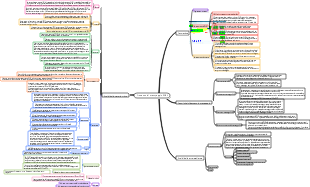
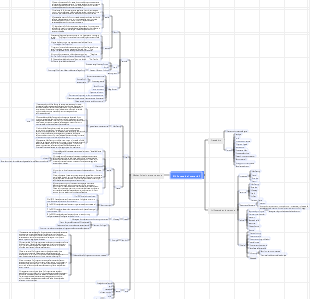
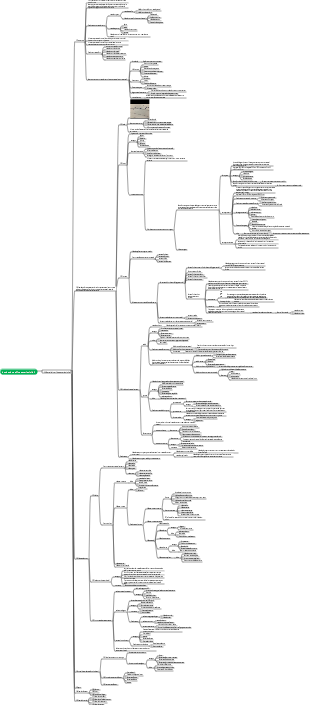
This is a mind map about the energy conversion between mitochondria and cells in Chapter 6 of Biology, including the basic characteristics of the wire body, cellular respiration and energy exchange, etc.
Edited at 2023-12-06 20:52:37Avatar 3 centers on the Sully family, showcasing the internal rift caused by the sacrifice of their eldest son, and their alliance with other tribes on Pandora against the external conflict of the Ashbringers, who adhere to the philosophy of fire and are allied with humans. It explores the grand themes of family, faith, and survival.
This article discusses the Easter eggs and homages in Zootopia 2 that you may have discovered. The main content includes: character and archetype Easter eggs, cinematic universe crossover Easter eggs, animal ecology and behavior references, symbol and metaphor Easter eggs, social satire and brand allusions, and emotional storylines and sequel foreshadowing.
[Zootopia Character Relationship Chart] The idealistic rabbit police officer Judy and the cynical fox conman Nick form a charmingly contrasting duo, rising from street hustlers to become Zootopia police officers!
Avatar 3 centers on the Sully family, showcasing the internal rift caused by the sacrifice of their eldest son, and their alliance with other tribes on Pandora against the external conflict of the Ashbringers, who adhere to the philosophy of fire and are allied with humans. It explores the grand themes of family, faith, and survival.
This article discusses the Easter eggs and homages in Zootopia 2 that you may have discovered. The main content includes: character and archetype Easter eggs, cinematic universe crossover Easter eggs, animal ecology and behavior references, symbol and metaphor Easter eggs, social satire and brand allusions, and emotional storylines and sequel foreshadowing.
[Zootopia Character Relationship Chart] The idealistic rabbit police officer Judy and the cynical fox conman Nick form a charmingly contrasting duo, rising from street hustlers to become Zootopia police officers!
Chapter 6 Mitochondria and Cell Energy Conversion
Basic characteristics of mitochondria
form, quantity and structure
In the form of threads, granules or rods. Acidic swelling, alkaline granular
The outer membrane is the outer unit membrane of the mitochondria
Porins, outer membrane substance transport channels
Large substances require outer and inner membrane protein transporters
Many particles adhere to the surface of the intima
Permeability is small, and substances must use specific membrane transporters or permeases to cross the membrane
Low permeability contributes to the establishment of a proton chemical gradient across the inner mitochondrial membrane
structure
matrix cavity
intermembrane space
crest
intercranial cavity
intracranial space
Grana (essentially ATP synthase)
head
Catalyzes the synthesis of ATP
handle
substrate
Inner and outer membrane contact points ¾ transposition contact points
intimal translocon Tim
channel protein
outer membrane translocator Tom
receptor protein
The matrix is the site of oxidative metabolism
Contains related enzymes
Mitochondria are the only organelles in human cells that contain DNA besides the nucleus.
chemical components
protein
Main components of mitochondria
type
soluble protein
insoluble protein
Phospholipids
Mainly phospholipids
cardiolipin
The main content of the intima, the key to low material permeability of the intima
The outer membrane protein to lipid ratio is 1:1 and the inner membrane protein to lipid ratio is 4:1
marker enzyme
Outer membrane ¾¾¾¾ monoamine oxidase
Intermembrane space ¾¾¾¾ adenylate kinase
Intima ¾¾¾¾ Cytochrome oxidase
Substrate ¾¾¾¾ malate dehydrogenase
genetic system
mtDNA
semiautonomous organelle
Outer ring heavy chain, inner ring light chain
Function
Oxidative phosphorylation
Uptake and release of Ca2
Involved in cell death
Cellular respiration and energy exchange
In specific organelles (mainly mitochondria), with the participation of O2, various macromolecular substances are decomposed to produce CO2; at the same time, the process of storing the energy released by catabolism in ATP is called cellular respiration, also known as cellular respiration. biological oxidation or cellular oxidation
Features
Essentially, it is a series of redox reactions catalyzed by enzymes in mitochondria.
The energy produced is stored in the high-energy phosphate bonds of ATP
The entire reaction process is carried out step by step, and energy is also gradually released.
The reaction is carried out under constant temperature (37C) and constant pressure conditions
The reaction requires the participation of H2O
process
Glycolysis
In the cytoplasm, 1 glucose → 2 pyruvate
Net production of 2ATP starting from glucose and 3ATP starting from glycogen
substrate level phosphorylation
NADH H enters the system via a specific shuttle system
Acetyl CoA production
Under sufficient oxygen conditions, in the mitochondrial system, 1 pyruvate → 1 acetyl CoA, 1CO2 and 1NADH H
tricarboxylic acid cycle
Acetyl CoA first condenses with oxaloacetate containing 4 carbon atoms in the mitochondrial matrix, and the two are covalently linked to form citric acid containing 6 carbon atoms.
Through 7 consecutive enzymatic reactions and 2 decarboxylation, the oxaloacetate in the initial stage of the reaction is re-formed at the end of the cycle.
One molecule of citric acid participates in the tricarboxylic acid cycle, generating a total of 10 molecules of ATP until the end of the cycle.
Subtopic 1Acetyl CoA 3NAD FAD ADP Pi→2CO2 3NADH 1FADH2 ATP 2H CoA-SH
1 Acetyl CoA 3 (NAD) FAD ADP Pi→ 2(CO2) 3NADH 1(FADH2) ATP 2(H) CoA-SH
Oxidative phosphorylation
The basis of oxidative phosphorylation
Respiratory chain (electron transfer chain)
It is composed of a series of chemical substances that reversibly accept and release electrons or H. They exist in the inner membrane of mitochondria and form an interconnected and orderly arranged lipoprotein complex functional system. It is also called the electron transport chain, respiratory chain, coupled mitochondria. Phosphorylation process
Electron transfer body (enzyme or coenzyme that only transfers electrons)
Cytochrome
iron-sulfur protein
Quinones
Hydrogen transfer body (enzyme or coenzyme that transfers both electrons and protons)
four complexes
Complex I - NADH-CoQ reductase complex (NADH dehydrogenase)
NADH transfers electrons to CoQ and simultaneously transfers protons from the mitochondrial matrix to the intermembrane space.
Complex II - succinate-CoQ reductase complex (succinate dehydrogenase)
Catalytic electron transfer from succinic acid to CoQ
Complex dish - CoQ-cytochrome c reductase complex (cytochrome reductase)
Catalytic electrons are transferred from CoQ to cytochrome C, and protons are transferred from the mitochondrial matrix to the intermembrane space.
Complex IV—cytochrome c oxidase complex (cytochrome oxidase)
Electrons received from cytochrome c are transferred to oxygen and protons are transferred to the mitochondrial intermembrane space.
Complexes I, III, and IV are all proton pumps, which can transfer protons from the mitochondrial matrix to the mitochondrial membrane space to form a proton motive force potential.
In addition to being responsible for part of the enzymatic reaction in the electron transfer process, (except for cytochrome c), it is also bound to the mitochondrial membrane lipid bimolecules in a mosaic form.
Two complete respiratory chains
The NADH respiratory chain, composed of complexes I, B, and IV, catalyzes the dehydrogenation and oxidation of NADH.
(FADH2) respiratory chain, composed of complexes II, HE, and IV, catalyzes the dehydrogenation and oxidation of succinic acid
Any two complexes are connected by diffusible molecules such as coenzyme Q and cytochrome c
Each component is arranged in an orderly manner, electrons are transferred from high to low according to the redox potential, and energy is released step by step.
The ATP synthase complex catalyzes the synthesis of ATP
The grana, also called complex V, is a bidirectional enzyme complex involved in both ATP synthesis and hydrolysis. Widely present on the thylakoid membrane or cell membrane of chloroplasts, heterotrophic bacteria, and photosynthetic bacteria
form
head
It is spherical in appearance, protruding from the intima (ridge) and facing the stroma, and is easily removed from the intima Shedding, the chemical essence is a peripheral protein with catalytic activity, referred to as (F1) factor or (F1)-ATPase
handle
It has a rod-shaped appearance and is a structure connecting (F0) and (F1). It has proton transport activity. Its chemical essence is a protein that makes (F1) sensitive to oligomycin, or it is called oligomycin sensitivity conferring protein (OSCP). After oligomycin binds to OSCP, it specifically blocks proton channels and inhibits ATP synthesis.
substrate
A substrate is a hydrophobic protein embedded in the inner mitochondrial membrane (crest), referred to as (F0) or (F0)-ATPase
The F factor of ATP synthase consists of 5 types and 9 subunits, namely αgβ3v8E, with 3 catalytic sites for ATP synthesis (one for each β subunit). α and β are the main parts that express enzyme activity. Arranged alternately, shaped like orange petals
ε, V and c combine together to form a "rotor", located in the center of αgβ3, regulating the opening and closing of the catalytic sites of the three β subunits. The ε subunit has the function of inhibiting enzyme hydrolysis of ATP and blocking H channels, reducing H leakage.
The (F0) factor is composed of multiple subunits, forming a transmembrane proton channel. The diameter of the (F0) factor is about 7.5nm. The 12 c subunits form a wheel-like structure. The a subunit and the b subunit are located between the c subunits. outside There is a proton channel in the a subunit, and the C subunit can be driven and rotated by the proton current provided by the a subunit, that is, the a subunit is the only channel for (H) return flow.
The electrochemical gradient formed by (H) across the membrane during electron transfer
chemiosmosis hypothesis
main argument
Form an electrochemical proton gradient on both sides of the inner membrane
Driven by the gradient, H in the mitochondrial intermembrane space passes through the ATP synthase on the inner membrane. Flows to the mitochondrial matrix, prompting ATP synthase to catalyze ADP and Pi to synthesize ATP.
The main steps
The respiratory chain in the inner mitochondrial membrane can be thought of as a proton pump
ATP synthase constitutes the matrix for high-concentration H reflux in the intermembrane space along the concentration gradient. channel and catalyzes the synthesis of ATP
Features
Emphasis on the unity of mitochondrial membrane structure and function
Emphasis on Directed Chemistry of Mitochondria
The energy contained in the electrochemical gradient is converted into the chemical energy of ATP
combined with allosteric mechanisms