 Wondershare EdrawMind
MindMap Gallery Chapter Six Energy Conversion between Mitochondria and Cells
- 30
Chapter Six Energy Conversion between Mitochondria and Cells
Cell Biology "Mitochondria and Energy Conversion of Cells" mind map is super detailed, including mitochondria, cellular respiration and energy conversion, mitochondria and diseases, etc.
Edited at 2023-11-14 22:03:10
- bacteria
This is a mind map about bacteria, and its main contents include: overview, morphology, types, structure, reproduction, distribution, application, and expansion. The summary is comprehensive and meticulous, suitable as review materials.
- Plant asexual reproduction
This is a mind map about plant asexual reproduction, and its main contents include: concept, spore reproduction, vegetative reproduction, tissue culture, and buds. The summary is comprehensive and meticulous, suitable as review materials.
- Reproductive development of animals
This is a mind map about the reproductive development of animals, and its main contents include: insects, frogs, birds, sexual reproduction, and asexual reproduction. The summary is comprehensive and meticulous, suitable as review materials.
Chapter Six Energy Conversion between Mitochondria and Cells
- bacteria
This is a mind map about bacteria, and its main contents include: overview, morphology, types, structure, reproduction, distribution, application, and expansion. The summary is comprehensive and meticulous, suitable as review materials.
- Plant asexual reproduction
This is a mind map about plant asexual reproduction, and its main contents include: concept, spore reproduction, vegetative reproduction, tissue culture, and buds. The summary is comprehensive and meticulous, suitable as review materials.
- Reproductive development of animals
This is a mind map about the reproductive development of animals, and its main contents include: insects, frogs, birds, sexual reproduction, and asexual reproduction. The summary is comprehensive and meticulous, suitable as review materials.
- Recommended to you
- Outline

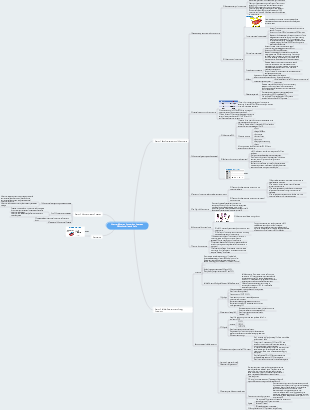

Chapter Six: Energy Conversion between Mitochondria and Cells
Section 1 Mitochondria
1. Form, quantity and structure
1. Form, quantity
①Form:
Different types or different physiological states
Hypotonic environment: swelling like bubbles
Hypertonic environment: elongated into a linear shape
Different stages of cell development
Early stage: short rod-shaped
Late stage: long rod shape
②Quantity: Depending on the type of cells
2. Ultrastructure of mitochondria
①Adventitial membrane
②Intima
Spatial structure
Inner cavity (stromal cavity)
External space (intermembrane space)
crest
intercranial cavity
intracranial space
③Inversion contact point
Temporary structures for transporting substances into mitochondria
intimal translocon
outer membrane translocon
④Matrix
site of oxidative metabolism
⑤Grana
The chemical essence is ATP synthase
Also known as ATP synthase or ATP and enzyme complex
2. Chemical composition
1. Protein
soluble protein
insoluble protein
2. Lipids
Mostly phospholipids
3.Others
Many enzyme systems
marker enzyme
Intima: Cytochrome oxidase
Outer membrane: Monoammonium oxidase
Substrate: malate dehydrogenase
Intermembrane space: adenylate kinase
3. Genetic system
1. Mitochondrial DNA
Features
Existence part
quantity
encoding product
Genome structure
2. Transcription of mitochondrial genes
Transcribe
Promoter
Transcription of the mitochondrial genome starts from two major promoters, the heavy chain promoter (HSP) and the light chain promoter (LSP). Transcription factors bind to it and initiate transcription under the action of mtRNA polymerase.
transcription process
The transcription of mitochondrial genes is similar to the transcription of prokaryotes, that is, a polycistronic sequence is produced, including mRNA and tRNA.
The heavy chain forms two primary transcripts
Primary transcript I - tRNAphe, tRNAval, 12S rRNA and 16S rRNA
Primary transcript II -- mRNA and tRNA
mRNA synthesis
Contains no introns and few untranslated regions
The starting password is AUG (or AUA) and the ending password is UAA
The 3' end has a polyA tail, and the 5' end has no cap structure for nuclear mRNA processing.
protein translation
Translated within mitochondria and on mitochondrial ribosomes
Proteins that make up mitochondrial ribosomes are transported from the cytoplasm into the mitochondria
All tRNAs used in protein synthesis are encoded by mtDNA
3. Replication of mitochondrial DNA
Copy Features
DNA replication is similar to prokaryotic cells
origin of replication
A heavy chain origin of replication: controlling heavy chain self-replication
A light chain origin of replication: controlling light chain self-replication
The light chain replicates later than the heavy chain
The direction of synthesis of the heavy chain is clockwise
The direction of synthesis of light chains is counterclockwise
Replication is not affected by the cell cycle, can transcend the stationary phase or interphase of the cell cycle, and can even be distributed throughout the cell cycle.
4. Transport of encoded proteins
Transport of nuclear-encoded proteins into the mitochondrial matrix🌟
There are approximately 1,000 gene products in mitochondria, of which only 37 are encoded by the mitochondrial genome, while the rest are encoded by the nucleus.
Features
Precursor proteins are synthesized in the cytoplasm
Mitochondrial transport signals (MTS, etc.)
The outer membrane translocon and the inner membrane translocon cooperate to enter the mitochondria through the translocation contact point
Consume energy
Molecular chaperone assistance
There are protein unfolding and refolding processes
Required conditions
1. A signal sequence is required for nuclear-encoded proteins to enter mitochondria.
2. The precursor protein remains in an unfolded state outside the mitochondria
transport process
3. The power generated by molecular motion assists the polypeptide chain to pass through the mitochondrial membrane
Refold
4. The polypeptide chain needs to be refolded within the mitochondrial matrix to form an active protein.
Transport of nuclear-encoded proteins to other parts of the mitochondria
Summarize
Signal sequences are required for nuclear-encoded proteins to enter mitochondria
Precursor proteins unfold outside mitochondria
Polypeptide chain crosses mitochondrial membrane
Polypeptide chains refold within mitochondria
5. Origin
The genetic system of mitochondria is similar to that of bacteria
Mitochondrial protein synthesis is similar to that of bacteria
Endosymbiosis theory (non-symbiosis hypothesis)
6. Split and Fusion
Mitochondrial fusion is a process mediated by a series of related proteins
Since mitochondria have a double-membrane structure, the fusion and fission of mitochondria require the joint participation of the inner and outer membranes, and require precise mediation and regulation by a series of protein molecules.
FZO1/Mfns mediates mitochondrial outer membrane fusion
Mgm1/OPA1 mediates mitochondrial inner membrane fusion
Mitochondria multiply by dividing
It is currently generally believed that mitochondrial biogenesis is completed through the division of original mitochondria.
Three ways of mitochondrial division:
budding division
contraction split
septal division
Mitochondria are not equally divided. Within the same mitochondrion, different types of mtDNA may exist, randomly distributed into new mitochondria.
On the other hand, mitochondrial division is also affected by cell division.
The mitochondrial fission process is also mediated by a series of proteins
mtDNA is distributed randomly and unevenly into new mitochondria
√In the same mitochondria, there may be different types of mtDNA, namely wild-type and mutant mtDNA. During division, wild-type and mutant mtDNA separate and are randomly distributed into new mitochondria.
√In the same cell, there may be mitochondria with different mtDNA, namely wild-type and mutant mitochondria. When dividing, they are randomly assigned to new cells.
maternal inheritance
A mother passes her mtDNA to both sons and daughters, but only daughters can pass their mtDNA to the next generation.
7. Function
🌟Understanding the semi-autonomous nature of mitochondria
Have an independent genetic system
Reasons for semi-autonomousness
Although mitochondria can also synthesize proteins, their synthesis capacity is limited. Among the more than 1,000 proteins in mitochondria, only a dozen are synthesized by themselves. Mitochondrial ribosomal proteins, aminoacyl-tRNA synthetases, and many structural proteins are encoded by nuclear genes. After being synthesized in the cytoplasm, they are directed and transported to the mitochondria. Therefore, mitochondria are called semi-autonomous organelles.
Section 2 Cellular respiration and energy conversion
cellular respiration
Features
①Essentially, it is a series of redox reactions catalyzed by enzymes in mitochondria.
②The energy generated is stored in the high-energy phosphate bonds of ATP
③The entire reaction process is carried out in a distributed manner, and energy is also gradually released.
④The reaction is carried out at a constant temperature of 37°C and constant pressure.
⑤The reaction process requires the participation of H₂O
The energy produced by cellular respiration is stored in the cellular energy conversion molecule ATP
1.ATP is a high-energy phosphate compound
2. During cellular respiration, the energy released can be promptly stored in the high-energy phosphate bonds of ATP through the phosphorylation of ADP as a backup
3. When cells require energy to carry out various activities, they can be dephosphorylated and break a high-energy phosphate bond to release energy to meet the needs of the body.
The energy carried in ATP comes from the oxidation of sugars, amino acids, fatty acids, etc. The oxidation of these substances is the prerequisite for energy conversion.
From glycolysis to ATP formation is an extremely complex process divided into three steps:
Glycolysis--cytoplasm
Tricarboxylic acid cycle (TAC)--mitochondria
Oxidative phosphorylation - mitochondria
Glycolysis of glucose in the cytoplasm
Glucose is broken down into pyruvate in the cytoplasm via glycolysis
Oxidative decarboxylation of pyruvate in the mitochondrial matrix to acetyl CoA
The tricarboxylic acid cycle in the mitochondrial matrix
Oxidative phosphorylation coupled to ATP formation
(1) The respiratory chain and ATP synthase complex are the structural basis of oxidative phosphorylation
1. respiratory chain
The enzymes and coenzymes participating in the respiratory chain are arranged on the inner membrane of the mitochondria in a certain order to transfer hydrogen and electrons, so it is also called the electron transport chain.
(2) Oxidative phosphorylation coupling
<ATP synthase complex>
It is a spherical grana attached to the inner surface of the inner mitochondrial membrane (including cristae).
It is a key device that uses the energy released during electron transfer in the respiratory chain to phosphorylate ADP to generate ATP.
Its chemical essence is the ATP synthase complex, also known as FoF, ATP synthase.
(3) Coupling mechanism - chemical osmosis hypothesis
The chemiosmotic coupling hypothesis believes that the basic principle of oxidative phosphorylation coupling
The free energy difference in electron transport causes H + to be transported across the membrane, which is converted into an electrochemical proton gradient across the inner mitochondrial membrane. Protons flow back down the gradient and release energy, driving ATP synthase bound to the inner membrane to catalyze the phosphorylation of ADP to synthesize ATP.
NADH or FADH2 provides a pair of electrons, which pass through the electron transport chain and are finally accepted by O2;
The electron transport chain also functions as an H + pump, and the process of transferring electrons is accompanied by the transfer of H + from the mitochondrial matrix to the intermembrane cavity;
The inner mitochondrial membrane is impermeable to H + and OH, so as the electron transfer process proceeds, H + accumulates in the intermembrane cavity, causing a difference in proton concentration on both sides of the inner membrane, thereby maintaining a certain potential energy difference;
H + in the intermembrane cavity has a tendency to return to the matrix along the concentration gradient, and can pass through the ATP synthase complex F with the help of potential energy. The proton channels on the mitochondria penetrate into the mitochondrial matrix, and the free energy released drives ATP synthase to synthesize ATP.
Emphasize the integrity of the mitochondrial membrane structure: H cannot pass through the membrane freely, a proton dynamic potential is formed on both sides of the inner membrane, and oxidation is coupled to phosphorylation.
Directed Chemical Reactions
Electron transfer orientation x
H ⁺Move Orientation
The reaction of ATP synthesis is also directional
Section 3 Mitochondria and Diseases
Mitochondrial changes during disease
mtDNA mutations and disease
Diseases with mitochondrial structural and functional defects as the main cause are often called mitochondrial disorders.
Mitochondrial diseases are a group of multisystem diseases. Because the central nervous system and skeletal muscles are most dependent on energy, clinical symptoms are characterized by lesions in the central nervous system and skeletal muscles.
Mitochondrial encephalomyopathy (ME) is a group of rare multisystem diseases mainly involving the brain and muscles caused by abnormalities in mitochondrial structure and/or function.
The main manifestations of muscle damage are extreme intolerance of fatigue in skeletal muscles, and the main manifestations of nervous system include external ophthalmoplegia, stroke, recurrent epilepsy, myoclonus, migraine, ataxia, intellectual disability, and optic neuropathy. Other system manifestations include extreme fatigue intolerance of skeletal muscles. Manifestations may include heart block, cardiomyopathy, diabetes, renal insufficiency, intestinal pseudo-obstruction, and short stature.
Pathogenesis: mtDNA8344G mutation → overall level of mitochondrial protein synthesis ↓ → reduced content of oxidative phosphorylation components other than complex II (especially reduced content of respiratory chain enzyme complexes I and IV).
Mitochondrial encephalomyopathy can be divided into several categories according to different clinical syndromes:
MELAS syndrome (mitochondrial encephalomyopathy with lactic acidemia and stroke-like episodes syndrome), symptoms include varying degrees of cognitive impairment and Alzheimer's disease, lactic acidosis, stroke, transient ischemic attack, deafness, movement disorders, weight decline.
MERRF syndrome (myoclonic seizures with ragged red fibers), symptoms include progressive myoclonic epilepsy, short stature, and accumulation of diseased mitochondrial clumps in the sarcolemma of muscle fibers.
KSS syndrome (progressive external ophthalmoplegia syndrome), sometimes also a subtype of mitochondrial encephalomyopathy, includes retinitis pigmentosa, heart block, and external ophthalmoplegia.
Leber hereditary optic neuropathy (LHON)
It is a maternally inherited disease of optic neurodegeneration. The majority of patients are male, and the disease usually occurs between the ages of 15 and 35. The main clinical manifestations are acute or subacute painless vision loss in both eyes simultaneously or successively, which may be accompanied by loss of central visual field and color vision impairment. The severity of visual impairment varies greatly, ranging from completely normal, mild, moderate to severe.
The main biochemical defect of LHON is complex I deficiency, and the genetic abnormality is a translocation mutation at the 11778 position of mtDNA. In addition, 14484 and 3460 point mutations have been reported.
Chronic progressive external ophthalmoplegia (CPEO)
It is a rare eye movement disorder disease. It is a chronic, progressive, and bilateral disease. It starts with ptosis, gradually develops eye movement disorders, and finally the eyeball becomes immobile. The causes include trauma, toxins, degeneration, genetic diseases and tumors.
Leigh syndrome
Also known as subacute necrotizing encephalomyelopathy, it is an inborn metabolic disorder caused by the loss of respiratory chain subunits. It is a mitochondrial encephalomyopathy. It usually begins between February and 6 years old and dies within weeks or months. The vast majority of children die before the age of 2 years.
The more characteristic clinical manifestations of those with onset in infancy include: intermittent respiratory rhythm abnormalities, external ophthalmoplegia, nystagmus, ataxia, and audio-visual impairment, while those with onset in early childhood have more prominent manifestations of myasthenia. Most children will have severe lactic acidosis.
Diseases related to abnormal mitochondrial fusion and fission
Mitochondrial disease treatment
complementary therapies
Choose therapy
gene therapy