 Wondershare EdrawMind
MindMap Gallery Chapter 14 Risk Control and Crisis Management
- 42
Chapter 14 Risk Control and Crisis Management
Financial statement analysis method: Financial statement analysis method is a method that uses financial statement data to evaluate the financial status, operating results and future prospects of an organization, thereby analyzing and identifying potential risks faced by the organization.
Edited at 2022-11-10 08:53:01
- bacteria
This is a mind map about bacteria, and its main contents include: overview, morphology, types, structure, reproduction, distribution, application, and expansion. The summary is comprehensive and meticulous, suitable as review materials.
- Plant asexual reproduction
This is a mind map about plant asexual reproduction, and its main contents include: concept, spore reproduction, vegetative reproduction, tissue culture, and buds. The summary is comprehensive and meticulous, suitable as review materials.
- Reproductive development of animals
This is a mind map about the reproductive development of animals, and its main contents include: insects, frogs, birds, sexual reproduction, and asexual reproduction. The summary is comprehensive and meticulous, suitable as review materials.
Chapter 14 Risk Control and Crisis Management
- bacteria
This is a mind map about bacteria, and its main contents include: overview, morphology, types, structure, reproduction, distribution, application, and expansion. The summary is comprehensive and meticulous, suitable as review materials.
- Plant asexual reproduction
This is a mind map about plant asexual reproduction, and its main contents include: concept, spore reproduction, vegetative reproduction, tissue culture, and buds. The summary is comprehensive and meticulous, suitable as review materials.
- Reproductive development of animals
This is a mind map about the reproductive development of animals, and its main contents include: insects, frogs, birds, sexual reproduction, and asexual reproduction. The summary is comprehensive and meticulous, suitable as review materials.
- Recommended to you
- Outline
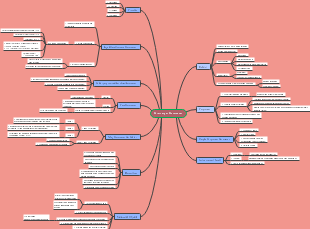

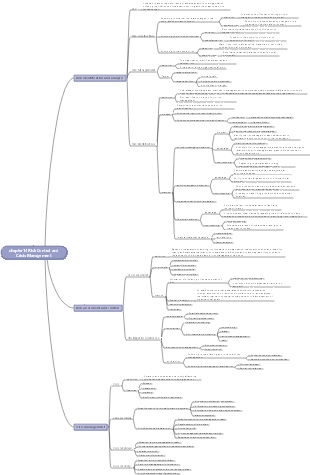



Risk Control and Crisis Management
Risk identification and analysis
Risks and their classification
There is no consensus among academics on what risk is, and there is currently no generally accepted definition. At present, although the definition perspectives are different, most scholars limit risks to the uncertainty that brings losses to the organization.
International Organization for Standardization: Risk is the impact of uncertainty on goals
COSO: Risk is a matter The possibility that it will occur and have a negative impact on the achievement of the goal
Main two types of views
objective theory of risk
Risk is the uncertainty of loss that exists objectively and is predictable. Based on the observation and statistics of risk accidents, statistics and other tools can be used to describe and measure risk uncertainty.
subjective theory of risk
While acknowledging that risk is the uncertainty of loss, it is considered that this uncertainty is a personal assessment of objective risk, It is related to factors such as personal knowledge, experience, spirit and psychological state. Different people will make different judgments when facing the same risks.
risk:
Static risk and dynamic risk (whether the economic environment changes)
Static risk: the possibility of loss when the economic environment does not change, Usually caused by natural objective factors or people's mistakes or misconduct
Static risk accidents bring real losses to society, but they have certain regularity and can be predicted
Dynamic risk: the possibility of loss caused by changes in the organization's external environment Usually caused by changes in factors such as macroeconomics, industrial organization, production methods, production technology, and consumers
In the long run, dynamic risk accidents are not necessarily losses to society, and may be beneficial to the adjustment of resource allocation. Relatively speaking, dynamic risks are difficult to predict due to lack of regularity.
Pure risk and speculative risk (whether there are profit opportunities)
Pure risk: refers to risks that only have the possibility of loss but no opportunity for profit. After a pure risk accident occurs, it will definitely cause losses to a specific organization or individual.
Pure risk accidents and their losses can generally be scientifically predicted through a large amount of statistical data.
Speculative risks: refers to risks that have the possibility of loss and the opportunity for profit
Speculative risks are largely affected by uncontrollable factors such as macro environment, market changes and moral factors.
Basic risks vs. specific risks (scope covered)
Basic risks: major risks, which refer to risks that cannot be prevented or controlled by specific social individuals.
Caused by economic disorders, political changes, major natural disasters, etc., it affects a considerable number of people and even the entire society. Individuals have no control over the factors that cause underlying risks, and risk management is usually borne by society
Specific risks: refer to risks that are causally related to specific social individuals.
A specific risk has a limited scope of impact and certain measures can be taken to prevent or control it Responsibility for dealing with specific risks lies primarily with the individual
Other classification standards
Will it cause economic losses?
Economic risks and non-economic risks
Can it be dispersed?
Diversified risk and non-diversifiable risk
potential loss patterns
Property risk, personal risk, liability risk and credit risk
Cause of loss
natural risks, social risks, economic risks and political risks
Risk management objectives
Risk management: refers to the organization’s identification, measurement and treatment of risks, Management activities that strive to provide security for the achievement of organizational goals at the smallest economic cost
Risk management is a goal-oriented organizational work. Its fundamental purpose is clear: it is to strive to ensure the realization of organizational goals with the minimum cost expenditure.
Both aspects
target before loss
Before the risk accident occurs, The purpose of risk management is to eliminate, reduce or transfer the occurrence of risk accidents as much as possible to ensure the normal operation of the organization
economic goals
The organization should prevent potential losses in an economically sound manner
legitimacy goal
The operation and development of the organization must be based on compliance with legal regulations
social responsibility goals
Organizations must also pay attention to the interests of stakeholders and conscientiously fulfill corresponding social responsibilities
target after loss
Once a risky accident occurs, The organization should strive to reduce the impact of risk incidents and take necessary measures to return to normal operations as soon as possible
survival goals
Ensure that the organization's operations can be partially or fully restored within a reasonable period of time
Going concern objectives
The organization cannot interrupt its business operations due to the occurrence of loss events to avoid losing its original market shares.
Income stability target
The organization should try to stabilize operations and eliminate the adverse effects of risk accidents
social responsibility goals
Organizations should try their best to reduce the adverse impact of loss events on stakeholders, assume corresponding social responsibilities, and establish a good social image.
risk identification process
Risk identification means that managers use relevant knowledge and methods to comprehensively, systematically and continuously Identify and describe the various risks faced by the organization, their causes and potential consequences
Determine the content and scope of risk identification
Choose the right risk identification tool
Conduct comprehensive risk identification
risk factors
material risk factors
moral hazard factors
psychological risk factors
legal risk factors
According to the severity of the consequences of risk accidents, four categories
The consequences of the accident can be ignored
Risk factors that warrant no control measures
The consequences of the accident are relatively minor
It is not possible to cause personal injury or property damage for the time being, and the risk factors of control measures should be considered
The consequences of the accident are serious
Risk factors that have not caused casualties or information damage and require immediate measures to be controlled
Risk accidents that can cause catastrophic consequences
Risk factors that must be eliminated immediately
risk accident
Cause of loss Property damage may occur such as fire or theft
An important step in risk identification is to be able to foresee risky accidents and nip the risk factors that may cause accidents in the bud.
Risk identification methods
on-site investigation method
Generally, the risk manager goes to the site to observe the operations of each department. Inspect the various facilities and operations of the organization
Before conducting an on-site investigation, the risk manager must make sufficient preparations so that the investigation can be targeted.
During the on-site investigation process, risk managers should pay attention to communication with front-line staff. Be flexible and creative, and remain acutely aware of potential risks
After the on-site investigation, the risk manager must act promptly to summarize and organize the investigation results, identify and analyze potential risks, and take corresponding measures.
audit form survey method
The relevant person in charge or risk manager fills in a pre-designed questionnaire, and then identifies and analyzes based on the content of the form.
The questionnaire usually systematically lists the risks that an organization may face. Users can construct the organization's risk framework by answering the questions in the questionnaire one by one.
organizational structure diagram
Structural diagramming refers to identifying the areas and scope where risks may occur by drawing and analyzing an organizational structure chart.
This method can be used to understand
Nature and specifications of corporate activities
Analyze the internal connections, power allocation and interdependence between various departments within the enterprise to see if there is any overlap between business and power.
An independent accounting unit that can be distinguished within an enterprise, which must be considered when making financial treatment decisions on risks
Weaknesses in the enterprise that may worsen the risk profile and the possible scope of potential risks
flow chart method
Draw the organizational activities into a flow chart according to the internal logical connections, and focus on each link in the process, especially the key links and weak links, Identify and analyze risk factors, risk accidents and possible loss consequences, etc.
advantage
Able to divide a problem into several manageable problems, thus facilitating risk identification
The flow chart is relatively concise and clear, and can basically reveal the entire production and operation process, which is helpful for identifying risks in each link.
shortcoming
consume a lot of time
Only the consequences of the accident are emphasized, and the possibility of the accident cannot be evaluated.
financial statement analysis
The financial statement analysis method uses financial statement data to evaluate an organization's financial status, operating results, and future prospects. A method to analyze and identify potential risks faced by an organization
The reports commonly used in financial statement analysis are the balance sheet, profit and loss statement and cash flow statement. The main methods for identifying risks include trend analysis, ratio analysis and factor analysis.
Trend analysis method refers to comparing and analyzing relevant data in a company's financial statements for consecutive periods. To reveal the changing trends of corporate financial status and operating results
Ratio analysis method refers to comparing relevant data in the same accounting period to find the ratio between relevant data. To analyze the relationships between items listed in financial statements
The factor analysis method is: based on the analysis of the relationship between indicators and influencing factors, quantitatively determine the degree of influence of each factor on the indicator. (Difference analysis method, indicator analysis method, serial substitution method, fixed base substitution method)
advantage
The information required for risk identification is obtained through transactions and is reliable and objective.
Easily identify hidden potential risks and prevent them before they happen
shortcoming
Strong professionalism
When reports are inaccurate, it is difficult to accurately predict the potential risks faced by the organization
There are many methods for risk identification, such as fault tree analysis, scenario analysis, hazard and operability research, etc. (Risk managers should be aware of this when choosing)
It is impossible for any method to reveal all the risks faced by an economic unit, let alone all the factors that lead to risky accidents.
Funding constraints and increasing work will lead to rising costs and declining returns
Risk identification is an ongoing process
Risk assessment and control
Risk assessment criteria
Risk assessment refers to the organization using methods such as probability theory and mathematical statistics on the basis of analyzing existing risk and loss data. Evaluate the loss probability and extent of specific risk accidents to provide a basis for risk management decisions
systematic principle
Assess both the likelihood of a risk and all its possible impacts
Assess both individual risk factors and the interrelationships and interactions between these factors
It is necessary to assess both risk entities and internal and external environmental factors.
scientific principle
The models and methods adopted must be scientific and rigorous
Try to keep your assessment methods consistent
The data and information sources used in the assessment must be reliable
dynamic principle
operability principle
Try to choose an assessment method that is concise, scientific and easy to obtain data.
risk assessment methods
Risk assessment methods, many application scenarios and conditions have different requirements Mainly divided into: qualitative analysis technology, quantitative analysis technology and their combination
The results of quantitative analysis are highly accurate, easy to understand and judge, and are more conducive to decision-making. However, when quantitative analysis is not required or the data required for quantitative evaluation cannot be obtained or the cost of obtaining it is not economical, qualitative analysis technology should be adopted.
Estimation of probability of loss and extent of loss
Estimation of probability of loss: the likelihood that a risk will occur
Consider three factors
Number of risk units
loss pattern
Loss event (or cause)
Estimation of the extent of the damage: how much damage may be caused, the maximum loss that may be caused
Scenario analysis
Scenario analysis refers to generating possible future scenarios through assumptions, predictions, simulations, etc. and an analysis method that analyzes various situations that may have an impact on the achievement of organizational goals.
It can be carried out using formal or informal, qualitative or quantitative methods, and is mainly used for risk analysis of projects with many variable factors.
Historical scenario reproduction method, target expansion method, factor decomposition method, random simulation method
sensitivity analysis
Sensitivity analysis refers to analyzing and measuring the magnitude of changes in system evaluation indicators when the main factors of the system change. and the degree of impact of changes in various factors on achieving expected goals, thereby confirming the system's ability to withstand various risks.
risk map
Risk map refers to a method that graphically represents the possibility and impact of one or more risks to provide a reference for risk management decisions.
Risk maps can take the form of heat maps or flow charts to quantitatively or qualitatively estimate the possibility and impact of risks. When describing risks, it is necessary to highlight which risks are more important and which risks are unimportant, so as to make the graphics intuitive and easy to use.
Strategies to control risk
risk avoidance
Risk avoidance refers to situations where risks are more likely to occur and have a higher degree of impact. A method by which an organization adopts risk treatment methods such as suspending, abandoning or adjusting to avoid risk losses.
Total refusal to take risks
Trying to take some of the risk
Give up and take risks midway
risk sharing
Risk sharing means that an organization consciously uses legitimate and legal means to share the risks or losses it may suffer. Methods for handling risks that are partially or completely transferred to other economic units
financial risk sharing
Insurance is the most commonly used method of risk sharing. The use of insurance for risk sharing is to transfer the potential risks faced by the organization to the insurance company in the form of insurance through insurance contracts.
Non-financial risk sharing
Non-financial risk sharing refers to the way in which an enterprise transfers risks that may cause losses to non-insurance economic units through a series of contracts.
outsourcing
A business activity in which an enterprise hands over non-core business and control rights in the value chain that it is not good at to external professional manufacturers.
lease
By signing a contract, one party rents its house, site, transportation, equipment or daily necessities to the other party together with part of the risks and charges a rental fee
Enterprises export machinery and equipment, Transfer the risk of backward equipment technology to the lessee company
Delegated management
By signing an entrustment contract, the entrusting enterprise will hand over its property to the entrusted enterprise for entrustment and pay a certain fee.
sell
The organization transfers risks by selling properties that may have potential risks.
The non-financial risk sharing method is an important supplement to the financial risk sharing method.
loss reduction management
Loss reduction management refers to risk management in which an organization consciously accepts the risks existing in business management and uses a prudent attitude to disperse risks and control risk losses, thereby maximizing risks into small risks and converting large losses into small losses. Way
Risk diversification
The organization divides the risk units it faces into several smaller and low-value independent units. and dispersed in different spaces to reduce the degree of risk losses that the organization may suffer
Copy risk units
Organize a backup copy of the resources required to maintain normal business activities when the original resources cannot be used normally due to various reasons. Backup risk units can function in place of original assets
risk retention
Risk retention means that organizations facing risks bear the losses caused by risk accidents and make corresponding financial arrangements. (The essence is: when a risk accident occurs and causes losses, the organization will make up for the losses through the accommodation of internal funds)
Proactive, conscious and planned risk retention
Passive, unconscious, and unplanned risk retention
Two manifestations
Retention of risk losses due to the organization's failure to recognize the existence of the risk
Although he is aware of the existence of risks, he underestimates the extent of the risks and retains risks due to a fluke mentality.
crisis management
Crisis and its characteristics
crisis
Crisis refers to a sudden situation that seriously affects the survival and development of an organization.
The difference between crisis and risk
Risk is the uncertainty of loss, a crisis that may bring about unexpected events with serious damaging consequences
Risk is the cause of crisis, and crisis is the obvious manifestation of accumulation of risk.
Not all risks will lead to crises. A crisis will only occur when the harm caused by risks has accumulated to a certain scale and the consequences of damage are serious.
Crisis characteristics
Sudden
Hazardous
Causing panic and confusion to managers
urgency
Insufficient information resources
Crisis warning
Crisis early warning work: If the factors and conditions for the formation of a crisis, the probability of the crisis occurring, the degree of damage, the scope of the crisis, etc. can be identified in time, managers can take defensive or pre-control measures to reduce the probability of the crisis, or Minimize the harm after a crisis occurs.
Establishment of crisis early warning system
Crisis early warning means that on the basis of continuous data collection, the organization predicts the possible occurrence of a crisis based on the collected relevant information and data and determines the crisis level, so as to issue corresponding alarms before the crisis occurs, so that relevant departments and personnel of the organization can Understand relevant information in advance and take corresponding preventive and response measures to avoid the occurrence of crises or reduce the damage of crises, and ensure the orderly operation of the organization and the smooth realization of organizational goals.
Information collection subsystem
Information processing subsystem
Information decision-making subsystem
alarm subsystem
Crisis Response Preparations
Crisis response preparation is to prepare in advance for the sudden occurrence of a crisis, including the establishment of a crisis management team, the formulation of crisis plans, crisis plan drills, crisis management awareness training, the storage of various supplies, and in order to reduce A series of measures taken in advance to deal with crisis losses
Crisis response and recovery management
Crisis response: After a crisis occurs, can the organization carry out effective management to turn the crisis into safety? Even capturing the opportunities to promote organizational development has become an important part of testing the organization's crisis management capabilities.
effective crisis response
Establish a crisis management team
Activate emergency plans or develop new plans
quarantine crisis
Get more information
crisis recovery
When a crisis event is effectively controlled or eliminated, the organization needs to quickly recover the losses caused by the crisis. Return to normal working conditions and order as soon as possible
Establish a crisis recovery team
Get crisis management information
Develop and implement a crisis recovery plan
Crisis Assessment and Development